Fulltext
Full-text is available in PDF format.
Journal of Nursing and Midwifery Sciences
The Official Journal of Mazandaran University of Medical Sciences
Authors
Context: Adolescents with cancer are involved with a disabling disease that affects their various educational dimensions.
Aim: The present study aimed at determining academic self-regulation and its relationship with Sternberg’s thinking styles, academic achievement, and course of disease in adolescents with cancer.
Setting and Design: The current study is a cross-sectional study Indeed, the participants were selected via simple random sampling method in the academic year of 2016–2017.
Material and Methods: This study was carried out on 269 adolescents with cancer who were covered by Mahak Hospital and Rehabilitation Complex.
Statistical Analysis: Data analysis was performed by descriptive statistics (frequency, percentage, and mean with standard deviation) and analytical statistics (multiple regression coefficients and path analysis approach).
Results: From the thinking styles, the legislative thinking style (b =0.301, P = 0.001) made the highest contribution to the prediction of academic self-regulation. With regard to the other research variables, the grade point average could significantly predict academic self-regulation (b =0.301, P = 0.001). However, the duration of cancer could not predict academic self-regulation (P> 0.05).
Conclusion: The adolescent cancer patients with the legislative thinking style were more talented in learning self-regulation than the other students. In this regard, it is possible to take measures with regard to the identification of such students in schools and other educational centers in order to lay higher emphasis on the teaching of academic self-regulation to them.
© 2017, Author(s). This open-access article is available under the Creative Commons Attribution 4.0 (CC BY 4.0) International License (https://creativecommons.org/licenses/by/4.0/), which allows for unrestricted use, distribution, and reproduction in any medium, provided that the original work is properly cited.
Coşkun AB, Yiğit R. Investigation of Relationship Between Levels of Self-Efficacy and Self-Care in Middle School Adolescents in Turkey. J Health Rep Technol. 2020;6(2):e106130. doi: https://doi.org/10.5812/ijhls.106130
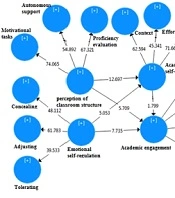
Babajani M, Erfani N, Yarahamdi Y, Ahmadian H. Developing a Causal Model of Academic Engagement Based on the Perception of Classroom Structure and Emotional Self-regulation with the Mediating Role of Academic Self-efficacy. J Clin Res Paramed Sci. 2022;11(2):e133180. doi: https://doi.org/10.5812/jcrps-133180
Hosseini SN, Mirzaei Alavijeh M, Karami Matin B, Hamzeh B, Ashtarian H, et al. Locus of Control or Self-Esteem; Which One is the Best Predictor of Academic Achievement in Iranian College Students. Iran J Psychiatry Behav Sci. 2016;10(1):e2602. doi: https://doi.org/10.17795/ijpbs-2602
Shohoudi M, Zandi K, Faridi MR, Fathi G, Safari Z. Relationship of Teaching Efficiency with Academic Self-Efficacy and Self-Directed Learning among English Language Students: University Students’ Perspectives. Educ Res Med Sci. 2015;4(2):e79169. doi:
Salajegheh A, Sanjari S, Mohammadi Soliemani MR. Metacognitive Beliefs, Academic Expectations Stress, and Achievement: A Path Analysis Among Iranian Upper Secondary Students. Middle East J Rehabil Health Stud. 2026;13(3):e169742. doi: https://doi.org/10.5812/mejrh-169742
Last Update: 1 month ago
Last Update: 1 month ago
Last Update: 1 month ago
Last Update: 6 days ago
Last Update: 2 days ago
Last Update: 4 days ago