Fulltext
Full-text is available in PDF format.
Journal of Nursing and Midwifery Sciences
The Official Journal of Mazandaran University of Medical Sciences
Authors
 5,*
5,*Background and Purpose: Surgery is a stressful situation and this study aimed to evaluate the effect of negative emotions coping styles
training on mental health of the patients undergoing open-heart surgery.
Methods: This study was conducted with a pretest-posttest design on the patients undergoing open-heart surgery during a course of
six months in Mazandaran Heart Center, Sari, Iran in 2014. In total, 30 patients were selected using non-random sampling method,
who were randomly assigned into intervention and control groups (15 cases in each group). In the intervention group, seven training
sessions of coping strategies (inc. stress and anger management, dealing with anxiety, and depression) were individually held for the
participants. Data collection was performed, using General Health Questionnaire by Goldberg and Hiller (1970) and coping strategies
scale by Lazarus and Folkman (1985), which showed the Cronbach’s alpha coefficient of 0.84 and 0.80, respectively. Data analysis was
performed, using ANOVA and Conflicting t.
Results: In this study, the results of ANOVA were indicative of a significant difference between the groups, which suggest the positive
effects of coping strategies on mental health (P=0.05).
Conclusion: According to the findings of the present study negative emotions coping styles training had a positive impact on mental
health of the patients, which was more significant in the intervention group.
2022 Journal of Nursing and Midwifery Sciences. This work is licensed under a Creative Commons Attribution-NonCommercial 3.0 Unported License which allows users to read, copy, distribute and make derivative works for non-commercial purposes from the material, as long as the author of the original work is cited properly. https://jnms.mazums.ac.ir/ https://wiki.creativecommons.org/wiki/License_Versions
Mohammadi Pashaky M, Yaghoubi AA, Mahmoodi Molaee AA, Abbasi Esfajir A. The effect of training life expectancy and coping styles on negative emotions of cardiac surgical patients' mental health. J Nurs Midwifery Sci. 2014;1(2):e141405. doi: https://doi.org/10.18869/acadpub.jnms.1.2.1
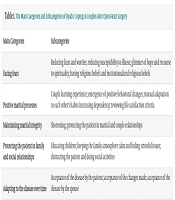
Sarhadi M. Explaining Couples' Perceptions of Dyadic Coping After Open Heart Surgery: A Qualitative Study Using Conventional Content Analysis. Int Cardiovasc Res J. 2025;19(1):e164207. doi: https://doi.org/10.5812/icrj-164207
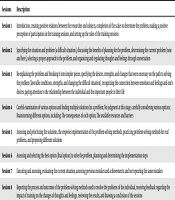
Omidi S, Kakabaraee K, Amiripour A. Effects of Problem-solving Skills Training on the Anxiety and Sleep Quality of Patients After Coronary Artery Bypass Graft Surgery. J Kermanshah Univ Med Sci. 2021;25(1):e107638. doi: https://doi.org/10.5812/jkums.107638
Asgari P, Bahramnezhad F, Mehrdad N, Asadi Noughabi AA, Hekmatpou D, et al. Depression, Functionality and Adaptability of Elderly Patients After Open Heart Surgery Off- or On-Pump. Jundishapur J Chronic Dis Care. 2015;4(4):e30508. doi: https://doi.org/10.17795/jjcdc-30508
Last Update: 4 days ago
Last Update: 4 days ago
Last Update: 4 days ago
Last Update: 6 days ago
Last Update: 2 days ago
Last Update: 4 days ago