
1. Background
Cardiovascular diseases are a leading cause of mortality in Iran and globally, imposing tens of millions of dollars on medical systems. Statistics in Iran are indicative of the increased mortality rate due to cardiovascular disorders, with 317 and 116,000 confirmed deaths in Iran daily and annually, respectively (1). A broad range of experimental and physiological data supports the association of cardiovascular diseases and psychological problems, demonstrating that an adaptive physiological mechanism is a response to anxiety and sleep disturbance, which allows the organism to fight the harmful stimuli, which in turn leads to the stimulation of the sympathoadrenal system and hypothalamic-pituitary-adrenal axis with the secretion of cortisol and norepinephrine. The excessive activity of these systems has adverse effects on the cardiovascular system (2). Therefore, sleep quality improvement and anxiety reduction positively influence the cardiac health and quality of life (QOL) of cardiac patients (3).
In a study, Chen et al. (4) reported that 74% of patients with congestive heart failure (CHF) experienced various types of sleep disturbance, and the stimulation of the autonomic nervous system caused hemodynamic, hormonal, neural, and cardiovascular changes in these patients. In another research, 51%, 44%, 40%, and 39% of patients with coronary artery disease (CAD) were reported to have insomnia, sleep disturbance, problems in the last stage of sleep, and early waking (5). In addition, sleep disturbance was more prevalent in the patients with CAD compared to the healthy individuals, and factors such as respiratory disorders, aging, and medication were speculated to have adverse effects in this regard (6). Evidence attests to the direct correlation between anxiety and sleep quality. Moreover, anxiety directly affects CAD patients and leads to the poor prognosis of CHF patients. Researchers have marked high anxiety rates in cardiac patients, cautioning that lack of treatment may increase the risk of cardiac events (7).
As part of cognitive science, problem-solving skills are recognized as an undeniable research priority and are mostly determined by two general, partially independent processes, known as problem-solving orientation and problem-solving style. Problem-solving orientation is a cognitive process that acts as the motivational use of problem-solving and encompasses relatively stable cognitive-emotional schemas, which reflect the general beliefs and perceptions of humans toward life affairs. On the other hand, problem-solving style refers to the cognitive and behavioral activities through which an individual strives to gain an accurate understanding of their daily life affairs and find effective coping strategies and solutions. Therefore, problem-solving styles are considered to be important tools for the management of issues such as anxiety and sleep disturbance (8).
2. Objectives
Considering the adverse effects of sleep disturbances on the QOL and the negative consequences in CHF patients, the high prevalence of anxiety that leads to sleep disturbance in these patients, the role of problem-solving skills training (PSST), and lack of similar research in this regard, the present study aimed to assess the effects of PSST on the sleep quality and anxiety of patients with CHF following CABG surgery in Kermanshah, Iran.
3. Methods
3.1. Sample Population
This quasi-experimental study was conducted on patients with CHF following CABG at Imam Ali Heart Hospital in Kermanshah, Iran in 2019. In total, 20 subjects were selected via convenience and purposive sampling from 60 individuals based on the inclusion and exclusion criteria.
3.1.1. Inclusion Criteria
Male gender;
Age of less than 70 years;
Cardiac surgery within the past six months;
Minimum education level of junior high school (third year);
Ejection fraction (EF);
Anxiety score of > 42 and sleep quality score of > 5;
Taking the same heart medications;
No smoking habits;
No diagnosis of psychological disorders;
No use of psychiatric medications.
3.1.2. Exclusion Criteria
Conditions intervening with normal sleep, such as night work, having a baby, and having a spouse who worked at night;
No medical problems during the study;
Lack of cooperation and physical disabilities.
3.2. Ethical Considerations
Informed consent;
Ensuring the patients of confidentiality terms regarding their personal information;
Voluntary participation in the study and ability to withdraw from the research at any stage.
3.3. Research Instruments
Data were collected using Spielberger’s state-trait anxiety inventory (STAI) and Pittsburgh sleep quality index (PSQI). In 1989, Buysse et al. (9) introduced PSQI and confirmed its internal consistency at the Cronbach’s alpha of 0.83. The validity and reliability of the Iranian version of the tool have been reported to be 0.86 and 0.89, respectively (10). PSQI consists of seven subscales, including sleep quality, sleep latency, sleep duration, sleep efficiency, sleep disturbance, sleep medication, and daytime dysfunction. The items in this scale are scored based on a three-point Likert scale. The instrument is used to evaluate sleep quality, and the scores above five indicate poor sleep quality.
STAI has 40 items, 20 of which evaluate the anxiety state, and the remaining items analyze the anxiety trait. The anxiety state scale (obvious anxiety) consists of 20 phrases, which assess the feelings of the respondent at the moment and at the time of response. The anxiety trait (hidden anxiety) has 20 items, which evaluate the general and normal feelings of the respondents. The internal consistency coefficient of STAI has been confirmed at the Cronbach’s alpha of 0.92 (11). In a research by Khanipour (12), the internal consistency coefficient of the instrument was estimated at the Cronbach’s alpha of 0.66.
3.4. Data Collection Method
Initially, the sample population was collected through several calls and in-person referrals to the hospital. Considering that the participants were selected via convenience and purposive sampling, any eligible individual would be considered a subject. In total, 20 subjects were selected and divided into two groups of test and control (10 per each). The data collection instruments, which had proper reliability and validity and were frequently used in the previous studies in this regard, were distributed among the participants. Afterwards, training sessions were held for the test group, and two months after the training, the instruments were completed by the participants in the test and control groups under the supervision of a co-researcher who was blinded to the study groups. In addition, the tools were scored by another co-researcher who was also blinded to the study groups, and data were analyzed by the executor.
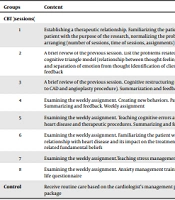
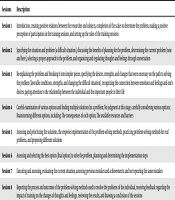
In the statistical analysis of the data, we attempted to ensure the accuracy of the hypotheses based on the obtained data. The intervention consisted of eight PSST sessions (one hour each), implemented based on the protocol confirmed by the faculty members. Notably, the sessions were held by an experienced instructor who was a member of the research team under the supervision of a cardiologist at Imam Ali Heart Hospital in Kermanshah (Table 1).
Table 1.
Contents of PSST Sessions for Test Group
| Sessions | Description |
|---|---|
| Session 1 | Introduction, creating positive relations between the researcher and subjects, completion of the scales to determine the problem, making a positive perception of participation in the training sessions, and setting up the rules of the training sessions |
| Session 2 | Specifying the situation and problem (a difficult situation), discussing the benefits of planning for the problem, determining the current problem (now and here), selecting a proper approach to the problem, and organizing and regulating thoughts and feelings through conversation |
| Session 3 | Re-explaining the problem and breaking it into simpler pieces, specifying the desires, strengths, and changes that were necessary on the path to solving the problem (favorable conditions, strengths, and changing the difficult situation), recognizing the connection between emotions and feelings and one’s desires, paying attention to the relationship between the individual and the important people in their life |
| Session 4 | Careful examination of various options and finding multiple solutions for a problem; No judgment at this stage, carefully considering various options; Brainstorming different options, including: The consequences of each option; The available resources and barriers |
| Session 5 | Assessing and prioritizing the solutions, the stepwise implementation of the problem-solving methods, practicing problem-solving methods for real problems, and proposing different solutions |
| Session 6 | Assessing and selecting the best option (final option) to solve the problem, planning and determining the implementation steps |
| Session 7 | Executing and assessing, evaluating the current situation, assessing previous mistakes and achievements, and not repeating the same mistakes |
| Session 8 | Reporting the process and outcomes of the problem-solving methods used to resolve the problems of the individual, receiving feedback regarding the impact of training on the changes of thoughts and feelings, reviewing the results, and drawing a conclusion of the sessions |
3.5. Statistical Analysis
Data analysis was performed in SPSS version 21 using the Shapiro-Wilk test to confirm the normal distribution of data, as well as descriptive and inferential statistics, the analysis of covariance, and Tukey’s post-hoc test. In all the statistical analyses, the P value of less than 0.05 was considered significant.
4. Results
In total, 20 subjects were selected via convenience and purposive sampling and divided into two groups of test and control. The mean age of the subjects in the test and control groups was 61.6 ± 4.2 and 61.6 ± 3.9 years, respectively. The participants were homogenous in terms of marital status (all married) and education level. Table 2 shows the mean values of the studied variables (i.e., sleep disturbance and anxiety) before, after, and during the follow-up.
Table 2.
Mean and Standard Deviation (SD) of Variables Before and After Intervention
| Variable | Group | Stage | Mean ± SD |
|---|---|---|---|
| Sleep Disturbance | Control | Pretest | 13.8 ± 2.6 |
| Posttest | 13.1 ± 2.6 | ||
| Follow-up | 12.6 ± 2.4 | ||
| Test | Pretest | 11.6 ± 2.7 | |
| Posttest | 8.4 ± 2.01 | ||
| Follow-up | 9.4 ± 2.17 | ||
| Anxiety | Control | Pretest | 45 ± 5.8 |
| Posttest | 43.3 ± 3.8 | ||
| Follow-up | 43.1 ± 3.6 | ||
| Test | Pretest | 45.6 ± 6.3 | |
| Posttest | 35.9 ± 7.3 | ||
| Follow-up | 41 ± 6.2 |
The normal distribution of the data was confirmed based on the results of Shapiro-Wilk test and Levene’s test before, after, and during the follow-up. In addition, the results of Levene’s test indicated the homogeneity of the variance of all the variables (P > 0.05). In order to analyze the mentioned hypotheses, the multivariate analysis of covariance (MANCOVA) was used considering the presence of an independent variable (PSST) and two dependent variables. To this end, the Box’s M test was applied to assess the equality of the variance-covariance matrix, and the hypothesis of the inequality of the equation of the variance-covariance matrix was ruled out given the insignificance of the test results (P = 0.215).
According to the information in Table 3, the P value was significant in all the tests (P < 0.001), indicating a significant difference between the test and control groups in terms of at least one of the dependent variables. Therefore, the one-way ANCOVA was used to assess the differences between the variables (Table 4).
Table 3.
MANCOVA to Measure Combined Variables of Anxiety and Sleep Disturbance
| Variable | Test | Value | F | P Value | Eta Coefficient |
|---|---|---|---|---|---|
| Anxiety/sleep disturbance | Pillai’s Trace | 0.67 | 15.7 | < 0.001 | 0.677 |
| Wilks’s Lambda Distribution | 0.323 | 15.7 | < 0.001 | 0.677 | |
| Hotelling’s Trace | 2.09 | 15.7 | < 0.001 | 0.677 | |
| Roy’s Largest Root | 2.09 | 15.7 | < 0.001 | 0.677 |
Table 4.
Results of Adjusted Mean and SD of Covariance of Dependent Variables (Anxiety and Sleep Disturbance)
| Variable | Sum of Squares | df | Mean Squares | F | P value | Eta Coefficient |
|---|---|---|---|---|---|---|
| Sleep Disturbance | 546.193 | 3 | 60.222 | 33.131 | < 0.001 | 0.86 |
| Anxiety | 182.667 | 3 | 182.064 | 7.86 | < 0.001 | 0.59 |
According to the information in Table 4, there was a significant difference between the two dependent variables. In addition, the Eta coefficients of 0.86 and 0.59 were obtained for the variables of sleep disturbance and anxiety, respectively, which demonstrated the more significant effect of PSST on sleep disturbance compared to anxiety. Tukey’s post-hoc test was also applied to determine the effects of training and status of the variables during the follow-up (Tables 5 and 6).
Table 5.
Tukey’s Post-hoc Test Results on Comparison of Mean Sleep Disturbance Variable in Test and Control Groups Before and After Training and During Follow-up
| Dependent Variable | Group | Comparison of Groups | Mean Difference ± SD | P Value |
|---|---|---|---|---|
| Sleep Disturbance | Control | Pretest and Posttest | 0.7 ± 1.1 | 0.98 |
| Pretest and Posttest | 2.2 ± 1.1 | 0.385 | ||
| Pretest and Posttest | 1.2 ± 1.1 | 0.884 | ||
| Test | Pretest and Posttest | 4.7 ± 1.1 | 0.001a | |
| Pretest and Posttest | -1 ± 1.1 | 0.943 | ||
| Pretest and Posttest | -3.7 ± 1.1 | 0.017a |
aP value of less than 0.05 considered statistically significant.
Table 6.
Tukey’s Post-hoc Test to Compare Mean Anxiety in Test and Control Groups Before and After Training and During Follow-up
| Dependent Variable | Group | Comparison of Group | Mean Difference ± SD | P Value |
|---|---|---|---|---|
| Anxiety | Control | Pretest and Posttest | -0.6 ± 2.72 | 1 |
| Posttest and Follow-up | 2.5 ± 2.72 | 0.94 | ||
| Follow-up and Pretest | 1.9 ± 2.72 | 0.981 | ||
| Test | Pretest and Posttest | 9.7 ± 2.72 | 0.01a | |
| Posttest and Follow-up | -1.1 ± 2.72 | 0.429 | ||
| Follow-up and Pretest | 4.6 ± 2.72 | 0.544 |
aP value of less than 0.05 considered statistically significant.
According to the information in Table 5, the paired comparison of the test and control groups demonstrated no significant difference in the mean score of sleep disturbance in the control group at various stages of the study. On the other hand, a significant difference was observed between the pretest and posttest stages (P = 0.001) and between the follow-up and pretest stages (P = 0.017) in the test group, while no significant difference was denoted between the posttest and follow-up stages in this regard (P = 0.943).
According to the information in Table 6, the comparison of the mean anxiety score showed no significant difference between the different stages of the study in the control group. However, a significant difference was observed between the pretest and posttest stages in the test group (P = 0.01), while no significant difference was denoted between the follow-up and pretest stages (P = 0.544) and between the posttest and follow-up stages in this regard (P = 0.429).
5. Discussion
The present study aimed to evaluate the effects of PSST on the sleep quality and anxiety of patients with CHF. According to the obtained results, the applied technique could reduce hidden anxiety and improve sleep quality in the patients with heart failure. After two months, the positive effects of the training intervention were observed on the patients, which could have various reasons (6, 7). For instance, the patients learned that psychological factors such as anxiety and sleep disturbance could lead to disease recurrence and decelerate their recovery. Therefore, the importance of these disturbances and the necessity of their treatment increased from the perspective of the patients. Moreover, the patients attempted to change their lifestyle and adopt proper coping mechanisms after receiving training. This change of outlook is emphasized as the patients were encouraged to prevent the recurrence of their cardiovascular condition and its complications. Therefore, PSST could help patients better cope with these factors, and training on these skills along with medication, exercise, and nutritional treatments could largely influence the control and prevention of cardiac disease recurrence (8).
Several studies have confirmed the effects of anxiety and sleep disturbance on the development and exacerbation of cardiovascular diseases (13-16). In a research by Chen et al. (4) and Clarke et al. (17), complicated factors were reported to affect sleep disturbance in patients with CHF, and sleep-related breathing disorders were observed in 60% of the patients. The reported respiratory disorders were associated with limited diagnostic signs and symptoms, and the subsequent mortality rate was due to the cessation of compensatory mechanisms and limited heart function (4, 17). In a meta-analysis, Chun et al. (18) observed the association of reduced sleep time (less than 7 - 8 hours) and increased complications over time. In another research by Yohannes et al. (19), anxiety was reported in 80% of cardiac patients. The aforementioned studies highlight the need for presenting solutions to control these factors.
Domestic and foreign studies have investigated the effects of psychological interventions on the anxiety and sleep quality of individuals (20). Since no studies have been focused on the effects of problem-solving skills on these factors in patients with CHF, we were only able to compare our findings with a few similar studies in this regard. Our findings are in line with the results of some studies showing that cognitive treatment methods could reduce anxiety in cardiac patients (7, 20-22). For instance, Nemati Sougoli Tapeh et al. (23) reported decreased anxiety and anger following cognitive therapy in 40 patients with CAD). According to Beadel et al., anger management could decrease stress in cardiac patients (24), while another study indicated that cognitive strategies improved sleep disturbance in CAD patients (20). Furthermore, Vollman et al. (25) concluded that the cardiac patients who used problem-solving skills more frequently had lower anxiety and depression symptoms and were able to control these factors significantly.
According to Agren et al. (26), problem-solving skills could increase perceived control in cardiac patients. Another study in this regard demonstrated the positive effects of cognitive therapy on life satisfaction, increased positive emotions, and decreased negative emotions in patients (7). Inconsistent with our findings, Bayazi et al. (27) and Ghasemi et al. (28) stated that short-term cognitive and behavioral therapy had no significant effects on anxiety, sleep disturbance, and depression. This discrepancy might be due to the differences in the age and education level of the research units. In the research by Bayazi et al. (27), only three sessions were primarily focused on anxiety, and most sessions revolved around stress reduction in the patients. According to the results of the present study, PSST could be effective by using cognitive approaches for the management of anxiety and sleep disorders in the cardiac patients with distressed attitudes towards the world. These methods could guide patients toward exploiting these skills to make the right decisions in the case of anxiety and insomnia and change their perceptions in general.
5.1. Conclusions
The hypothesis of this study was confirmed based on the available literature, previous research, and statistical analysis. In addition, the consistency of our findings with the previous studies in this regard further confirms the potency of the study outcomes. Accordingly, the eight-week PSST intervention could effectively reduce the anxiety and improve the sleep quality of the patients with CHF. Therefore, it is suggested that this technique be incorporated into other conventional treatments in all cardiac treatment and rehabilitation centers.
5.2. Recommendations
It is recommended that further investigations be conducted on larger sample sizes, wider age ranges, both genders, and subjects with various education levels.
5.3. Limitations of the Study
Insufficient time of the researchers;
Lack of cooperation of some experts in the field.