
1. Background
Patient safety is fundamental to healthcare; however, preventable adverse events remain a major challenge in surgical care despite advances in surgical techniques and perioperative management (1). Globally, millions of surgical procedures are performed annually (2), and a considerable proportion of hospitalized patients experience adverse events, nearly half of which are preventable (3, 4). Surgical care demands coordinated teamwork, and failures in communication, teamwork, or adherence to safety protocols can result in avoidable complications, prolonged hospitalization, disability, or death (5, 6).
To enhance surgical safety, the World Health Organization (WHO) introduced the Surgical Safety Checklist (SSC), a low-cost tool that promotes communication, teamwork, and the completion of critical safety steps at three key phases: before induction of anesthesia, before skin incision, and before the patient leaves the operating room (7). Evidence indicates that SSC use can positively influence communication patterns among surgical team members in the operating room (8). Appropriate use of the SSC significantly reduces postoperative complications, morbidity, and mortality (9, 10). Nevertheless, consistent implementation remains challenging (11). A recent systematic review and meta-analysis reported that although overall compliance reaches approximately 73%, full adherence to all checklist items occurs in only about half of surgical procedures (3).
Barriers to effective SSC implementation include inadequate education, limited familiarity with the checklist, workforce shortages, and heavy clinical workload (12). Among these, insufficient educational preparation is a modifiable barrier, particularly for undergraduate operating room students, who must acquire patient safety competencies before independent practice. Although traditional classroom instruction can improve theoretical knowledge of the SSC, it often provides limited opportunities to develop the practical skills, communication, teamwork, and clinical judgment required for real-world checklist use in the operating room, because effective checklist use cannot be taught through didactic instruction alone (13, 14).
Work-based learning (WBL) bridges the gap between theory and clinical practice by embedding learning in authentic workplace settings (15). Through WBL, students develop competence by participating, under supervision, in real patient care, supported by continuous feedback and structured reflection (16). Grounded in Kolb's Experiential Learning Theory, WBL follows a cycle of concrete experience, reflective observation, abstract conceptualization, and active experimentation (17, 18). Gibbs' Reflective Cycle further structures reflection, helping learners critically evaluate their experiences and translate insights into improved practice (19). Together, these frameworks integrate theoretical knowledge with non-technical competencies, such as communication, teamwork, situational awareness, and clinical decision-making, that are essential for SSC implementation. Previous studies have demonstrated that workplace-based strategies, such as mentoring and apprenticeships, improve perioperative competence among operating room students (20-22).
However, to our knowledge, no study has evaluated whether a theory-informed WBL program grounded in experiential and reflective learning can improve operating room students' knowledge, attitude, and observed practice regarding the WHO SSC during clinical training. A literature search of PubMed, Scopus, and Web of Science (last search: April 2026) using combinations of keywords related to work-based learning, surgical safety checklist, and operating room students did not identify any study that specifically evaluated this combination of intervention and outcomes. Addressing this gap may provide evidence to support the integration of such strategies into curricula to strengthen patient safety culture and the quality of perioperative care.
2. Objectives
The present quasi-experimental study examined whether a theory-informed work-based learning program improves operating room students' knowledge, attitude, and practice regarding the WHO Surgical Safety Checklist. We hypothesized that all three outcomes would show significant gains compared with pre-intervention levels.
3. Methods
3.1. Study Design and Setting
This quasi-experimental study used a single-group pretest–posttest design without a control group to evaluate the effects of a theory-informed WBL program on operating room students' knowledge, attitude, and practice regarding the WHO SSC. The study was conducted at Isfahan University of Medical Sciences, Iran, from April to 14 July 2026. Classroom sessions were held at the School of Nursing and Midwifery, and clinical training took place in four affiliated teaching hospitals. Baseline assessments were completed before the intervention, and post-intervention assessments were performed after the clinical training period.
The individual student was the unit of assignment and analysis. Blinding was not feasible because of the nature of the educational intervention; however, to minimize the Hawthorne effect, students were not informed of the exact timing of practice assessments. Nevertheless, because practice was assessed through direct observation in the operating room, a Hawthorne effect cannot be entirely ruled out; students and clinical teams may have modified their behavior when aware of being observed, potentially inflating practice scores. Additional measures to reduce bias included census sampling to avoid selection bias, identical standardized assessment procedures for all participants, and the use of a single trained observer for all practice evaluations.
This study was reported in accordance with the Transparent Reporting of Evaluations with Nonrandomized Designs statement. The study was not prospectively registered because it was conducted as part of a master's thesis, and registration was not a requirement of the institutional review process at the time of the study.
3.2. Participants and Sampling
The study population comprised all fourth-semester undergraduate operating room students at Isfahan University of Medical Sciences. A census method was used, and all 40 eligible students were enrolled. Because the census included the entire accessible population, no formal a priori sample size calculation was performed. This approach was chosen to maximize representativeness and avoid selection bias.
Fourth-semester students were selected because they had completed the prerequisite courses and were beginning their operating room clinical practicum, which ensured the clinical exposure necessary for the WBL intervention. The inclusion criteria were fourth-semester enrollment, completion of prerequisite courses, active participation in the operating room clinical practicum, and written informed consent. Students were excluded if they were absent from more than one educational session, failed to complete the questionnaires or the practice assessment, or voluntarily withdrew. None of the participants had received prior formal training on the WHO SSC. They were at the beginning of their clinical practicum and had no prior experience in independently performing the SSC. However, as part of their routine clinical exposure, they had observed surgical procedures under the direct supervision of qualified operating room staff.
The 40 eligible students were divided into five groups of eight for the clinical practicum. Group assignment to the four affiliated teaching hospitals was determined solely by the clinical practicum schedule. All students rotated through orthopedic, neurosurgical, gynecological, and general surgical procedures across the four hospitals. The WHO Surgical Safety Checklist is a standardized instrument applied uniformly across all surgical specialties and procedures; therefore, the distribution of specialties does not affect the content or scoring of the practice assessment.
3.3. Outcomes and Measurement
3.3.1. Primary Outcomes
The three primary outcomes were knowledge, attitude, and practice related to the WHO SSC, all of which were assessed at baseline and after completion of the intervention.
Knowledge: understanding of the purpose, phases, and team responsibilities of the WHO SSC.
Attitude: beliefs and perceptions regarding the usefulness and feasibility of the SSC.
Practice: observable implementation of the SSC in real-world clinical practice.
3.3.2. Instruments
Three researcher-developed instruments, derived from the WHO SSC guidelines and the existing literature, were used:
Knowledge Test: A 15-item, four-option multiple-choice test (score range, 0 – 15; one point per correct answer).
Attitude Questionnaire: A 10-item Likert scale (1 = strongly disagree to 5 = strongly agree); three negatively worded items were reverse-scored. Total scores ranged from 10 to 50.
Practice Checklist: A nine-item observational checklist aligned with the three phases of the WHO SSC, scored by a single trained observer on a three-point scale (1 = not performed, 2 = partially performed, 3 = completely performed). Total scores ranged from 9 to 27.
The knowledge test and attitude questionnaire were identical at the pre- and post-intervention assessments. Parallel forms were not developed or used because the study aimed to measure change in the same constructs using the same items. The practice checklist was also identical across all observations.
To reduce random measurement error, each student was observed performing the checklist during two baseline and two post-intervention surgical procedures, separated by approximately 24 hours. The two observations at each time point were conducted on different procedures, patients, and surgical teams and were therefore treated as independent. The 40 students were divided into five groups of eight. Because of the clinical rotation schedule, these five groups were distributed across four affiliated teaching hospitals (with some hospitals hosting multiple groups at different times). Although each student was observed twice per time point in the specific surgical specialty through which they were rotating on that day, the cohort as a whole was exposed to a diverse mix of orthopedic, neurosurgical, gynecological, and general surgical procedures across the four hospitals. Because the WHO SSC is a standardized instrument applied uniformly across all surgical specialties and procedure types, the content and scoring of the practice assessment remained independent of the specific procedure performed. Although individual procedures varied, the checklist items and scoring criteria remained identical across all observations. The intraclass correlation coefficient (ICC) for the two practice observations at each time point was 1.00 (two-way mixed-effects model, absolute agreement). This perfect intra-rater consistency occurred because the same trained observer scored the same student performing the identical standardized WHO SSC steps across different procedures, with no differences between the repeated observations. The two scores obtained at each time point were averaged to produce a single practice score for analysis. Importantly, during the baseline assessments, students did not act independently. They were supervised by qualified surgical staff, and any omitted or inaccurate steps were immediately corrected by the supervising clinician to ensure that patient safety was never compromised.
3.3.3. Validity and Reliability
The face and content validity of all instruments were established through review by an expert panel of 10 specialists (five operating room faculty members, two anesthesia faculty members, two surgeons, and one anesthesiologist), and revisions were made based on their feedback. Content validity was quantified using the Content Validity Ratio and Content Validity Index (CVI). For the knowledge test, the overall Content Validity Ratio was 0.88 and the CVI was 0.96. The corresponding values were 0.72 and 0.92 for the attitude questionnaire and 0.76 and 0.90 for the practice checklist.
Internal consistency was assessed in a pilot study of 30 operating room students who were not part of the main study. For the knowledge test, which uses dichotomous scoring, the Kuder-Richardson Formula 20 was 0.80. For the attitude questionnaire, Cronbach's alpha in the pilot sample was 0.89. Inter-rater reliability of the practice checklist was evaluated by having two independent raters simultaneously observe and score a subset of 10 participants. Raw agreement was 100% (10/10), and Cohen's κ was 1.00 (95% CI, 1.00 to 1.00), indicating perfect agreement.
In the main study sample (N = 40), the attitude questionnaire demonstrated acceptable internal consistency (Cronbach's alpha = 0.80). Corrected item-total correlations ranged from 0.41 to 0.75, all exceeding the acceptable threshold of 0.30. Construct validity was examined using principal component analysis (PCA). The Kaiser-Meyer-Olkin measure of sampling adequacy was 0.742, and Bartlett's test of sphericity was significant (χ² = 161.444, df = 45, P < 0.001). The PCA revealed a single dominant component with an eigenvalue of 3.98, explaining 39.8% of the total variance. The scree plot showed a clear break after the first component, and all items loaded above 0.40 on this component, supporting the unidimensional structure of the attitude questionnaire. However, because the sample size (N = 40) falls below the recommended threshold for stable factor analysis, these PCA results should be interpreted as preliminary exploratory evidence rather than definitive construct validation. Responsiveness was assessed using the standardized response mean, which was 0.57, indicating moderate responsiveness to change.
3.4. Intervention
The theory-informed WBL program, grounded in Kolb's Experiential Learning Theory (23) and supplemented by Gibbs' Reflective Cycle (19), integrated the theoretical foundations of the WHO SSC with supervised clinical practice. The program was structured around Kolb's four-stage experiential learning cycle, as follows:
3.4.1. Abstract Conceptualization (Classroom Phase)
A standardized 60-minute classroom session was held at the School of Nursing and Midwifery. The session covered the purpose, evidence base, three phases (before anesthesia induction, before skin incision, and before the patient leaves the operating room), and team responsibilities of the WHO SSC. This session provided the conceptual foundation for subsequent clinical learning.
3.4.2. Concrete Experience (Clinical Observation)
On the first day of the four-day clinical practicum, students observed real-time SSC implementation in the operating room to become familiar with the checklist flow and team dynamics. This direct observation provided the concrete experience needed for subsequent reflection and conceptualization.
3.4.3. Reflective Observation and Abstract Conceptualization (Debriefing)
At the end of each clinical day, a 10 – 15-minute structured debriefing based on Gibbs' Reflective Cycle (Description, Feelings, Evaluation, Analysis, Conclusion, Action Plan) was conducted. Students critically examined their experiences, linked them to concepts taught in the classroom, and planned improvements. Continuous formative feedback was provided throughout the practicum.
3.4.4. Active Experimentation (Supervised Clinical Practice)
Students were divided into five groups of eight for a four-day clinical practicum in the operating rooms of four affiliated hospitals. The clinical practicum totaled 20 hours, approximately five hours per day. Attendance was recorded daily throughout the practicum, and a make-up session with the same timing, content, and supervision was arranged for any missed clinical session to ensure complete exposure to the intervention. Over the subsequent three days, students progressively assumed supervised active participation under the joint supervision of the research and surgical teams, taking greater responsibility for performing the checklist during actual surgical procedures.
The 20-hour clinical practicum was designed to provide students with repeated, supervised exposure to the WHO SSC across all three phases (Sign In, Time Out, and Sign Out). Across the four days, students observed and performed the checklist in orthopedic, neurosurgical, gynecological, and general surgical procedures, ensuring exposure to diverse clinical contexts. The supervision ratio was one supervising clinician per student during all checklist performance, with additional oversight from the research team. The practicum duration was determined according to the standard clinical rotation schedule for fourth-semester students at the study institution. The specific tasks were aligned with the three phases of the WHO Surgical Safety Checklist:
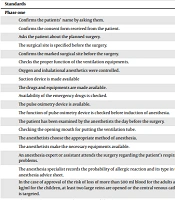
Sign In (before induction of anesthesia): confirming patient identity, procedure, and surgical site; verifying consent; and reviewing allergies, airway risks, and anticipated blood loss.
Time Out (before skin incision): confirming team introductions and roles; verifying the patient, procedure, and site; reviewing critical events; and ensuring antibiotic prophylaxis and the availability of essential imaging.
Sign Out (before the patient leaves the operating room): confirming the procedure name; verifying instrument, sponge, and needle counts; checking specimen labeling; and documenting equipment problems and key recovery concerns.
Throughout all sessions, students performed the checklist only under direct supervision. For the baseline practice assessments conducted during their routine clinical practicum, students were supervised by the research team. However, final responsibility for verifying the completeness and accuracy of the checklist remained with qualified operating room staff at all times. If an item was omitted or performed inaccurately, the supervising clinician corrected it immediately before proceeding to the next phase of surgery. This supervisory structure ensured that responsibility for patient safety was never delegated to novice learners.
3.5. Intervention Delivery and Assessment
The classroom session and daily debriefings were facilitated by the researcher (A.E.), who had received formal training in experiential learning and reflective debriefing under the supervision of senior faculty. Owing to logistical constraints, the same researcher also conducted the practice assessments. Before data collection, the observer underwent structured training in the use of the nine-item observational checklist. The observer was not blinded to the intervention or to the assessment time point (pre- vs post-intervention), as the same individual delivered the educational sessions. To partially mitigate this limitation, a standardized checklist with predefined scoring criteria was used, the observer was trained in its consistent application, and participants and clinical staff were not informed of the exact timing of the practice observations to reduce reactive behavior. Nevertheless, the absence of an independent, blinded assessor remains a limitation.
Several strategies were used to promote and monitor fidelity. First, all classroom sessions and debriefings were delivered using a standardized protocol and a structured guide to ensure consistency across groups. Second, the researcher (A.E.) delivered all educational sessions and supervised all debriefings, which minimized variability in instructional delivery. Third, supervising clinicians in all four hospitals received a brief orientation on the checklist scoring criteria and the expected level of student participation before the practicum began. Fourth, daily attendance records and direct observation by the research team confirmed that all sessions were delivered as planned. Fifth, the standardized observational checklist with predefined scoring criteria was applied consistently across all groups and hospitals.
3.6. Data Analysis
Statistical analyses were performed using SPSS version 16.0. The normality of the pre–post difference scores for each outcome was assessed using the Shapiro–Wilk test. The paired-samples t-test was used for outcomes with normally distributed difference scores, whereas the Wilcoxon signed-rank test was applied to outcomes with non-normally distributed difference scores. Mean within-participant differences (post-intervention minus baseline) with corresponding 95% confidence intervals (CIs) were reported for all outcomes to quantify the magnitude and precision of change. To compare the magnitude of improvement across the three outcomes, change scores were standardized as percentages of the maximum possible score and compared using the Friedman test, followed by post hoc Wilcoxon signed-rank tests with Bonferroni adjustment when a significant overall difference was observed. Effect sizes were reported for the paired comparisons. All tests were two-sided, and P < 0.05 was considered statistically significant.
Clustering by training group, hospital, or surgical team was not accounted for in the analysis. Groups were formed solely for logistical scheduling and were not based on student characteristics, baseline ability, or prior knowledge. All groups received an identical standardized intervention with the same content, duration, supervision, and assessment procedures, thereby minimizing between-group variability.
3.7. Ethical Considerations
The study was approved by the Ethics Committee of the School of Nursing and Midwifery, Isfahan University of Medical Sciences (Approval No. IR.MUI.NUREMA.REC.1404.136). Written informed consent was obtained from all participants after the study's purpose and procedures were explained. Participation was voluntary, and participants were permitted to withdraw at any time without academic consequences.
The Ethics Committee waived the requirement for individual patient consent because the educational intervention was integrated into routine clinical care, students performed the checklist only under the direct supervision of qualified staff, and no additional procedures or risks were introduced. Final responsibility for checklist accuracy remained with qualified operating room staff at all times.
4. Results
4.1. Participants
All 40 eligible students completed the study and were included in the final analysis; no participant withdrew or had missing outcome data. Participants' demographic characteristics are presented in Table 1. None of the participants had received prior formal training on the WHO SSC, and none reported prior clinical exposure to the SSC outside formal training, as all were at the beginning of their clinical practicum.
Table 1.
Demographic Characteristics of the Study Participants (N = 40) a
| Variables | Values |
|---|---|
| Age (years), mean ± SD | 21.25 ± 2.44 |
| Sex, No. (%) | |
| Female | 26 (65.0) |
| Male | 14 (35.0) |
| Prior SSC training, No. (%) | |
| Yes | 0 (0) |
| No | 40 (100) |
a Abbreviations: SD, standard deviation.
Attendance was recorded daily during the classroom session and the four-day clinical practicum. Of the 40 enrolled students, 39 attended all scheduled sessions, and one student missed a single clinical session, for which a make-up session with the same timing and content as the regular sessions was provided. No participant missed more than one session or was lost to follow-up, yielding an attrition rate of 0%.
4.2. Preliminary Analyses
Normality of the pre–post difference scores was assessed using the Shapiro–Wilk test. The difference scores for knowledge were normally distributed (W = 0.965, P = 0.253), whereas those for attitude (W = 0.922, P = 0.009) and practice (W = 0.837, P < 0.001) were not. Accordingly, a paired-samples t-test was used for knowledge, and the Wilcoxon signed-rank test was used for attitude and practice.
Item analysis of the 15 knowledge questions was conducted using baseline pre-intervention data (N = 40). Item difficulty ranged from 42% to 82%, with three items classified as easy (> 75%), eight as moderate (55 – 75%), and four as relatively difficult (< 55%). Discrimination indices, calculated using the high-low group method (top 27% vs bottom 27%), ranged from 0.18 to 0.46; 14 of the 15 items exceeded the acceptable threshold of 0.20, whereas one item showed borderline discrimination (0.18).
4.3. Main Results
4.3.1. Knowledge
Knowledge scores increased significantly after the WBL intervention. The mean knowledge score increased from 7.87 ± 2.15 at baseline to 13.23 ± 1.69 after the intervention, corresponding to a mean within-participant increase of 5.35 points (95% CI, 4.67 to 6.03). The median (Q1–Q3) knowledge score increased from 8 (6 – 9) at baseline to 14 (12 – 15) after the intervention. This improvement was statistically significant and was associated with a large effect size (paired t-test, Cohen’s d = 2.53, P < 0.001) (Table 2).
Table 2.
Comparison of Knowledge, Attitude, and Practice Scores Before and After the Educational Intervention a
| Outcome | Before Mean ± SD | Before Median (IQR) | After Mean ± SD | After Median (IQR) | Mean Difference (95% CI) | Effect Sizeb | Test | P-Value |
|---|---|---|---|---|---|---|---|---|
| Knowledge | 7.87 ± 2.15 | 8 (6 – 9) | 13.23 ± 1.69 | 14 (12 – 15) | 5.35 (4.67 to 6.03) c | Cohen's d = 2.53 | Paired-Samples t test | < 0.001 |
| Attitude | 41.55 ± 5.17 | 43 (41 – 45) | 45.23 ± 4.36 | 46.5 (44 – 48) | 3.50 (2.00 to 5.00) d | r = 0.59 | Wilcoxon | < 0.001 |
| Practice | 10.53 ± 1.91 | 10 (9 – 12) | 26.08 ± 1.05 | 26 (25 – 27) | 16.00 (15.00 to 16.50) d | r = 0.87 | Wilcoxon | < 0.001 |
a Abbreviations: Q1–Q3, first and third quartiles (interquartile range); SD, standard deviation; IQR, interquartile range; CI, confidence interval.
b Effect sizes: Cohen’s d for the Paired-Samples t test; r = |Z|/√N for the Wilcoxon signed-rank test, where N represents the total number of participants (N = 40). Tied observations were assigned average ranks, and zero differences were excluded from the Z calculation by the statistical software.
c For knowledge, the mean difference and 95% CI (Paired-Samples t test) are reported.
d For attitude and practice, the median difference and 95% CI were calculated using the Hodges-Lehmann estimator, consistent with the Wilcoxon signed-rank test.
4.3.2. Attitude
Students demonstrated significantly more positive attitudes toward the SSC after the intervention. The median (IQR) attitude score increased from 43 (41 – 45) at baseline to 46.5 (44 – 48) after the intervention, with a Hodges-Lehmann median difference of 3.50 (95% CI, 2.00 to 5.00). This improvement was statistically significant, with a moderate-to-large effect size (Wilcoxon signed-rank test, r = 0.59, P < 0.001) (Table 2).
After the intervention, 2 participants (5%) achieved the maximum attitude score of 50. Although baseline attitude scores were relatively high (mean = 41.55 out of 50), the intervention was still associated with a statistically significant improvement, indicating that the instrument was sufficiently sensitive to detect meaningful change.
4.3.3. Practice
The most pronounced improvement was observed in students’ actual practice of the SSC. The median (IQR) practice score increased from 10 (9 – 12) at baseline to 26 (25 – 27) after the intervention, with a Hodges-Lehmann median difference of 16.00 (95% CI, 15.00 to 16.50). This improvement was statistically significant and was associated with a large effect size (Wilcoxon signed-rank test, r = 0.87, P < 0.001) (Table 2). Notably, all participants had higher practice scores after the intervention than at baseline.
After the intervention, 19 participants (47.5%) achieved the maximum practice score of 27, indicating a ceiling effect.
4.4. Comparison of Changes Across Outcome Domains
Because knowledge, attitude, and practice are distinct constructs with different scoring ranges, directly comparing their absolute improvements would be inappropriate. Therefore, change scores were standardized as percentages of the maximum possible score for each scale. This standardization allows comparison of the relative magnitude of educational gain within each domain without implying direct equivalence among the constructs. Using these standardized change scores, the Friedman test revealed a statistically significant difference in the magnitude of improvement across the three outcomes (χ² = 64.314, df = 2, P < 0.001; Table 3). Practice showed the greatest improvement (mean rank = 2.89), followed by knowledge (mean rank = 2.01) and attitude (mean rank = 1.10).
Table 3.
Comparison of Change Scores Among Knowledge, Attitude, and Practice (Friedman Test) a
| Domain | Mean Rank |
|---|---|
| Attitude | 1.10 |
| Knowledge | 2.01 |
| Practice | 2.89 |
| Test | Value |
| Friedman χ² | 64.314 |
| Degrees of freedom | 2 |
| P | < 0.001 |
| Kendall’s W b | 0.804 |
a The Friedman test was used to compare the magnitude of change across the three outcomes; mean ranks are presented for each domain.
b Kendall’s W, calculated as W = χ²/[N × (k − 1)] with N = 40 and k = 3, was 0.804, indicating a strong effect.
Post hoc pairwise comparisons using Wilcoxon signed-rank tests with Bonferroni correction revealed significant differences between all three outcome domains (Table 4; all adjusted P < 0.001). Specifically, the improvement in practice was significantly greater than that in both knowledge and attitude, and the improvement in knowledge was significantly greater than that in attitude. These pairwise comparisons were associated with large effect sizes (r = 0.77 to 0.87).
Table 4.
Pairwise Comparisons of Change Scores Among Knowledge, Attitude, and Practice Domains Using the Wilcoxon Signed-Rank Test with Bonferroni Correction a
| Comparison | Zb | Adjusted Pc | Effect Size (r)d |
|---|---|---|---|
| Knowledge vs. Attitude | −5.216 | < 0.001 | 0.82 |
| Knowledge vs. Practice | −4.893 | < 0.001 | 0.77 |
| Attitude vs. Practice | −5.512 | < 0.001 | 0.87 |
a Pairwise comparisons were performed using the Wilcoxon signed-rank test with Bonferroni correction.
b Z = standardized test statistic. Tied observations were assigned average ranks, and zero differences were excluded from the Z calculation by the statistical software.
c Adjusted P values are reported. Exact adjusted P values based on Z statistics were approximately 5.7 × 10⁻⁷, 3.1 × 10⁻⁶, and 1.1 × 10⁻⁷, respectively.
d The effect size r was calculated as r = |Z|/√N (N = 40).
5. Discussion
5.1. Principal Findings
This quasi-experimental study demonstrated that a theory-informed WBL program significantly improved operating room students' knowledge, attitude, and practice regarding the WHO SSC, with the largest gains observed in practice. This pattern aligns with evidence that workplace-embedded education particularly strengthens procedural skills (17, 18). The pronounced improvement in practice likely reflects the design of the intervention, which linked theoretical instruction with authentic, supervised clinical experience. Because SSC implementation inherently requires teamwork, communication, and situational awareness, the WBL approach appeared to foster these competencies within the real clinical context in which they must be applied. This level of integration may be difficult to achieve through classroom instruction alone, as suggested by prior evidence on the limitations of didactic teaching for practical skills (13, 14).
The findings of this study align with Kolb's Experiential Learning Theory. The program guided students through repeated experiential learning cycles: they engaged in real checklist implementation, reflected on these experiences through structured debriefings using Gibbs' Reflective Cycle, and then applied refined approaches in subsequent clinical encounters. This iterative process of action, reflection, and feedback likely contributed to the observed gains, particularly in the practice domain, in which repeated hands-on engagement is essential. The large effect size for practice (r = 0.87) is consistent with this interpretation, suggesting a meaningful experiential contribution, although observer-based assessments and the ceiling effect may have influenced the magnitude of this estimate.
The differential improvement, with practice outperforming both knowledge and attitude, is noteworthy. Procedural skills respond robustly to supervised, repetitive practice with immediate feedback, which are core features of WBL. Furthermore, the ceiling effect observed in practice (47.5% achieving the maximum score) is clinically expected, as the WHO SSC is a finite, criterion-referenced checklist. Once students master these defined safety steps, reaching the maximum score reflects a desirable educational outcome rather than merely a measurement artifact.
In contrast, attitudes evolve gradually and are shaped by sustained professional socialization and deeply held values, consistent with models of attitude formation in health professions education (24, 25). Thus, the smaller yet significant gain in attitude likely reflects the nature of attitudinal learning. Additionally, the relatively high baseline scores (mean = 41.55 out of 50) indicate that students already held positive perceptions of the SSC before the intervention, leaving less room for improvement and potentially creating a ceiling effect. Social desirability bias may also have influenced self-reported attitudes at baseline, potentially inflating initial scores and further constraining the observable change. Future studies may benefit from attitude measures with a wider response range or from alternative assessment methods.
Ultimately, the significant gains observed across both domains, despite these ceiling constraints, underscore the effectiveness of the intervention. Moreover, the large knowledge gain (Cohen's d = 2.53) suggests that coupling a focused classroom session with immediate clinical application reinforced both retention and practical relevance. Although the intervention was relatively brief, the high intensity of 1:1 supervision and the immediate application of theory to clinical practice compensated for its short duration, facilitating rapid acquisition of checklist competencies.
5.2. Comparison with Previous Studies
The present findings are consistent with, and extend, the growing body of literature on work-based and experiential learning in clinical education. Previous studies have shown that learning in authentic clinical environments improves students' engagement, confidence, and integration of theory with practice (17, 26). Our study contributes to this evidence by demonstrating that a theory-driven WBL model can produce significant, measurable improvements in objective educational outcomes specifically related to patient safety practices. However, these previous studies differed in design, use of control groups, and outcome measures, which limits direct comparability. Specifically, several of the studies cited above used single-group or nonrandomized designs, which share the limitations of the present study, including vulnerability to selection bias, history effects, and maturation. In contrast, randomized controlled trials, such as that by Hosseinpour et al. (20), provide stronger evidence for causal inference but may differ in context, population, and intervention intensity.
The considerable improvement in practice is consistent with research emphasizing the value of supervised clinical experience and formative feedback. Baboolal and Singaram highlighted that workplace-based assessment promotes clinical competence through continuous oversight (18). Similarly, Hosseinpour et al. and Mirbagher Ajorpaz et al. reported that mentoring and supervised practice models enhanced perioperative skills among operating room students (20, 21). Although the specific designs of these interventions varied, they shared essential educational elements with the present program, such as authentic clinical tasks, active learner participation, and structured feedback, which may explain their comparable benefits. Furthermore, our findings extend the work of Ilorah et al., who reported an association between SSC knowledge and positive attitudes among healthcare professionals (27).
Overall, these results indicate that a single, integrated educational program was associated with simultaneous improvements in students' knowledge, attitude, and practice. However, given the absence of a control group, these findings should be interpreted as preliminary rather than as evidence that this approach is superior to others. Instead, they suggest that embedding patient safety training within real clinical workflows may be a promising strategy that warrants further rigorous evaluation in randomized controlled trials.
5.3. Limitations and Future Research
Several limitations warrant consideration. First, the single-group pretest-posttest design without a concurrent control group, together with the lack of prospective registration, limits causal inference; history and maturation effects cannot be fully separated from the effects of the intervention. Additionally, no a priori sample size calculation was performed, and clustering by training group was not accounted for in the analysis, although groups were formed solely for logistical scheduling and received an identical standardized intervention.
Second, the same researcher who delivered the educational sessions also conducted the observational assessments, and the assessor was not blinded to the intervention or to the assessment time point. This dual role may have introduced observer expectancy or allegiance bias. Several measures were implemented to minimize this risk, including a standardized observational checklist and structured observer training. Nevertheless, the absence of a fully independent, blinded assessor remains a limitation.
Third, direct observation of practice may have prompted a Hawthorne effect, potentially inflating practice scores, and the use of identical pretest and posttest measures may have produced a testing effect. Although observations were embedded within the routine workflow, assessment timing was concealed, and repeated observations promoted habituation, residual Hawthorne and testing effects cannot be entirely excluded. Additionally, ceiling effects may have limited the observed improvements: 47.5% of participants reached the maximum practice score, and baseline attitude scores were relatively high (mean = 41.55 out of 50). These factors may have attenuated the detectable effect sizes for practice and attitude.
Fourth, the follow-up period was short, and patient outcomes were not measured. Therefore, the sustainability of the improvements and their impact on clinical care remain unknown. Importantly, improved student practice does not necessarily translate into improved patient outcomes, as patient benefit depends on multiple factors beyond checklist performance. Future studies should incorporate patient-level outcomes. Moreover, the single-institution setting restricts generalizability, and all instruments were researcher-developed, which may limit comparability with other studies. Additionally, the sample size (N = 40) was insufficient for robust factor analysis; thus, the factor structure of the attitude questionnaire requires confirmation using confirmatory factor analysis in future studies with larger samples.
Fifth, although several strategies were used to promote fidelity (standardized protocols, a single lead researcher, supervisor orientation, and daily attendance records), no formal fidelity checklist was used to quantitatively assess adherence. Finally, self-reported knowledge and attitude measures may have been influenced by social desirability bias.
Despite these limitations, the core elements of the intervention, namely experiential learning, structured reflection, and continuous feedback, are broadly transferable across health professions education. Future multicenter randomized trials with larger samples, longer follow-up, blinded outcome assessment, and patient-level outcomes are needed to confirm these findings and to examine the transition from supervised to autonomous checklist competence. Embedding theory-informed WBL in operating room curricula holds promise for advancing surgical safety competencies.
5.4. Conclusions
This study suggests that a theory-informed WBL program grounded in experiential and reflective learning principles was associated with significant improvements in operating room students' knowledge, attitude, and practice regarding the WHO SSC. However, given the single-group design and the potential risk of bias, these findings should be considered preliminary. The results underscore the value of combining classroom instruction with structured, supervised practice and feedback, an approach that may help improve checklist adherence and SSC performance among future healthcare professionals. Nevertheless, patient outcomes were not measured in this study, and it remains unknown whether improved student practice translates into patient benefit. Future research incorporating patient-level outcomes is needed to address this gap.