Dear Editor,
Psoriasis is a chronic inflammatory condition, characterized by exaggerated keratinocyte proliferation. Although the etiology of this disease is not completely understood, current evidence propose that alterations in T-cell subpopulations and abnormality of their cytokine expression levels may contribute to the disease pathogenesis (1). Cytokines represent a large group of proteins, which can occur in soluble and membrane-bound form and play important roles in all aspects of the immune response. The effects of cytokines are mediated by binding to cell surface receptors. It is not surprising, therefore, that targeting cytokines and cytokine receptors would lead to new strategies for treating psoriasis. This aim was achieved through the use of biologics. They have been designed to distinctively target the molecular pathways, engaged in the pathogenesis of different autoimmune diseases including psoriasis (2). Biologics that target cytokines and their receptors consist of genetically engineered monoclonal antibodies, soluble recombinant cytokine receptors and fusion proteins. They work by interrupting the inflammatory response that is occurring in patients with psoriasis. These blocking agents have revolutionized the treatment of psoriasis and other autoimmune disorders. Nonetheless, they have several limitations (3). First, they only have parenteral administration. Second, several patients are unresponsive to these therapeutic agents. Third, their short-lived effect opens the possibility of disease progression, if the medication is stopped for a long period. The high cost and the increased risk of infections or cancers, due to systemic immunosuppression, are the other restricting factors, in the use of biologics. Another important issue, regarding the biologics, is that these high molecular weight drugs, which attach to cell surface molecules or to secretory proteins, only restrain or modulate the intercellular pathways, with no influence upon the intracellular message signaling.
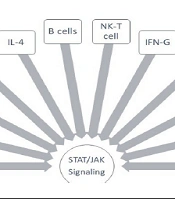
Due to the limitations mentioned above, the scientific community initiated a major effort to discover novel psoriasis drugs that target essential signals of activated cells. This objective was reached by using small molecules that block the intracellular cytokine signaling pathways, especially janus kinases (JAKs) inhibitors. The JAKs are a family of four tyrosine kinases (JAK1, JAK2, JAK3 and TYK2) that selectively interact non-covalently with cytoplasmic domains of cytokine receptor subunits and phosphorylate tyrosine residues, on signaling proteins. The JAKs are expressed in a variety of cell types and play an important role in both innate and adaptive immune responses. It is now well established that these adaptor molecules play a major role in human physiology. Nonetheless, disturbances in JAK signaling pathways lead to different human diseases, such as autoimmune diseases and cancers. Aberrations in JAK kinase activity could result in disease states, via disruption of the normal cytokine network and cellular responses. Tofacitinib (a JAK1 and JAk3 inhibitor) and ruxolitinib (a JAK1 and JAK2 inhibitor) are the most broadly investigated JAK antagonists, in psoriasis (4). They block multiple proinflammatory cytokines signaling pathways and inhibit the unbalanced activation of the inflammatory cascade in psoriasis. For instance, tofacitinib interferes with the expression of IL-23R, IL-17A, IL-17F and IL-22. It must be mentioned that IL-23 is the major stimulus for promoting the differentiation of Th17 cells, which is a critical driving factor in the immunopathogenesis of psoriasis. Moreover, it is a major inducer of IL-17A and IL-22, which appear to be more strictly a product of Th17 cells. Therefore, suppresion of IL-23R expression inhibits Th17 cell differentiation and the effector functions mediated by these cells. Psoriasis is also a Th1-mediated autoimmune disease and several studies have shown that tofacitinib inhibition of cytokine receptor signalling, in T cells, can finally result in suppression of IL-12 and IFN-γ that are critical in Th1 differentiation and functions.
Ruxolitinib is another JAK inhibitor that can diminish the expression of IFN-γ (Th1) cytokine and IL-17, IL-21 and IL-22 (Th17) cytokines. All of these cytokines contribute to inflammatory reactions and elevated levels of their proteins and gene transcripts are found in serum and skin lesions of patients with psoriasis. Ruxolitinib also influences on dendritic cells (DCs) biology and reduces DC-mediated T-cell responses (5).
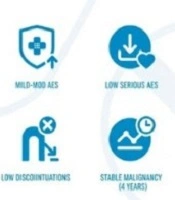
The results of different clinical trials, in patients with psoriasis, indicate that appropriate use of JAK inhibitors can result in remission of the disease and promote clinical improvement. These positive health effects depend on different factors, such as route of administration (oral, as the non-invasive administration route), target specificity and technical aspects, like manufacturing processes (6). Nonetheless, these medications can also elicit side-effects, such as liver enzyme, creatinine and serum lipid elevations, increased incidence of several infections or cancers (7).
In conclusion, the concept of general and non-specific immunosuppression, as a first-line
therapy, for psoriasis, should be revised because modalities targeting intracellular key proteins have changed the landscape of treatment of autoimmune diseases, including psoriasis.
It seems that, in near future, several some of these therapeutic agents may be the first drugs to add in patients with psoriasis, who are intolerant or do not respond to traditional systemic immunosuppressive agents. However, our understanding of the mechanism of action of JAK inhibitors is not completely clear and their exact role will require to be described in real-world clinical practice.