Journal of Semnan University of Medical Sciences
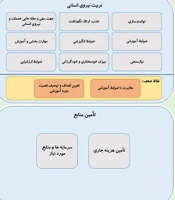
Image Credit:Koomesh
Outline
Legal and Regulatory Review of Training and Employing Midlevel Dental Providers in Iran
Authors

Abstract
Background: The training of various dental auxiliaries has been the result of efforts to address the issue of access to dental services in Iran.
Objectives: To examine the laws governing the training and employment of dental auxiliaries in Iran and to identify their strengths and weaknesses.
Methods: This qualitative study analyzed 22 documents in five stages, utilizing framework analysis based on the 2000 World Health Organization report.
Results: The strengths of the laws enacted in stewardship function include: establishing regulations for addressing violations; ensuring compliance with the law; setting prohibitions; defining responsibilities and enforcement; repealing outdated laws; refining legislation; delegating authority; fulfilling needs; enhancing access; promoting equity; securing human resources; providing educational infrastructure; standardizing education; defining hierarchies and fostering intersectoral collaboration. Additionally, the weaknesses of these laws include contradictory policies, extension of laws, and lack of adherence to the regulations. In the area of human resource training, the strengths include having regulations for service orientation and relocation, recruitment and retention of personnel, skill development, educational and motivational standards, evaluation, and needs assessment. However, weaknesses include inconsistencies in educational standards and the defined goals of the training program. The laws in the service delivery domain exhibit strengths such as prioritizing and supplying human resources for both urban and rural areas, emphasizing preventive services, and facilitating access. Nevertheless, weaknesses in this domain involve the nature of assigned tasks and the priorities set. In the area of resource production, strengths include identifying the necessary resources for program implementation and implementing cost-saving measures.
Conclusion: This study highlights the strengths and weaknesses of the laws governing dental auxiliaries in Iran. It suggests revising contradictory laws, enhancing supervision, clarifying legal distinctions, defining vision and achievable goals, involving stakeholders in legislative processes, and prioritizing initiatives.
Highlights
References
- 1.Singh A, Purohit BM. Addressing oral health disparities, inequity in access and workforce issues in a developing country. Int Dent J. 2013;63(5):225-9. [PubMed ID:24074015]. [PubMed Central ID:PMC9375013]. https://doi.org/10.1111/idj.12035.
- 2.Dyer TA, Brocklehurst P, Glenny AM, Davies L, Tickle M, Issac A, et al. Dental auxiliaries for dental care traditionally provided by dentists. Cochrane Database Syst Rev. 2014;2014(8):CD010076. [PubMed ID:25140869]. [PubMed Central ID:PMC10667627]. https://doi.org/10.1002/14651858.CD010076.pub2.
- 3.Nash DA, Friedman JW, Mathu-Muju KR, Robinson PG, Satur J, Moffat S, et al. A review of the global literature on dental therapists. Community Dent Oral Epidemiol. 2014;42(1):1-10. [PubMed ID:23646862]. https://doi.org/10.1111/cdoe.12052.
- 4.Wright JT, Graham F, Hayes C, Ismail AI, Noraian KW, Weyant RJ, et al. A systematic review of oral health outcomes produced by dental teams incorporating midlevel providers. J Am Dent Assoc. 2013;144(1):75-91. [PubMed ID:23283929]. https://doi.org/10.14219/jada.archive.2013.0017.
- 5.Phillips E, Shaefer HL. Dental therapists: evidence of technical competence. J Dent Res. 2013;92(7 Suppl):11S-5S. [PubMed ID:23690358]. https://doi.org/10.1177/0022034513484333.
- 6.Sheiham A, Alexander D, Cohen L, Marinho V, Moyses S, Petersen PE, et al. Global oral health inequalities: task group--implementation and delivery of oral health strategies. Adv Dent Res. 2011;23(2):259-67. [PubMed ID:21490238]. https://doi.org/10.1177/0022034511402084.
- 7.Rodriguez TE, Galka AL, Lacy ES, Pellegrini AD, Sweier DG, Romito LM. Can midlevel dental providers be a benefit to the American public? J Health Care Poor Underserved. 2013;24(2):892-906. [PubMed ID:23728055]. https://doi.org/10.1353/hpu.2013.0084.
- 8.Khoshnevisan MH, Ghasemianpour M, Samadzadeh H, Baez RJ. Oral Health Status and Healthcare System in I.R. Iran. J Contemporary Med Sci. 2018;4(3).
- 9.Shoaee S, Saeedi Moghaddam S, Masinaei M, Sofi-Mahmudi A, Hessari H, Heydari MH, et al. Trends in dental caries of deciduous teeth in Iran: a systematic analysis of the national and sub-national data from 1990 to 2017. BMC Oral Health. 2022;22(1):634. [PubMed ID:36564764]. [PubMed Central ID:PMC9789600]. https://doi.org/10.1186/s12903-022-02634-z.
- 10.Shoaee S, Masinaei M, Saeedi Moghaddam S, Sofi-Mahmudi A, Hessari H, Shamsoddin E, et al. National and Subnational Trend of Dental Caries of Permanent Teeth in Iran, 1990-2017. Int Dent J. 2024;74(1):129-37. [PubMed ID:37574408]. [PubMed Central ID:PMC10829359]. https://doi.org/10.1016/j.identj.2023.07.012.
- 11.Kiadaliri AA, Hosseinpour R, Haghparast-Bidgoli H, Gerdtham UG. Pure and social disparities in distribution of dentists: a cross-sectional province-based study in Iran. Int J Environ Res Public Health. 2013;10(5):1882-94. [PubMed ID:23648443]. [PubMed Central ID:PMC3709354]. https://doi.org/10.3390/ijerph10051882.
- 12.Bayat F, Vehkalahti MM, Akbarzadeh A, Monajemi F. Varying Manpower Alters Dental Health in a Developing Health Care System. Int Dent J. 2022;72(3):360-5. [PubMed ID:34134900]. [PubMed Central ID:PMC9275189]. https://doi.org/10.1016/j.identj.2021.04.003.
- 13.Goldsmith L. Using Framework Analysis in Applied Qualitative Research. Qual Rep. 2021;26(6). https://doi.org/10.46743/2160-3715/2021.5011.
- 14.Singh PK. Job satisfaction among dental therapists in South Africa. J Public Health Dent. 2014;74(1):28-33. [PubMed ID:22882168]. https://doi.org/10.1111/j.1752-7325.2012.00363.x.
- 15.Kruger E, Smith K, Tennant M. Non-working dental therapists: opportunities to ameliorate workforce shortages. Aust Dent J. 2007;52(1):22-5. [PubMed ID:17500160]. https://doi.org/10.1111/j.1834-7819.2007.tb00461.x.
- 16.Sodo PP, Malele-Kolisa Y, Moola A, Yengopal V, Nemutandani S, Jewett S. Exploring reasons why South African dental therapists are leaving their profession: A theory-informed qualitative study. PLoS One. 2023;18(10):e0293039. [PubMed ID:37883391]. [PubMed Central ID:PMC10602277]. https://doi.org/10.1371/journal.pone.0293039.
- 17.Nomura Y, Okada A, Miyoshi J, Mukaida M, Akasaka E, Saigo K, et al. Willingness to Work and the Working Environment of Japanese Dental Hygienists. Int J Dent. 2018;2018:2727193. [PubMed ID:30224920]. [PubMed Central ID:PMC6129321]. https://doi.org/10.1155/2018/2727193.
- 18.Reinders JJ, Krijnen WP, Onclin P, van der Schans CP, Stegenga B. Attitudes among dentists and dental hygienists towards extended scope and independent practice of dental hygienists. Int Dent J. 2017;67(1):46-58. [PubMed ID:27678334]. [PubMed Central ID:PMC9376707]. https://doi.org/10.1111/idj.12254.
- 19.Mohammadpour M, Bastani P, Brennan D, Ghanbarzadegan A, Bahmaei J. Oral health policymaking challenges in Iran: a qualitative approach. BMC Oral Health. 2020;20(1):158. [PubMed ID:32487152]. [PubMed Central ID:PMC7268740]. https://doi.org/10.1186/s12903-020-01148-w.
- 20.World Health Organization. The world health report 2000: health systems: improving performance. Geneva, Switzerland: World Health Organization; 2000 Contract No.: Document Number|.
- 21.Glick M, Williams DM. FDI Vision 2030: Delivering Optimal Oral Health for All. Int Dent J. 2021;71(1):3-4. [PubMed ID:33478782]. [PubMed Central ID:PMC9188664]. https://doi.org/10.1016/j.identj.2020.12.026.
- 22.World Health Organization. Regional Office for South-East Asia. Social determinants of health. 2008; New Delhi. WHO Regional Office for South-East Asia; 2008.
- 23.Candell A, Engstrom M. Dental hygienists' work environment: motivating, facilitating, but also trying. Int J Dent Hyg. 2010;8(3):204-12. [PubMed ID:20624190]. https://doi.org/10.1111/j.1601-5037.2009.00420.x.
- 24.Chen D, Hayes M, Holden A. A global review of the education and career pathways of dental therapists, dental hygienists and oral health therapists. Br Dent J. 2021;230(8):533-8. [PubMed ID:33893429]. https://doi.org/10.1038/s41415-021-2836-z.
- 25.Stenberg E, Milosavljevic A, Gotrick B, Lundegren N. Continuing professional development in general dentistry-experiences of an online flipped classroom. Eur J Dent Educ. 2024;28(3):825-32. [PubMed ID:38654701]. https://doi.org/10.1111/eje.13013.
- 26.Hopcraft M, Martin-Kerry JM, Calache H. Dental therapists' expanded scope of practice in Australia: a 12-month follow-up of an educational bridging program to facilitate the provision of oral health care to patients 26+ years. J Public Health Dent. 2015;75(3):234-44. [PubMed ID:25790219]. https://doi.org/10.1111/jphd.12094.
- 27.Roberts MJ, Hsiao W, Berman P, Reich MR. Getting health reform right: a guide to improving performance and equity. Oxford, England: Oxford University Pres; 2008.
- 28.Galloway J, Gorham J, Lambert M, Richards D, Russell D, Russell I, et al. The professionals complementary to dentistry: systematic review and synthesis. London, England: University College London; 2002.
- 29.Sheikh K, Josyula LK, Zhang X, Bigdeli M, Ahmed SM. Governing the mixed health workforce: learning from Asian experiences. BMJ Glob Health. 2017;2(2):e000267. [PubMed ID:28589031]. [PubMed Central ID:PMC5435263]. https://doi.org/10.1136/bmjgh-2016-000267.
- 30.McCombs GB, Gadbury-Amyot CC, Wilder RS, Skaff KO, Lappan Green M. Dental hygienists' contributions to improving the nation's oral health through school-based initiatives from 1970 through 1999: a historical review. J Dent Hyg. 2007;81(2):52. [PubMed ID:17570176].
- 31.Shiffman J, Smith S. Generation of political priority for global health initiatives: a framework and case study of maternal mortality. Lancet. 2007;370(9595):1370-9. [PubMed ID:17933652]. https://doi.org/10.1016/S0140-6736(07)61579-7.
- 32.Levesque JF, Harris MF, Russell G. Patient-centred access to health care: conceptualising access at the interface of health systems and populations. Int J Equity Health. 2013;12:18. [PubMed ID:23496984]. [PubMed Central ID:PMC3610159]. https://doi.org/10.1186/1475-9276-12-18.
Copyright
© 2025, Author(s). This open-access article is available under the Creative Commons Attribution 4.0 (CC BY 4.0) International License (https://creativecommons.org/licenses/by/4.0/), which allows for unrestricted use, distribution, and reproduction in any medium, provided that the original work is properly cited.
Similar Articles
Knowledge, attitudes, and practices toward legal issues among iranian nurses
Araghian Mojarad F, Amoui F, Hossein Nataj A, Heidari Gorji MA, Jafari H, et al. Knowledge, attitudes, and practices toward legal issues among iranian nurses. J Nurs Midwifery Sci. 2022;9(4):e134532. doi: https://doi.org/10.4103/jnms.jnms_165_21
Knowledge, attitudes, and practices toward legal issues among iranian nurses
Molania T, Salehabadi N, Zahedpasha S, Yazdani Charati J, Imani B, et al. Knowledge, attitudes, and practices toward legal issues among iranian nurses. J Nurs Midwifery Sci. 2022;9(4):e134525. doi: https://doi.org/10.4103/jnms.jnms_115_21
Knowledge and attitude toward AIDS among people admitted to the Qazvin faculty of Dentistry (2014)
zarabadipour M, Borhan Mojabi K, Saboor Bagherzade B, Mozafari F. Knowledge and attitude toward AIDS among people admitted to the Qazvin faculty of Dentistry (2014). J Inflamm Dis. 2024;22(1):e156076. doi:
Attitude of dentistry students at clinical sections of Qazvin Medical University towards the application of basic sciences courses
Alipour Haydari M, Hasanzadeh G, HajiSeied Javadi Z. Attitude of dentistry students at clinical sections of Qazvin Medical University towards the application of basic sciences courses. J Inflamm Dis. 2024;6(2):e154875. doi:
Evaluation of clinical skills in Qazvin Faculty of Dentistry through the students and teachers’ points of view
Borhan Mojabi K. Evaluation of clinical skills in Qazvin Faculty of Dentistry through the students and teachers’ points of view. J Inflamm Dis. 2024;6(2):e154877. doi:
- Scopus by DOI: 0
Last Update: 2 weeks ago
- Scopus by Title: 0
Last Update: 2 weeks ago
- Scopus by Title (Ref): 0
Last Update: 2 weeks ago
- CrossRef: 0
Last Update: 6 days ago
- OpenAlex: 0
Last Update: 1 day ago
- OpenCitations: 0
Last Update: 4 days ago
