Journal of Semnan University of Medical Sciences
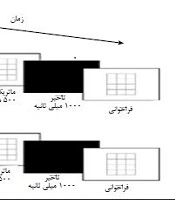
Image Credit:Koomesh
Outline
The effect of simultaneous and sequential arrays coding on the consolidation of working and long-term visual memory in children: the approach of the specific encoding principle in memory representation
Authors

Abstract
Background: Arrays are items that are presented in an orderly manner for encoding into memory, and delivering visual arrays simultaneously or sequentially has a different effect on the amount of memory encoding and consolidation.
Objectives: The research aims to investigate the effect of coding simultaneous and sequential arrays on the consolidation of working and long-term visual memory in children, and understand the principle of specific memory coding.
Methods: This semi-experimental research was conducted in the field with a practical purpose. Forty students aged 10 to 12 from three cities in Tehran, studying in schools in the second half of 1401 - 1402, were divided into two experimental groups: one with simultaneous array presentation (20 people) and the other with sequential array presentation (20 people). A visual-spatial task was used to measure the memory of simultaneous and sequential arrays (Carti et al., 2015). The research included coding steps (147 attempts executed in three blocks of 49 attempts for each group) and memory tests. The first test involved performing 49 attempts simultaneously, while the second test involved performing 49 attempts consecutively.
Results: The analysis of variance with repeated measures in the coding phase showed that simultaneous array presentation led to better memory retention and greater working memory consolidation compared to sequential array presentation. Additionally, in the memorization stages, the groups that coded simultaneously performed better on the simultaneous array test, while the groups that coded sequentially performed better on the sequential array test.
Conclusion: Children's visual working memory is consoled by practice in the encoding stage, but the degree of consolidation of simultaneous and sequential arrays is different. Also, visual array recall is more effective when the encoding conditions are similar to the recall conditions. These findings support the principle of memory-specific encoding.
Highlights
References
- 1.Baddeley A. Working memory (vol. 11). Oxford: Oxford University Press, Clarendon Press; 1986. Available from: https://legacy.cs.indiana.edu/~port/HDphonol/Baddely. wkg.mem.Science.pdf.
- 2.Sahaf R, Rassafiani M, Shamsipour Dehkordi P, Shams A, Dana A. [Effect of Sleep and Consciousness on Consolidation of Implicit motor memory among Youth, Middle- aged and Elderly]. Koomesh. 2022;25(1):38-47. Persian.
- 3.Turvey MT. On peripheral and central processes in vision: inferences from an information-processing analysis of masking with patterned stimuli. Psychol Rev. 1973;80(1):1- 52. [PubMed ID:4689202]. https://doi.org/10.1037/ h0033872.
- 4.Vogel EK, Woodman GF, Luck SJ. The time course of consolidation in visual working memory. J Exp Psychol Hum Percept Perform. 2006;32(6):1436-51. [PubMed ID:17154783]. https://doi.org/10.1037/0096-1523.32.6.1436.
- 5.Jolicoeur P, Dell'Acqua R. The demonstration of short-term consolidation. Cogn Psychol. 1998;36(2):138-202. [PubMed ID:9721199]. https://doi.org/10.1006/cogp.1998.0684.
- 6.Cohen DA, Pascual-Leone A, Press DZ, Robertson EM. Off-line learning of motor skill memory: a double dissociation of goal and movement. Proc Natl Acad Sci U S A. 2005;102(50):18237-41. [PubMed ID:16330773]. [PubMed Central ID:PMC1312380]. https://doi.org/10.1073/ pnas.0506072102.
- 7.Zhao C, Vogel EK. Sequential encoding paradigm reliably captures the individual differences from a simultaneous visual working memory task. Atten Percept Psychophys. 2023;85(2):366-76. [PubMed ID:36624199]. [PubMed Central ID:PMC10158817]. https://doi.org/10.3758/s13414- 022-02647-4.
- 8.Lecerf T, de Ribaupierre A. Recognition in a visuospatial memory task: The effect of presentation. Europ J Cogn Psychol. 2005;17(1):47-75. https://doi. org/10.1080/09541440340000420.
- 9.Bharti AK, Yadav SK, Jaswal S. Feature Binding of Sequentially Presented Stimuli in Visual Working Memory. Front Psychol. 2020;11. https://doi.org/10.3389/ fpsyg.2020.00033.
- 10.Starr A, Srinivasan M, Bunge SA. Semantic knowledge influences visual working memory in adults and children. PLoS One. 2020;15(11):e0241110. [PubMed ID:33175852]. [PubMed Central ID:PMC7657485]. https://doi. org/10.1371/journal.pone.0241110.
- 11.Souza AS, Oberauer K. Promoting visual long-term memories: When do we learn from repetitions of visuospatial arrays? J Experim Psychol. 2022 151(12):3114.
- 12.Tulving E, Thomson DM. Encoding specificity and retrieval processes in episodic memory. Psychol Rev. 1973;80(5):352-73. https://doi.org/10.1037/h0020071.
- 13.Carretti B, Lanfranchi S, De Mori L, Mammarella IC, Vianello R. Exploring spatial working memory performance in individuals with Williams syndrome: the effect of presentation format and configuration. Res Dev Disabil. 2015;37:37-44. [PubMed ID:25460218]. https://doi.org/10.1016/j.ridd.2014.10.031.
- 14.Oi Y, Okuzumi H, Kokubun M. Visuospatial Working Memory in Individuals with Intellectual Disabilities under Simultaneous and Sequential Presentation. J Special Educ Res. 2018;7(1):1-8. https://doi.org/10.6033/specialeducation. 7.1.
- 15.Firdaus TA. Accelerating Second Language Acquisition for Effective Strategies for Student. J Pendidikan Indonesia. 2024 5(10).
- 16.Peters S, Gadgeel SM, Mok T, Nadal E, Kilickap S, Swalduz A, et al. Entrectinib in ROS1-positive advanced non-small cell lung cancer: the phase 2/3 BFAST trial. Nature Med. 2024 30(7):1923-32.
- 17.Kelso JA. Theoretical concepts and strategies for understanding perceptual-motor skill: from information capacity in closed systems to self-organization in open, nonequilibrium systems. J Exp Psychol Gen. 1992;121(3):260-1. [PubMed ID:1402697]. https://doi.org/10.1037//0096- 3445.121.3.260.
- 18.Henry LA, MacLean M. Working Memory Performance in Children With and Without Intellectual Disabilities. Am J Mental Retard. 2002;107(6). https://doi. org/10.1352/0895-8017(2002)107<0421:Wmpicw>2.0. Co;2.
- 19.Timothy DJ, Więckowski M. Borders, heritage, and memory. In: Timothy DJ, Gelbman A, editors. Routledge handbook of borders and tourism. Oxfordshire, UK: Routledge; 2022 p. 219-40.
- 20.Schuchardt K, Gebhardt M, Maehler C. Working memory functions in children with different degrees of intellectual disability. J Intellect Disabil Res. 2010;54(4):346-53. [PubMed ID:20433572]. https://doi.org/10.1111/j.1365- 2788.2010.01265.x.
- 21.Cowan N, Guitard D. Encoding colors and tones into working memory concurrently: A developmental investigation. Dev Sci. 2024;27(6):e13552. [PubMed ID:39021311]. [PubMed Central ID:PMC11489019]. https://doi.org/10.1111/desc.13552.
- 22.Román-Caballero R, Marotta A, Lupiáñez J. Target–background segregation in a spatial interference paradigm reveals shared and specific attentional mechanisms triggered by gaze and arrows. J Experim Psychol: Hum Percept Performance. 2021 47(11).
- 23.Proteau L, Carnahan H. What causes specificity of practice in a manual aiming movement: vision dominance or transformation errors? J Mot Behav. 2001;33(3):226-34. [PubMed ID:11495827]. https://doi. org/10.1080/00222890109601908.
- 24.Proteau L, Isabelle G. On the role of visual afferent information for the control of aiming movements toward targets of different sizes. J Mot Behav. 2002;34(4):367-84. [PubMed ID:12446251]. https://doi. org/10.1080/00222890209601954.
- 25.Krigolson O, Van Gyn G, Tremblay L, Heath M. Is there "feedback" during visual imagery? Evidence from a specificity of practice paradigm. Can J Exp Psychol. 2006;60(1):24-32. [PubMed ID:16615715]. https://doi. org/10.1037/cjep2006004.
- 26.Robertson S, Collins J, Elliott D, Starkes J. The Influence of Skill and Intermittent Vision on Dynamic Balance. J Mot Behav. 1994;26(4):333-9. [PubMed ID:12719190]. https:// doi.org/10.1080/00222895.1994.9941689.
- 27.Blandin Y, Toussaint L, Shea CH. Specificity of practice: interaction between concurrent sensory information and terminal feedback. J Exp Psychol Learn Mem Cogn. 2008;34(4):994-1000. [PubMed ID:18605884]. https:// doi.org/10.1037/0278-7393.34.4.994.
- 28.Reid M, Crespo M, Lay B, Berry J. Skill acquisition in tennis: research and current practice. J Sci Med Sport. 2007;10(1):1- 10. [PubMed ID:16809063]. https://doi.org/10.1016/j. jsams.2006.05.011.
Copyright
© 2025, Author(s). This open-access article is available under the Creative Commons Attribution 4.0 (CC BY 4.0) International License (https://creativecommons.org/licenses/by/4.0/), which allows for unrestricted use, distribution, and reproduction in any medium, provided that the original work is properly cited.
Similar Articles
Short-Term Memory Performance in Children with Down Syndrome: Analysis Based on Simultaneous and Sequential Array Conditions
Nazari Z, Shamsipour Dehkordi P, Hejazi Dinan P, Khalaji M. Short-Term Memory Performance in Children with Down Syndrome: Analysis Based on Simultaneous and Sequential Array Conditions. J Motor Control Learn. 2026;8(2):e166345. doi: https://doi.org/10.69107/jmcl-166345

Comparison of Working and Visual Memory in Children with and Without Dyslexia
Talepasand S, Eskandaripour M, Taghinezhad A. Comparison of Working and Visual Memory in Children with and Without Dyslexia. Zahedan J Res Med Sci. 2018;20(9):e70701. doi: https://doi.org/10.5812/zjrms.70701
Rapid stabilization of implicit motor memory after learning
Hashemi Ahooei E, Ghadiri F, Vaez Mousavi SMK. Rapid stabilization of implicit motor memory after learning. koomesh. 2017;19(3):e152898. doi:
Memory Encoding Processes in Young and Old Adults
Kuo MCC, Liu KPY, Bissett M, Wesson J, Tulliani N, et al. Memory Encoding Processes in Young and Old Adults. Arch Neurosci. 2015;2(1):e19813. doi: https://doi.org/10.5812/archneurosci.19813
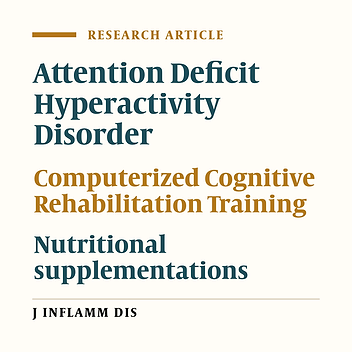
Comparison of Effectiveness of Nutrition and C-CRT on Improving Working Memory in Children With ADHD
Barzegar M, Talepasand S, Rahimian boogar I. Comparison of Effectiveness of Nutrition and C-CRT on Improving Working Memory in Children With ADHD. J Inflamm Dis. 2024;22(6):e156138. doi:
More by these authors
- Scopus by DOI: 0
Last Update: 2 weeks ago
- Scopus by Title: 0
Last Update: 2 weeks ago
- Scopus by Title (Ref): 0
Last Update: 2 weeks ago
- CrossRef: 0
Last Update: 6 days ago
- OpenAlex: 0
Last Update: 1 day ago
- OpenCitations: 0
Last Update: 4 days ago
