
1. Background
Thematically, the humanities reflect the answer to the fundamental question of “What does it mean to be human?” The humanities reveal how people have tried to construct moral, spiritual, and intellectual concepts from a world where irrationality, despair, loneliness, and death are as evident as birth, friendship, hope, and wisdom. The humanities have been described as cultivating four basic arts, including language, analysis of ideas, literary and artistic criticism, and historiography (1). Humanities education is dedicated to understanding human experiences through the regular development of insights, perspectives, critical understanding, recognition, and creativity. However, it seems that disciplines, subjects, and methods- either separately or together- cannot sufficiently define the humanities because the humanities ultimately emphasize the description, interpretation, explanation, and understanding of diversity, uniqueness, complexity, originality, and unpredictability of human beings seeking to know- and change- themselves and their world. Since the 1960s and given the sense of need for the humanities in other sciences and jobs, the scope of humanities has expanded beyond its traditional boundaries to include what is called “interdisciplinary humanities” (e.g., ethnic studies, cultural studies, media studies, science studies, technology and information, and almost general studies) (2). Medical humanities and the health humanities, as the emerging sibling, are among these interdisciplinary studies arising with social needs and problems that cannot be adequately addressed within the boundaries set by traditional disciplines and/or methods. With the emergence of modern medical schools and the teaching of medicine in a modern way, biomedical science, which was considered a source of identity and authority, was quickly replaced by old human medicine, and concerns about the dehumanization of medicine intensified so that medicine seemed to be so scattered and fragmented that there was an urgent need for someone to guide it through the desert and tie it together. The medical humanities field was formed to find a way to prevent science and commerce from taking the medicine spirit out. On the one hand, the biological approach cannot alone address various human phenomena that physicians encounter in their daily work.
The meaning of health-disease process has now shifted from a biological to an anthropological approach. In other words, the disease is defined as a social, cultural, biological, and psychological process that is socially and culturally determined by a group of humans. Medical technologies have somewhat altered the ways of thinking, pathways, algorithms of disease treatment, and even the ultimate goals of clinical care and have saved the lives of many patients. The mentality that “medical technology is a priority” leads to technology-based medicine that ignores the humanistic spirit in medical practice (3), so that empathy is gradually decreasing among medical students. In order to address this important issue, the general medicine curriculum emphasizes the importance of understanding the patient’s psychological, social, and cultural needs, as well as their pathology. Extending medical education beyond biomedical sciences and clinical skills is a key strategy in developing professional values and behaviors, including the formation of professional identity (4). Thus, in the age of the bio-psycho-social medical model, the exclusively technical-scientific approach to medical education is increasingly considered insufficient for the 21st-century physician (5). The ideal of modern medicine is to promote the humanities in medical education, cultivate medical talents with a humanistic spirit, and promote the integration of medical and scientific concepts and a medical humanistic spirit.
Art is a form of literacy and a valuable tool for meaning transmission. Also, recognition of aesthetics is a type of knowledge not exclusive to artists or a person with artistic talent and can be extended to everyone (6). Of course, this is different from the artist’s activity that leads to the production of artwork. In fact, art, by creating a real and fundamental inner transformation in human beings, leads to their conscious and free desire for the cultural values of society. According to education experts, the consequences of art in education are effective in three areas of moral values, mental cultivation and work skills, and mental and physical strengthening of individuals (7). Studies have shown that the arts can foster visual diagnostic and analytical skills (8), reduce physicians’ job exhaustion (9), and cultivate positive traits of empathy, self-efficacy, and patient-centered efficient care (9, 10).
A particular approach to looking at art is known as visual thinking strategies (VTS), developed by Abigail Hausen, a Harvard cognitive psychologist, from 1991 to 1998 (11). This teaching method begins with facilitated discussions about artistic images and is implemented in a way that positively affects teachers and students (12). So far, several studies have been conducted on the interpretation of expressive and preferably metaphorical paintings (simple to complex), and to some extent related to medicine by the VTS method and its role in medical education, being shown to be helpful in improving the personal and professional development of medical students (13). In this study, VTS focuses on the interpretation of Persian paintings or pictures mixed with ancient Persian culture.
2. Objectives
The present study aims to compare the educational effectiveness of Persian pictures with classical painting, which leads to teaching the concepts of medical humanities using the perspective of medical students.
3. Methods
This study covers both applied and fundamental areas in terms of purpose because, on the one hand, it shows the necessity of formulating and implementing the teaching of professional principles of medicine with art, and on the other hand, it introduces the method and context of integrating art into health. This study is a cross-sectional descriptive-analytical study based on the data collection method.
3.1. Statistical Population, Samples, and Sampling Method
The statistical population of this study included medical students passing a clinical course (trainees or interns, 4th to 7th year of general medicine) in a hospital. This course was offered to students who were somewhat familiar with the medical profession because this study aims to compare the effectiveness of Persian miniatures with classical painting in medical education. An educational course was held for medical students using the teaching method of VTS to interpret paintings. The students wishing to participate in the course entered the study. Then, based on the research aim, the purposive sampling method was used. From the clinical medical course, trainee and intern students participating in the course were selected as the samples. Finally, 14 clinical students participated in the study.
3.2. Data Collection Method
The data collection tool was a researcher-made questionnaire involving two parts. The first part included the participants’ demographic information and the second part consisted of 15 questions, ten of which were related to the application of art in medical education and were completed separately for each painting. The other four questions assessed the role of the VTS discussion session in improving medical professional capabilities. The face validity and content validity of the tool were determined by applying the corrective opinions of seven medical education and curriculum specialists. The reliability of the questionnaire was confirmed by Cronbach’s alpha coefficient of 0.82. This questionnaire was carefully completed by the students after the VTS discussion session. Also, a five-point Likert scale was used to score the questionnaire (1 = very low, 2 = low, 3 = medium, 4 = high, and 5 = very high). In addition, one question was related to the emotional impact of the painting, which was designed as closed-ended. The questions of the questionnaire were extracted based on a field study on the implementation of the VTS teaching method in other countries, as well as interviews with medical education experts (14).
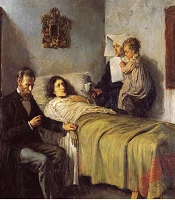
The painting interpretation course using VTS was used to collect data. The VTS was an art-based and student-centered teaching method focused on small-group discussions of six to eight people about different artistic elements in such a way that in a 60-minute session, three paintings were presented for students (four to six individuals in each group). After informing the trainees and interns, 14 people were interested in participating in the study, who were assigned into two groups of five and a group of four people based on the students’ desire, and presentations in each group were performed under similar conditions in all respects. These paintings included a classical western painting, a Safavid era miniature, and a contemporary painting. The first painting, entitled “Science and Charity”, depicted in 1987, was created by the famous Spanish painter Pablo Picasso, a 20th-century artist. This painting shows a physician looking at the patient and a physician taking a pulse without paying attention to the patient and a woman lying on the bed with a worried and sick face, and a woman standing next to the bed and taking care of the patient’s family and staring at the patient with kindness and hope (Figure 1). The second painting, considered one of the ancient works of Persian painting, is an anecdote of Khamseh Nezami Shah Tahmasebi, depicted in the Tabriz school of the second Safavid era. This picture shows the quarrel between two sages and the poisoning by one of the sages. The relevant picture is attributed to Aghamirk, one of the painters of the Safavid era (Figure 2). The third painting is one of the contemporary works of Persian painting; in this picture, the global Coronavirus disease 2019 (COVID-19) pandemic has been depicted. The painter of this work has demonstrated the pandemic as a sample in four Asian countries, including Iran, Korea, India, and China, and has used the necessary precautions and protocols during the COVID-19 epidemic, such as keeping distance, wearing masks, and sparse population in public places (Figure 3).
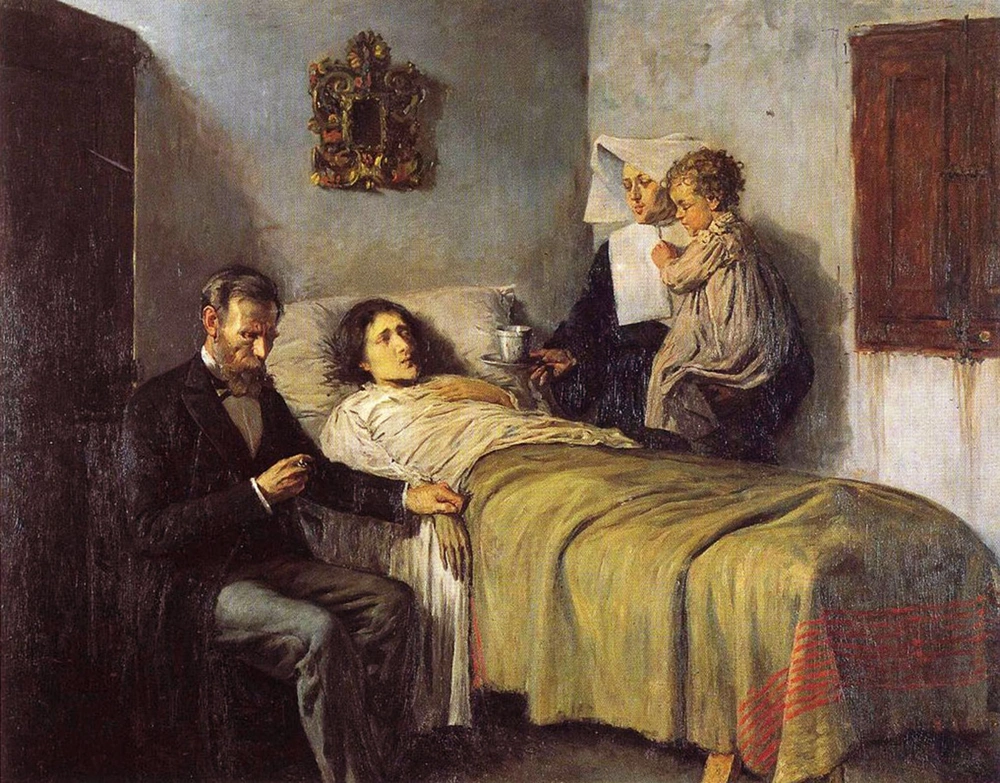
Figure 1.
By Pablo Picasso
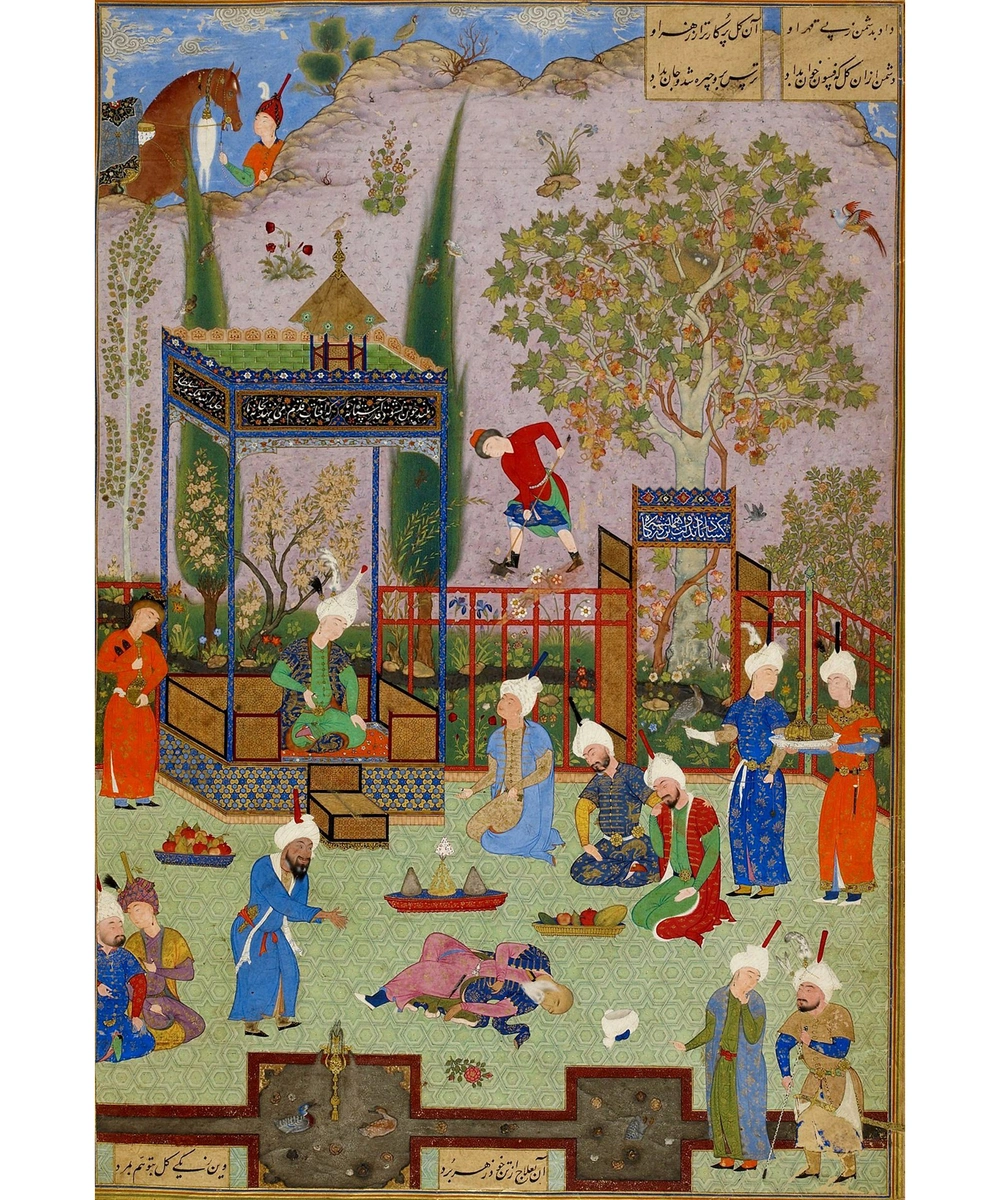
Figure 2.
The quarrel between two sages, Khamseh Nezami Shah Tahmasebi, Tabriz school of the second Safavid era.
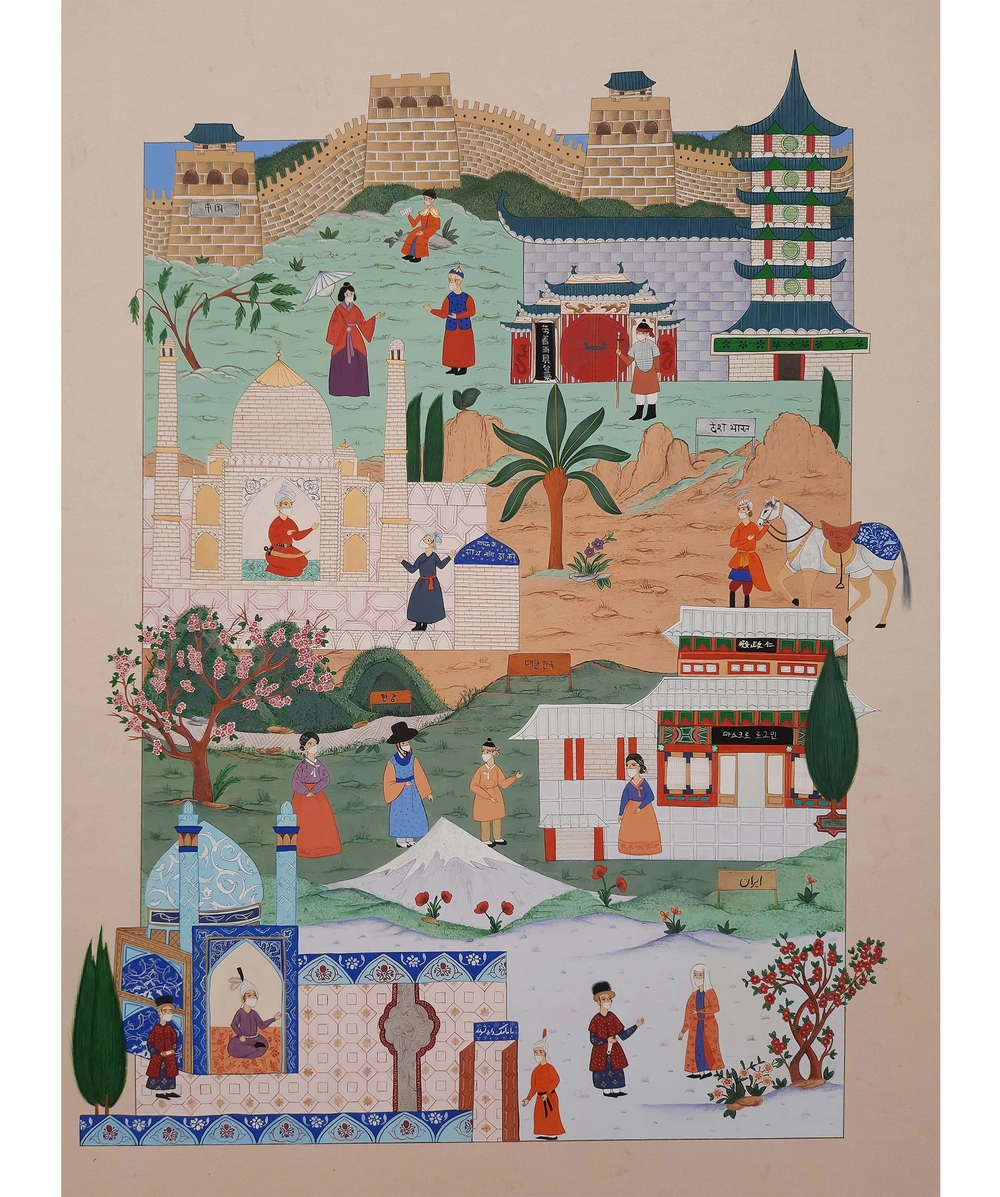
Figure 3.
The global COVID-19 epidemic, the contemporary era
The number of participants in the course was 14 people, that were assigned into three groups. It should be noted that this course is a basic principle education to integrate art into medical education, which is required as a prerequisite for other educational courses developed for professional medical principles. A professor with a background in medicine, an art instructor, and a master’s student of Persian painting conducted the course sessions. The art instructor introduced the concepts of aesthetics, expressive elements, and painting symbols to the students, and the professor of specialized medical courses, who attended the sessions based on their interest as the teacher, guided the students regarding the association of these concepts with practical examples of the medical profession. The class was administered in such a way that students were first given time to look carefully at the paintings, and then three questions were asked in the following order: (1) “What do you think this picture shows?” After that, students were given time to express their opinions separately and loudly, and the art instructor, as a facilitator, forced the student to be more careful in the picture by asking more detailed questions; (2) “What made you think so about this picture?”; and (3) “Do you see anything else significant in this picture?” The important point in choosing a painting is that it should not be abstract and should preferably be related to the concepts of health and disease (15). The paintings used in this study were given as examples. In order to manage the session, a few points were observed as follows: the instructor referred to several points and reminded some tips; the painter of the COVID-19 pandemic somehow participated in the interpretation of the painting; in explanations, the use of appropriate words and sentence structures were considered; and instructors were completely neutral in student discussions and combined different ideas and opinions. The purpose of VTS is not to teach the main subject of painting but to develop evidence-based discussion and thinking. Finally, the expert professor summarized the comments and discussions related to the displayed pictures. At the end of the session, a researcher-made questionnaire was distributed among the students for completion.
3.3. Data Analysis Method
Quantitative variables were described using mean and standard deviation, and qualitative variables were described using percentages. GraphPad Prism version 9 statistical software (GraphPad, California USA) was used to evaluate the results. The normality of the data was assessed using the Kolmogorov-Smirnov test. All results were expressed as mean ± standard deviation. The Wilcoxon signed-rank test was also used to compare the results of skills and competencies with the average level. The Kruskal-Wallis test was used to compare each measure between the three paintings. The data frequency was expressed by descriptive statistics. A P < 0.05 was considered as significant for all analyses.
4. Results
In this study, out of 14 participants, six (43%) were female and eight (57%) were male (mean age = 23.38 ± 1.04 years). All students were satisfied with participating in the VTS artistic discussion session. Most students (85.71%) stated that Persian paintings could be used in VTS discussions. Other students stated that only classical paintings (7.15%) or only Persian paintings (7.15%) were suitable for VTS sessions. The majority (91.66%) of them preferred that classical paintings or miniatures be used separately in VTS discussion sessions, and others (8.44%) agreed that both types of painting should be presented together in one session. As shown in Table 1, the analytical study of students’ opinions showed that all three paintings were well discussed and criticized by students and provided a good context for students to pay more attention and explore and discover more concepts.
Table 1.
The Themes Extracted from the Analysis of Students’ Discussion Interpretation of the Paintings
| Classical Painting | Safavid Era Miniature | Contemporary Miniature |
|---|---|---|
| (1) Attention to cultural-climatic-social details; (2) Thinking about living conditions in epidemics (infectious diseases) | (1) Attention to the details of the social context; (2) Attention to cultural traditions; (3) Understanding the patient’s feeling; (4) Increased sensitivity and attention to symptoms | (1) Thinking about the relationship between spirituality and health; (2) Physician’s natural feelings in the face of the patient; (3) Careful understanding of the patient’s feelings from the patient’s perspective |
Regarding the importance of interpreting these paintings in improving the abilities of medical students, as shown in Table 2, the results showed that the ability to communicate significantly had a significant increase compared to the average level (score 3 was considered as the hypothetical mean). A survey of students showed that a painting interpretation session played no role in improving the other three capabilities, namely personal achievement, professional commitment, and decision-making skills, and was not statistically significant.
Table 2.
The Effect of the VTS Discussion Session Implementation Method on Promoting Medical Professional Capabilities Related to Non-biomedical Sciences from the Perspective of Medical Students
| Capability Type | Score of 5 (Mean ± SD) | P-Value |
|---|---|---|
| Communicate | 0.52 ± 4.4 | 0.037 |
| Individual progress | 1.68 ± 3.8 | 0.68 |
| Commitment and professional ethics | 1.33 ± 3.6 | 0.61 |
| Decision-making skills | 1.23 ± 3.8 | 0.62 |
Measures that involve the applications of art in medical education were measured separately in three classical expressive, Safavid Persian, and contemporary paintings. The results of statistical analysis showed that all the three paintings had a statistically significant effect in improving items such as increasing visual and auditory sensitivity, group activities, and interaction with others, as well as strengthening attention and thinking compared to the average level (Table 3). Also, only the contemporary miniature had a significant beneficial effect in reducing anxiety and stress and relaxing the mind compared to the average level. On the other hand, from the students’ perspective, classical painting significantly improved abstract thinking and teaching human concepts (Table 3). In addition, the results of comparing the mean scores of different measures among the three paintings showed that contemporary Persian painting, which was associated with COVID-19, was more effective in reducing anxiety and stress compared to Safavid Persian painting, so that it also showed a statistically significant increase. Also, based on the results of intergroup comparisons, contemporary Persian painting and classical painting were more effective than Safavid Persian painting in reducing job tension and exhaustion due to the work environment (Figure 4). There was no statistically significant difference among the three paintings in terms of other measures.
Table 3.
The VTS Educational Effectiveness Criterion Questions (the Use of VTS in Education)
| Questions (Measures) | Contemporary Persian Miniature | Safavid Persian Miniature | Classical Painting | |||
|---|---|---|---|---|---|---|
| Mean ± SD | P-Value | Mean ± SD | P-Value | Mean ± SD | P-Value | |
| 1. Reducing anxiety and stress | 3.8 ± 0.78 | 0.01 | 2.6 ± 1.52 | 0.34 | 3.4 ± 1.26 | 0.34 |
| 2. Reducing job tension and exhaustion due to working in the hospital environment | 0.84 ± 3.6 | 0.05 | 2.2 ± 1.42 | 0.28 | 3.8 ± 1.03 | 0.036 |
| 3. Experiencing group and team activities | 3.4 ± 0.52 | 0.03 | 4 ± 0.94 | 0.008 | 4.2 ± 0.79 | 0.001 |
| 4. The share and role of each person in the group | 0.42 ± 3.8 | 0.0002 | 0.51 ± 3.4 | 0.04 | 0.42 ± 3.8 | 0.0002 |
| 5. Listening skills in addition to hearing | 0.79 ± 3.8 | 0.01 | 0.78 ± 3.8 | 0.01 | 0.79 ± 3.8 | 0.01 |
| 6. Seeing skill in addition to looking | 0.52 ± 4.4 | > 0.0001 | 0.79 ± 4.2 | 0.001 | 0.42 ± 4.2 | > 0.0001 |
| 7. Strengthening attention and accuracy to topics | 0.79 ± 4.2 | 0.001 | 0.79 ± 4.2 | 0.001 | 0.51 ± 4.4 | > 0.0001 |
| 8. Proper cooperation and interaction with others | 0.84 ± 3.6 | 0.05 | 0.51 ± 3.6 | 0.005 | 0.84 ± 3.8 | 0.01 |
| 9. Effective teaching of human concepts in the medical profession, such as empathy, compassion, and respect | 1.26 ± 3.6 | 0.16 | 1.4 ± 3 | < 0.99 | 1.13 ± 3.8 | 0.05 |
| 10. Critical thinking | 1.07 ± 3.4 | 0.26 | 1.07 ± 3.4 | 0.27 | 0.78 ± 3.8 | 0.01 |
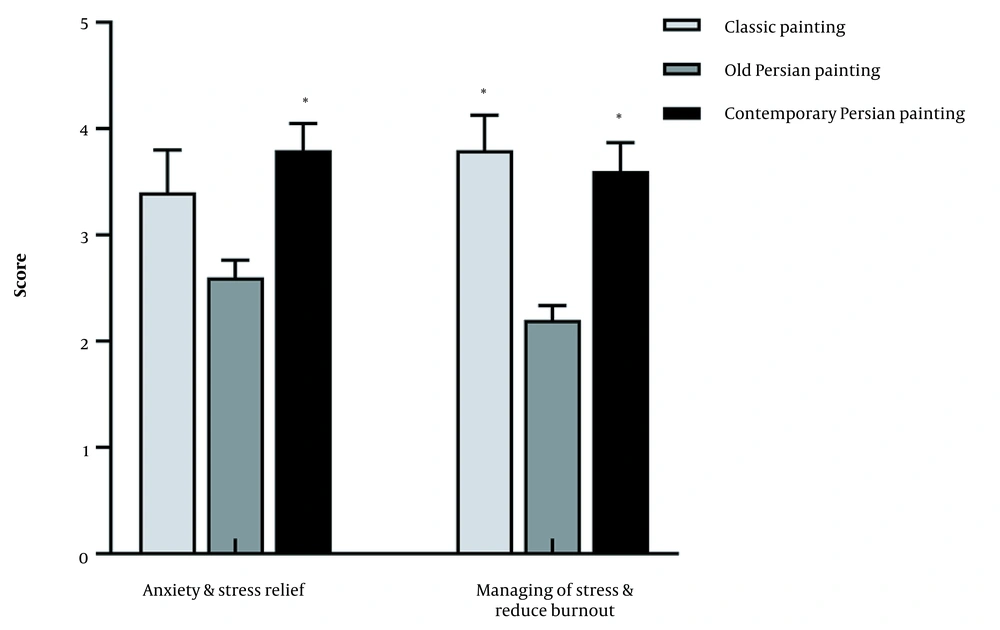
Figure 4.
Comparison of three paintings in terms of importance in reducing job anxiety and tension compared to Safavid painting.
In response to the closed-ended question “If you want to express only one feeling, how each of these paintings makes you feel?” The results of the frequency of students’ opinions are illustrated in Figure 1. As shown in Figure 5, looking at contemporary miniature made 70% of students feel relaxed, confirming the results associated with the use of art in medical education, i.e., reducing anxiety and stress. In the remaining 30%, the first feeling they expressed was the experience of the artwork’s beauty. Classical painting created a sense of discomfort in 50% of students and a sense of calm in the remaining 50%, indicating the effect of painting on the deep transmission of concepts to students. Safavid era painting created a sense of indifference in 30% of students and a sense of revenge in 30%. In addition, 20% of students experienced discomfort after seeing this painting, and in the remaining 20%, a sense of the artwork’s beauty was created. It seems that the various signs in this painting led to various emotions.
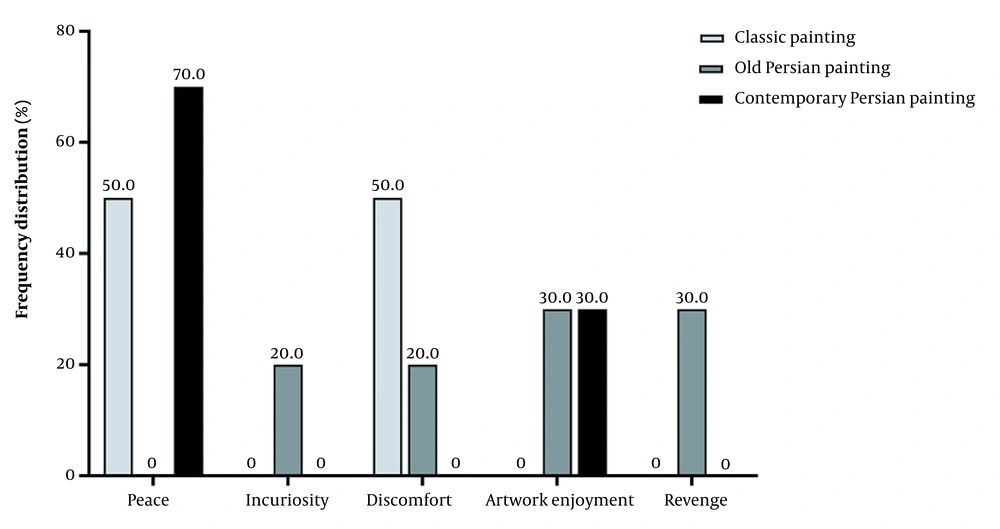
Figure 5.
Frequency (percentage) of students’ emotional perception of the artwork.
5. Discussion
According to the results of the present study, interpreting paintings by the VTS method improves the capability to communicate effectively. It also improves visual and auditory sensitivity, accuracy and attention, interaction and collaboration with others, teamwork, and an understanding of their contribution to the group. In addition, from the students’ perspective, contemporary Persian painting plays a prominent role in reducing job exhaustion, anxiety, and stress, and contemporary miniature affects students’ emotions by applying the topics and issues of the day, and paying attention to cultural and social issues creates a sense of calm and aesthetics in students. Classical painting conveyed a sense of calm and discomfort to the students, which according to the students’ interpretive content analysis, the reason is due to the profound effect of this painting on the meaning transmission so that it exposed the comprehensive views on the subject to the viewer’s sight. Given that the Safavid era miniature contains various signs expressing the details of the social context and cultural traditions related to human beings, it conveys various feelings. On the other hand, the application of classical painting and contemporary Persian painting in VTS discussions in medical education is more prominent than in the Safavid era miniature.
Acquiring professional medical qualifications is essential to providing effective healthcare services based on the community’s needs. In addition, we are now in a period of medicine in which the demands on physicians are increasing day by day since the puzzles of our era, such as unknown pathogens, emerging biological threats, and environmental disasters, as well as new technologies and rapidly changing scientific discoveries, broaden the medical landscape. Currently, the emphasis is on the capability-based curriculum instead of the subject-central curriculum, which is in semester form (16), and multi-dimensional assessment of professional capability (such as teamwork ability, clinical reasoning, etc.) replaces knowledge-based assessment (17), so that graduates have sufficient skills in addition to strong knowledge. Therefore, special attention is paid to teaching soft skills such as communication, especially with patients, commitment, and professional ethics. In this regard, the acquisition of non-medical knowledge-based abilities constitutes a major part of a competent physician’s performance, as shown in Table 1. Educating these capabilities can benefit from accurate observation, accurate recording, and an interdisciplinary approach to knowledge. This approach is somehow art in science. Harmony of art and science means that art is guided by science, and science is expressed through art (11). In this regard, three issues are raised: (1) “arts as therapy”; (2) “community arts and health”; and (3) the use of art in teaching medical students. The term “medical humanities”, in a limited sense, is used to refer to the latter, i.e., art and medical education, and the first two cases can be placed in “art and health” (18). The humanities, including the arts and social sciences, are important aspects of daily medical activities and support the development of interpersonal skills required to play leadership and management roles in a multidisciplinary team. Healthcare management guided by the physician has been shown to lead to better financial and clinical performance (19). The duty of physicians is not only to treat the disease but also to relieve and ensure the comfort of the patients. It reflects the human spirit of medicine. If this human dimension is separated from medicine, the greatest betrayal of medicine will take place. Achieving human medicine requires a paradigm shift from what can be called medical reductionism to medical holism, in which patients are not reduced to disease and the body but are seen as complete individuals in fields and relationships (20). The arts can contribute to the perception of the whole person in at least three ways: (1) shared human experiences; (2) insights into the difference or uniqueness of each person; and (3) enrichment of the individual’s language and thought (21). In this regard, in examining the relationship between art and medicine, in addition to paying attention to the value of the arts in increasing the understanding of individual characteristics, i.e., “whole person understanding”, what one shares with other human beings is also considered; namely, the holistic view is complemented by a holistic approach to man. Thus, art is complementary to the biomedical perspective. Thereby, in addition to focusing on the disease symptoms, it also pays close attention to the whole person (22). Given that the “community has a lot of trust in physicians’ knowledge but much less trust in physicians’ clinical behavior”, the inclusion of medical humanities as part of a healthcare professional’s initial training in helping to shape his/her future, both as a compassionate physician and as a thoughtful human being, is vital (23).
The results of the present study showed that miniature, similar to classical painting, was able to cause effective evidence-based discussions in VTS sessions. Searching in scientific databases did not yield any results regarding the use of miniature in VTS discussions; however, in relation to the classical paintings in supporting the results of the present study, Joel reported that VTS improved the ability to effective communication and teamwork, reduced job exhaustion, and increased job satisfaction. The “interpretive challenge” was improved with the use of VTS. In addition, it remarkably improved the power of observation, which is the central feature of physical examination (13). Also, several cross-sectional, descriptive-analytical, qualitative, systematic, and trial studies have confirmed the useful effect of VTS in teaching thinking and required communication skills in students of different medical sciences, such as medicine, pharmacy, and nursing. For example, VTS increased the observational skills in medical students to the extent that the evaluation of the effectiveness of VTS implementation in the educational curricula of first-year medical students with pretest-posttest evaluation led to improving visual literacy in the interpretation of radiographic images, so that VTS training increased the total number of words used to describe clinical images, the time spent analyzing images, and the number of related clinical observations (24). Also, in the second-year medical students, the implementation of the VTS course led to improving learners’ observational skills (25). A previous study also showed that VTS allowed nursing instructors to use the art to listen carefully, consider the opinions of others, provide details to communicate ideas and observations, and that VTS was the potential to enhance communication and observational skills for inter-professional learning and mutual respect (26). The content analysis of the topics of a VTS session for nursing students showed that VTS developed observational, cognitive, interpersonal, and intrapersonal skills (27). A qualitative study also showed that nursing thinking and assessment skills were improved through the use of VTS (28). A systematic study showed that VTS can help nursing graduate students develop observation, communication, and ambiguity tolerance skills, as well as an improved sense of security in learning and collaborative work (29). A cross-sectional study on pharmacy students showed that VTS led to the development of personal communication, cultural competence, and critical thinking skills (30). A field trial study also confirmed that VTS leads to improving visual literacy skills, reducing stress, and promoting active listening and teamwork among medical students (31).
VTS is a type of art integration in curricula, but not with the aim of “art for art’s sake”, rather clearly contributes to students’ creative thinking and their measurable academic achievement (12). VTS is focused on art, in which all students participate in a critical thinking process regarding complex artistic elements. It uses visual literacy to teach thinking and communication skills. Research has shown that VTS develops critical thinking skills (observation, evidence-based inference, hypothesizing, correcting, and reviewing) and leads to eloquence. VTS has been established and researched for 30 years and tested in various fields for 12 years. Increased visual sensitivity also leads to accurate interpretation of the patient’s language and behavior, enhances curiosity and imagination in relation to the patient’s experience, improves emotional communication with the patient, and makes the whole-person attitude tangible (32). The use of VTS to teach the humanities to medical students can increase empathy, understanding, and medical art sensitivity. Visual sensitivity increases team building and collaboration among medical students (15). Not surprisingly, such curriculum developments are the best tool for preparing learners’ academic achievement. At the same time, students’ knowledge of medical humanities is still low in Iran, and there is no official university program in this regard (33). From the perspective of students (30) and education professionals (14), various studies have emphasized the need to integrate art into the medical science curriculum and also using the art-based teaching-learning method in medical science disciplines, but in a way that no more educational burden is imposed on students.
In the present study, the results of a survey of students showed that contemporary miniature had the greatest impact on reducing job exhaustion compared to the other two paintings. The analysis of students’ opinions suggested that artistic attention to the current status of the community might be involved in this finding. Perhaps part of this issue is due to the colors used in miniature because previous research showed that pink, and blue, with a greater effect, significantly reduce stress. Given that attending clinical duty is a stressful experience among students, students’ stress levels decreased after exposure to pink color therapy and blue, with a greater effect (34). The goal of implementing VTS-based interdisciplinary programs at Harvard Medical School is also to acquire human capabilities along with the prevention of job exhaustion, which impairs job satisfaction (13). Given that teaching observational skills, improving psychosocial abilities, and reducing stress are essential to teach professional and flexible healthcare workers in the future, VTS discussion sessions of the contemporary miniature are expected to play an important role in reducing job exhaustion and anxiety.
Despite increasing visual and auditory sensitivity and communication, the miniature has not been able to have a significant beneficial effect in transmitting medical humanities concepts, such as empathy, compassion, respect, and critical thinking, to students. One of the features of the miniature is that it depicts not only a literary text but also the atmosphere of that situation in an imaginative way, i.e., the depicted scenes deal with something beyond that scene and with another world at the same time of everyday life so that the whole painting assumes a mystical, imaginary, and other world nature. It also deals with the fact that the whole painting finds a cryptic, imaginary, and other universal nature (35), and the more abstract it becomes, the broader and more general concept it depicts. Therefore, the type of painting and perhaps its more abstract form than classical painting seem to have provoked this reaction in students.
The limitation of this study is the absence of a control group and also the small number of participants. Also, it was not possible to include other medical students in the study due to virtual education. It is suggested that for final approval and by using it in educational planning, this study be implemented with larger sample size and in different university centers with different miniatures. It is evident that its proper implementation requires a close interdisciplinary interaction between art and medical sciences, so that both producing artworks with the ability to think and discuss based on the above evidence and as a facilitator can be helpful in discussion sessions.
5.1. Conclusions
Overall, the findings of this study showed that VTS is a unique educational strategy with the potential to help medical students develop a wide range of skills. The use of miniature in VTS topics can be an effective educational and learning tool to increase professional skills and reduce job exhaustion and anxiety; also, it has the potential to meet the challenge of professional development in them. The data indicated that the inclusion of multiple VTS sessions is a valuable addition to the health curriculum that can provide emotional learning experiences to be able to develop and transfer key skills and attitudes related to inclusive care delivery. Nonetheless, these miniatures were not successful in teaching human concepts and critical thinking. It is suggested that various studies be repeated on a larger scale to complete and confirm the results of this study.