


1. Introduction
2. Case Presentation
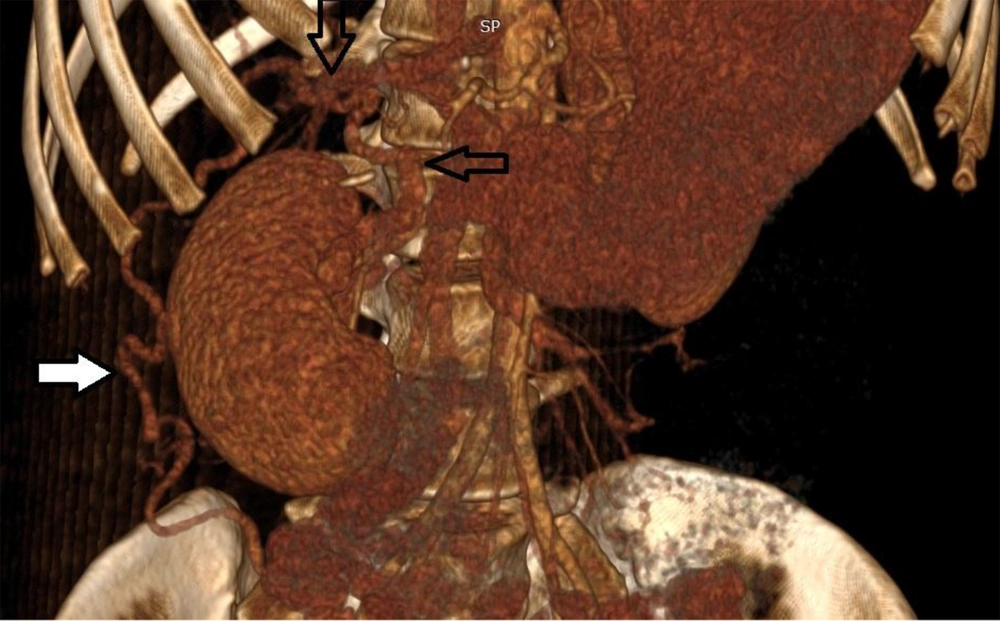
Drainage of the right kidney through the upper pole into the suprarenal vein (left black arrow). Tortuous right suprarenal vein (down black arrow). Drainage of the suprarenal vein into the right gonadal vein (white arrow)
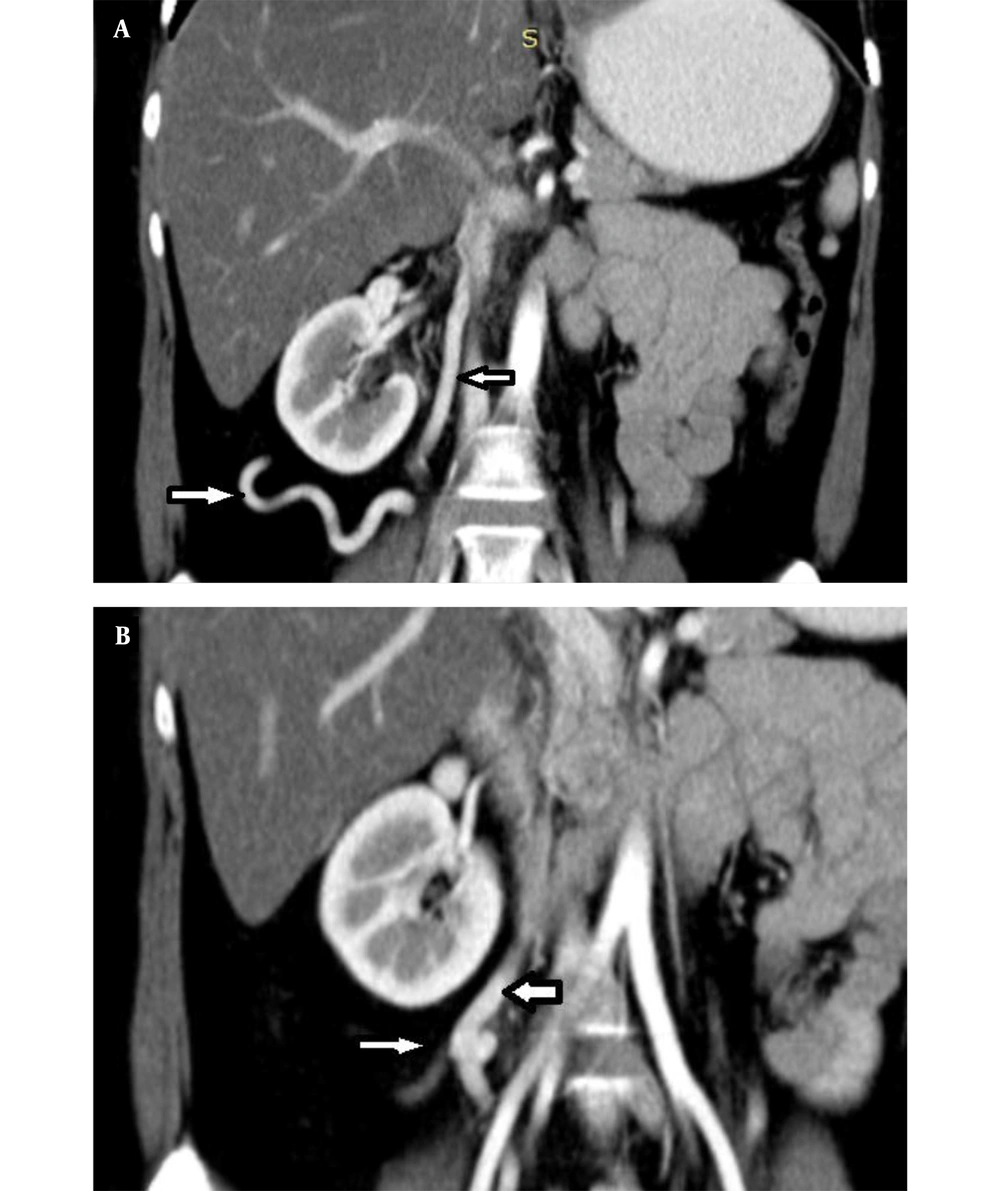
A, The course of the right suprarenal vein to drain into the gonadal vein (left arrow); right gonadal vein (right arrow). B, Right suprarenal vein joining the gonadal vein (right arrow); gonadal vein (left arrow)
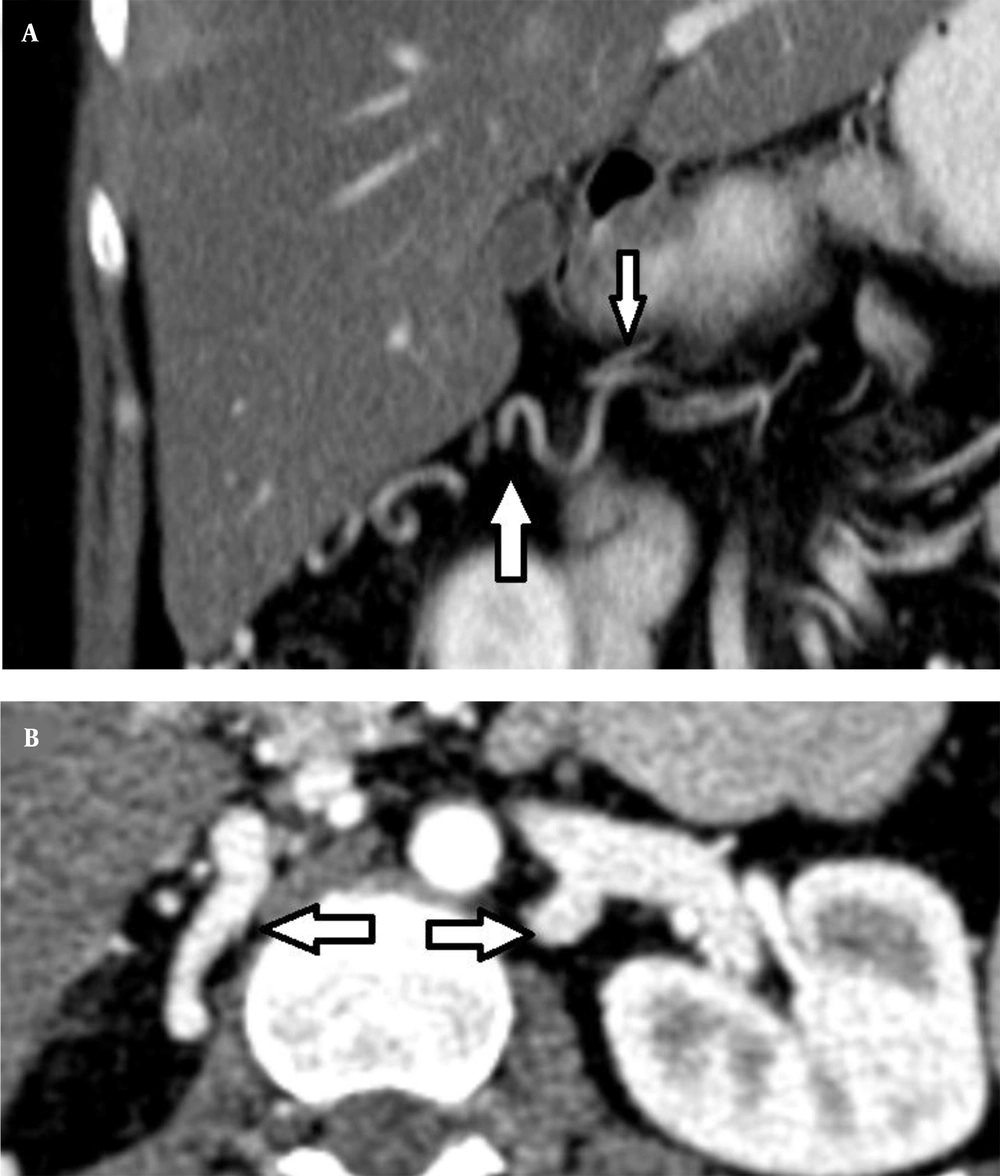
A, Collateral vessels from the right suprarenal vein go down and run along the inferior margin of the right lobe of the liver and then turn up to the gastroepiploic branch of the superior mesenteric vein (up arrow); the gastroepiploic branch of the superior mesenteric vein (down arrow). B, Collateral vessels of the right suprarenal vein (left arrow); the lateral branch of the left renal vein, which passes through the aortic hiatus of the diaphragm and drains into the left hemiazygos vein (right arrow).
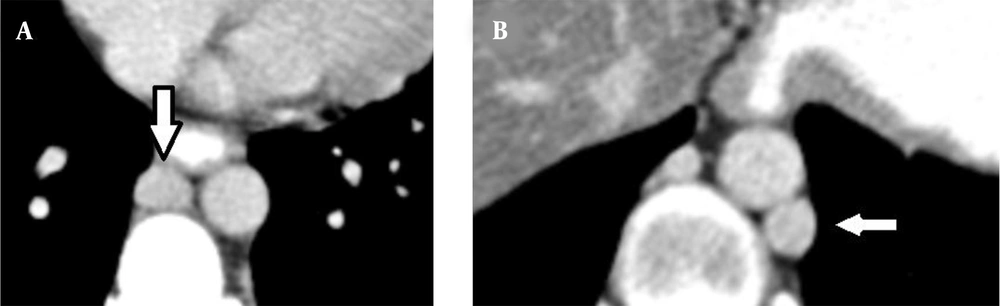
Increased diameter of azygos vein (A) and hemiazygos vein (B)

