
1. Background
Chronic neck pain is among the most prevalent musculoskeletal disorders worldwide and is a major cause of disability, reduced quality of life, and increased healthcare utilization. Epidemiological studies have shown that a substantial proportion of the general population experiences neck pain at least once during their lifetime, and a considerable number of these individuals subsequently develop chronic symptoms. Chronic neck pain can adversely affect occupational performance, sleep quality, social activities, and daily functioning, thereby imposing a substantial socioeconomic burden on both patients and healthcare systems (1, 2). Chronic neck pain is commonly defined as pain localized between the superior nuchal line and the first thoracic vertebra that persists for more than 12 weeks. Multiple factors have been associated with the development and persistence of chronic cervical pain, including prolonged static posture, repetitive occupational activities, poor ergonomics, muscular overuse, obesity, reduced physical activity, smoking, psychological stress, anxiety, and depression (2, 3). Among the various etiologies of chronic cervical pain, myofascial pain syndrome is one of the most common. Myofascial trigger points are hyperirritable spots within taut bands of skeletal muscle that can produce local tenderness, referred pain, muscle stiffness, restricted range of motion, and functional impairment. In patients with chronic neck pain, trigger points are frequently identified in the upper trapezius and cervical paraspinal muscles and may contribute substantially to persistent pain and disability (4, 5).
Several conservative and interventional treatment modalities have been proposed for the management of chronic myofascial neck pain, including pharmacologic therapy, therapeutic exercise, manual therapy, transcutaneous electrical nerve stimulation (TENS), dry needling, trigger point injections, extracorporeal shockwave therapy, and low-level laser therapy (6). Current rehabilitation guidelines strongly recommend exercise therapy as a primary treatment approach for chronic neck pain because of its beneficial effects on muscular strength, flexibility, posture, endurance, and functional recovery. However, despite the established effectiveness of exercise-based rehabilitation, some patients continue to experience persistent symptoms and long-term functional limitations (7-9).
Mesotherapy, also referred to as subcutaneous therapy, is a minimally invasive technique involving multiple superficial microinjections of pharmacological agents into dermal or subdermal tissue near the affected area. The proposed therapeutic mechanisms of mesotherapy include local anti-inflammatory effects, modulation of nociceptive pathways, prolonged local drug retention, improved microcirculation, and reduced systemic drug exposure. In recent years, mesotherapy has received increasing attention as a potential adjunctive treatment modality for localized musculoskeletal pain disorders (10, 11).
Previous studies have investigated the role of mesotherapy in musculoskeletal rehabilitation and chronic neck pain management. Paolucci et al. reported favorable short-term outcomes following trigger point mesotherapy in patients with chronic neck pain. More recent studies have also suggested potential benefits of mesotherapy in cervical pain syndromes and myofascial pain conditions. Nevertheless, the available evidence remains limited, and considerable heterogeneity exists in treatment protocols, pharmacological formulations, anatomical injection sites, the number of injection points, and the duration of follow-up (10-13).
Compared with previous studies, the present trial was designed as a single-blind randomized controlled clinical trial with assessor and data analyst blinding. In addition, this study used a different pharmacological formulation consisting of lidocaine and piroxicam, a greater number of cervical injection points involving both the upper trapezius and cervical paraspinal muscles, a structured exercise-based comparator group, and a longer follow-up period.
2. Objectives
The present study aimed to investigate the effects of mesotherapy on pain intensity and neck-related disability in patients with chronic myofascial neck pain.
3. Methods
3.1. Study Design and Setting
This single-blind, parallel-group, randomized controlled clinical trial was conducted among patients with chronic neck pain who were referred to the Physical Medicine and Rehabilitation Clinic, Amin Hospital, affiliated with Isfahan University of Medical Sciences, during 2025 - 2026. The study protocol was approved by the Ethics Committee of School of Medicine - Isfahan University of Medical Sciences. University of Medical Sciences under the ethical approval code IR.MUI.MED.REC.1403.420 and was registered in the Registry of Clinical Trials (IRCT20250110064336N1) on January 21, 2025, before the enrollment of any participant. The first participant was enrolled 10 days after registration, on January 31, 2025. The registered outcomes and the outcomes reported in the present manuscript were reviewed against the original study protocol. No changes were made after trial registration to the study design, eligibility criteria, intervention protocol, follow-up schedule, or outcome assessment procedures. No protocol deviations occurred that affected participant enrollment, intervention delivery, outcome assessment, or statistical analysis. Written informed consent was obtained from all participants before enrollment.
3.2. Sample Size Calculation
The sample size was determined a priori using PASS software (version 21) based on an analysis of covariance (ANCOVA) model with two treatment groups and one covariate. The calculation assumed a two-sided significance level of 0.05, 95% statistical power, a standard deviation of 1.0, an assumed standard deviation of the group means of 0.5, and an R2 of 0.20 for the covariate. The corresponding residual standard deviation was 0.89443. Based on these assumptions, a total sample size of 44 participants (22 per group) provided 95.15% power. Allowing for an anticipated 20% attrition rate, the target sample size was increased to 56 participants, with 28 participants allocated to each group. The sample-size assumptions were based on previously published data from Paolucci et al.
3.3. Participants
A total of 56 patients with chronic myofascial neck pain were enrolled in the study and randomly allocated to two equal groups of 28 participants each.
The inclusion criteria were:
- age between 18 and 60 years;
- chronic neck pain persisting for at least 12 weeks;
- presence of active myofascial trigger points in the upper trapezius or cervical paraspinal muscles; and
- a pain intensity score of at least 3 on the Visual Analog Scale (VAS) and normal neurological examination findings.
Patients were excluded if they had:
- acute neck pain;
- cervical radiculopathy;
- spondylolisthesis;
- a history of cervical fracture or cervical surgery;
- rheumatologic, neurologic, infectious, oncologic, or severe systemic diseases;
- pregnancy;
- severe cognitive impairment;
- an allergy to lidocaine;
- coagulation disorders or anticoagulant therapy; or
- any therapeutic intervention for neck pain during the previous 2 months.
3.4. Participant Recruitment and Follow-Up
A total of 56 eligible participants were enrolled after assessment according to the predefined inclusion and exclusion criteria. All participants provided written informed consent before enrollment and were subsequently randomized in a 1:1 ratio to the mesotherapy plus exercise group (n = 28) or the exercise-only control group (n = 28).
All 56 randomized participants received their allocated intervention and completed the scheduled follow-up assessments. No participants were lost to follow-up, withdrew from the study, discontinued the intervention, or were excluded from the final analysis. Thus, the final analysis included all 56 randomized participants, with 28 participants analyzed in each group.
3.5. Randomization and Blinding
Participants were randomly allocated to the intervention and control groups in a 1:1 ratio using a computer-generated block permutation randomization sequence. Fixed blocks of four were used, and no stratification was applied. The randomization sequence was generated by an independent researcher who was not involved in participant recruitment, intervention delivery, or outcome assessment. Allocation concealment was maintained using sequentially numbered, opaque, sealed envelopes, which were prepared before participant enrollment and opened only after eligibility had been confirmed and informed consent had been obtained. Participant enrollment was performed by the study researcher, whereas group allocation was performed according to the concealed randomization sequence.
The study was designed as a single-blind trial. Because of the nature of the mesotherapy intervention, participants and the clinician administering the intervention could not be blinded to treatment allocation. Outcome assessors and the statistician were blinded to group allocation throughout the study. The outcome assessors did not participate in the treatment procedures and were not informed of participants' treatment assignments. Statistical analyses were performed using coded group labels, and the treatment codes were not disclosed to the statistician until the primary analyses had been completed. The success of blinding was not formally assessed.
3.6. Intervention Protocol
3.6.1. Mesotherapy Group
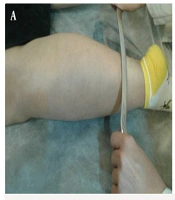
Participants allocated to the intervention group received mesotherapy twice weekly for 2 consecutive weeks. At each session, a total of 2 mL of the injection solution, consisting of 1 mL of 2% lidocaine and 1 mL of piroxicam (40 mg), was administered subcutaneously at 10 injection sites. The injection sites were selected individually according to the location of the patient's active and painful myofascial trigger points within the cervical paraspinal and upper trapezius muscles. Therefore, the anatomical location of the injection sites could vary across participants according to the distribution of painful trigger points.
The total injection volume was distributed equally among the 10 sites, with 1 mL administered across each group of five sites (0.2 mL per site), resulting in a total injected volume of 2 mL per treatment session. The same medication composition, total dose, number of injection sites, and injection volume per site were maintained across treatment sessions.
All injections were performed by a physician experienced in musculoskeletal injection procedures. Before each procedure, the skin was disinfected using an appropriate antiseptic solution, and sterile single-use syringes and needles were used. The injection protocol was standardized with respect to medication composition, total volume, number of injection sites, volume per site, treatment frequency, and duration, whereas the specific anatomical sites were determined individually according to each participant's painful trigger points.
All mesotherapy procedures were performed by a board-certified Physical Medicine and Rehabilitation physician experienced in musculoskeletal injection procedures. Before trial initiation, the injection protocol was standardized according to predefined anatomical landmarks, medication dose, injection volume, number of injection sites, and the treatment schedule. The same practitioner performed all mesotherapy sessions to minimize inter-operator variability and improve intervention fidelity. Any deviation from the predefined intervention protocol was recorded and reviewed by the study team.
3.6.2. Control Group
Participants in the control group received exercise therapy and oral medication without mesotherapy.
3.6.3. Exercise Therapy Program
Both groups received the same standardized therapeutic exercise program for 2 consecutive weeks. The exercise program consisted of four types of exercises targeting the cervical and shoulder girdle muscles: cervical isometric exercises, shoulder elevation exercises, scapular retraction exercises, and stretching exercises for the cervical and shoulder girdle muscles.
For the cervical isometric exercise, participants placed the palm of their hand against the forehead and applied gentle opposing pressure between the head and hand without producing cervical movement. The contraction was maintained for 10 seconds and repeated five times per session.
For the shoulder elevation exercise, participants elevated their shoulders and maintained the elevated position for 30 seconds, repeated five times per session. For the scapular retraction exercise, participants retracted their shoulders/scapulae and maintained the position for 30 seconds, repeated five times per session.
For the stretching exercise, participants brought one upper limb across the front of the body toward the contralateral side and applied gentle pressure with the opposite hand to stretch the shoulder girdle muscles. The position was maintained for 30 seconds and repeated five times on each side.
All exercises were performed three times daily (morning, afternoon, and evening) for 2 consecutive weeks. All exercises were initially taught face-to-face by the treating physician, and standardized instructional materials were subsequently provided to participants to facilitate correct performance at home. During the 4-month follow-up period, participants were contacted regularly by telephone and text message to monitor exercise performance, treatment-related complaints, and follow-up adherence.
No specific progression in exercise intensity or volume was prescribed during the 2-week exercise intervention.
Quantitative exercise adherence was not prospectively recorded as a percentage; therefore, group-specific adherence rates could not be calculated retrospectively. Adherence was instead monitored through regular telephone and text-message contacts during follow-up.
3.7. Treatment Contact and Visit Frequency
Both groups received the same standardized exercise therapy program and were followed according to the same study schedule. Participants in the intervention group additionally received mesotherapy injections twice weekly for 2 consecutive weeks, resulting in greater treatment contact during the initial treatment period than in the control group. The control group did not receive sham injections. Therefore, the frequency and nature of treatment contact differed between groups, and this difference could have contributed to participants' expectations and perceived treatment effects.
3.8. Concomitant Medications
Both groups received the same concomitant oral medications for 2 weeks. Tizanidine 4 mg tablets were prescribed at a dose of one-quarter of a tablet nightly during the first four nights, followed by one-half of a tablet nightly thereafter. In addition, participants received one Anaheal Plus capsule daily for 2 weeks. Each Anaheal Plus capsule contains 150 mg of bromelain and 300 mg of turmeric extract/curcuminoids.
Medication use was monitored during follow-up through participant reports and telephone/text-message contacts. Quantitative medication adherence was not prospectively assessed using pill counts or another predefined adherence measure; therefore, group-specific medication adherence percentages were not calculated.
3.9. Outcome Measures
Pain intensity was assessed using the Visual Analog Scale (VAS). The VAS is a validated instrument ranging from 0 to 10, with higher scores indicating greater pain severity. Functional disability was evaluated using the Neck Disability Index (NDI), a validated questionnaire designed to assess neck-related disability and functional impairment. Each NDI item is scored from 0 to 5, yielding a total score from 0 to 50 (0%-100% when expressed as a percentage). Higher NDI scores indicate greater neck-related disability, whereas lower scores indicate better functional status.
The prespecified outcome measures included neck-related disability assessed using the NDI and pain intensity assessed using the VAS. Both outcomes were assessed at baseline and during follow-up. The NDI was considered the primary clinical outcome for the present analysis, whereas the VAS was considered a secondary outcome. The prespecified follow-up assessments were performed at 1 month and 4 months after the intervention.
All questionnaires and pain assessments were completed verbally through direct patient interviews during follow-up evaluations.
Outcome assessments were performed by assessors who were not involved in treatment administration and were blinded to participants' group allocation. Participants completed the NDI and VAS assessments without the outcome assessors disclosing or discussing treatment allocation. The statistician also received the dataset with coded group labels and remained unaware of the treatment assignments during the primary statistical analyses.
3.10. Adverse Effects Monitoring
Participants were monitored for treatment-related adverse effects throughout the study period. Mild transient adverse events, including localized bruising, tenderness, and pain at the injection site, were observed in some patients receiving mesotherapy. No serious adverse events or major complications were reported during the study.
3.11. Statistical Analysis
Longitudinal changes in NDI and VAS scores were analyzed using a repeated-measures general linear model (GLM). Time (baseline, 1 month, and 4 months) was specified as the within-subject factor, whereas the treatment group (mesotherapy plus exercise vs control/exercise alone) was specified as the between-subject factor. The model included the main effects of time and treatment group and the group-by-time interaction. The group-by-time interaction was considered the primary test of whether the trajectory of change differed between the treatment groups.
The assumption of sphericity was assessed using Mauchly's test. When the sphericity assumption was violated, Greenhouse–Geisser-corrected degrees of freedom were used; when sphericity was satisfied, the sphericity-assumed results were reported. Estimated marginal means were used for between-group comparisons at each follow-up time point, and Bonferroni adjustment was applied to pairwise comparisons.
The statistical interpretation of treatment effectiveness was based primarily on the group-by-time interaction and between-group contrasts rather than on within-group P values alone. For the repeated-measures analyses, partial eta squared (ηp2) was reported as a measure of effect size. All tests were two-sided, and P < 0.05 was considered statistically significant.
4. Results
4.1. Participant Flow and Baseline Characteristics
A total of 56 participants were enrolled and randomized, with 28 allocated to the mesotherapy plus exercise group and 28 to the exercise-only control group.
All 56 participants received their allocated intervention and completed the scheduled follow-up assessments at 1 and 4 months. No participants were lost to follow-up, withdrew, discontinued, or were excluded after randomization. Accordingly, all 56 randomized participants were included in the final analysis (28 participants per group).
Participant flow is presented in the CONSORT diagram.
The mean ± standard deviation (SD) age of the participants was 46.05 ± 9.92 years (range, 26 - 60 years). Baseline demographic characteristics, including age, weight, height, and body mass index (BMI), were comparable between the two groups, and no statistically significant differences were identified before intervention. Detailed demographic characteristics of the study participants are presented in Table 1.
Table 1.
Demographic Characteristics of the Study Participants a
| Variables | Control Group | Mesotherapy Group | P Value |
|---|---|---|---|
| Age, y | 45.69 ± 9.88 | 45.93 ± 9.83 | 0.926 |
| Weight, kg | 68.55 ± 10.07 | 68.07 ± 9.53 | 0.852 |
| Height, cm | 158.72 ± 4.78 | 161.69 ± 6.61 | 0.059 |
| BMI | 27.23 ± 4.09 | 26.07 ± 3.73 | 0.265 |
a Values are expressed as mean ± SD.
4.2. Neck Disability Index
Functional disability was assessed using the NDI at baseline and at 1 and 4 months after treatment. Baseline NDI scores were comparable between the control and mesotherapy groups (43.69 ± 18.78 vs 42.50 ± 18.35, respectively; P = 0.783). During follow-up, the NDI score decreased in the mesotherapy group from 42.50 ± 18.35 at baseline to 33.54 ± 17.78 at 1 month and 32.38 ± 17.90 at 4 months, indicating improvement in neck-related disability. In contrast, the control group showed an increase in NDI score from 43.69 ± 18.78 at baseline to 52.79 ± 19.16 at 1 month and 58.82 ± 17.90 at 4 months, indicating worsening disability. At 1 month, the mean NDI score was significantly lower in the mesotherapy group than in the control group (33.54 ± 17.78 vs 52.79 ± 19.16; P < 0.001). This difference remained significant at 4 months (32.38 ± 17.90 vs 58.82 ± 17.90; P < 0.001). Repeated-measures analysis showed a significant difference in the longitudinal pattern of NDI scores between groups (P < 0.001). These findings indicate that the observed between-group difference was attributable to improvement in disability in the mesotherapy group, together with worsening NDI scores in the control group. Detailed NDI score comparisons are presented in Table 2 and Figure 1.
Table 2.
Comparison of Neck Disability Index Scores Between the Two Groups Over Time a
| Time | Control Group | Mesotherapy Group | P Value |
|---|---|---|---|
| Baseline | 43.69 ± 18.78 | 42.50 ± 18.35 | 0.783 |
| 1-month follow-up | 52.79 ± 19.16 | 33.54 ± 17.78 | < 0.001 |
| 4-month follow-up | 58.82 ± 17.90 | 32.38 ± 17.90 | < 0.001 |
| Change from baseline at 1 month | 9.10 | -8.96 | < 0.001 |
| Change from baseline at 4 months | 15.13 | -10.12 | < 0.001 |
| Comparison over time | P < 0.001 | P < 0.001 | 0.000 b |
a Values are expressed as mean ± SD.
b Repeated-measures analysis for between-group comparison over time.
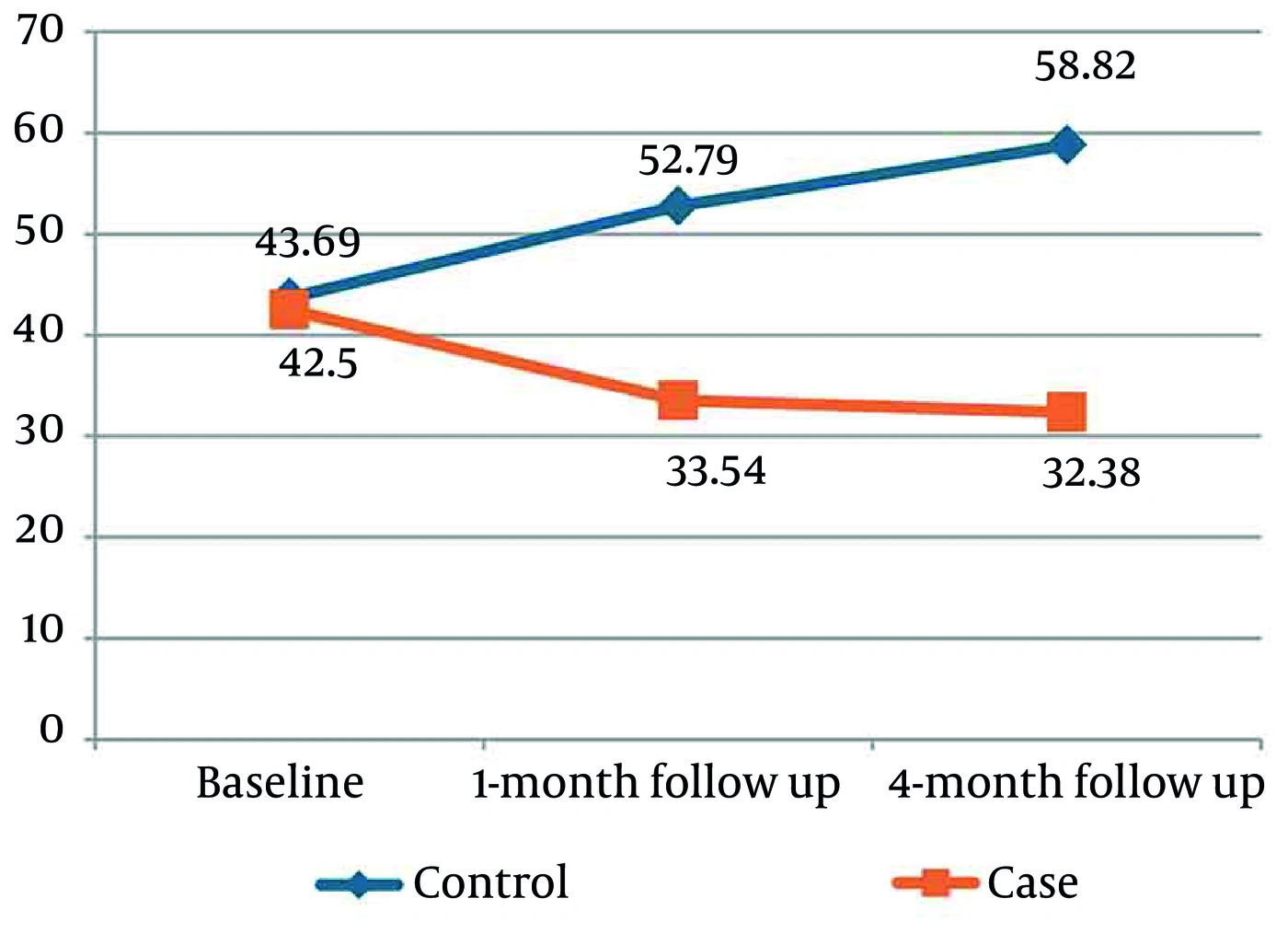
Figure 1.
Neck Disability Index scores between the two groups over time
The repeated-measures GLM demonstrated a statistically significant group-by-time interaction for NDI, indicating that the trajectory of disability across the three assessment points differed significantly between the treatment groups (F(2, 116) = 20.570, P < 0.001, partial η2 = 0.262). The linear group-by-time contrast was also statistically significant (F(1, 58) = 30.753, P < 0.001, partial η2 = 0.346). The mean NDI score in the mesotherapy group decreased from 40.11 ± 18.36 at baseline to 33.55 ± 17.79 at 1 month and 32.39 ± 17.09 at 4 months, whereas the control group showed an increase from 46.38 ± 18.79 at baseline to 52.79 ± 19.17 at 1 month and 58.83 ± 17.91 at 4 months. Between-group comparisons based on estimated marginal means showed no statistically significant difference at baseline (mean difference = −6.27, P = 0.197), whereas statistically significant differences were observed at 1 month (mean difference = −19.25, P < 0.001) and 4 months (mean difference = −26.44, P < 0.001), with Bonferroni adjustment.
4.3. Visual Analog Scale
Pain intensity was assessed using the VAS at baseline and at 1 and 4 months after treatment.
Baseline VAS scores were comparable between the two groups before intervention, and no statistically significant difference was observed at study entry (P = 0.474).
During follow-up, participants in the mesotherapy group demonstrated numerically lower pain scores than those in the control group. However, repeated-measures analysis showed no statistically significant between-group difference in pain-intensity changes over time (P = 0.298).
At the 1-month follow-up, the mean VAS score was 5.93 ± 1.94 in the control group and 5.48 ± 1.56 in the mesotherapy group (P = 0.329). At the 4-month follow-up, mean VAS scores were 6.28 ± 1.66 and 5.58 ± 1.47 in the control and mesotherapy groups, respectively (P = 0.092). Although between-group differences in pain reduction did not reach statistical significance, the mesotherapy group showed a consistent trend toward lower pain intensity during follow-up. In addition, within-group analyses showed significant longitudinal changes in VAS scores over time in both groups (P < 0.001).
Detailed VAS score comparisons are summarized in Table 3 and Figure 2. For VAS scores, the repeated-measures GLM also demonstrated a statistically significant group-by-time interaction, indicating that the longitudinal pattern of pain intensity differed significantly between the treatment groups (F(2, 116) = 21.138, P < 0.001, partial η2 = 0.267). The linear component of the group-by-time interaction was statistically significant (F(1, 58) = 32.337, P < 0.001, partial η2 = 0.358), and the quadratic component was also statistically significant (F(1, 58) = 7.345, P = 0.009, partial η2 = 0.112). These findings indicate that the pattern of change in pain intensity over time differed significantly between the two treatment groups.
Table 3.
Comparison of Visual Analog Scale Scores Between the Two Groups Over Time a
| Time | Control Group | Mesotherapy Group | P Value |
|---|---|---|---|
| Baseline | 5.62 ± 1.40 | 5.93 ± 1.23 | 0.474 |
| 1-month follow-up | 5.93 ± 1.94 | 5.48 ± 1.56 | 0.329 |
| 4-month follow-up | 6.28 ± 1.66 | 5.58 ± 1.47 | 0.092 |
| Comparison over time | P < 0.001 | P < 0.001 | 0.298 b |
a Values are expressed as mean ± SD.
b Repeated-measures analysis for between-group comparison over time.
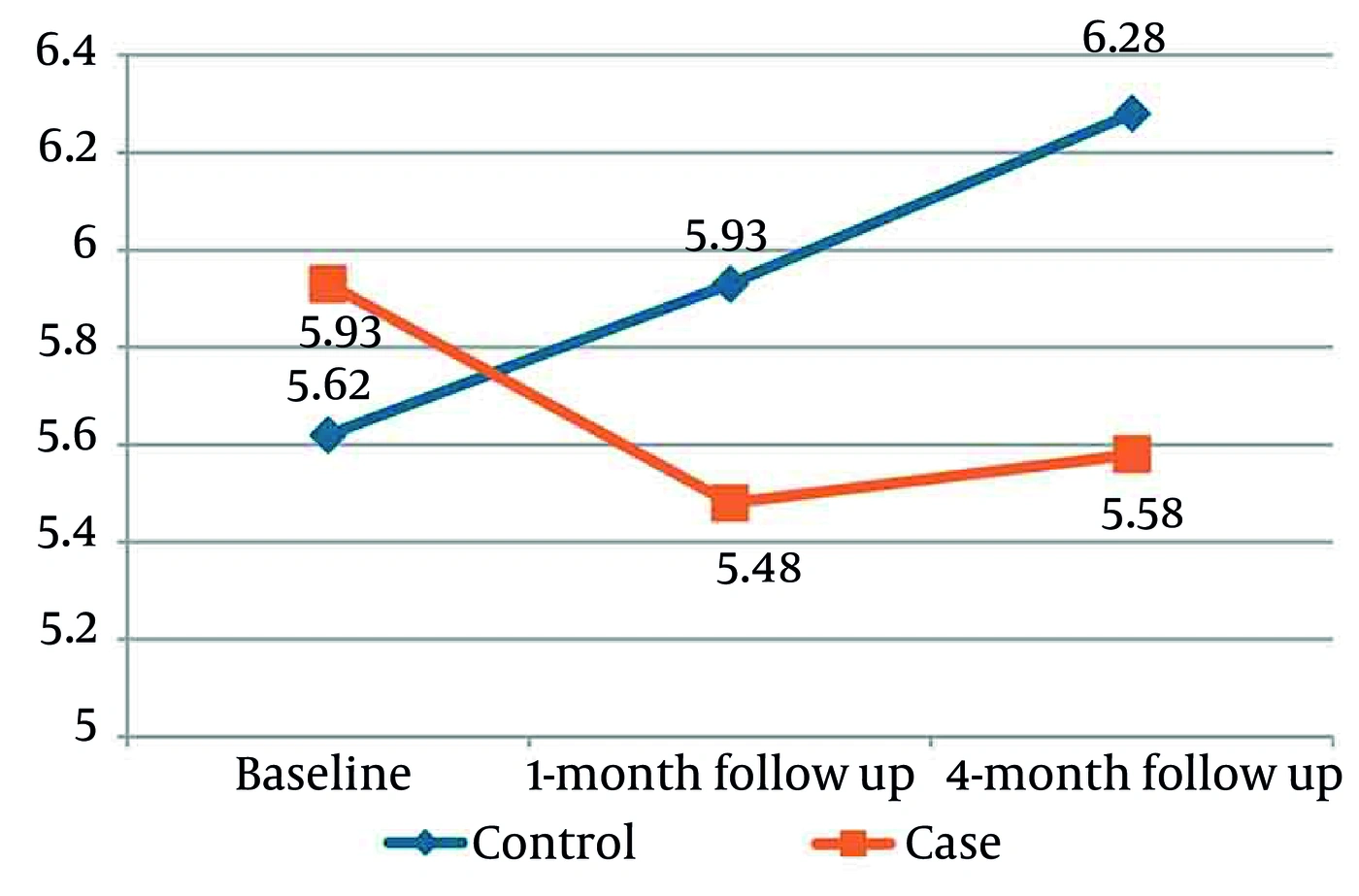
Figure 2.
Visual Analog Scale scores between the two groups over time
4.4. Adverse Effects
No serious adverse events or major complications were observed during the study period. Mild transient adverse effects, including localized tenderness, injection-site pain, and minor bruising, were reported in some participants receiving mesotherapy. These symptoms resolved spontaneously without the need for additional intervention.
5. Discussion
The present single-blind randomized controlled clinical trial evaluated the effectiveness of mesotherapy combined with exercise therapy in patients with chronic myofascial neck pain. The findings demonstrated that participants receiving mesotherapy experienced significantly greater improvement in neck-related functional disability, as measured by the NDI, than patients receiving exercise therapy alone. Although pain intensity based on VAS scores showed numerical improvement in the mesotherapy group during follow-up, no statistically significant between-group difference in pain reduction over time was identified.
Chronic neck pain associated with myofascial trigger points is a multifactorial musculoskeletal condition that frequently results in long-term disability, impaired quality of life, decreased occupational performance, and reduced daily functioning. Trigger points located within the upper trapezius and cervical paraspinal muscles are considered important contributors to persistent cervical pain syndromes and may lead to local tenderness, referred pain, muscular stiffness, restricted mobility, and chronic functional impairment (4, 5).
The findings of the present study are generally consistent with previous investigations supporting the role of mesotherapy in cervical pain rehabilitation. Among the currently available studies, the investigation conducted by Paolucci et al. is the most closely related to the present trial. Paolucci et al. reported favorable short-term outcomes following trigger point mesotherapy in patients with chronic neck pain and demonstrated improvement in both pain-related symptoms and functional status after treatment (12). Similar to the present findings, their study suggested that mesotherapy may provide clinically meaningful benefits in patients with cervical myofascial pain syndrome (10).
An important finding of the present study was the divergent trajectory of functional disability between the two groups. While NDI scores decreased in the mesotherapy group, indicating improvement in neck-related disability, NDI scores increased progressively in the control group. Because higher NDI scores represent greater disability, the increase from 43.69 at baseline to 52.79 at 1 month and 58.82 at 4 months indicates worsening disability in the control group rather than improvement. This finding should be interpreted cautiously. The absence of a sham-injection control, differences in treatment contact and expectations, and the subjective nature of the NDI may have contributed to the observed between-group difference. In addition, the worsening trajectory in the control group increased the magnitude of the observed between-group contrast and therefore may have made the apparent treatment effect of mesotherapy seem greater than would be observed against a stable or sham-treated control.
However, several important methodological and therapeutic differences distinguish the current study from previous investigations. First, unlike the retrospective design used in the study by Paolucci et al., the present trial was conducted as a randomized controlled clinical trial with assessor and data analyst blinding, thereby improving methodological rigor and reducing potential bias. Second, the current study used a different pharmacological formulation consisting of lidocaine 2% combined with piroxicam 40 mg, whereas previous studies primarily evaluated lidocaine-based mesotherapy protocols alone. Third, the present protocol involved a greater number of injection points targeting both the cervical paraspinal and upper trapezius muscles. In addition, the current study incorporated a structured rehabilitation-based comparator group and a longer 4-month follow-up period, allowing a more comprehensive longitudinal assessment of treatment outcomes.
One of the most important findings of the present study was the significant improvement in neck-related disability despite the absence of statistically significant superiority in VAS pain scores between groups. This observation may have important clinical implications because functional disability often reflects the real-life burden of chronic neck pain more accurately than pain intensity alone. Patients with chronic cervical myofascial pain frequently experience limitations in posture, muscular endurance, occupational activities, sleep quality, and daily performance even when changes in subjective pain intensity are relatively modest. Therefore, the superior improvement observed in NDI scores may indicate enhanced functional recovery, improved cervical biomechanics, or greater rehabilitation responsiveness following mesotherapy intervention (3, 8).
Several mechanisms may explain the potential therapeutic effects of mesotherapy in chronic cervical myofascial pain syndrome. Mesotherapy involves superficial subcutaneous microinjections that may prolong local drug retention while minimizing systemic drug exposure. Lidocaine may reduce peripheral nociceptive sensitization and interrupt abnormal pain transmission associated with active trigger points, whereas piroxicam may exert local anti-inflammatory effects by inhibiting inflammatory mediators involved in chronic musculoskeletal pain. In addition, repeated superficial injections around trigger points may influence local circulation, tissue oxygenation, muscular tension, and neuromuscular modulation, potentially contributing to functional improvement (10, 11).
Previous investigations evaluating trigger point-targeted interventions further support the biological plausibility of the present findings. Another study demonstrated that lidocaine injection into intramuscular innervation zones could effectively improve chronic neck pain associated with trapezius myofascial trigger points. Likewise, systematic reviews and meta-analyses evaluating dry needling interventions, including the study conducted by Navarro-Santana et al., have reported favorable effects of trigger point-targeted therapies on neck pain and disability outcomes (14). Although dry needling and mesotherapy differ mechanistically, both approaches emphasize the importance of trigger point modulation in the management of chronic cervical myofascial pain (6, 7, 15-17).
The current findings are also supported by more recent evidence regarding mesotherapy in cervical pain disorders and musculoskeletal rehabilitation. Ranieri et al. reported improvement in pain intensity, cervical function, and range of motion following intradermal therapy in patients with cervicobrachial pain (17). Similarly, Scaturro et al. demonstrated beneficial effects when mesotherapy was combined with rehabilitation interventions in patients with neck pain syndromes. Collectively, these findings support growing interest in mesotherapy as a potentially beneficial adjunctive modality for cervical musculoskeletal disorders and myofascial pain conditions (2, 13, 16).
Exercise therapy remains one of the most evidence-based conservative interventions for chronic neck pain rehabilitation (7). Current rehabilitation guidelines and systematic reviews strongly support the role of therapeutic exercise in improving muscular endurance, posture, flexibility, and functional recovery in chronic cervical pain disorders. In the present study, both groups received standardized exercise therapy and demonstrated longitudinal changes over time, underscoring the value of structured rehabilitation programs. Nevertheless, the significantly greater improvement in disability observed in the mesotherapy group suggests that mesotherapy may provide additive benefits when integrated into multimodal rehabilitation protocols (7-9).
The findings of the present study should also be interpreted in light of the current heterogeneity in the mesotherapy literature. Previous studies have used different pharmacological agents, injection techniques, anatomical targets, treatment frequencies, and outcome measures, making direct comparisons across studies challenging. The systematic review and meta-analysis conducted by Faetani et al. emphasized that although mesotherapy appears to be relatively safe and potentially effective for musculoskeletal pain disorders, further high-quality randomized controlled studies with standardized protocols remain necessary (11).
The present study has several strengths. To the best of our knowledge, this study is among the limited randomized controlled clinical trials specifically investigating mesotherapy in chronic cervical myofascial pain syndrome. The use of assessor and data analyst blinding, a structured exercise-based comparator group, a standardized injection protocol, longitudinal 4-month follow-up, and active adherence monitoring through telephone calls and text-message follow-up improved the methodological quality of the study. Furthermore, the current protocol used a distinct lidocaine-piroxicam formulation and a greater number of injection points than previous related studies, potentially contributing to its clinical relevance and novelty.
Nevertheless, several limitations should be acknowledged. The relatively limited sample size may have reduced the statistical power required to detect subtle between-group differences in pain intensity outcomes. Although the follow-up duration in the present study was longer than that in several previous investigations, future studies with extended follow-up periods may provide additional insight into the durability of treatment effects. Moreover, because both groups received exercise therapy and oral medication, the isolated independent effect of mesotherapy could not be fully determined. Because of the nature of the mesotherapy intervention, participants and the treating clinician could not be blinded to treatment allocation. In addition, the control group did not receive a sham injection. Therefore, differences in treatment expectations, treatment-related attention, frequency of clinical contact, and nonspecific effects associated with receiving injections may have contributed to the observed between-group differences. This issue is particularly relevant because the primary outcomes, including the NDI and VAS, are subjective patient-reported measures and may be influenced by participants' expectations and perceptions of treatment. Although outcome assessors and the statistician were blinded to group allocation, these measures cannot completely eliminate the potential for performance and expectation bias. Future randomized controlled trials using an appropriate sham-injection control and equivalent treatment contact between groups are warranted to better distinguish the specific effects of mesotherapy from nonspecific treatment effects. Future studies incorporating an additional mesotherapy-only group may help clarify the independent contribution of mesotherapy to clinical outcomes.
Overall, the findings suggest that mesotherapy combined with exercise was associated with greater improvement in neck-related disability and pain than exercise alone. For NDI, the between-group differences in change from baseline were 12.98 points at 1 month and 20.17 points at 4 months, favoring the mesotherapy group. The magnitude of these differences exceeded the commonly reported 7.5-point MCID reference for the 0 - 50 NDI scale. However, because MCID estimates vary across populations and methodologies, these findings should be interpreted as evidence of a potentially clinically important treatment effect rather than as definitive proof of clinically meaningful benefit.
The safety findings should also be interpreted in the context of the number, severity, and duration of reported adverse events. Given the relatively small sample size and limited follow-up period, the absence of serious adverse events, if confirmed, should not be interpreted as definitive evidence of long-term safety. Although statistically significant superiority in pain-intensity reduction was not observed, the consistent improvement in functional outcomes indicates that mesotherapy may serve as a valuable adjunctive modality within multidisciplinary rehabilitation programs for chronic cervical myofascial pain syndrome.
Recent studies have further highlighted the potential role of conservative and myofascial-based interventions in the management of musculoskeletal pain and functional disability, including exercise-based approaches for chronic neck pain and myofascial interventions for other musculoskeletal conditions. Mesotherapy has also been investigated in other clinical contexts, although its application and therapeutic mechanisms may vary according to the target condition and injected agents (18-20).
5.1. Conclusions
The findings of this randomized controlled clinical trial indicate that mesotherapy combined with exercise therapy may improve neck-related functional disability in patients with chronic myofascial neck pain. Although pain intensity improved in both groups, no statistically significant between-group difference was observed for VAS scores. However, patients receiving mesotherapy demonstrated significantly greater improvement in NDI scores at both 1- and 4-month follow-up assessments.
The mesotherapy group demonstrated greater improvement in NDI and pain scores over follow-up than the control group. The magnitude of the between-group difference in NDI change exceeded a commonly reported MCID reference at follow-up. No serious adverse events were observed during the study period. Given the relatively small sample size and limited follow-up, these findings should be interpreted cautiously. Mesotherapy may serve as a useful adjunct to rehabilitation programs for chronic myofascial neck pain. Further multicenter randomized controlled trials with larger sample sizes and additional treatment arms are recommended to clarify the independent and long-term effects of mesotherapy.