
1. Background
Multiple sclerosis (MS) is one of the most common immune-mediated neurological diseases worldwide, with a global prevalence ranging from 5 to 300 per 100,000 people and influenced by latitude (1). As an autoimmune inflammatory condition, MS causes demyelination in the brain, spinal cord, and optic nerves, impairing sensory, motor, and cognitive functions. Symptoms vary widely and may worsen with fatigue, heat exposure, illness, or medication side effects (2).
Although pharmacological therapies, such as interferon-beta, and symptom-management strategies are widely used (3), individuals with MS frequently experience physical limitations that reduce their participation in health-promoting behaviors (4). Decreased physical activity (PA) is a major global concern among patients with MS. PA encompasses all skeletal muscle-driven movements that produce energy expenditure, including work-related activities, commuting, household tasks, leisure activities, and structured exercise (5).
Reduced PA in MS is associated with increased risks of cardiovascular disease, diabetes, depression, fatigue, impaired balance, and decreased mobility (6). Despite guidelines promoting PA in MS, evidence (7) consistently indicates that affected individuals remain less active (8, 9) than healthy populations (10, 11).
Empowerment-based education can foster positive behavioral changes, promote self-care, and improve quality of life (12). Advances in digital health have made mobile technology a practical and cost-effective platform for delivering timely health education. Mobile applications enable flexible, adaptive learning regardless of time and location (13, 14).
Studies show that mobile-based education can improve knowledge, adherence, and lifestyle behaviors in various chronic conditions (15). Limited yet promising evidence also suggests potential benefits for neurological diseases, including MS and Parkinson’s disease. However, findings are inconsistent: while some studies report improved self-management with MS apps (16), others highlight unmet needs and insufficient functionality (17).
Salimzadeh et al. reported that mobile app-based self-management programs empower patients with MS (18), whereas Giunti et al. reported that MS mobile applications are unable to respond to the needs and wishes of patients with this disease, which may reduce their effectiveness (16). They stated that these applications are often developed with limited involvement of healthcare professionals, resulting in a lack of evidence-based content and standardized design. Consequently, some applications may provide inadequate or potentially misleading information and may not cover all aspects of the disease, such as self-management and patient empowerment. These applications also offer limited opportunities for social interaction and peer support. The authors concluded that such shortcomings may hinder their ability to adequately address the complex needs of individuals with MS.
In contrast, Salimzadeh et al. suggested that mobile applications addressing a broad spectrum of MS symptoms may enhance patient empowerment and support self-management. However, the authors emphasized that evidence-based mobile applications should be developed with the active involvement of healthcare professionals.
2. Objectives
Although previous Iranian studies have reported the development of mobile application-based self-management programs for people with MS, no nurse-led mobile app-based educational intervention has been specifically developed to improve PA levels in this population (16, 18). Given the contradictory evidence and these gaps, this study aimed to examine the effect of nurse-led mobile app-based education on PA levels among individuals with MS.
3. Methods
3.1. Study Design and Setting
This quasi-experimental study with a control group was conducted among patients with MS attending the MS Clinic of Firuzgar Medical Education Center in Tehran. Participants were recruited through convenience sampling. Individuals who met the inclusion criteria were enrolled and, to reduce contamination, were nonrandomly allocated to the intervention and control groups on alternating recruitment days (intervention on one day and control on the following day). The inclusion criteria were age ≥ 18 years, literacy, a confirmed diagnosis of MS by a neurologist documented in the medical record and supported by MRI findings, ownership of an Android smartphone, and willingness to participate. The exclusion criteria were mobility limitations unrelated to MS, unwillingness to continue participation, or death during the study.
Due to the mobile app-based nature of the intervention, complete blinding of participants was not feasible. However, the outcome assessor was blinded to group allocation. Physical activity outcomes were measured using self-administered questionnaires completed by the participants.
Participants in the control group received routine care provided by the MS clinic, including pharmacotherapy, and did not receive access to the educational mobile application during the study period. After completion of data collection, the educational materials were made available to the control group.
3.2. Sample Size
The sample size was calculated based on the primary outcome, the PA score. Using estimates reported by Rahimian et al. (19), a standard deviation of 750.8, and a minimum clinically relevant between-group difference of 400 points, the required sample size was 55 participants per group at a two-sided significance level of 0.05 and 80% power. To account for potential attrition, 60 participants were recruited for each group.
Based on the sample size calculation, approximately 60 participants were required in each group. A total of 120 eligible participants were enrolled in the study. Due to the nonrandom allocation process, the final groups consisted of 61 participants in the intervention group and 59 participants in the control group.
3.3. Ethical Considerations
Ethical approval was obtained from the Iran University of Medical Sciences Ethics Committee (IR.IUMS.REC.1402.173). The trial was registered in the Iranian Registry of Clinical Trials (IRCT20230628058609N1). Written informed consent was obtained from all participants.
3.4. Data Collection and Instruments
Data were collected using a two-part questionnaire. The first part was a demographic characteristics form, and the second part was the International Physical Activity Questionnaire (IPAQ). The long-form International Physical Activity Questionnaire (IPAQ-LF), consisting of 27 items across work-related, transportation, domestic/gardening, and leisure-time physical activity domains, was used. A link to the questionnaire was sent electronically to patients referred to the MS clinic of Firuzgar Hospital who met the inclusion criteria and signed the consent form to participate in the study. The first part of the questionnaire included disease information and demographic characteristics, including age, sex, educational level, marital status, and MS type (relapsing-remitting, primary progressive, or secondary progressive).
In the second part, the approved Persian version of the International PA Questionnaire (IPAQ) was used to evaluate physical activity. This questionnaire has been tested and approved for adults aged 18 - 65 years in 20 countries (20, 21). The questions address the amount of vigorous and moderate PA and walking in the last 7 days. The PA tool consists of 27 questions on types of physical activities in five sections related to 1. daily work, 2. transportation (commuting), 3. housework (housekeeping and family care), 4. sports and PA during leisure time, and 5. time spent sitting, which the person performed as part of daily life during the last 7 days. Finally, the data were categorized as low, moderate, and high, as shown in Table 1 (22).
Table 1.
Analysis of Physical Activity Levels in Multiple Sclerosis a
| No. | Physical Activity Level | Conditions |
|---|---|---|
| 1 | Low | No activity or failure to meet the criteria for the other 2 categories |
| 2 | Moderate | Meeting at least 1 of the following criteria: a) vigorous physical activity for at least 20 minutes/day on at least 3 days/week; b) moderate physical activity or walking for at least 20 minutes/day on at least 5 days/week; or c) a combination of moderate or vigorous physical activity and walking on at least 5 days/week, totaling at least 600 MET-min/week |
| 3 | High | Meeting at least 1 of the following criteria: a) vigorous physical activity on at least 3 days/week, totaling at least 1500 MET-min/week; or b) any combination of vigorous or moderate physical activity and walking on at least 7 days/week, totaling at least 1500 MET-min/week |
a Metabolic Equivalent of Task is a physiological scale that expresses the energy cost related to physical activity and is a ratio of the amount of metabolism and therefore energy consumption during a specific physical activity compared to a reference metabolic ratio.
Table 1 Analysis of Physical Activity levels in MS
3.4.1. Validity and Reliability of the Instruments
To determine the validity of the demographic form, content validity was used. The author-made demographic form was prepared after reviewing reliable sources and books, and content validity was assessed by 3 faculty members of the Faculty of Nursing and Midwifery, Iran University of Medical Sciences.
3.4.2. Validity and Reliability of the Physical Activity Questionnaire
The IPAQ was created by an international physical activity expert group in Geneva in 1998, and its validity and reliability have been confirmed in 12 countries, with a validity of 0.30 and a reliability of 0.80 reported (23). This questionnaire has been used in various studies in China, and its validity and reliability have been confirmed. Content validity was also used to assess the educational content. This content was prepared after reviewing reliable sources and books related to the research; additionally, scientific comments were obtained from 5 faculty members of the Iran Faculty of Nursing and Midwifery.
3.5. Educational Content
The content of Mobile App-Based Education on Physical Activity in Patients with multiple sclerosis was extracted by the author, a medical-surgical nurse, from reliable, up-to-date, evidence-based medical, nursing, and rehabilitation references. The accuracy, precision, and validity of this information were approved by three faculty members of the School of Nursing and Midwifery at the Iran University of Medical Sciences.
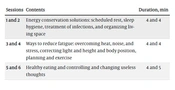
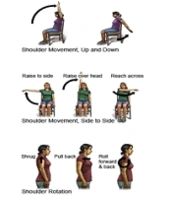
The application consisted of 11 evidence-based educational modules containing both text and illustrative images. The modules covered: multiple sclerosis and its symptoms (providing information about disease and clinical symptoms), corrective exercises, physiotherapy and occupational therapy, balance exercises, yoga, physical self-care, swallowing problems, pain management, urinary problems, sleep disorders and insomnia management, and nutrition and dietary recommendations. The app suggested performing the physical exercises at home for at least half an hour, three times a week.
3.6. Software Design
A custom Android application was developed in collaboration with a software engineering team. The logo was designed in consultation with the graphic team. This logo is the well-known sign of the MS disease association and was designed in the standard size of the application, with an appropriate color similar to the background of the text. To design features with the desired options, a software engineer specializing in this field was consulted. The initial software was designed based on the expert consultant engineer’s opinions, verifying the fit of the content placement with the proposed graphics and matching software standards with the existing content. In the initial software, the font size was 12, whereas the headers were 14. In the initial version, the options were arranged as circles next to each other, and the screen background was a combination of soothing colors such as blue and green. After applying standards and graphically reviewing similar application samples, the consulting engineer team designed the options as rectangles below each other, and the screen background color was changed to white and pale blue.
To ensure implementation of the practical plans by patients, during the first two weeks, daily and weekly phone calls were made to the intervention group, and participants were reminded to implement the practical plan. At the end of the educational intervention, the questionnaires were completed again by the participants in the study (both the control and intervention groups).
3.7. Intervention
Participants in the intervention group received a smartphone-based educational program for four weeks. The application was installed on participants’ Android smartphones during a face-to-face session lasting approximately 15 - 20 minutes, during which instructions on installation and use of the application were provided.
In addition to the educational content, participants were encouraged to perform the recommended exercises and self-care activities. To enhance adherence, daily telephone follow-up was conducted during the first two weeks, followed by weekly telephone follow-up during the remaining two weeks. Baseline questionnaires were completed before accessing the educational content, and outcomes were assessed at baseline and at the end of the four-week intervention period.
3.8. Statistical Analysis
Data were analyzed using SPSS version 22. Descriptive statistics, including means, standard deviations, frequencies, and percentages, were used to summarize participant characteristics and study outcomes. Baseline comparability between the intervention and control groups was assessed using independent-samples t tests (Table 2). Within-group changes from baseline to the one-month follow-up were evaluated using paired-samples t-tests (Tables 3 and 4). To examine intervention effects over time, change scores (follow-up minus baseline) were calculated for each physical activity outcome and compared between groups using independent-samples t tests (Table 5). Statistical significance was set at P < 0.05. Prior to analysis, data were reviewed for completeness and obvious entry errors. No additional truncation procedures were applied.
Table 2.
Demographic Characteristics of the Participants a
| Factors | Control Group | Intervention Group | Test Result |
|---|---|---|---|
| Age | Independent t test: df = 118; P = 0.156 | ||
| ≤ 30 | 10 (16.9) | 18 (29.5) | |
| 30 - 39 | 27 (45.8) | 23 (37.7) | |
| ≥ 40 | 22 (37.3) | 20 (32.8) | |
| Total | 59 (100) | 61 (100) | |
| Mean ± SD | 37.02 ± 7.62 | 34.9 ± 8.55 | |
| Range | 21 - 50 | 20 - 48 | |
| Gender | χ2 = 1.109; df = 1; P = 0.292 | ||
| Female | 43 (72.9) | 39 (63.9) | |
| Male | 16 (27.1) | 22 (36.1) | |
| Total | 59 (100) | 61 (100) | |
| Employment status | Fisher exact test: P = 0.439 | ||
| Employed | 3 (5.1) | 3 (4.9) | |
| Retired | 33 (55.9) | 41 (67.2) | |
| Homemaker | 23 (39) | 17 (27.9) | |
| Total | 59 (100) | 61 (100) | |
| Health insurance | Fisher exact test: P = 0.998 | ||
| Yes | 54 (91.5) | 56 (91.8) | |
| No | 5 (8.5) | 5 (8.2) | |
| Total | 59 (100) | 61 (100) | |
| Education | χ2 = 5.325; df = 3; P = 0.149 | ||
| Elementary school | 8 (13.6) | 3 (4.9) | |
| High school | 16 (27.1) | 22 (36.1) | |
| Bachelor degree | 24 (40.7) | 30 (49.2) | |
| Higher than bachelor degree | 11 (18.6) | 6 (9.8) | |
| Total | 59 (100) | 61 (100) | |
| Marital status | Fisher exact test: P = 0.169 | ||
| Married | 38 (64.4) | 30 (49.2) | |
| Single | 17 (28.8) | 28 (45.9) | |
| Widowed | 4 (6.8) | 3 (4.9) | |
| Total | 59 (100) | 61 (100) | |
| Living arrangement | Fisher exact test: P = 0.191 | ||
| Alone | 4 (6.8) | 4 (6.6) | |
| With family | 38 (64.4) | 30 (49.2) | |
| In children's home | 17 (28.8) | 27 (44.3) | |
| Total | 59 (100) | 61 (100) | |
| MS type | Fisher exact test: P = 0.431 | ||
| Progressive | 4 (6.8) | 5 (8.2) | |
| Remittance | 4 (6.8) | 8 (13.1) | |
| Primary progressive | 1 (1.7) | 3 (4.9) | |
| Secondary progressive | 14 (23.7) | 8 (13.1) | |
| Unknown | 36 (61) | 37 (60.7) | |
| Total | 59 (100) | 61 (100) |
a Values are expressed as No. (%) unless otherwise indicated.
Table 3.
Physical Activity Dimensions Before the Intervention in the Control and Intervention Groups
| Physical Activity Dimension | Control Group | Intervention Group | Independent t Test | ||
|---|---|---|---|---|---|
| Minimum - Maximum | Mean ± SD | Minimum - Maximum | Mean ± SD | ||
| Daily work | 0 - 1645.5 | 438.1 ± 458.48 | 0 - 1314 | 581.36 ± 515.69 | t = 1.606; df = 118; P = 0.111 |
| Transportation | 198 - 2754 | 1783.07 ± 621.87 | 297 - 3459 | 1784.9 ± 811.81 | t = 0.021; df = 118; P = 0.983 |
| Housework and family care | 0 - 3880 | 417.28 ± 673.28 | 0 - 3880 | 6.1.31 ± 696.26 | t = 1.471; df = 118; P = 0.144 |
| Recreation and sports during leisure time | 0 - 4338 | 608.68 ± 719.68 | 0 - 1566 | 487.32 ± 475.71 | t = 1.093; df = 118; P = 0.277 |
| Time spent sitting | 318 - 3170 | 1291.01 ± 675.39 | 318 - 3170 | 1459.57 ± 708.01 | t = 1.334; df = 118; P = 0.185 |
| Total physical activity | 2286 - 10852 | 1646.24 ± 1723 | 1723 - 7733 | 4914.48 ± 1528.41 | t = 1.28; df = 118; P = 0.203 |
Table 4.
Physical Activity Dimensions After the Intervention in the Control and Intervention Groups
| Physical Activity Dimension | Control Group | Intervention Group | Independent t Test | ||
|---|---|---|---|---|---|
| Minimum - Maximum | Mean ± SD | Minimum - Maximum | Mean ± SD | ||
| Daily work | 0 - 1356 | 482.53 ± 424.16 | 0 - 3672 | 979.63 ± 773.31 | t = 4.435; df = 118; P < 0.001 |
| Transportation | 339 - 2853 | 1571.89 ± 664.63 | 558 - 5139 | 2206.86 ± 935.63 | t = 4.273; df = 118; P < 0.001 |
| Housework and family care | 0 - 3000 | 366.77 ± 431.62 | 0 - 5280 | 1188.85 ± 1308.09 | t = 4.591; df = 118; P < 0.001 |
| Recreation and sports during leisure time | 0 - 4338 | 665.8 ± 724.89 | 0 - 3132 | 871.41 ± 773.51 | t = 1.501; df = 118; P = 0.136 |
| Time spent sitting | 417 - 2064 | 956.57 ± 351.12 | 318 - 3170 | 1048.59 ± 383.01 | t = 1.371; df = 118; P = 0.173 |
| Total physical activity | 2286 - 8391 | 4043.59 ± 1354.28 | 2340 - 12435 | 6295.34 ± 2068.45 | t = 7.03; df = 118; P < 0.001 |
Table 5.
Physical Activity Dimensions Before and After the Intervention in the Intervention Group
| Physical Activity Dimension | Control Group | Intervention Group | Independent t Test | ||
|---|---|---|---|---|---|
| Minimum - Maximum | Mean ± SD | Minimum - Maximum | Mean ± SD | ||
| Daily work | 0 - 1314 | 581.36 ± 515.69 | 0 - 3672 | 979.63 ± 773.31 | t = 6.046; df = 60; P < 0.001 |
| Transportation | 297 - 3459 | 1784.9 ± 811.81 | 558 - 5139 | 2206.86 ± 935.63 | t = 5.021; df = 60; P < 0.001 |
| Housework and family care | 0 - 3880 | 601.31 ± 696.26 | 0 - 5280 | 1188.85 ± 1308.09 | t = 5.315; df = 60; P < 0.001 |
| Recreation and sports during leisure time | 0 - 1566 | 487.32 ± 475.71 | 0 - 3132 | 871.41 ± 773.51 | t = 6.822; df = 60; P < 0.001 |
| Time spent sitting | 318 - 3170 | 1459.57 ± 708.01 | 318 - 3170 | 1048.59 ± 383.01 | t = 6.007; df = 60; P < 0.001 |
| Total physical activity | 1723 - 7733 | 4914.48 ± 1582.41 | 2340 - 12435 | 6295.34 ± 2068.45 | t = 7.362; df = 60; P < 0.001 |
MET-min/week scores were calculated according to the IPAQ scoring protocol by multiplying the frequency (days/week), duration (minutes/day), and corresponding MET values for each activity intensity and domain. Total physical activity was obtained by summing the domain-specific MET-min/week scores.
Participants were classified into low, moderate, and high physical activity levels according to the IPAQ scoring protocol. These categories were used to characterize participants’ physical activity levels. However, the statistical analyses reported in Tables 2-6 were performed using continuous physical activity measures (MET-min/week and domain-specific scores) rather than the categorical classifications.
Table 6.
Physical Activity Dimensions Before and After the Intervention in the Control Group
| Physical Activity Dimension | Control Group | Intervention Group | Independent t Test | ||
|---|---|---|---|---|---|
| Minimum - Maximum | Mean ± SD | Minimum - Maximum | Mean ± SD | ||
| Daily work | 0 - 1645.5 | 438.1 ± 458.48 | 0 - 1356 | 482.53 ± 424.16 | t = 1.441; df = 58; P = 155/0 |
| Transportation | 198 - 2754 | 1782.07 ± 621.87 | 339 - 2853 | 1571.89 ± 664.63 | t = 3.784; df = 58; P < 0.001 |
| Housework and family care | 0 - 3880 | 417.28 ± 673.28 | 0 - 3000 | 366.77 ± 431.62 | t = 1.16; df = 58; P = 0.251 |
| Recreation and sports during leisure time | 0 - 4338 | 608.68 ± 719.68 | 0 - 4338 | 665.8 ± 724.89 | t = 1.476; df = 58; P = 0.145 |
| Time spent sitting | 318 - 3170 | 1291.01 ± 675.39 | 417 - 2064 | 956.57 ± 351.12 | t = 4.824; df = 58; P < 0.001 |
| Total physical activity | 2286 - 10852 | 4537.15 ± 1646.24 | 2286 - 8391 | 4043.59 ± 1354.28 | t = 5.024; df = 58; P < 0.001 |
4. Results
A total of 120 participants were included in the analysis, including 61 in the intervention group and 59 in the control group. Descriptive statistics for demographic variables are presented in Table 7. Baseline demographic characteristics were compared between groups using chi-square and Fisher's exact tests, and no statistically significant differences were observed.
Table 7.
Changes in Physical Activity and its Dimensions in the Intervention and Control Groups a
| Physical Activity Dimension | Control Group | Intervention Group | Independent t Test |
|---|---|---|---|
| Daily work | 44.43 ± 236.85 | 398.26 ± 514.46 | t = 4.812; df = 118; P < 0.001 |
| Transportation | -210.17 ± 426.66 | 421.96 ± 656.34 | t = 6.233; df = 118; P < 0.001 |
| Housework and family care | -50.51 ± 334.56 | 587.54 ± 863.36 | t = 5.304; df = 118; P < 0.001 |
| Recreation and sports during leisure time | 57.11 ± 297.17 | 384.07 ± 439.72 | t = 4.756; df = 118; P < 0.001 |
| Time spent sitting | -423.82 ± 565.9 | -345.41 ± 554.01 | t = 0.767; df = 118; P = 445/0 |
| Total physical activity | -493.56 ± 754.61 | 1380.86 ± 1456.01 | t = 8.766; df = 118; P < 0.001 |
a Values are expressed as mean ± SD.
The intervention and control groups were comparable at baseline. As shown in subsequent tables, participants in both groups demonstrated low PA levels prior to the intervention. As shown in Table 6, at the one-month follow-up, participants in the intervention group demonstrated significantly higher levels of work-related physical activity, transportation-related physical activity, household activities, and total physical activity than the control group (P < 0.001).
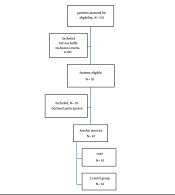
Post-intervention analyses revealed significant improvements in total PA and in PA domains in the intervention group compared with the control group (P < 0.001). No significant improvements were observed in the control group. Figure 1 shows the flow of participant recruitment, allocation, follow-up, and inclusion in the final analysis.
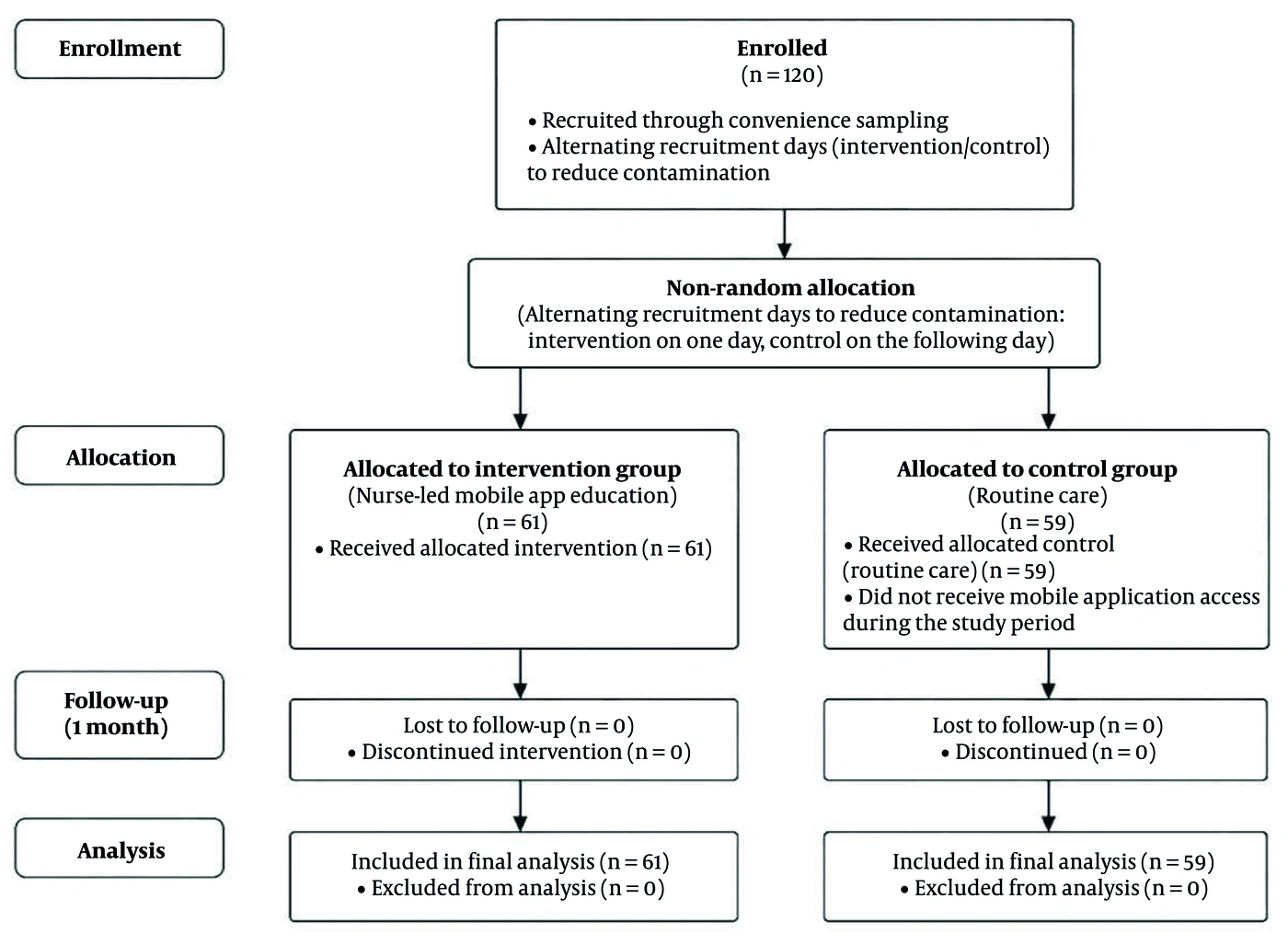
Figure 1.
Flow diagram of participant recruitment, allocation, follow-up, and analysis
Although a universally accepted minimal clinically important difference for IPAQ scores in people with MS has not been established, the observed increase suggests a meaningful enhancement in self-reported physical activity behavior over the study period.
5. Discussion
This study demonstrated that mobile app-based education significantly improved PA in individuals with MS. Before the intervention, both groups had similarly low PA levels, consistent with previous studies indicating reduced PA as a global challenge among patients with MS (11). As this chronic neurological disease is associated with a variety of sensory, motor, visual, and cognitive symptoms, as well as fatigue (24), these consequences clearly have a negative effect on PA levels among patients with MS.
The results reported by Nasseri et al., Zhai et al., Motl et al., and Plow et al. were consistent with the present findings and showed no significant difference in the mean PA score between the intervention and control groups (25-27). These studies also reported low PA levels among patients with MS (26, 28). However, continued reductions in PA are associated with an increased risk of comorbidities, such as cardiovascular diseases, diabetes, depression, and fatigue, as well as the aggravation of movement and balance problems in people with MS (6, 8).
Despite these similarities, several important differences distinguish the present study from previous investigations. Motl et al. evaluated the effect of a behavioral intervention on physical activity, whereas the present study specifically focused on promoting physical activity through exercise education, corrective exercises, and yoga delivered via a mobile-based application. Similarly, although the intervention developed by Nasseri et al. incorporated educational materials in text and image formats, it was designed and delivered by physiotherapists, whereas the application in the present study was developed with multidisciplinary input under nursing leadership. Furthermore, unlike the study by Plow et al., which primarily relied on telephone-based educational support, our intervention was delivered through a mobile application, providing continuous and easily accessible educational content. These differences highlight distinctions from previously published work.
After the intervention, there was a statistically significant difference in PA dimensions related to daily work, PA for transportation, housework, family care, and the average total PA score; thus, the average score obtained in each dimension in the intervention group was significantly greater than that in the control group. According to the results of the present study, mobile app-based education in patients with MS can improve PA related to daily work, PA for transportation, housework, family care, and general physical activity. Salimzadeh et al. reported that self-management programs based on mobile applications empower patients with MS (18).
The results of the study by Üstündağ et al., in line with the present study, showed a significant effect of a mobile application educational programme developed with self-care topics on improving the PA of patients with MS over 3 months (29). This study is consistent with our findings, in which self-care educational content, such as nutrition and diet training, sleep management, corrective movements, and physical activities, was provided to improve physical activity. This finding also highlights the popularity of mobile applications among patients with MS. Safian et al. showed a significant effect of a self-care program based on a mobile application on increasing balance (standing and walking) in patients with MS during the 2 months after completion of the intervention (30).
The results of Nasseri et al. also showed, in line with the present study, that 3 months after receiving healthy lifestyle education via a mobile application, there was a significant increase in PA in the intervention group compared with the control group. Possible reasons for the alignment between that study and the current study include similar educational content (nutrition and diet, adherence to treatment, sleep, PA, and corrective movements). In addition, education through mobile applications, while providing powerful educational content to improve self-care skills, offers the advantage that the content is available at any time and place (24). This accessibility may motivate patients to increase participation in health-promoting behaviors, thereby improving PA among patients with MS. One study also revealed that lifestyle intervention approaches can play a long-term role in increasing PA levels among patients with MS (25).
Additional recent evidence supports our findings. A 2022 randomized trial demonstrated that mobile health coaching improved physical activity and reduced fatigue in patients with MS (31). Similarly, a 2023 systematic review reported that app-based self-management tools were associated with improved adherence to physical activity recommendations among individuals with neurological conditions (32). Moreover, a 2024 multicenter study reported improvements in daily physical activity levels following tailored digital education programs in participants with chronic neurological diseases, including MS (33).
Unlike previous digital health interventions for people with MS, the present study evaluated a nurse-led mobile educational application that provided comprehensive, evidence-based content on physical activity, self-care, nutrition, sleep management, and symptom-related education. The intervention was implemented through a structured four-week educational program combined with telephone follow-up, and its effectiveness was assessed by measuring changes in physical activity outcomes.
In the Iranian context, caregiving for individuals with MS is frequently associated with considerable occupational, emotional, and social challenges. Motaharinezhad et al. reported that family caregivers of people with MS experience disruptions in daily routines, occupational limitations, and psychological burdens related to long-term care responsibilities (34). Although caregiver outcomes were not evaluated in the present study, improving patients' self-management skills and physical activity through mobile app-based education may potentially reduce some caregiving demands by promoting greater patient independence in daily activities. Therefore, nurse-led digital educational interventions may have broader implications beyond patients and may positively influence family-centered nursing in chronic neurological conditions such as MS. Future studies are warranted to investigate the effects of such interventions on caregiver burden and quality of life.
5.1. Strengths and Implications
This is the first study in Iran to evaluate a mobile-based educational intervention targeting PA among people with MS.
Nurse-led mobile education offers a scalable approach to chronic disease management.
5.2. Study Limitations
- The non-randomized study design may have introduced selection bias and residual confounding despite comparable baseline demographic characteristics between groups.
- Adjusted statistical analyses controlling for baseline values and potential confounding variables were not performed; therefore, the estimated intervention effects should be interpreted with caution. Assumptions underlying parametric statistical tests were not explicitly assessed or reported in the original study.
- The study did not assess participants' disease severity or disability status (e.g., Expanded Disability Status Scale [EDSS]), which may substantially influence physical activity levels and responsiveness to the intervention, thereby limiting the interpretation and generalizability of the findings.
- Generalizability may be limited because participants were recruited from a single neurology clinic and were required to own and use Android smartphones. Therefore, the findings may not fully represent individuals with MS receiving care in other settings or using different mobile platforms.
- Potential differences in responsiveness due to disease subtypes and participant subgroups were not specifically examined.
- Effect sizes and 95% confidence intervals were not available for the present analyses.
- The one-month follow-up period allowed assessment of short-term changes in physical activity but was insufficient to determine whether the observed improvements were sustained over time.
- Physical activity was self-reported and therefore may have been subject to recall and reporting bias.
5.3. Recommendations for Future Studies
Future studies should use randomized designs, longer follow-up periods, objective measures of app engagement, and assessments of caregiver-related outcomes, such as caregiver burden and quality of life, to evaluate the maintenance of behavioral change.
5.4. Conclusions
A nurse-led, mobile app-based educational program was associated with higher PA scores than routine care. By integrating modules on corrective exercise, nutrition, and sleep management, the app supported improvements across multiple PA domains. Mobile-based education may be an accessible and cost-effective tool for enhancing self-care and clinical outcomes among people with MS.
The detailed reporting of PA dimensions provides a foundation for future digital health interventions targeting populations with MS.