
1. Introduction
Mega mass gatherings represent one of the most complex stress tests for health systems, as they simultaneously generate a sudden surge in demand for healthcare services, place substantial pressure on prehospital care systems, disrupt referral pathways, increase congestion along access routes, and elevate the likelihood of secondary hazards related to environmental health, public safety, and disaster management (1). Under such circumstances, the mere availability of physical resources and healthcare personnel is insufficient to guarantee effective health system performance. Rather, the critical determinant is the resilience of the health system, characterized by its capacity to maintain essential functions, absorb sudden operational pressures, recover from operational disruptions, and dynamically adapt to evolving environmental and population (2). From this perspective, mega mass gatherings should be regarded not merely as service delivery events but as real-world tests of health governance, operational preparedness, and multisectoral response capacity within densely populated urban settings (3).
The capital of Iran faces substantial structural complexities even under routine urban conditions, including saturated highway networks, imbalanced distribution of healthcare resources, and persistent environmental challenges (4). During mega events, these vulnerabilities are intensified by population density. The event took place in an area characterized by dense administrative and transportation infrastructure, a complex traffic network, a highly mobile transient population, and the close operational interdependence of emergency medical services, healthcare providers, and law enforcement agencies. Consequently, Tehran faces conditions that constitute unique and critical challenges for public health management (5).
In addition to these structural challenges, the influx of a massive number of pilgrims and participants from different cities and provinces across the country, each with distinct demographic characteristics, varying levels of personal hygiene, and diverse sociocultural backgrounds, exposes the Tehran to a highly complex epidemiological and logistical phenomenon. Projections and concerns of up to 20 million participants exponentially increase epidemiological risk factors, including the transmission of communicable diseases, large-scale foodborne illnesses, and imminent exhaustion of the medical supply chain (6). Furthermore, such population density exceeds the absorptive capacity of both the capital's prehospital Emergency Medical Services (EMS) and the broader hospital-based healthcare infrastructure (6).
On the other hand, uncontrolled collective behaviors— manifesting spontaneous, unplanned assemblies, the unauthorized establishment of service stations at key transit hubs, and non-compliance of crowds with inactive defensive crowd management protocols—can lead to obstruction of critical transportation arteries, delays in emergency medical response, and substantially elevate the risk of crowd-related catastrophes such as fatal crush incidents. These conditions substantially undermine the accuracy of risk assessments and diminish urban resilience (7).
Accordingly, a substantial surge in healthcare demand under these conditions potentially overwhelming prehospital emergency medical services, field hospitals, referral networks, patient transport logistics, and the routine delivery of urban healthcare services (8). Nevertheless, despite Iran's extensive institutional experience in managing large-scale religious, political, and national gatherings, systematic scientific evidence regarding the actual performance of the capital's health system during mega mass gatherings remains limited, specifically evidence grounded in direct field observations and analyses of operational documentation (9).
The majority of the global literature on health in mass gatherings has primarily focused on clinical outcomes, healthcare utilization patterns, communicable diseases transmission, heat-related illnesses, and the management of internationally recognized events such as the Hajj, Arbaeen, and the Kumbh Mela. However, there remains a substantial gap in the systematic reporting of health system performance within a metropolitan capital, particularly from the perspective of the four key dimensions of health system resilience — robustness, absorptive capacity, recovery, and adaptability (8). Within Iran, few studies have provided comprehensive and well-documented reports of healthcare services delivered during mass gatherings, integrating multiple sources of evidence to present a realistic picture of the functional capacity of the health system during a high-density event (10). This evidence deficit impedes data-driven planning for future events, the development of response protocols for mega mass gatherings, and efforts to enhance urban resilience (11).
Furthermore, health system resilience cannot be adequately understood solely by quantifying available resources. A health system may possess an acceptable number of hospital beds, ambulances, or healthcare personnel; however, systemic vulnerabilities such as deficiencies in intersectoral coordination, disruptions in triage protocols, inadequacies in medical evacuation logistics, spatial inequities in the distribution of healthcare services, or shortcomings in environmental health measures may substantially compromise its ability to deliver an effective and safe response (12). Therefore, systematically documenting and reporting the actual performance of the various components of the health system during the event is essential for understanding the gap between nominal capacity and operational performance (13). This issue is particularly critical during mega mass gatherings in the capital, where any disruption in healthcare service delivery may extend beyond the event itself and adversely affect the entire urban healthcare delivery network (6). Accordingly, this descriptive case study was designed to systematically report the performance of the health system and its supporting infrastructures during the national funeral mega mass gathering in Iran.
2. Case Presentation
2.1. Study Design
This study utilized a retrospective, descriptive case study design, employing a systematic analysis of media documentation. Data were derived exclusively from reports issued by reputable national and international news agencies and media outlets. Conducted retrospectively after the completion of the national funeral ceremony, the study aimed to provide a comprehensive descriptive characterization of healthcare service delivery, operational frameworks, and outcomes of the health system, as well as the performance of the supporting infrastructures during this mega mass gathering.
2.2. Data Sources
Data were collected from two categories of sources: (1) Official national news agencies and media outlets, including IRNA, WANA, Tasnim News Agency, Mehr News Agency, ISNA, Khabar Online, Eghtesad Online, Donya-e-Eqtesad, and Tehran Times; and (2) internationally recognized media outlets, including The Guardian, Al Jazeera, TIME, Euronews, and New Age. Searches were conducted using combinations of Persian and English keywords, including "Tehran funeral emergency response," "Mass Gathering health resilience," "Tehran crowd management," "Heat stress response Tehran," "Iran Funeral," "Khamenei Funeral," "Iran Supreme Funeral," "Tehran Funeral," "Martyred Leader," "Supreme Leader," and "Late Leader," across the official archives of the news agencies and Google News. The search period extended from 29 June 2026 to 11 July 2026, encompassing pre-event coverage of infrastructure preparedness and accommodation arrangements as well as follow-up reports published through 11 July 2026 after the conclusion of the event.
2.3. Eligibility Criteria
The inclusion criteria were: (1) publication by an official news agency or a media outlet with established editorial standards; (2) the provision of operational, logistical, or quantitative data pertaining to the health system or its supporting infrastructures; and (3) provision of an identifiable source and publication date. Conversely, reports were excluded if they lacked official attribution, content originating from unverified social media platforms, or consisted of redundant reports that offered no incremental informational value.
2.4. Data Extraction Process
Given the secondary nature of the data, verification was performed through cross-source triangulation. Quantitative data reported by multiple news agencies were presented as intervals (representing the minimum and maximum reported values) to reflect the inherent variability in reporting. Data available from only a single official source were reported with explicit attribution to that source, without additional interpretation or generalization. Claims identified exclusively in non-official sources and not corroborated by other reports were either excluded from the analysis or explicitly identified using cautious wording (e.g., "according to one report...").
2.5. Conceptual Framework and Organization of Findings
This study adopted the widely recognized four-dimensional framework of health system resilience — robustness (prevention), absorptive capacity, recovery capacity, and adaptive capacity — solely as a conceptual framework to emphasize the significance of the research topic. The findings, however, were organized and reported according to the actual operational domains of the event and its clinical outcomes, without analytically assigning individual observations or operational activities to any specific dimension of resilience. This reporting approach is consistent with the descriptive nature of the study and its media documentary analysis design.
2.6. Findings
2.7.1. Temporal Dynamics and Duration of the Event
The funeral proceedings spanned a six-day duration across both national and transnational levels, with the principal activities in the capital organized over three consecutive days, including two days of public farewell ceremonies at the Tehran Mosalla followed by a primary funeral procession. To reduce urban traffic congestion and maximize the operational capacity of the metropolitan road network, Saturday, 4 July, and Sunday, 5 July 2026 were declared official public holidays in Tehran Province by the National Headquarters. This governmental intervention minimized non-essential intra-urban travel by residents and substantially enhanced the absorptive capacity of both the public transportation system and emergency response services (14) (Figure 1).
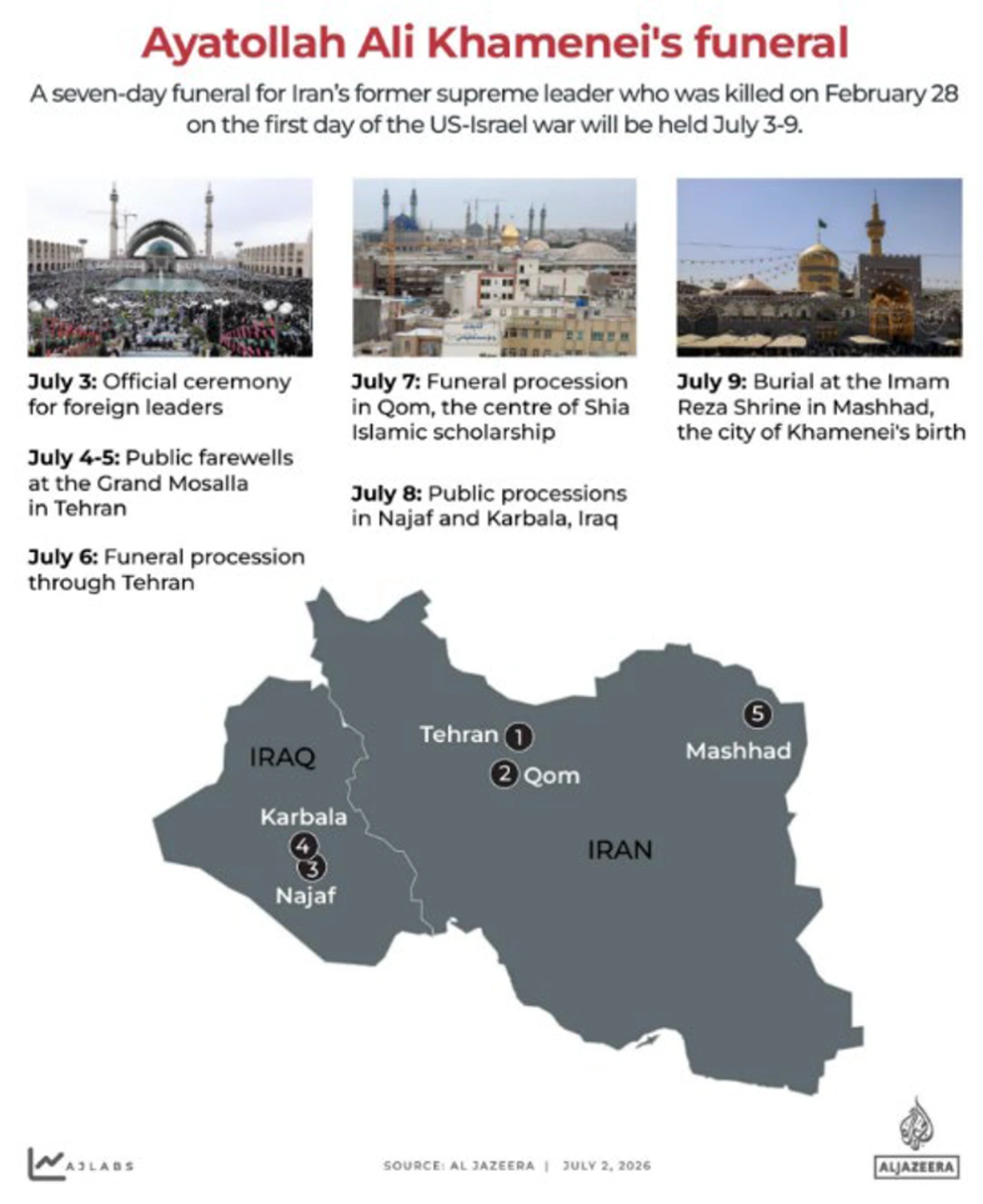
Figure 1.
Five funeral procession routes between 3 and 9 July 2026 (15).
2.6.2. Participant Statistics and Geographic Scope of the Event
Integrated estimates derived through the triangulation of active mobile telecommunications signaling, derived public transportation throughput, and aerial crowd density analyses, indicate that this event became the largest funeral gathering in recorded history. After accounting for repeated attendance by individuals across multiple cities, the cumulative number of participants in Tehran, Qom, Mashhad, Najaf, and Karbala was estimated to range between 41 and 43 million. At the transnational level, official records verified by the Iraqi Prime Minister's Office confirmed the participation of approximately 10 million individuals across the Najaf and Karbala processions (16).
Within metropolitan Tehran, mourners density on Monday alone exceeded 12 million, a figure that substantially surpassed the nominal absorptive capacity of the capital's routine EMS. In Mashhad, the final destination for the burial of the bodies at the Imam Reza Holy Shrine, provincial authorities of the Khorasan Razavi Security Council likewise reported the attendance of several million participants. These unprecedented attendance figures underscored the critical need for a spatially distributed crowd management strategy and a decentralized logistical system capable of regulating large-scale population flows (17) (Figure 2).
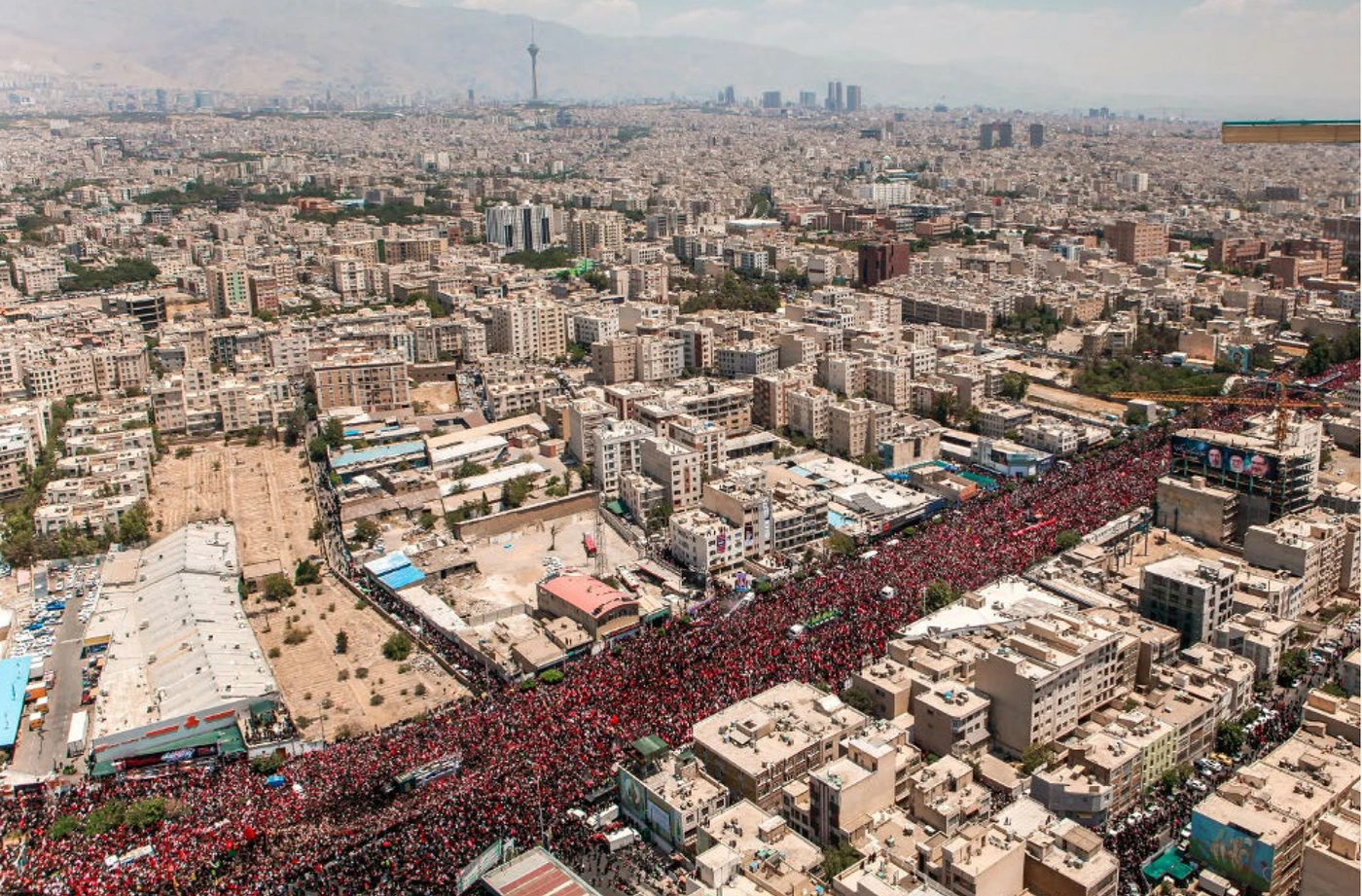
Figure 2.
Millions of people attending the funeral ceremony of the late Leader of Iran in Tehran on 6 July 2026 (18).
2.6.3. Corridor Engineering and Funeral Procession Route Design in the Capital
Expert assessments demonstrated that Tehran's arterial road network was insufficient to accommodate a population influx of several million participants. Consequently, the crowd movement strategy was redesigned from a centralized model to a broad corridor-based approach. The official funeral procession route in Tehran extended over several tens of kilometers and was configured as a continuous primary transportation corridor. The route began at Damavand Street, passed through Imam Hossein Square, Enghelab Street, Enghelab Square, Azadi Street, and Azadi Square, before continuing along Shahid Lashgari Expressway toward Iran Khodro Boulevard and ultimately Azadegan Expressway. To safeguard pedestrian movement and ensure the uninterrupted mobility of emergency response vehicles, the Tehran Traffic Police implemented a two-tier traffic restriction strategy (19).
2.6.3.1. Tier I
The Primary Traffic Control Zone (Defensive Red Corridor) involved complete closure of the main funeral procession route and all intersecting streets to prohibit the entry of private vehicles and motorcycles, thereby ensuring unobstructed operational access for ambulances and other emergency vehicles.
2.6.3.2. Tier II
The Secondary Traffic Control Zone (Outer Guidance Ring) extended from Hemat, Zeynoddin, and Kharrazi Expressways in the north to Kerman Khodro Boulevard in the west and Mahallati, Molavi, and Fath Expressway in the south. Its primary function was to divert incoming private vehicles toward designated temporary parking facilities located outside the central event area (20) (Figure 3).
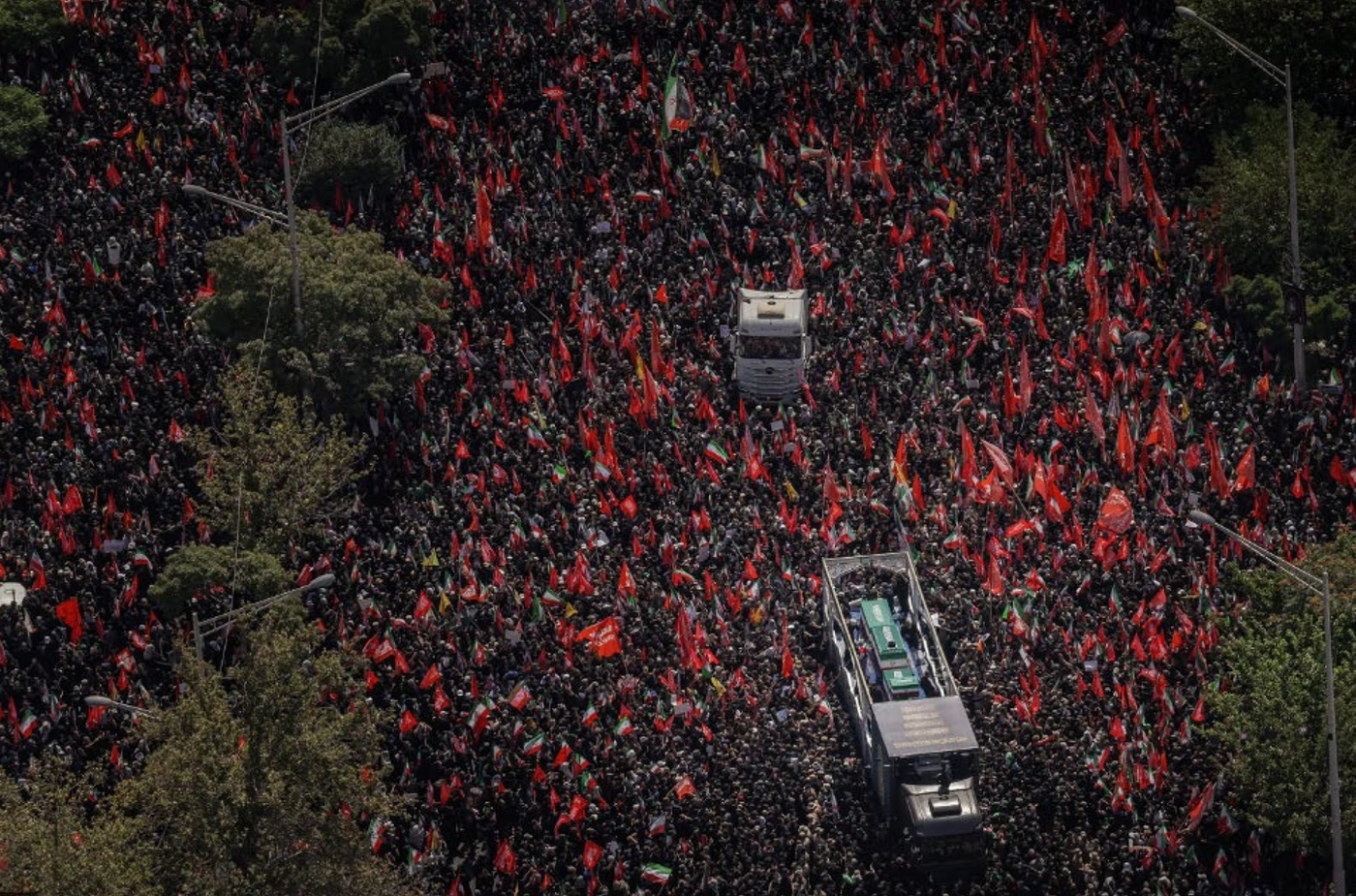
Figure 3.
Vehicle transporting the coffin of the late Leader of Iran during the funeral procession in the streets of Tehran on 6 July 2026 (18).
2.6.4. Crowd Management and Dynamics of the Urban Transportation System
To manage the transient population and prevent private vehicles from entering the central districts of Tehran, an "inside-out restriction" strategy was implemented through a four-ring traffic management system. Under this strategy, private vehicles were stopped at the city's entry points, and pilgrims were instructed to park their vehicles at metro-adjacent parking facilities located along 14 major access corridors before entering Tehran (21). Maximizing the capacity of the urban rail network constituted a cornerstone of the transportation strategy. The Tehran Metro established a historic record by operating continuously for 72 consecutive hours, serving as the backbone of participant transportation throughout the event. During this period, more than 14 million passenger trips were recorded through metro stations located near the ceremony routes. This unprecedented volume of rail-based transportation effectively prevented saturation of the capital's surface road network (6).
To complement the rail transportation system, the Tehran Municipality implemented additional road-based transportation measures. Taxi service corridors were expanded from 8 to 14 routes, while 1,000 van taxis were deployed free of charge to transport pilgrims from peripheral parking facilities to nearby metro stations. Consequently, the public transportation network operated at maximum capacity, directly transferring participants from these peripheral parking areas and emergency accommodation centers to the ceremony venue at the Tehran Mosalla. This integrated transportation strategy not only prevented the formation of severe traffic congestion but also facilitated effective crowd management through the orderly and continuous movement of participants toward the public transportation network. As a result, despite the unprecedented number of attendees, Tehran did not experience a surge of private vehicle traffic, and urban mobility remained orderly and uninterrupted throughout the event (6).
2.6.5. Channelization of Crowd Movement at the Tehran Mosalla
The Tehran Mosalla, which served as the primary venue for the public farewell ceremonies, had considerable potential for crowd bottlenecks. To manage the massive influx of participants and minimize potential hazards, 400 unsafe locations within the Mosalla complex were identified, and corrective measures were undertaken in collaboration with relevant organizations before the event. These interventions established the essential safety infrastructure required to accommodate a large mass gathering.
To channel crowd movement and prevent interference between opposing pedestrian flows, entrance and exit management at the Tehran Mosalla was designed using a highly structured engineering approach. Under this plan, the eastern and northern gates were exclusively designated as entry points, ensuring that incoming participants were directed through predefined and controlled access routes while preventing the intersection of incoming and outgoing pedestrian streams.
Exit routes, in contrast, were carefully organized based on gender-specific circulation patterns. Female participants exited through Shahid Beheshti Street, whereas male participants were directed toward the Pakistan Street exit. This physical separation of pedestrian flows eliminated crossing points within the evacuation routes, reduced evacuation time by approximately 50%, and prevented excessive crowd pressure and the development of dangerous crowd compression and crowd crushes (22).
2.6.6. Incident Command Structure, Intersectoral Coordination, and Executive Committees
Ensuring urban resilience during an event of this magnitude extends well beyond the nominal capacity of any single organization. To manage the event, a Central Organizing Headquarters was established under the supervision of the First Vice President and coordinated by the Ministry of Interior, bringing together all key governmental and operational stakeholders. The headquarters established specialized committees responsible for logistics, security, transportation, medical services, cultural affairs, and international coordination, among other operational domains. Responsibilities were explicitly allocated across participating organizations, thereby minimizing duplication of effort and enhancing operational efficiency. Regular coordination meetings involving representatives of all participating agencies facilitated rapid decision-making and enabled timely adaptation to evolving operational conditions.
At the operational level, coordination among the Tehran Municipality, Traffic Police, the Ministry of Health, the Iranian Red Crescent Society, Tehran Metro, the Basij Organization, and the Armed Forces was organized to ensure that each agency contributed according to its institutional expertise within an integrated service delivery framework. This coordination extended beyond national borders, with parallel coordinating headquarters established in Iraq to synchronize operational activities with those in Tehran. The resulting governance structure created a coordinated and adaptive response network capable of addressing the unprecedented complexity of the event, encompassing functions ranging from public safety and healthcare delivery to domestic and international media coordination. This experience demonstrated a successful model of interagency collaboration for the management of large-scale mass gatherings (23).
2.6.7. Deployment of Ambulances and EMS
The Relief and Emergency Medical Committee of the Central Organizing Headquarters designed a comprehensive medical response system by mobilizing the maximum operational capacity of the country's emergency healthcare resources. An extensive emergency medical network was established within a 1.5-km radius of the Tehran Mosalla and along the funeral procession routes. More than 1,500 EMS personnel were deployed within this operational zone, supported by hundreds of ambulances and motorcycle ambulances (motorlances), providing rapid emergency medical response for participants throughout the event.
Mobile medical clinics and emergency medical helicopters remained on full standby to respond to critical incidents, while 18 temporary emergency medical posts were strategically distributed across key locations. In parallel, approximately 25,000 Iranian Red Crescent volunteers, supported by motorized and vehicular response units, provided extensive operational coverage throughout the procession routes. Collectively, this integrated deployment substantially strengthened the medical preparedness of the event and ensured timely emergency response, even during periods of peak crowd density (24).
2.6.8. Field Hospitals, Mobile Hospitals, and Healthcare Surge Capacity
A network of six specialized mobile hospitals with a combined capacity of 600 beds was established within the inner operational ring surrounding the Tehran Mosalla. These facilities were complemented by two field hospitals positioned along high-density peripheral corridors, together forming the largest temporary healthcare network ever deployed in the country.
In addition, the Armed Forces of Iran deployed two large field hospitals staffed by military healthcare personnel at the Beyhaghi Terminal and in the vicinity of the Tehran Mosalla. Services provided by these temporary healthcare facilities included minor surgical procedures, electrocardiography (ECG), advanced life support, and pharmaceutical services, all delivered free of charge. Furthermore, all hospitals affiliated with universities of medical sciences throughout Tehran Province were mandated to provide free admission and treatment for patients referred from the event (25, 26).
2.6.9. Logistical Response to Extreme Heat Stress and Mass Heat-Related Illness
The event coincided with the hottest period of the year. Ambient temperatures in Tehran approached 40°C, and the combination of extreme heat with prolonged exposure of millions of participants in open spaces transformed heat stress management into one of the principal logistical priorities of the organizing headquarters. Thousands of volunteer service stations were established throughout the city, particularly around the Tehran Mosalla. Many of these stations were equipped with industrial cooling fans and large-scale misting systems to improve thermal comfort for participants. In addition, water trucks sprayed water along the approximately 20-km funeral procession route to reduce ambient heat exposure among mourners. Large quantities of chilled beverages and safe drinking water were distributed free of charge, while volunteers provided continuous support throughout the event.
Simultaneously, EMS and the Iranian Red Crescent Society increased operational readiness by strategically deploying additional ambulances, healthcare personnel, and emergency response teams throughout key locations. Temporary medical posts were equipped with intravenous fluid therapy facilities, air-conditioned treatment areas, misting systems, cooling rooms, and advanced resuscitation equipment to facilitate the rapid management of heat-related illnesses. These proactive preventive measures, combined with rapid emergency medical response, enabled effective management of heat-related risks, and despite the extreme environmental conditions and exceptionally high crowd density, no major medical crisis was reported during the event (Figure 4) (27, 28).
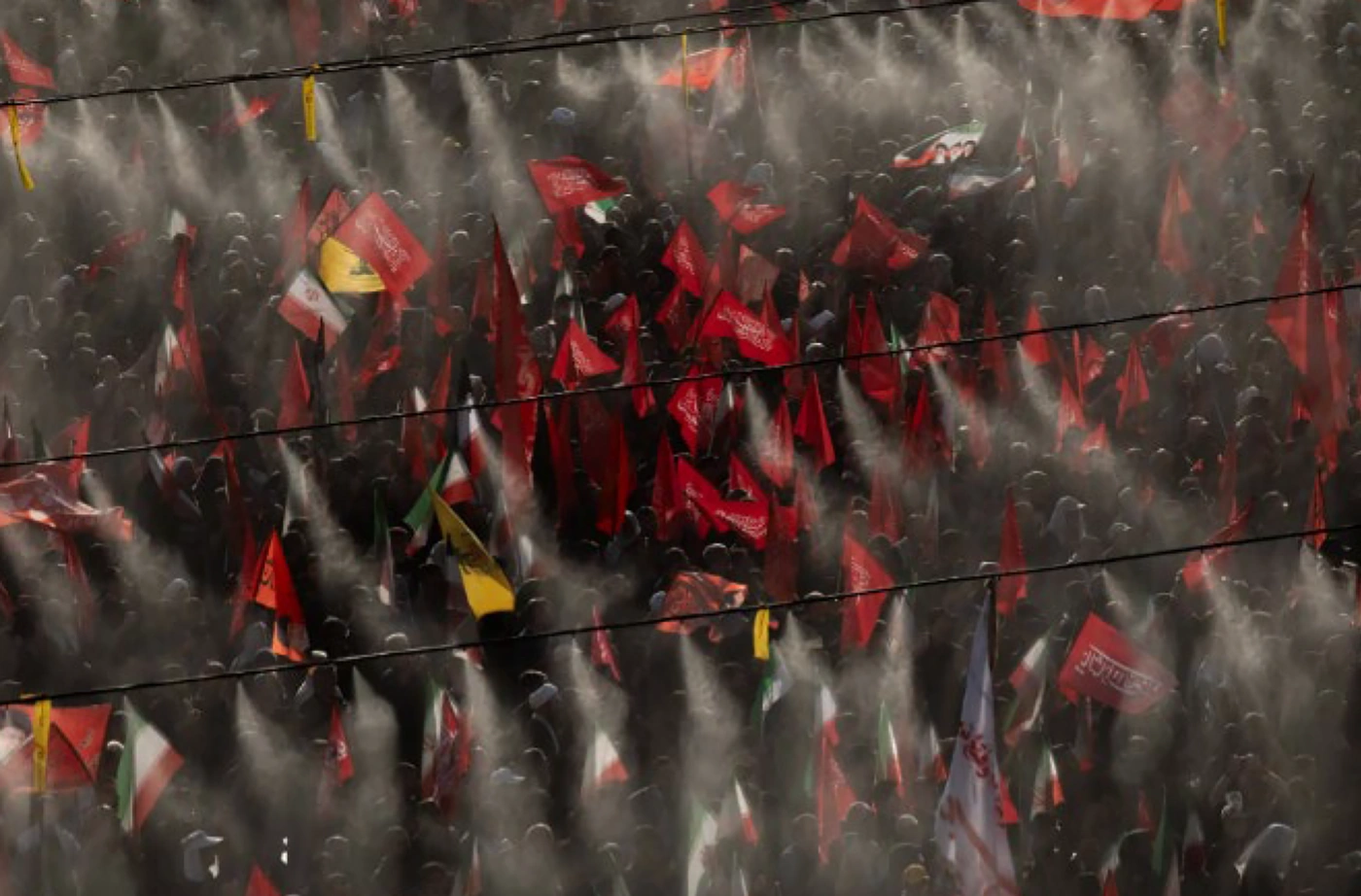
Figure 4.
Examples of management measures implemented to prevent heat-related illness during the event (18).
2.6.10. Management of the Food Supply Chain, Safe Drinking Water, and Charitable Food Distribution
During this mass gathering, volunteers distributed food and drinking water free of charge to mourners. Because unregulated distribution of food and water during mega mass gatherings can serve as a source of acute gastrointestinal disease outbreaks, the Accommodation and Nutrition Committee implemented a comprehensive system for monitoring food safety and drinking water quality through the deployment of mobile water supply networks and designated distribution stations. Approximately 1,000 specialized personnel, including environmental health inspectors, public health workers, and communicable disease control experts, were deployed along the main procession routes and accommodation sites. Easily identifiable by their official uniforms, these personnel conducted continuous surveillance throughout the entire food supply chain, from food preparation to water distribution. To minimize the risk of food spoilage under high ambient temperatures, a defensive operational protocol requiring cooked food to be distributed and consumed within 2 hours of preparation was mandated for all volunteer service stations. These preventive measures were implemented not only on the day of the funeral procession but also during the days preceding and following the event, effectively preventing outbreaks of gastrointestinal and infectious diseases among the millions of participants (29, 30).
2.6.11. Environmental Health, Biological, and Laboratory Surveillance
Maintaining the biological safety of participants required continuous monitoring of environmental chemical and microbiological indicators. Rapid health response teams from the Universities of Medical Sciences conducted routine residual chlorine testing of water tankers and performed microbiological sampling of ice blocks distributed at volunteer service stations. A mobile laboratory was deployed along the procession route, while public health rapid response teams remained on standby to investigate any suspected waterborne or foodborne disease outbreaks. Upon notification of a suspected food poisoning incident, these teams were immediately dispatched to the scene and reported directly to the incident command structure to facilitate timely intervention. To ensure strict enforcement of public health regulations, an on-duty judicial officer was assigned to accompany inspection teams, enabling immediate legal action against health violations when necessary. In parallel, selected governmental and private laboratories operated continuously on a 24-hour basis to rapidly analyze suspected contaminated water and food samples, thereby minimizing the risk of gastrointestinal disease outbreaks (30).
2.6.12. Municipal Services, Public Safety, and Waste Management
Without rapid waste collection, the large volume of solid waste generated along the funeral corridors could have obstructed critical transportation routes and impeded the movement of emergency response vehicles. Operational reports indicated that the Tehran Municipality deployed 7,434 sanitation workers and 366 mechanized service vehicles to conduct continuous cleaning and washing of the main roads and procession routes throughout the event, ensuring that cleanliness was maintained at all times. The waste management system was further strengthened through the distribution of 86 tons of waste collection bags, installation of temporary waste containers at high-density locations, and transportation of approximately 12,000 tons of waste to the Aradkouh Waste Processing Complex. Public safety operations included the deployment of 1,600 firefighters supported by 430 specialized firefighting vehicles, together with safety inspections of 100 high-hazard locations. Collectively, these coordinated municipal interventions maintained environmental hygiene and public safety throughout the heavily utilized event corridors (31).
2.6.13. Accommodation Management and Pilgrim Cities
Major highways in Tehran were temporarily converted into peripheral parking facilities, while mosques, schools, sports complexes, parks, public green spaces, and universities were repurposed as emergency accommodation centers. Each of Tehran's 22 municipal districts was designated to host mourners arriving from one of Iran's 31 provinces. Simultaneously, commercial flights were suspended, and entry into major cities was subject to enhanced security controls.
A spatial accommodation strategy was implemented across Tehran. Major accommodation sites included the Abbas Abad Hills (capacity: 53,000), Azadegan Park and the Tehran International Exhibition Center (each accommodating 25,000 participants), and Sorkheh Hesar (capacity: 24,000). Additional facilities, including Behesht Zahra, Yas Park, Mellat Park, the Eastern Bus Terminal, and several cultural centers, provided capacities ranging from 4,000 to 12,000 individuals, ensuring geographically distributed accommodation across the metropolitan area.
In parallel, the Armed Forces established four dedicated pilgrim cities at major entry points to Tehran. These facilities operated around the clock and provided cold drinking water, misting systems, mother-and-child stations, and temporary medical camps. Together, these integrated accommodation measures enabled the safe, organized, and large-scale reception of millions of participants across metropolitan Tehran (26, 32, 33).
2.6.14. Clinical Findings and Interpretation of the "Zero Mortality" Indicator
The achievement of zero mortality during a mass gathering of this magnitude, characterized by extreme crowd density and severe heat stress, reflects a high level of resilience of the country's health system and the effectiveness of its integrated emergency medical response network. Among 19,555 documented healthcare encounters recorded during the three principal days of the event, 3,814 individuals received on-site outpatient treatment for heat-related illness, intravenous fluid therapy, generalized weakness, and fatigue. All patients were stabilized and discharged at the scene without requiring hospital admission. This high rate of successful on-site stabilization highlights the effectiveness of the deployed field medical services and substantially reduced the burden on referral hospitals.
Furthermore, two successful advanced cardiopulmonary resuscitation (CPR) procedures were performed at the Tehran Mosalla. The first patient, who experienced complete cardiac arrest, was successfully resuscitated at the on-site field hospital before being transported by air ambulance to the Tehran Heart Center for coronary angiography. The second patient, who developed acute respiratory distress associated with extreme crowd density, was successfully stabilized and treated by EMS personnel. These clinical findings demonstrate that the establishment of dedicated emergency access corridors and the strategic deployment of motorlances substantially reduced response times during the critical "golden time," thereby improving survival outcomes during mega mass gatherings. Even under the most demanding operational conditions, these integrated emergency response measures contributed to achieving the operational benchmark of zero mortality throughout the event (28, 34).
3. Discussion
3.1. Limitations
This study has several inherent limitations. First, its exclusive reliance on media reports introduces the possibility of reporting bias, including potential alignment of some domestic media outlets with official narratives. Second, access to raw administrative and operational datasets was unavailable. Third, discrepancies may exist between the coverage provided by domestic and international media sources. In addition, media reports contained limited information regarding post-event outcomes, including the restoration of routine hospital services and the assessment of the post-event healthcare system burden.
3.2. Conclusions
This descriptive case study provides an overview of the health system response and supporting operational measures implemented during the national funeral mega mass gathering in Tehran. The findings highlight the importance of coordinated planning, intersectoral collaboration, integrated EMS, and comprehensive public health measures in managing large-scale population events. Given the reliance on media-based secondary data, the findings should be interpreted cautiously; however, the documented operational experiences may provide useful insights for emergency planners and policymakers in developing preparedness strategies and response frameworks for future mega mass gatherings.