
1. Background
The birth of an infant is a pleasant event, but encountering a premature infant (less than 37 full weeks’ gestational age) and subsequently being hospitalized in the neonatal intensive care unit creates a severe psychological crisis for parents (1, 2). According to the World Health Organization (WHO), the prevalence of premature infants is increasing in most countries (3). In different regions of Iran, its prevalence has been reported from 5.4% to 19.8% (4).
Premature birth not only threatens the health of the infant but also challenges the well-being of various family members (5). Parents frequently suffer a lot of psychological distress during the hospitalization of the infant in Neonatal Intensive Care units (NICUs) resulting from multiple invasive treatments and the environment of the unit in terms of light, sound, and unfamiliar equipment, pipes, and devices connected to the infant, the lack of involvement and participation in care, and lack of knowledge about how to play their parenting role and interact with their premature infant, and consequently, experience high stress, feelings of hopelessness and inadequacy, anxiety, depression, and change in parenting styles (6-8).
Since the families must be engaged in setting goals and specific needs and performing interventions in a timely manner, they are considered valuable elements in providing care for infants (2). Family-centered care is an innovative approach to planning, implementing, and evaluating health care that is founded upon mutual and beneficial collaborations among patients, families, and health care providers. In fact, family-centered care shifts parents from inactivity to being actively involved in caring for their infants (9). The four main components of family-centered care consist of respect, receiving information, participating in care, and collaboration (10). Reducing stress, reducing the negative effects of hospitalization, ensuring the sufficiency of care before discharge, and providing comfort and support for the patient are some of the benefits of family-centered care (2). Although the birth and hospitalization of a premature infant is a stressful experience for mothers, fathers also experience a great deal of tension due to hospitalization of their premature infant (11).
On the other hand, one of the principles that is not taken seriously in the implementation of family-centered care in the NICU is the participation of fathers in infant care and maternal support education (12). Therefore, paying attention to the role of fathers and their ability to be heavily involved in caring for the infant with the purpose of assisting the mother in emotional adjustment during hospitalization and her psychological health in the postpartum period as well as reducing stress and increasing their sense of autonomy would be of significant value. Research has also shown that fathers are counted as a key person in supporting mother and infant, and the lack of a supporting father and his awareness increases his stress in this crisis, leading to some inappropriate short-term and long-term outcomes (13). Owing to the prevalence of premature birth and importance of reducing parental stress and to improve the quality of family-centered care, designing and implementing an intervention that, in addition to teaching ways to care for infant to both parents, include the active participation of fathers, facilitating father-mother-infant interactions, and emotional participation of parents seems essential. Training and participation of parents in the care of premature infants while reducing nursing work creates a positive mental image of nurses in these wards, improves communication, and ultimately increases satisfaction with nursing services.
2. Objectives
Hence, the present study was performed to determine the effect of family-centered educational-supportive intervention on the stress of parents with premature babies admitted to the NICU.
3. Methods
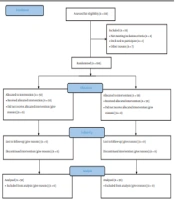
The present study is a quasi-experimental, two-group study with a pretest-posttest design. The research population consisted of 80 eligible parents with the inclusion criteria (40 mothers and 40 fathers in each group) with premature infants admitted to the NICU ward of Ali-ibn Abitaleb Specialty Hospital in Zahedan, who were studied from May 21 to September 21, 2020.
The inclusion criteria for infants and parents were gestational age between 30 - 37 weeks, a singleton infant, no congenital malformations, having a minimum literacy for parents, the presence of both parents, no history of severe physical or psychological illness or addiction and abuse of psychiatric drugs, no history of premature infant care, no stressful experience during the past year. Furthermore, the exclusion criteria of the research were the death of the infant in the NICU, discharge of the infant in less than one week, non-participation of parents in training and counseling sessions (more than one session).
The sample size was determined to be 40 for each group (80 in total) based on the mean and standard deviation of parental stress score in the study of Beheshtipour et al. (7) in Iran and with a 95% confidence interval and test power of 95.
Z1-α/2 = 1.96; Z1-β = 1.64 S1; = 7.02; S2 = 6.95;
The data collection tool in this study was a two-part questionnaire. The first part was related to personal information of both parents and the infant that was completed through interviews and self-reporting of parents and case information. The second part was the 26-item Parental Stressor scale (2011) that contained 26 items on three sub-scales: Neonatal Intensive Care Unit (5 items), appearance and behavior of the infant and special treatments (14 items), and the relationship of parent with the infant and the role of parents (7 items). It examines the amount of stress caused by various stressors in the NICU according to parents’ claims. The items are scored based on a 6-level Likert score, with scores represented as “I have not encountered this in the section, there is no stress, it creates little stress, it creates moderate stress, it creates a high level of stress, it creates an unbearable level of stress.” Choosing the option of “I have not encountered this in the section” nullifies the item, and the score for each item ranges from 0 to 4. The range of total score is 0 - 104, higher scores indicate higher parental stress. The validity of these works in Iran has been reviewed and confirmed by Beheshtipour et al. (7). Its reliability in the present study (on 30 parents that was excluded from the study) was determined to be 0.88 using Cronbach’s alpha.
After obtaining permission from the Ethics Committee and receiving a letter of introduction from the Vice-Chancellor for Research and Technology of the University of Medical Sciences (code of ethics issued by the Ethics Committee, IR.ZAUMS-REC.1398.394), referred to the NICU of Ali Ibn Abitaleb Educational Hospital in Zahedan and coordinated with the relevant authorities to cooperate in the study. First, explanations were provided about the objectives of the study and the confidentiality of the information. Then written informed consent was obtained from all participants before the study. Based on the inclusion and exclusion criteria of the study, the research units were selected using convenience sampling and then randomly divided into two groups of intervention and control. The sample was randomized using limited random allocation. First, 80 color cards identifying the study groups (red for intervention and white for control) were prepared for the whole subjects. Based on the color of cards taken from the pot, a list of 80 participants representing each group was prepared, and gradually, each person was assigned to the respective group by determining the eligible person from the list by number. After admitting the infant to the ward, the parents of both groups underwent a pre-test by completing a questionnaire. If a sample was excluded from the study due to early discharge or infant death, another eligible individual was included in the study.
For parents who were assigned to the intervention group through sampling, five sessions of family-centered educational-supportive program were held after completing the Parental Stressor scale as a pre-test. After reviewing interventional studies and related clinical trials, the authors drafted the content of the sessions. Moreover, we sought the expert opinion of relevant faculty members such as neonatologists, NICU nurses, midwives, psychiatric nurses, and counselors in order to reinforce the scientific validity of the materials. After summarizing and applying these comments, we prepared the final format of the educational support program. The sessions were held on a daily basis with an average of 60 minutes based on the contents specified in Table 1 and in the form of preterm infant care, participation in infant care, facilitating communication and mutual support of couples, and psychological training on the stress associated with the presence of parents of preterm infants in the intensive care unit. Family-centered care was performed with the presence of parents and a researcher in the NICU ward and alongside the infant, while phone calls and text messages were employed during the study to respond to the questions and alleviate the concerns of parents. Family-centered training was conducted with an MSc in counseling in midwifery and under the supervision of a PhD in midwifery and a PhD in counseling. After finishing the intervention at discharge from the hospital, a post-test was collected using the Parental Stress scale (PSS) questionnaire. Parents assigned to the control group received only the usual care of the ward, and at discharge from the hospital, a post-test was performed on them.
Table 1.
Structure and Content of Family-centered Educational, Supportive Intervention
| Session | Educational Content |
|---|---|
| 1 | Introduction, getting familiar with the neonatal intensive care units (NICUs) and equipment and its rules and regulations, appearance, problems of premature infants, sleeping and waking patterns, stress symptoms in premature infants and ways to alleviate them, washing hands, touching the infant, and the role of parents in the care of a premature infant. |
| 2 | Teaching the principles and correct methods of regular daily care for premature infants, bathing, maintaining proper body temperature and clothing, changing diapers, umbilical cord care, the importance of embracing and performing kangaroo care, and the effect of simultaneous parental involvement in infant care and physical contact on physiological indicators and psychosocial nourishment of the infant. |
| 3 | Offering instructions on psychological issues regarding participation and the presence of the father and emphasizing the supportive role of the father and assisting couples in emotional adaptation and participation, encouraging couples to express thoughts and feelings related to the ward and the premature infant, instructing techniques of emotional disclosure and venting such as parents talking about their stress and worries. |
| 4 | Training related to feeding and breastfeeding (preparation of mother, milking by hand and types of milking methods), training to start feeding with a syringe or dropper, how to collect and store breast milk, how to hug the infant, and help to perform breastfeeding. |
| 5 | Familiarity of parents with the stress process and its consequences, the significance of stress reduction and muscle relaxation training, vaccination, and effective communication with the infant. |
Data were collected and analyzed by SPSS 22. Due to the normality of the data, a paired t-test was used to compare the means before and after in each group, an independent t-test was used to compare the means of the two groups, and a chi-square test was used to compare the frequency of qualitative variables in the two groups. The significance level was considered 0.05 in this study.
4. Results
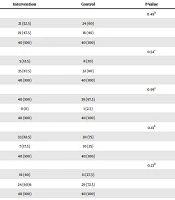
The differences in demographic variables between the two groups using independent t-test and chi-square revealed that there is no statistically significant difference between the two groups. Information regarding other demographic variables is shown in Table 2.
Table 2.
Demographic Characteristics of Participants in the Intervention and Control Groupsa
| Variable | Intervention | Control | P-Value |
|---|---|---|---|
| Gender of the baby | 0.49b | ||
| Girl | 21 (52.5) | 24 (60) | |
| Son | 19 (47.5) | 16 (40) | |
| Total | 40 (100) | 40 (100) | |
| Mother’s occupation | 0.54c | ||
| Employed | 5 (12.5) | 8 (20) | |
| Housewife | 35 (87.5) | 32 (80) | |
| Total | 40 (100) | 40 (100) | |
| Father’s occupation | 0.99c | ||
| Employed | 40 (100) | 39 (97.5) | |
| Un Employed | 0 (0) | 1 (2.5) | |
| Total | 40 (100) | 40 (100) | |
| Mechanical ventilation | 0.41b | ||
| Yes | 33 (82.5) | 30 (75) | |
| No | 7 (17.5) | 10 (25) | |
| Total | 40 (100) | 40 (100) | |
| Type of delivery | 0.23b | ||
| Vaginal delivery | 16 (40) | 11 (27.5) | |
| Cesarean section | 24 (60)6 | 29 (72.5) | |
| Total | 40 (100) | 40 (100) | |
| Mother’s education | 0.87b | ||
| Lower than diploma | 20 (50) | 19 (47.5) | |
| Diploma | 9 (22.5) | 11 (27.5) | |
| Diploma and higher | 11 (27.5) | 10 (25) | |
| Total | 40 (100) | 40 (100) | |
| Father’s education | 0.72b | ||
| Lower than diploma | 16 (40) | 15 (37.5) | |
| Diploma | 8 (20) | 11 (27.5) | |
| Diploma and higher | 16 (40) | 14 (35) | |
| Total | 40 (100) | 40 (100) | |
| Age of mothers, y | 28.32 ± 5.96 | 30.97 ± 6.21 | 0.06d |
| Age of fathers, y | 32.45 ± 5.60 | 34.82 ± 6.18 | 0.07 |
| Gestational age, wk | 33.20 ± 1.75 | 32.65 ± 1.61 | 0.14 |
| Hospitalization, d | 8.60 ± 2.34 | 7.97 ± 1.94 | 0.19 |
| Weight, g | 1967.87 ± 521.17 | 1838.55 ± 433.91 | 0.23 |
aValues are expressed as mean ± SD or No. (%).
bChi-square.
cFisher’s exact test.
dIndependent t-test.
The findings of the research on the effect of educational-supportive intervention based on Table 3 showed that the mean parental stress score of mothers in the intervention group reduced from 83.85 ± 12.61 to 43.80 ± 9.76, while the value of the similar variable decreased from 80.65 ± 12.60 to 67.25 ± 11.75 in the control group that is a significant reduction in both groups (P = 0.001).
Table 3.
Parental Stress Scores of Mothers and Fathers of Premature Neonates in the Intervention and Control Groups Before and After the Family-centered Educational, Supportive Intervention
| Variable | Mothers, Mean ± SD | Fathers, Mean ± SD | ||||||
|---|---|---|---|---|---|---|---|---|
| Before | After | Changes | Paired t-test (Before-After) | Before | After | Changes | Paired t-test (Before-After) | |
| Intervention | 83.85 ± 12.6 | 43.80 ± 9.76 | -40.05 ± 11.47 | 0.0001 | 68.75 ± 16.08 | 37.07 ± 10.20 | -31.67 ± 10.40 | 0.001 |
| Control | 80.65 ± 12.60 | 67.25 ± 11.75 | -13.40 ± 7.18 | 0.0001 | 65.07 ± 15.53 | 54.55 ± 10.70 | -10.52 ± 8.56 | 0.001 |
| Independent t-test | 0.26 | 0.001 | 0.001 | 0.3 | 0.001 | 0.001 | ||
Also, the mean and standard deviation (SD) of parental stress scores of fathers before the family-centered educational-supportive care in the intervention and control groups were 68.75 ± 16.08 and 65.07 ± 15.53, respectively, while after the intervention they were significantly decreased to 37.07 ± 10.20 and 54.55 ± 10.70, respectively (P = 0.001).
5. Discussion
The purpose of this study was to examine the effect of family-centered educational-supportive intervention on the stress of parents of premature infants hospitalized in NICUs, the results of which showed that endorsing family-centered care in the NICU results in reduced stress in parents, which can be attributed to the involvement of both parents and the implementation of educational programs based on the individual needs of each parent. Research has also shown that supporting the family, offering constructive information, giving relevant instruction to parents, and using their participation during the hospitalization makes them feel more in control of their situations and gain a realistic view on the condition of their infant, in turn, leading to higher participation level in the care of the infant (2).
Regarding the use of the family-centered care approach in NICU on the psychological disorders of parents of preterm infants, several studies have been conducted. Regarding the involvement of parents in the care, the studies by Toivonen et al. (14) and Bastani et al. (15) are the most notable, all of which outlined the positive effect of their respective family-centered methods on reducing parental anxiety and stress.
In a study examining family-centered interventions with the purpose of increasing parent-infant communication in the NICU, Browne concluded that the level of awareness, dependence, and interactions was higher in the intervention group than those of the control group (16). According to the results of studies conducted by Jackson et al. (17), Heidari et al. (18), and Hassanpour et al. (19), establishing communication with parents and offering them information leads to reduced stress levels and feelings of more control and power over their situations, in turn, resulting in participation in caring for their child with higher confidence.
Although both parents are anxious about their preterm infant being admitted to the NICU; thus suffering from some degree of stress. They often adapt differently to stressful situations, which depends on their level of relationship with their infants and their understanding of their parenting role (20). The variable of gender affects the impact of stressors, including the perception of the stressful situation experienced, and methods employed to respond to the stressful situation, among others (21). As fathers are perceived to exhibit more self-controlling behaviors to adapt to the situation, they are also at higher risk of realizing that their supportive role is jeopardized by difficult problems. Severe stressors in the family can cause negative emotions such as depression, feelings of weakness, guilt, inability, isolation, shame and anger, especially in fathers. Fathers are more anxious in presuming that they cannot control the situation and their efforts deemed in vain. Strategies for coping with stress in these situations include finding information about their infant and being aware of his or her condition, their autonomy, and participation, among others (22). However, in most studies, only mothers are involved in education and participation, and the effect of interventions have been studied therein, yet one of the reasons for the effectiveness of the intervention in the present study may be related to family-centeredness, i.e., education and active participation of fathers, especially in cultures and mother-centered environments of the intensive care unit such as Iran. Raiskila et al. (12) studied fathers, mothers, and nurses of 11 NICUs in several European countries, the findings of which showed that the weakest aspects of family-centered care were emotional support, participation in decision-making, and fathers’ participation in infant care. On the other hand, Noergaard et al. (23) suggest that changing the environment of the NICU to a more father-friendly environment can be highly fruitful in reducing the stress levels of fathers. Mode Ignell et al. (24) showed that fathers feel more secure after receiving comprehensive information about their infant, while their tension would remain high as long as they are not properly informed on the expectations of medical staff from them.
The present study showed that according to the special needs of fathers and their participation in the care for an infant, an effective educational program can be readily designed and implemented therein, which in turn reduces their stress and increases their supportive role towards the mother and the infant, which was in contrast to the findings of Matricardi et al., which indicated that stress-reducing interventions are ineffective in fathers (25). The study by Weis et al. (26) also did not approve the effects of interpersonal communication-based interventions in neonatal intensive care units on stress levels.
Overall, in the present study, the mean stress score of the parents in the intervention group was significantly reduced compared to that of the control group, which indicates the efficacy of family-centered educational support program. The findings of the present study revealed that in parents of the control group who did not receive family-centered supportive-educational intervention, the stress was significantly reduced. It seems that the time, discharge from the hospital, the survival of the baby, and the consequent growth and nourishment of the baby in the postpartum period are possible causes of this reduction in the parental stress. Lack of a dedicated room with the necessary equipment for each baby, the large and extensive content of the intervention and the difficulty of achieving 100% participation of fathers in education, and especially in practical care, for cultural reasons are among the limitations and challenges of this research that needs to be addressed in future studies.
5.1. Conclusions
The results of the present study showed that educational-supportive intervention with a family-centered approach and psychological education of couples simultaneously has a positive and significant effect on reducing stress in parents of preterm infants admitted to the NICU. Therefore, the need for designing and reviewing interventions for reducing stress in parents of preterm infants in the NICU is emphasized. With continuous training of nurses in this regard, the inclusion of topics such as parental interactions with the treatment team, the quality of the couple’s relationship together and with the premature infant, active participation of fathers in education and care, mutual support of couples during and after hospitalization as a manifestation. Some of the family-centered approaches are suggested, along with routine ward training.