
1. Context
Platelet-rich plasma (PRP) and platelet-rich fibrin (PRF) are generated from whole blood by centrifugation. PRP and PRF products provide concentrated platelets, as well as released growth factors and cytokines, that stimulate tissue repair and angiogenesis (1-5). Evidence suggests moderate to significant clinical benefit of PRP for pain relief and functional improvement compared with placebo or other injectable treatments for knee osteoarthritis; however, the degree of improvement varies across study protocols and individual studies (6-9). In addition, a large body of literature describes PRP-based products as therapeutic agents in dermatology and wound care to promote skin and soft-tissue wound closure; however, results are variable, and many studies have design flaws (8, 10-13). Pediatric use of platelet concentrates is an emerging area and remains substantially less developed and less standardized than adult use. Reviews in pediatric and general surgery indicate increasing enthusiasm for PRP/PRF as therapeutic agents to enhance postoperative wound healing, bone regeneration, and complex reconstructive procedures. Although case series and observational data suggest that PRP/PRF may accelerate the healing of chronic or difficult wounds and decrease the frequency of aggressive interventions, data on the short-term safety of PRP/PRF in pediatric patients remain limited (8, 12, 14-17).
In pediatric urology, PRP/PRF are being evaluated as biologic coverage layers or injectable adjuvants for reconstructive procedures. These include primary and redo hypospadias repairs, urethrocutaneous fistula closure, and management of penile skin defects (18-27). Studies using PRP, platelet gel, or PRF as neourethral coverage in distal and mid-penile hypospadias often report fewer urethrocutaneous fistulas and improved early wound healing compared with conventional tissue flaps. These studies are generally underpowered, have short- to intermediate-term follow-up, and use variable outcome definitions (19-28). A systematic review and meta-analysis of autologous platelet concentrates in hypospadias repair reported possible reductions in postoperative complications but noted substantial heterogeneity in preparation protocols, dosing, and outcomes. The authors recommended more rigorous clinical trials (28, 29).
Platelet concentrates encompass a wide range of product types that differ in platelet concentration, leukocyte count, fibrin architecture, and activation mechanisms. Currently used classification schemes categorize these products into three broad categories: 1) leukocyte-poor vs. leukocyte-rich; 2) liquid vs. gel/fibrin matrix; and 3) platelet "dose," which can be associated with different levels of inflammation and regeneration (2, 3, 9, 30-32). These distinctions are relevant to pediatrics because they may affect both safety and efficacy. A glossary and classification of platelet-derived products and other terms for regenerative therapy are provided in Table 1 to assist readers who may be unfamiliar with PRP/PRF terminology.
Table 1.
Glossary and Classification of Platelet-Derived Products and Regenerative Terminology
| Terms | Categories | Concise Definitions | Practical Relevance in this Review |
|---|---|---|---|
| Platelet-rich plasma (PRP) | Platelet concentrate | Autologous plasma with a platelet concentration above baseline whole-blood levels, usually in liquid form and often injected or applied as a thin layer. | Core product discussed throughout the review; used as a biologic coverage layer or injectable adjunct in hypospadias and experimental pediatric urologic indications. |
| Platelet-rich fibrin (PRF) | Platelet concentrate/fibrin matrix | Second-generation autologous platelet concentrate prepared without anticoagulant, forming a fibrin clot or membrane that entraps platelets and leukocytes. | Used as a membrane over neourethra or suture lines in hypospadias and fistula repair; slower release of growth factors than liquid PRP. |
| Leukocyte-poor PRP (LP-PRP) | PRP subclassification | PRP processed to minimize leukocyte content while concentrating platelets. | May be preferred when the aim is to reduce inflammation while still providing growth factors (e.g., in delicate pediatric tissues). |
| Leukocyte-rich PRP (LR-PRP) | PRP subclassification | PRP that contains both concentrated platelets and appreciable leukocyte content. | Potentially more pro-inflammatory and antimicrobial; protocols using LR-PRP may differ in safety/efficacy from LP-PRP, but most pediatric studies do not report this detail clearly. |
| Pure PRP/ “P-PRP” | PRP subclassification | Platelet-rich plasma with minimal leukocytes and low fibrin content, remaining largely liquid after activation. | Represents a “cleaner” growth-factor preparation; often used for injections or as a thin liquid layer rather than a structural scaffold. |
| Leukocyte- and platelet-rich fibrin (L-PRF) | PRF subclassification | Fibrin matrix rich in both platelets and leukocytes, prepared without anticoagulants, usually as a solid clot or membrane. | Commonly used as a membrane in dental and maxillofacial surgery; pediatric hypospadias studies often use similar PRF membranes as an interposed layer. |
| Advanced/extended PRF (A-PRF, e-PRF, etc.) | Modified PRF | Variants of PRF produced with altered centrifugation protocols to modify fibrin architecture, cellular content, or release kinetics of growth factors. | Relevant mainly conceptually: illustrates how different PRF protocols may not be comparable; pediatric studies rarely report these details but may be using such variants. |
| Autologous PRP (A-PRP) | Source | PRP prepared from the same patient’s blood. | Almost all pediatric urology applications in this review use autologous PRP/PRF, minimizing immunologic and infectious risk. |
| Activated PRP (AA-PRP) | Activation status | PRP that has been exposed to an activating stimulus (e.g., calcium, thrombin, contact with tissue collagen), triggering platelet degranulation and fibrin formation. | Activation timing (before vs after application) affects viscosity, handling (liquid vs gel), and release kinetics; seldom standardized in published pediatric studies. |
| Platelet “dose”/concentration | Quantitative parameter | The fold-increase in platelet concentration in PRP/PRF compared with the patient’s baseline whole blood (e.g., 3 - 5× baseline). | A key variable for comparing protocols and interpreting results; rarely reported consistently in pediatric urology studies, limiting reproducibility. |
| Fibrin matrix/scaffold | Structural component | Three-dimensional fibrin network formed after activation or clotting, which traps platelets, leukocytes, and cytokines and provides a provisional scaffold for tissue repair. | Underly PRF membranes and PRP gels used as coverage layers in hypospadias and fistula repair, providing both mechanical support and controlled release of bioactive factors. |
| Membrane/clot PRF | Application form | Solid or semisolid PRF prepared as a sheet or plug that can be sutured or laid over a defect or suture line. | Most hypospadias and urethrocutaneous fistula studies apply PRF as a membrane interposed between neourethra and skin. |
| Liquid PRP/injectable PRP | Application form | Noncoagulated or minimally coagulated PRP suitable for injection into tissue planes or luminal installation (e.g., intravesical). | Relevant to experimental intravesical PRP for bladder pain/neurogenic bladder and to local injection around urethral repairs. |
| Gel PRP/platelet gel | Application form | PRP that has been activated to form a semisolid gel, often mixed in the operating room immediately before use. | Used as a “biologic glue” or sealant over suture lines in some hypospadias protocols; handling properties differ from liquid PRP and PRF membranes. |
| Biologic coverage layer/biologic adjuvant | Surgical concept | Any tissue or biomaterial (e.g., PRF membrane, dartos flap, tunica vaginalis, tissue sealant) placed over a neourethra or repair site to protect the suture line and support healing. | PRP/PRF membranes are considered biologic coverage layers competing with or supplementing traditional flaps in hypospadias repair. |
| Tissue sealant/fibrin glue | Related biologic product | Adhesive fibrin-based products (often allogeneic) used to approximate tissues, reduce bleeding, and seal suture lines. | Important comparator/alternative adjuvant in hypospadias literature; conceptually similar to platelet gels but with different composition and regulatory status. |
| Autologous vs allogeneic product | Source | Autologous: derived from the same patient. Allogeneic: derived from another donor. | The review focuses on autologous PRP/PRF; allogeneic or pooled products would raise different regulatory, infectious, and ethical considerations in children. |
| Regenerative adjunct | Therapeutic role | A biologic product used to support or enhance tissue healing in addition to standard surgical repair (not replacing the primary procedure). | PRP/PRF are framed throughout the review as regenerative adjuncts rather than stand-alone therapies in pediatric urology. |
| Growth factors (e.g., PDGF, TGF-β, VEGF) | Mechanistic mediators | Bioactive peptides released from platelet α-granules that regulate angiogenesis, fibroblast migration, collagen synthesis, and extracellular-matrix remodeling. | Provide mechanistic rationale for using PRP/PRF to improve wound healing and reduce complications such as fistula and dehiscence. |
| Extracellular-matrix (ECM) remodeling | Biological process | Dynamic turnover and reorganization of collagen and other matrix components during tissue repair. | One of the principal targets of PRP-mediated effects; particularly relevant in urethral and skin healing after pediatric reconstructive surgery. |
| Biomaterial/scaffold | Regenerative medicine concept | Natural or synthetic material designed to support cell attachment and tissue regeneration; may be combined with PRP/PRF. | Mentioned in the context of combining platelet concentrates with meshes or grafts in reconstructive urology and related fields. |
| Intravesical PRP | Route of administration | Instillation or injection of PRP into the bladder lumen or wall. | Experimental approach in adult interstitial cystitis/bladder pain syndrome; discussed as an exploratory concept for pediatric neurogenic bladder and VUR. |
| Core outcome set | Outcomes methodology | A standardized minimum set of outcomes that should be measured and reported in all clinical trials for a given condition. | Proposed in the review for hypospadias/PRP studies (e.g., fistula, infection, wound dehiscence, reoperation, catheter duration, patient-/parent-reported outcomes). |
Platelet concentrates (PRP/PRF) have become increasingly used in pediatric surgical practice, and pediatric urology is beginning to report early experiences with PRP/PRF. However, an adequate pediatric-specific evidence base for pediatric urology is lacking. This review aims to: 1) discuss emerging pediatric urology applications of PRP/PRF in both clinical and preclinical settings; 2) assess the quality, consistency, and safety of existing pediatric urology data; and 3) identify gaps in pediatric-specific study design and outline high-priority areas for future pediatric-focused translational research.
2. Evidence Acquisition
The narrative review was developed from a structured literature search based on predetermined inclusion and exclusion criteria to identify all studies (preclinical and clinical) evaluating the use of platelet-rich plasma (PRP) or platelet-rich fibrin (PRF) in pediatric urology. Because the included studies were heterogeneous with respect to patient populations, PRP/PRF preparation methods, comparator groups, routes of administration, and outcome measures, we used a narrative approach rather than a meta-analysis to synthesize the results. We also described the search and study selection processes and provided a qualitative synthesis consistent with PRISMA 2020 guidelines when possible.
2.1. Data Sources and Search Strategy
Searches of the PubMed and Scopus databases were conducted for English-language articles published between January 1, 1980, and August 31, 2025. Terms related to platelet concentrates were combined with terms for pediatric urologic conditions. The complete PubMed search strategy was as follows:
(“platelet-rich plasma” OR “platelet-rich plasma” OR “platelet-rich fibrin” OR “platelet-rich fibrin” OR PRP OR PRF)
AND (hypospadias OR “urethrocutaneous fistula” OR “vesicoureteral reflux” OR “neurogenic bladder” OR “bladder exstrophy” OR “bladder pain syndrome” OR “interstitial cystitis” OR “undescended testis” OR cryptorchidism OR circumcision OR “penile surgery” OR urolog*)
AND (pediatric* OR paediatric* OR child* OR infant* OR neonate* OR adolescent*).
A search of the Scopus database was completed using the same terms; however, database-specific modifications were made when necessary. When filters were available, both the PubMed and Scopus searches were limited to human studies and studies published in the English language. Searches of clinical trial registries and gray literature sources were not conducted. In addition, the reference lists of relevant pediatric urology and pediatric surgery studies using PRP/PRF were reviewed to identify additional studies meeting the eligibility requirements.
2.2. Inclusion and Exclusion Criteria
Studies were eligible only if they met all of the following conditions:
Children aged 0 - 18 years diagnosed with urologic or adjacent organ conditions, such as hypospadias, urethrocutaneous fistulas, vesicoureteral reflux, neurogenic bladder, bladder exstrophy, undescended testes, or post-circumcision wound management; alternatively, animal studies or laboratory-based research focused on reconstructive techniques in pediatric urology, urinary system function, or recovery of adjacent tissues were eligible.
Use of autologous PRP, PRF, or similar platelet-rich material as a treatment (e.g., coating, injection, bladder rinse, or dressing), with a clear description confirming that the material was a platelet product.
A comparator consisting of a standard surgical method without PRP/PRF, another type of tissue covering, a sham treatment, or no comparator; single-group case reports were also eligible.
Reporting of at least one key outcome measure. In human studies, outcomes included postoperative complications (e.g., leakage, impaired healing, and infections) and measures such as recovery, pain, organ function, or the need for reintervention. In animal studies, outcomes included histologic changes, structural outcomes, or functional indicators related to healing in urinary tissues.
Preclinical animal studies or early human research, including individual patient cases, small case series, observational data, pilot trial results, or fully randomized trials, all focused on PRP or PRF use in urology-related conditions.
We excluded papers based on the following criteria:
Studies that did not involve PRP, PRF, or similar platelet-based treatments.
Studies targeting only nonurologic indications.
Studies limited to laboratory experiments unless they included animal or human results.
Conference abstracts, brief reports, or opinion pieces without usable findings.
Studies published in languages other than English.
Studies in adult urology or general pediatric surgery were not the primary focus of this review, but were included when they provided relevant insights into mechanisms, context, or safety applicable to pediatric urologic care.
2.3. Study Selection
Records identified through PubMed and Scopus were entered into citation management software for deduplication, and titles and abstracts were screened to identify relevant study designs. Full-text articles of potentially eligible studies were then assessed against the predetermined inclusion and exclusion criteria. All included studies were categorized by research type (pediatric clinical, adult clinical, preclinical animal research, laboratory-based). A flow diagram illustrating the search, screening, eligibility assessment, and synthesis of results is provided in Figure 1.
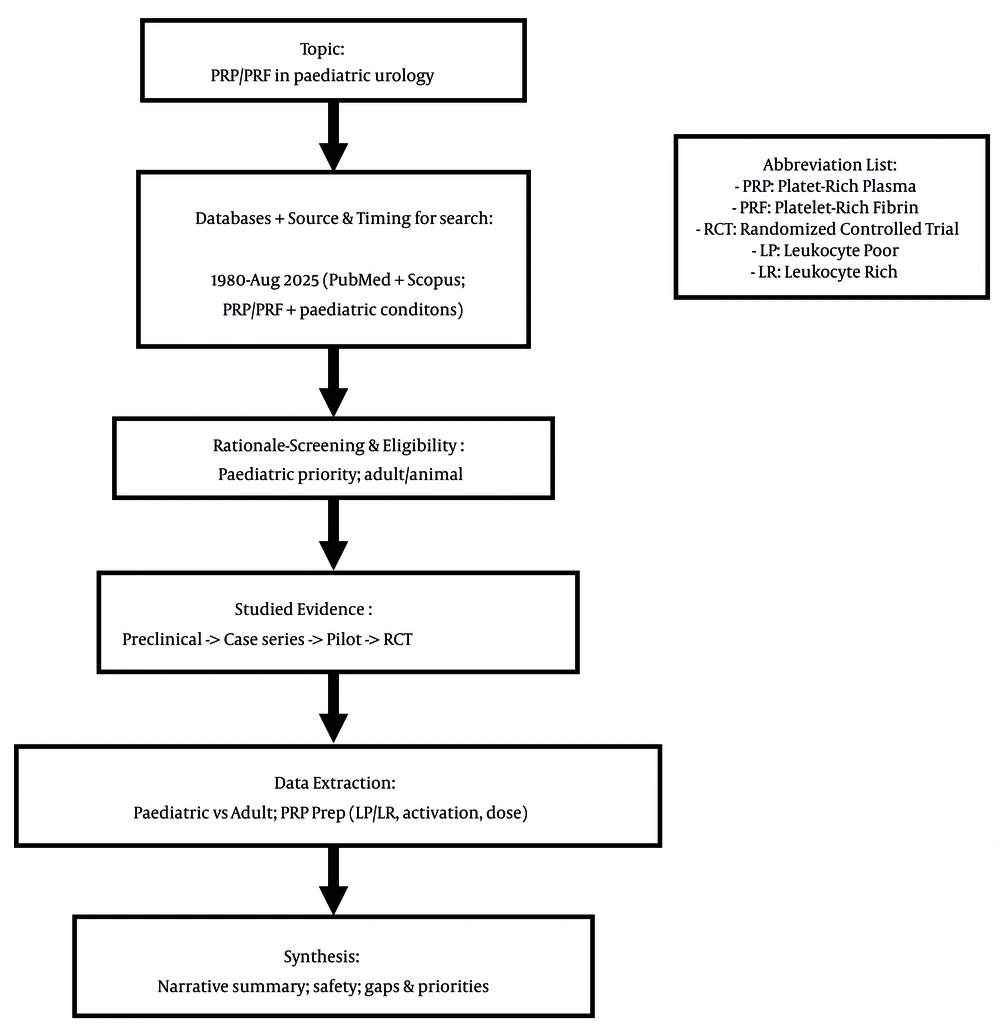
Figure 1.
Conceptual flow diagram of the review process for PRP/PRF in pediatric urology, from database search and eligibility assessment to evidence classification and narrative synthesis.
2.4. Data Extraction and Categorization of Results
Relevant data were extracted from each eligible study using a standardized template. The following data were recorded: authors and year of publication, study location, study design, number of participants, participant age range, clinical indication, treatment characteristics (type of PRP/PRF, formulation composition, presence of leukocytes when stated, preparation and activation methods, administered doses/volumes, route of administration), comparator approach, follow-up duration, outcome measures, and reported adverse effects. When available, authors’ stated study limitations and potential sources of bias were also documented. For qualitative synthesis, studies were categorized as follows: 1) by strength of evidence (animal model preclinical studies, case reports/case series, observational comparative studies, RCTs); 2) by clinical indication (hypospadias/urethrocutaneous fistula, vesicoureteral reflux, neurogenic bladder or lower urinary tract dysfunction, bladder exstrophy and complex reconstruction, undescended testis/pediatric andrology, circumcision-related wound care); and 3) by population and context (childhood vs. adulthood; clinical vs. laboratory/experimental settings). We prioritized child-specific results from the included studies and then incorporated evidence from adults or animals that may clarify PRP/PRF mechanisms and provide preliminary dosing and safety data. Table 2 lists potential applications of PRP/PRF in pediatric urology and includes possible benefits, possible drawbacks, required additional data, and potential future research directions.
Table 2.
Summary of Potential Pediatric Urologic Indications for PRP/PRF, Advantages, Limitations, and Priority Research Questions
| Pediatric Condition | Setting/Procedure | Nature of the Studied References | Advantages | Limitations | Priority Research |
|---|---|---|---|---|---|
| Hypospadias | TIP repair; fistula coverage | Pilot RCTs/series (pediatric) | Fewer fistulae; improved wound healing; possible reduced infection | Small samples; PRP/PRF prep heterogeneity; short follow‑up | Multi‑center RCTs with standardized PRP/PRF and core outcomes |
| Vesicoureteral reflux (VUR) | Adjunct to endoscopic/surgical therapy | Experimental | Theoretical urothelial/tissue repair | No pediatric trials; unclear mechanism for reflux | Feasibility pilot; biomarker‑guided dosing |
| Neurogenic bladder | LUTD/IC‑like symptoms | Experimental | Adult urothelial repair signals | No dosing/safety data in kids | Preclinical pediatric models; Phase I safety |
| Bladder exstrophy | Reconstruction adjunct | Hypothetical/experimental | Hypothesized better healing | No pediatric studies | Single‑center feasibility protocols |
| Undescended testis (UDT) | Peri‑orchiopexy support | Preclinical (rodents) | Histologic/antigenic improvement | No human data; uncertain relevance | Translational models only |
| Circumcision | Wound care | Limited/uncertain | Possible healing benefit (extrapolated) | Not standard; ethics & consent | Only within RCT/registry if used |
2.5. Assessment of Methodological Quality and Heterogeneity
The methodological quality and potential risk of bias of pediatric clinical trials were assessed qualitatively. For RCTs, we evaluated sequence generation, allocation concealment when reported, blinding of patients and outcome assessors as appropriate, completeness of follow-up, and selective outcome reporting. For observational studies and case reports, we assessed patient selection, clarity of inclusion and exclusion criteria, baseline comparability, clarity of outcome definitions and measurement, duration and completeness of follow-up, and the quality of adverse event reporting. For preclinical studies, we assessed the use of control groups, randomization, sample size, blinding of outcome assessment, and the relevance of the models to pediatric urologic disease. We did not assign a numerical quality score; however, we described concerns regarding the potential risk of bias, small sample sizes, lack of blinding, and short follow-up duration in the Results and Discussion sections. We also provide specific comments on how these limitations may have affected the strength of the evidence and the generalizability of the findings.
2.6. Synthesis of Results
Given the substantial clinical and methodological heterogeneity among studies—including, but not limited to, differences in the rationale for PRP/PRF treatment (liquid vs. membrane formulations, leukocyte-rich vs. leukocyte-poor products, product dose, route of administration, comparator group, and outcome definitions)—a meta-analysis was not feasible. Therefore, we conducted a structured narrative synthesis of clinical findings by indication and level of evidence. For each indication, we assessed the direction and consistency of findings, identified major sources of heterogeneity, and distinguished pediatric findings from those in adult and preclinical studies. We also evaluated the quality of evidence for each indication, including study design quality, sample size, risk of bias, and the quality of safety reporting.
Safety reporting was highly variable among pediatric studies using PRP/PRF products, particularly with respect to hematologic monitoring during and immediately after procedures and the total blood volume used to generate PRP/PRF products, stratified by patient age and/or weight. This variability limits direct comparisons across studies and further reduces confidence in the safety of these treatments in children. Three major questions remain unanswered: 1) How may we establish feasible maximum upper limits on blood volume to produce PRP/PRF products that can be safely used in pediatric patients as a function of age or weight? 2) What standardized hematologic monitoring protocols and standardized adverse event reporting systems should be developed and implemented for all pediatric studies using PRP/PRF products? 3) Which potential pediatric applications will demonstrate statistically significant treatment outcomes compared with standard treatments in future prospective randomized comparative clinical trials?
3. Results
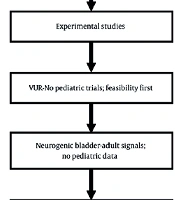
Figure 2 shows the distribution of the literature in relation to pediatric urological indications. Figure 2 also identifies potential areas in which PRP/PRF should be considered experimental and, therefore, would be most appropriately studied through a trial or feasibility study, as well as areas in which it may be used routinely in pediatric urology. Table 3 outlines the quality, quantity, and direction of the currently available evidence regarding the application of PRP/PRF for each indication; outlines the primary limitations of the current body of literature; and describes the currently appropriate clinical stance for each indication (established vs experimental).
Table 3.
Summary of Evidence for Platelet-Rich Plasma (PRP) and Platelet-Rich Fibrin (PRF) in Pediatric Urologic Indications
| Indication/Setting | Level and Source of Evidence | Role of PRP/PRF | Summary of Observed or Expected Effects | Key Limitations | Recommended Current Stance |
|---|---|---|---|---|---|
| Hypospadias/urethrocutaneous fistula | Multiple pediatric prospective series and small RCTs; systematic reviews and meta-analyses of platelet concentrates and urethral coverings in hypospadias. (23, 26-37) | Autologous coverage layer or sealant over neourethra or suture lines; adjunct to standard dartos/tunica flaps. | Most studies report numerically lower rates of urethrocutaneous fistula, wound dehiscence, and infection, with similar or shorter healing times compared with standard coverage alone. Direction of effect is generally favorable and biologically plausible. | Small, single-center samples; short- to medium-term follow-up; heterogeneous PRP/PRF preparation (platelet/leukocyte content, activation, form), dosing, and application; nonstandardized outcome definitions; limited and nonsystematic safety reporting. | Promising but experimental adjunct. Use should be within well-designed RCTs, prospective cohorts, or structured audits, not as unmonitored routine practice. |
| Vesicoureteral reflux (VUR)/recurrent UTI | Adult series of intravesical PRP for recurrent UTI/LUTS; preclinical models of PRP in urothelial injury; no pediatric VUR trials; pediatric VUR guidelines do not include PRP. (38-48) | Hypothetical adjunct to support urothelial healing, periureteral tissue quality, or reduction in infection risk. | Adult and experimental data suggest potential improvement in urothelial integrity and recurrent infection control, but there are no pediatric data demonstrating benefit in VUR resolution or UTI prevention. | No pediatric trials; no dosing, protocol, or long-term safety data in children; current VUR guidelines restrict management to established medical and surgical strategies. | Experimental only. Use in children should be limited to carefully designed early-phase feasibility studies with explicit safety and surrogate efficacy endpoints; no role in routine VUR care. |
| Neurogenic bladder/lower urinary tract dysfunction | Adult studies of intravesical PRP in interstitial cystitis/bladder pain syndrome and other LUT disorders; no pediatric neurogenic bladder trials. (38, 44, 48-50) | Intravesical injections are intended to modulate urothelial barrier function, nociception, and local inflammation. | Adult cohorts report symptoms and cystoscopic improvements in selected patients, but protocols and populations are heterogeneous, and findings are not directly transferable to pediatric neurogenic bladders. | Absence of pediatric data; unknown dosing, injection patterns, and durability in children; unknown interactions with catheterization, anticholinergics, botulinum toxin, or reconstruction; limited long-term safety information. | Purely experimental. Any pediatric use should occur only within rigorously monitored early-phase studies or registries. |
| Bladder exstrophy and complex pelvic reconstruction | No direct pediatric PRP trials; extrapolation from pediatric surgery, plastic surgery, and regenerative literature on blood products and platelet concentrates. (8, 14, 22, 40-42) | Theoretical adjunct to enhance soft-tissue healing, flap integration, and wound stability in multistage exstrophy repairs. | Conceptually attractive in high-risk reconstructions with compromised tissues, but there is no clinical evidence demonstrating improved outcomes with PRP/PRF in exstrophy. | Completely lacking indication-specific clinical data; anatomical and procedural complexity; high-stakes surgery with limited tolerance for unproven adjuncts; unknown hematologic and logistical feasibility in small children. | Hypothetical/experimental. Introduction should be restricted to institutional feasibility protocols or pilot studies with predefined safety and wound-healing endpoints. |
| Undescended testis (UDT) and pediatric andrology | Preclinical animal and translational models of testicular ischemia–reperfusion or toxin-induced damage; early adult male infertility/andrology studies; no pediatric UDT trials. (9, 14, 34, 35, 43, 44) | Experimental peri- or intratesticular adjunct intended to protect or restore testicular structure and function. | Animal models show improved histology and markers of oxidative stress; adult andrology data suggest possible benefit in selected infertility contexts, but pathophysiology differs from congenital UDT. | No pediatric human data in UDT or orchiopexy; uncertain dosing, safety, and long-term fertility impact; preclinical models may not reflect congenital pathology or surgical reality. | Preclinical/nontranslatable at present. PRP cannot be recommended for UDT outside formal research; any use should be within clearly defined experimental protocols. |
| Circumcision-related wound care and penile skin conditions | Heterogeneous data from adult and pediatric wound-care studies, dermatology (e.g., lichen sclerosus), and obstetric surgery; no dedicated randomized pediatric circumcision trials. (10-13, 45, 51, 52) | Topical or injectable adjunct to enhance wound healing, reduce pain, or improve outcomes in genital skin conditions. | PRP/PRF may improve healing and symptoms in selected nonurologic or adult genital conditions and appear feasible in extraoral and surgical wounds; however, direct pediatric circumcision data are lacking. | No standardized protocols or outcome sets for circumcision; absence of pediatric RCTs; uncertain cost-effectiveness; logistical constraints in low-resource settings. | Investigational. Use in circumcision should be limited to ethically approved pediatric trials or registries with standardized formulations, dosing, and outcome measures. |
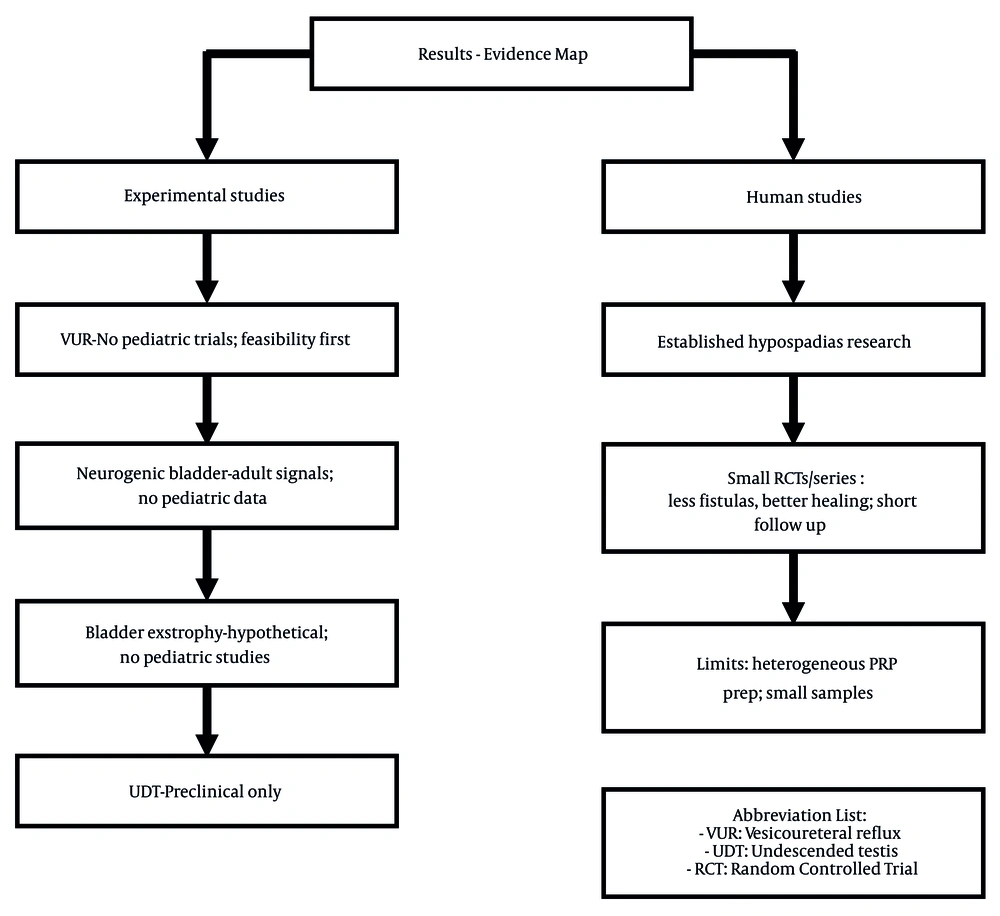
Figure 2.
Evidence landscape of platelet-rich plasma (PRP) and platelet-rich fibrin (PRF) in pediatric urology.
3.1. Hypospadias
The outcomes of hypospadias repair are largely dependent on the vascularization of the tissues involved and the degree of tension experienced by the neourethra; urethrocutaneous fistulas and dehiscence are considered two of the most detrimental complications. Thus, the biological activity of autologous platelet concentrate products (also referred to as biologically active coverage layers or sealants) has been examined for its ability to protect against wound complications in the neourethral segment and/or along suture lines of the newly formed urethra (18-29, 53, 54).
Results from prospective and retrospective pediatric case series, including a few randomized trials, indicate that the application of either PRP or PRF as an adjunct to the wound during primary or secondary hypospadias repair may be associated with fewer urethrocutaneous fistulas, infections, and delays in wound healing than wounds treated without such intervention (18-25, 28, 29, 53, 54). The direction of effect is consistent and biologically plausible; PRP/PRF application would likely enhance local hemostasis, angiogenesis, and ultimately tissue repair (Figure 2).
However, important limitations restrict the certainty of the evidence regarding the effectiveness of PRP/PRF application in hypospadias repair. First, most studies were conducted at a single institution and included relatively small numbers of subjects; thus, sample sizes were typically in the tens rather than hundreds. In addition, follow-up ranged from a few months to a few years and primarily focused on early postoperative complications rather than longer-term aesthetic or functional outcomes (18-29, 53, 54). Second, randomization, concealment of allocation, and blinding of the outcome assessor have been consistently poorly reported. In some instances, investigators used historical or nonconcurrent control groups, thereby increasing the potential for selection and performance bias (19-25, 28, 29, 53, 54).
Finally, variability in PRP/PRF composition and application remains a major barrier to standardization. Key parameters (e.g., platelet concentration relative to baseline, leukocyte content, activation method, and final form) and dosing/timing are inconsistently reported, which precludes recommending a single protocol and limits understanding of which components drive any observed benefit (2, 3, 5, 8, 9, 30-32).
Reports of pediatric-specific adverse effects directly related to PRP/PRF administration have been extremely rare in the literature; however, minor adverse effects have been noted in all previously published series. This pattern is consistent with reports on the safety of platelet concentrates in the broader context of surgery and urology; however, the small sample sizes of individual studies, combined with the fact that none were adequately powered to detect rare harms, precludes definitive conclusions regarding the safety of PRP/PRF in pediatric hypospadias (7, 14, 18-25, 28, 33-35, 53, 54). Additionally, safety outcome reporting, as defined prior to data collection and/or using an explicit grading system, was inconsistent across studies, as was the reporting of hematologic parameters and/or transfusion thresholds (2, 3, 9, 18-25, 28-32, 53-55).
In summary, while the available literature suggests that adding PRP/PRF to hypospadias repair may be potentially useful, it remains highly experimental. Its inclusion should be justified within the context of well-designed RCTs, prospective cohort studies, or systematic local audit projects, rather than as unmonitored routine practice.
3.2. Emerging and Experimental Pediatric Applications
All indications covered in this section should be considered experimental in pediatrics. Few pediatric studies are available to support this section; most evidence is based on preclinical models (animal studies), small and/or heterogeneous adult cohorts, or mechanistic rationale. No large-scale, well-controlled pediatric clinical trials are currently available.
3.2.1. Vesicoureteral Reflux (VUR), Experimental
Pediatric clinical evidence for the use of platelet-rich plasma (PRP) in vesicoureteral reflux is essentially nonexistent. PRP has been studied in adult lower urinary tract disorders and experimental urothelial repair contexts, including recurrent urinary tract infection and interstitial cystitis/bladder pain syndrome; however, these studies were small, heterogeneous, and not pediatric (38, 43, 44, 47, 48, 50, 56). There are no randomized or prospective pediatric studies evaluating the efficacy of PRP in preventing or treating VUR. Additionally, pediatric VUR guidelines do not include PRP as a management option (37, 57 - 61). However, there is potential support for PRP to promote urothelial healing or improve periureteral tissue quality, which remains speculative and has not been validated with pediatric outcome data (13, 36, 56, 62, 63, 64, 65); therefore, early-phase feasibility studies are needed to validate safety and surrogate efficacy endpoints for PRP. Outside of these studies, PRP should not be used to treat VUR in children.
3.2.2. Neurogenic Bladder, Experimental
In research in adults with interstitial cystitis/bladder pain syndrome and other lower urinary tract dysfunctions, intravesical platelet-rich plasma (PRP) has been reported to potentially influence urothelial barrier function and sensory signaling; intravesical PRP may also affect local inflammation (36, 56, 63, 65, 66). The studies noted above were conducted in small and variable adult cohorts and used different methods for applying PRP to the bladder. No studies have evaluated PRP in pediatric patients with neurogenic bladder or other neurogenic lower urinary tract dysfunction. Therefore, no evidence is available regarding appropriate dosing, application technique, expected duration of effect, pediatric safety, or interactions with standard treatments for pediatric neurogenic bladder (i.e., CIC, anticholinergics, BTX, augmentation surgery). As such, PRP use for pediatric neurogenic bladder should be considered strictly experimental and restricted to phase I clinical trials or registry-based studies with close monitoring.
3.2.3. Bladder Exstrophy, Experimental
The use of platelet-rich plasma (PRP) in patients undergoing bladder exstrophy repair, as well as complex pelvic reconstruction, may aid soft tissue healing, increase graft success rates, particularly when local tissue quality is poor after multiple surgical procedures, and potentially reduce wound-related complications (8, 12, 14, 18, 38, 39, 67, 68). To date, no randomized controlled clinical trials in children have assessed the utility of PRP as an adjunct to exstrophy closure. The ability to draw inferences regarding PRP efficacy from pediatric nonurological studies or adult reconstructive surgery studies is limited due to anatomical differences, variability in techniques, and differences in overall health status (8, 12, 14, 15, 38, 39, 67). Therefore, PRP should be used to facilitate exstrophy repair only through a formalized internal pilot program or within a formalized study framework to monitor safety and recovery/functional progression, and not as standard clinical practice.
3.2.4. Undescended Testis (UDT), Experimental
Most research regarding PRP in pediatric undescended testis is based on preclinical models, primarily animal data, with far fewer human case reports. Most preclinical studies used models involving tissue injury (or chemical insult) and demonstrated improved capillary density and reduced microscopic evidence of cellular injury (41-46). These models differ from typical childhood UDT, which is surgically corrected, and they do not assess key outcomes, such as long-term reproductive capability. To date, no published clinical trials have evaluated PRP injections around or into the testis at the time of surgical correction of pediatric UDT. Therefore, because findings from animal models may not translate to humans and given that many other treatments have shown efficacy for UDT, PRP should remain experimental until proven effective in a randomized controlled study before application to UDT treatment.
3.2.5. Circumcision Wound Care, Limited/Uncertain
Although PRP could assist in promoting wound healing in children and adults with various skin issues, including genital skin conditions, there are currently no established guidelines regarding PRP application to promote wound healing after pediatric circumcision (11-13, 17, 46, 51, 52, 69). Moreover, most evidence supporting PRP/PRF to promote circumcision-related wound healing in children is derived from adult data or from wounds associated with other types of injuries and/or dermatologic treatments. Reported outcomes from studies using PRP/PRF to promote postoperative wound healing in children undergoing routine pediatric urologic circumcision have shown variable success when assessed using clinically relevant endpoints such as postoperative pain, time to epithelialization, and infection-related complication rates. These inconsistencies may reflect methodological differences in sample size and study design, substantial variation in PRP/PRF preparation and dosing, and differences in outcome definitions. To date, no randomized controlled clinical trials have evaluated PRP or PRF (platelet-rich fibrin) in children undergoing routine circumcision using consistent methodology, dosing, or outcome measurements. As such, because the current evidence is insufficient to support PRP/PRF effectiveness for post-circumcision recovery in children—and because applicable studies lack randomization, use highly variable PRP/PRF protocols, and do not represent comprehensive pediatric circumcision evidence—PRP/PRF use for this purpose should remain confined to controlled research settings with ethics approval, informed consent, and monitoring. The need to examine pediatric circumcision safety data, as well as hematological feasibility and ethical/regulatory requirements prior to any expansion of clinical use, is driven by the limited pediatric circumcision evidence and the heterogeneity of PRP/PRF formulations and outcomes in the literature.
3.3. Safety, Hematologic Feasibility, Regulatory, and Ethical Considerations
A major advantage of PRP/PRF is that these products are autologous; thus, they contain no foreign protein, eliminating the potential for immune responses and/or transmission of diseases, including blood-borne infections, compared with allogeneic blood products. In addition, PRP has been studied as an adjunctive treatment in various surgeries and for numerous wound-healing challenges (6, 8, 10-14, 35, 47). Although studies examining complications associated with PRP/PRF application in children with hypospadias and fistulae were unable to demonstrate statistically significant increases in postoperative infections, hematomas, or other serious complications, the reported complication rates primarily reflected the underlying surgical intervention rather than PRP/PRF use (14, 18-28, 33, 54). Pediatric urologic safety data on PRP/PRF primarily derive from hypospadias repair studies, which included more than 300 children in randomized trials, comparative cohort analyses, and case reports, as shown in Table 4 (18-27).
Table 4.
Summarizes the Distribution of Study Designs and Sample Sizes Across the Available Pediatric Hypospadias Literature and Is Presented Immediately Below
| Study (Reference No.) | Population/Procedure | Study Design and Size | PRP/PRF Protocol (as Reported) | Follow-up | Safety/Complications (key Data only) | Hematologic/Blood-Volume Information |
|---|---|---|---|---|---|---|
| Shang et al., 2025 – penile hypospadias PRP (70) | 103 children with penile hypospadias undergoing TIP urethroplasty | Retrospective comparative cohort; PRP group n = 53, control n = 50 | 10 mL autologous venous blood; two-spin prep; ~3 mL PRP injected subcutaneously along both sides of the urethral plate and between skin and dartos flap during surgery | 2 years (5 patients lost to follow-up overall) | Overall complication rate significantly lower with PRP (5.66%) vs control (28.0%). Surgical success 94.3% vs 72.0%. No PRP-related systemic adverse events reported; no increase in operative time or hospital stay. | Volume of 10 mL blood per child explicitly reported. No transfusions or hematologic complications described; no formal hemoglobin/hematocrit thresholds reported. |
| Mansour et al., 2024 – distal hypospadias PRF membrane (71) | Children with distal hypospadias undergoing TIP repair | Prospective randomized trial: 44 patients (PRF cover vs standard repair) | Autologous PRF membrane harvested intraoperatively and used as neourethral coverage layer | Reported short- to mid-term follow-up (months) | PRF group had fewer overall complications and lower rates of urethrocutaneous fistula and wound infection than controls; no PRF-related systemic adverse events or need for reoperation due to PRF itself reported. | Amount of blood drawn and specific platelet counts not reported in abstract; no transfusions or hemodynamic/hematologic complications mentioned. |
| Abdelazim et al., 2024 – distal hypospadias PRF membrane vs dartos (72) | 40 boys with distal hypospadias | Prospective randomized trial; PRF membrane group n = 20; local dartos flap group n = 20 | Autologous PRF membrane interposed as a second layer over neourethra versus standard dartos coverage | Minimum 6-month clinical follow-up (per article text) | Urethrocutaneous fistula and meatal stenosis occurred less often in the PRF group than in controls; no systemic or hematologic adverse events attributed to PRF; all complications were local wound issues. | Article does not report pre/postoperative hemoglobin or explicit blood-volume limits; the volume of blood used for PRF preparation is not quantified. No transfusions were reported. |
| Mahmoud et al., 2019 – distal hypospadias PRP vs dartos flap (73) | 180 boys, 12 - 65 months, distal hypospadias undergoing TIP urethroplasty | Prospective randomized trial; PRP sheet group (group A) vs ventral dartos flap (group B) | Autologous PRP sheet used as coverage layer over neourethra vs standard dartos flap coverage. | Follow-up up to several years (per study period 2011 - 2016) | Total complications: 13.3% in PRP group vs 26.7% in Dartos group. Urethrocutaneous fistula: 10% vs 13.3%. Partial glans dehiscence: 1 case vs 4 cases. No PRP-related systemic adverse events or thrombotic events were reported. | Volumes of autologous blood used for PRP, and peri-operative hematologic monitoring were not detailed in the abstract. No transfusion requirement or hemodynamic instability related to blood draw or PRP reported. ( |
| Shang et al., 2025 – hypospadias PRP (same cohort as above; additional safety detail) (70) | Same 103-patient cohort as above | Retrospective comparative | As above | 2 years | Authors explicitly state that PRP application did not increase operative time, ambulation time, or length of stay and that complication reduction was achieved without new safety signals, supporting feasibility in routine practice. | No additional hematologic monitoring parameters beyond initial blood draw are reported; no anemia, bleeding, or transfusion events are described. |
| Soyer et al., 2013 – PRF for urethrocutaneous fistula repair (74) | Single 3-year-old boy with recurrent UCF after hypospadias repair | Case report | 5 mL autologous blood drawn; PRF clot prepared and used intraoperatively as interposition layer during fistula repair. | 1 and 3-month follow-up | Fistula closed successfully; no recurrence at 3 months. No bleeding, infection, or systemic complications reported. | 5 mL blood volume explicitly reported; no hematological or hemodynamic consequences observed; no transfusion needed. |
| Borkar et al., 2022 – meta-analysis of autologous platelet-rich concentrate in hypospadias repair (29) | Pooled pediatric hypospadias studies using autologous platelet-rich concentrates as barrier layers | Systematic review and meta-analysis | PRP/PRF and related autologous platelet concentrates used as adjunct coverage vs standard techniques | Variable (depends on included RCTs and series) | Meta-analysis showed reduced urethrocutaneous fistula rates with platelet concentrates and did not identify any serious PRP/PRF-related adverse events; complications were limited to typical local postoperative issues already expected after hypospadias repair. | Across included studies, hematologic parameters and blood-volume limits were rarely reported, and no transfusion-requiring events related to blood collection were documented. The authors highlight the need for better adverse-event and dosing reporting. |
Studies using PRP/PRF for hypospadias repair showed complication frequencies comparable to those of control groups; complications were primarily localized to the repair site, including infections, wound dehiscence, and urethrocutaneous fistula formation, as expected with surgical repair (18-27). The reviewed pediatric literature reports no systemic adverse reactions, no hematologic adverse reactions, and no transfusion-related adverse events related to blood sample collection; however, available sample sizes do not exclude rare adverse events. Although qualitative pediatric safety appears favorable, the pediatric safety evidence base for PRP/PRF remains incomplete; therefore, future studies must collect additional adverse event and hematologic parameter data. These should include baseline and postcollection hematologic parameters (hematocrit, platelet, and hemoglobin), the volume of blood collected from each child, and specific prespecified safety endpoints.
Hematologic safety and practicality are particularly important in pediatric patients undergoing PRP/PRF-related interventions. Children have substantially smaller total blood volumes than adults and are at greater risk of iatrogenic anemia; therefore, even relatively small amounts of study-related phlebotomy may be clinically significant, particularly if repeated. Very little information has been reported on pediatric pre- and post-phlebotomy hematologic values (i.e., hemoglobin, hematocrit, and platelet count) or on how these values vary by age group and surgical indication in the pediatric PRP/PRF literature, limiting assessment of hematologic safety across relevant pediatric demographics. Baseline hemoglobin and platelet counts were not clearly reported in the primary pediatric clinical trials summarized in Table 4, further reducing confidence in hematologic safety across age groups and indications. Because PRP/PRF may require blood volumes that approximate or exceed conservative pediatric research phlebotomy guidelines for very young or small children, pediatric recommendations to restrict study-related blood draw volumes to a minimal fraction of total blood volume per sampling event and to limit cumulative blood collection across repeated sampling events (48, 49) should be incorporated into pediatric PRP/PRF protocols, along with age- and weight-based protections.
Practically, these restrictions permit drawing no more than a few milliliters of blood per kilogram of body weight for nontreatment purposes (48). Several commercially available PRP systems, developed primarily for adult use, may require blood volumes that are not feasible in younger or smaller pediatric patients without careful protocol modification; thus, widespread adoption of PRP/PRF in routine pediatric urology may be limited. This feasibility issue supports the need for pediatric-specific, evidence-based guidance providing standardized criteria for mandatory reporting of baseline hematologic values, total blood volume collected, and prespecified safety endpoints for children across ages and body weights. Although aligning research blood draws with clinically required laboratory testing is reasonable to minimize additional phlebotomy, this may be difficult in outpatient pediatric surgical pathways, in which routine preoperative laboratory testing is not typically obtained for low-risk procedures (15, 16, 32, 40, 50).
Regulatory oversight may be provided by clinics through internal policies and procedures developed in accordance with local and regional regulations for autologous blood or minimally manipulated tissue, although specific requirements depend on clinic location and facility type. For safe PRP/PRF application in pediatric urology, each clinic should establish a working relationship with the local hospital blood handling department, apply validated methods for PRP/PRF preparation and application, and formally train all staff in PRP/PRF preparation and handling. In addition, each clinic must implement documentation processes to demonstrate standardized production of each PRP/PRF batch (i.e., number of platelets per milliliter, number of leukocytes per milliliter, platelet activation status, amount of product applied per patient, and related parameters) (5, 7, 8, 16, 38, 39).
Although evidence supporting PRP/PRF as an adjunctive treatment for children enrolled in clinical trials has increased compared with conventional treatments, PRP/PRF should be used only within a clinical trial or quality improvement study framework. This should include obtaining Institutional Review Board (IRB) approval; developing and standardizing protocols for PRP/PRF preparation and treatment; maintaining documentation of PRP/PRF characteristics before each patient’s treatment; establishing clear pediatric safety endpoints; and implementing methods to track adverse reactions and/or establish a surveillance registry. The informed consent process must clearly describe uncertainty regarding long-term results and potential risks; inform the family/guardian that PRP/PRF is an unproven treatment modality; and identify alternative treatment options. When appropriate, pediatric subjects should provide assent to participate in clinical studies in accordance with pediatric clinical research principles (49, 70).
Platelet (autologous or donor) use also raises additional challenges (e.g., regulation, pricing, access to care) that should be addressed transparently by all parties when developing protocols and obtaining informed consent. Moreover, unique and difficult ethical concerns exist regarding the use of unproven, expensive treatments such as PRP/PRF in low- and middle-income countries. Practical barriers include, but are not limited to, clinics’ ability to afford disposable PRP kits, limited access to validated centrifugation equipment, constraints on maintaining and ensuring quality control of equipment and personnel, and variable availability of trained staff. In resource-limited settings, even modest per-case cost increases may reduce access to established perioperative and wound-care services. Adoption of expensive biologic treatments in low- and middle-income countries, particularly when pediatric efficacy data are sparse or absent, may further exacerbate existing disparities in access to surgical care. High-cost, unproven biological treatments should not replace low-cost, evidence-based options and should not widen gaps in surgical access across socioeconomic groups (7, 8, 12, 16, 38, 39).
3.4. Recommendations and Future Directions
Incorporating standardized PRP/PRF terminology in pediatric studies (specifically, platelet concentration relative to baseline; leukocyte content (LR-PRP vs LP-PRP); activation status; and dose per treated tissue) would facilitate comparisons across clinical trials and support development of a core outcome set for hypospadias and related surgeries (5, 48, 49, 54, 75). The core outcome set for hypospadias-related procedures should include fistula, infection, wound dehiscence, and reoperation, as well as catheter duration, time to wound healing, and patient- and parent-reported measures.
Future steps include developing multicenter randomized controlled trials with sufficient statistical power to assess primary and revision hypospadias repair using standardized PRP/PRF preparation protocols (14, 54, 67, 70, 76). These trials should explicitly describe PRP/PRF preparation protocols (including platelet and leukocyte characteristics), standardized dosing strategies, and predefined pediatric safety endpoints (hematologic parameters and adverse event rating scales). Long-term functional and cosmetic outcomes should also be assessed.
Platelet concentrates have also been studied in urology. However, much of this literature is based on small studies, nonrandomized designs, or substantial variability that may have influenced outcomes. For example, in reproductive medicine, a prospective, observational "before-and-after" study of 17 females with decreased ovarian reserve reported that intraovarian PRP injection increased antral follicle counts, the number of oocytes, and the number of embryos and decreased FSH levels. However, because the study did not include a control group, its findings are difficult to interpret (75). In pain medicine, a single-arm, open-label study of 16 adults evaluating ultrasound-guided PRP injections into the sacroiliac joint for pain reported improved pain scores and function at 3 months after treatment. The study had several limitations, including its single-arm design (lacking a comparator) and small sample size, limiting generalizability (76). Therefore, future pediatric urology studies using PRP/PRF will require comparator arms (e.g., standard therapy and/or an active comparator), uniform characterization of the PRP/PRF used, and reporting of long-term functional outcomes and patient-reported measures (75, 76).
Feasibility studies with prespecified safety and mechanistic endpoints must precede large-scale efficacy trials for other indications, such as bladder reconstruction and VUR (8, 12, 33, 36, 38, 39, 41, 57, 58, 59).
Prospective registries will be instrumental in collecting critical data regarding pediatric safety signals, real-world effectiveness, PRP/PRF preparation parameters, and resource utilization. As registries accrue data, they can provide the foundation for cost-effectiveness analyses, particularly in low- and middle-income countries where specialized devices and disposable products may be expensive (16, 38, 41, 64).
Therefore, PRP/PRF appear promising but remain experimental adjuncts in pediatric urology and should be used within a systematic research framework to establish optimal preparation method(s), indications, safety and ethical acceptability, and ultimately economic viability, rather than as an unmonitored addition to standard treatment.
4. Conclusions
The potential of platelet-rich plasma (PRP) and platelet-rich fibrin (PRF), as well as their preparation and reporting, remains variable. However, some of the most promising pediatric evidence has been observed in hypospadias repairs, which have shown reduced fistula formation rates and wound complication rates, among other outcomes, although the overall level of certainty is limited by variability and small sample sizes in the reported studies. Experimental evidence for vesicoureteral reflux, neurogenic bladder, and bladder exstrophy remains limited, and no clinical evidence currently exists for undescended testes. Favorable results for all pediatric safety outcomes have been reported; however, very few adverse events have been reported specifically in pediatric patients. Therefore, priorities include standardizing the nomenclature for PRP/PRF, dose ranges, and reporting methods; establishing a consensus on a "core outcome set"; conducting multicenter randomized controlled trials with sufficient power to assess efficacy in hypospadias repairs; and undertaking feasibility studies and registries to assess other indications. Until additional high-quality pediatric evidence becomes available, the use of PRP/PRF should be limited to research studies or audits.