
1. Background
The kidneys maintain acid–base balance by regenerating bicarbonate and excreting acid as ammonium (1). In chronic kidney disease (CKD), declining renal function impairs these mechanisms, leading to hydrogen ion retention and metabolic acidosis. Clinically, metabolic acidosis is defined as serum bicarbonate levels below 22 mEq/L (2). Its prevalence increases with CKD severity, ranging from 2%–13% in stage 3 and reaching nearly 40% in stage 4 disease (1, 2). Metabolic acidosis may manifest as eubicarbonatemic acidosis, nonacidemic hypobicarbonatemia, or acidemic hypobicarbonatemia due to progressive acid accumulation (1). Acid retention can occur before a substantial decline in bicarbonate, particularly in obstructive nephropathy, diabetic nephropathy, and sickle cell nephropathy (3). Serum bicarbonate also declines with advancing age, especially after 60 years, making the exact CKD-related prevalence uncertain (4). Metabolic acidosis promotes CKD progression, muscle protein breakdown, inflammation, malnutrition, and cardiovascular complications (5, 6). Although sodium bicarbonate therapy may slow CKD progression and improve nutritional status (5, 7, 8), some studies have shown no benefit in estimated glomerular filtration rate (eGFR) decline (9, 10). Evidence regarding its effects on serum albumin and muscle mass remains limited.
2. Objectives
The primary objective was to evaluate the effect of correcting metabolic acidosis with oral sodium bicarbonate supplementation on changes in eGFR and on the preservation of renal function in predialysis patients with CKD. The secondary objectives were to assess the effects of sodium bicarbonate therapy on serum albumin levels, as a marker of nutritional status, and on muscle mass, measured by mid-arm muscle circumference (MAMC), in predialysis patients with CKD.
3. Methods
3.1. Study Design and Setting
This prospective, randomized, open-label, parallel-group study was conducted in the Department of Medicine at a tertiary care hospital in Northern India. The institutional ethics committee approved the study (IEC 65/02/02/2024). Written informed consent was obtained from all participants before enrollment. The study was conducted and reported in accordance with the CONSORT guidelines for randomized controlled trials.
3.2. Participants
A total of 90 predialysis patients with CKD (eGFR, 15 - 45 mL/min/1.73 m2) were enrolled. Patients were allocated in a 1:1 ratio to the sodium bicarbonate plus standard care group or the standard care alone group, with 45 participants in each arm.
The inclusion criteria were age ≥ 18 years, stable predialysis CKD, eGFR of 15 - 45 mL/min/1.73 m2, serum bicarbonate of 10 - 20 mEq/L, and willingness to provide informed consent.
The exclusion criteria were eGFR < 15 mL/min/1.73 m2, steroid therapy, congestive heart failure, uncontrolled hypertension (> 150/90 mm Hg), cognitive impairment, sepsis, morbid obesity (BMI ≥ 40 kg/m2), or malignancy.
3.3. Randomization and Allocation Concealment
A computer-generated permuted block randomization sequence with variable block sizes of 4 and 6 was used to allocate participants equally to the 2 arms. Allocation concealment was ensured using sequentially numbered, sealed, opaque envelopes. The randomization sequence was generated by an independent statistician who was not involved in recruitment, treatment allocation, or outcome assessment.
3.4. Intervention and Control
Group 1 received oral sodium bicarbonate 500 mg 3 times daily in addition to standard CKD management according to KDIGO 2024 recommendations. Serum bicarbonate was measured monthly, and the dose was adjusted to achieve a target serum bicarbonate concentration of 19 - 25 mEq/L. Group 2 received standard CKD management without oral sodium bicarbonate supplementation. To avoid an increased acid load, sevelamer hydrochloride was avoided. To avoid interactions between calcium carbonate and sodium bicarbonate, calcium acetate was the only phosphate binder permitted in this study.
3.5. Adherence and Safety Monitoring
Adherence to sodium bicarbonate therapy in the intervention group was monitored using tablet counts during scheduled follow-up visits, review of patient-maintained medication records, and serial serum bicarbonate responses. Safety monitoring included assessment for worsening hypertension, edema, increased diuretic requirement, hospitalization due to congestive heart failure, and progression to end-stage renal disease. These outcomes were compared between groups using categorical statistical tests and risk ratios.
3.6. Outcome Measures
The primary outcome was the change in eGFR from baseline to 9 months. Secondary outcomes included changes in serum bicarbonate, serum albumin, MAMC, adherence to sodium bicarbonate therapy, and selected safety outcomes.
3.7. Sample Size Calculation
The sample size was calculated before study initiation to compare the mean change in eGFR between 2 independent groups. The formula used was:
where Zα/2 = 1.96 for a 2-sided 5% alpha error, Zβ = 0.84 for 80% power, σ = 3.9 mL/min/1.73 m2 as the expected standard deviation of eGFR change based on earlier bicarbonate supplementation studies (6, 15), and Δ = 2.5 mL/min/1.73 m2 as the minimum clinically meaningful between-group difference in eGFR change. Thus, n = 2(1.96 + 0.84)2(3.9)2/(2.5)2 = 38.15, rounded to 40 participants per group. Allowing for 10% – 15% attrition, the final sample size was increased to 45 participants per group, resulting in a total planned enrollment of 90 patients.
3.8. Laboratory and Nutritional Assessment
Venous blood was collected under aseptic precautions. Serum bicarbonate was quantified using enzymatic procedures with a cobas kit (Roche Diagnostics, Switzerland) according to the manufacturer's instructions. Serum creatinine was analyzed using the Roche/cobas CREJ2 assay based on Jaffe's method. Serum albumin was estimated by the bromocresol green method using an automated analyzer. Estimated glomerular filtration rate was calculated from serum creatinine using the Modification of Diet in Renal Disease formula:
Nutritional status was assessed using serum albumin and MAMC. For MAMC measurement, the elbow was flexed to 90°, the midpoint between the acromion and olecranon process was identified, and arm circumference was measured with the participant standing erect, the arm relaxed, and the elbow extended.
3.9. Statistical Analysis
Data were analyzed using SPSS version 18.0. Continuous variables were expressed as the mean ± SD or median (IQR), and categorical variables as frequency (%). Normality was assessed using the Shapiro-Wilk test. Baseline comparisons were performed using the independent t-test or the chi-square test. Within-group changes were evaluated using the paired t-test. Between-group differences in changes from baseline to 9 months for eGFR, serum bicarbonate, serum albumin, and MAMC were analyzed using an independent-sample t-test with 95% confidence intervals (CIs). Analysis of covariance, adjusted for baseline values, was applied for serum albumin and MAMC because of baseline imbalances. Nonparametric tests were used when data were not normally distributed. The primary analysis followed the intention-to-treat (ITT) principle. For participants who did not complete the final 9-month visit, missing final outcome data were handled using the last observation carried forward from the last available follow-up visit. Safety outcomes were compared between groups using the Fisher exact test and risk ratios with 95% CIs. A 2-sided P value < 0.05 was considered statistically significant.
3.10. CONSORT Flow Diagram
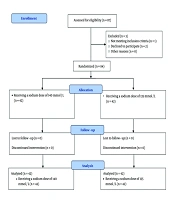
A total of 132 patients were assessed for eligibility. Of these, 42 patients were excluded: 28 did not meet the inclusion criteria, 10 declined to participate, and 4 were excluded for other reasons. The remaining 90 patients underwent randomization Figure 1.
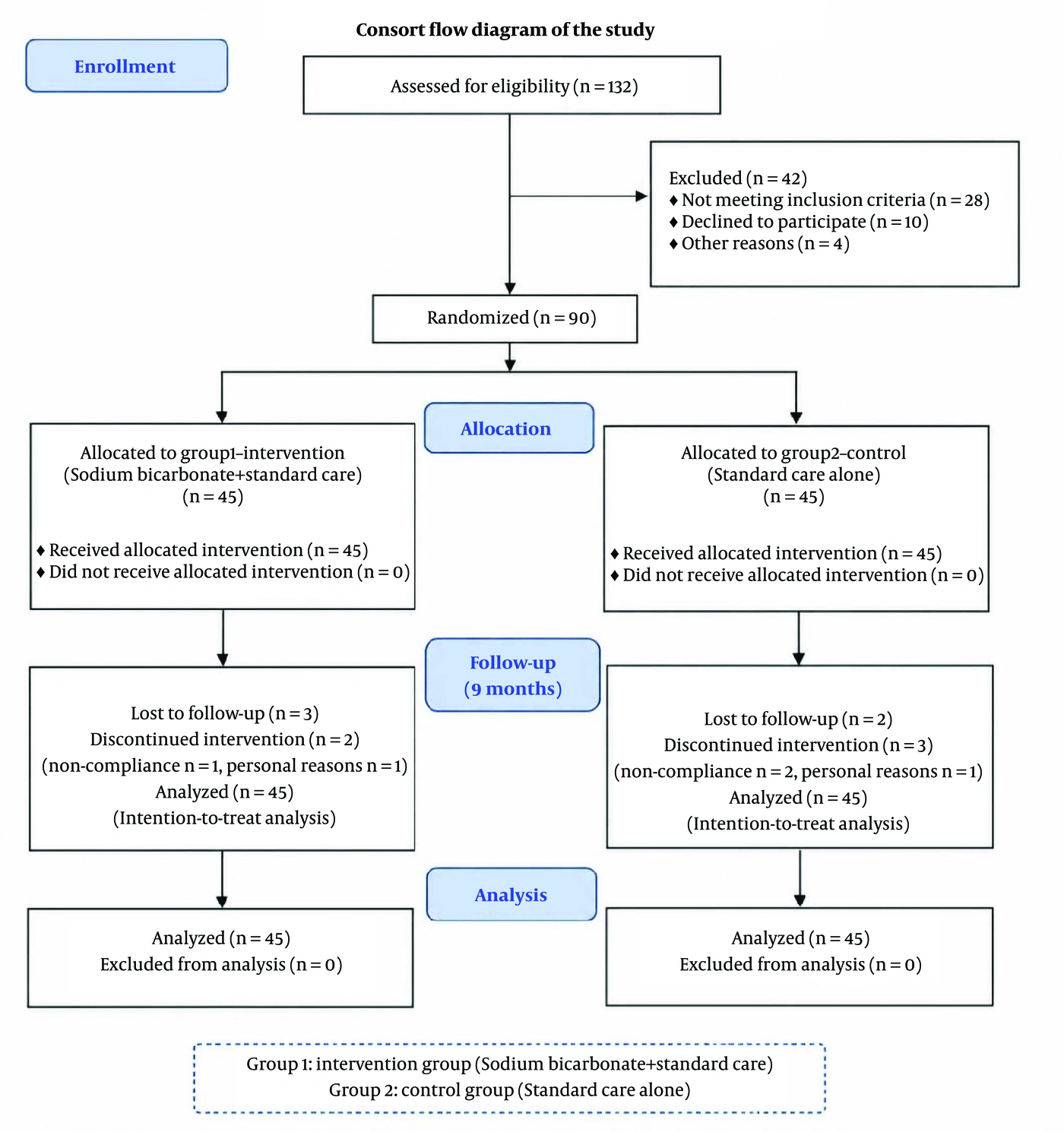
Figure 1.
CONSORT flow diagram showing patient allocation, follow-up, withdrawals, and final intention-to-treat analysis population.
4. Results
A total of 90 predialysis patients with CKD were randomized into two groups, with 45 participants in each group. Seven patients in Group 1 and 8 patients in Group 2 did not complete the final 9-month follow-up. The final analysis was conducted according to the ITT principle, using last observation carried forward for missing final outcome data. Baseline characteristics are shown in Table 1. The mean age was 54.78 ± 13.44 years in Group 1 and 56.93 ± 12.03 years in Group 2. In Group 1, 30 patients (66.7%) were male and 15 (33.3%) were female. In Group 2, 31 patients (68.9%) were male and 14 (31.1%) were female. Baseline eGFR and bicarbonate levels were compared between groups. The baseline mean eGFR was 23.60 ± 6.69 mL/min/1.73 m2 in Group 1 and 24.29 ± 7.21 mL/min/1.73 m2 in Group 2 (P = 0.639). After 9 months, eGFR increased from 23.60 to 24.71 mL/min/1.73 m2 in Group 1 and decreased from 24.29 to 22.42 mL/min/1.73 m2 in Group 2. The mean change in eGFR differed significantly between groups: Group 1 showed a mean increase of 1.11 mL/min/1.73 m2, whereas Group 2 showed a mean decline of 1.87 mL/min/1.73 m2, yielding a between-group difference of 2.98 mL/min/1.73 m2 (95% CI, 2.66 to 3.30; P < 0.001). Serum albumin increased from 3.82 ± 0.58 to 4.13 ± 0.34 g/dL in Group 1 and remained essentially unchanged in Group 2. The between-group difference in albumin change was 0.33 g/dL (95% CI, 0.18 to 0.48; P < 0.001). MAMC increased from 23.96 ± 0.85 to 24.80 ± 0.92 cm in Group 1 and remained unchanged in Group 2, resulting in a between-group difference in change of 0.91 cm (95% CI, 0.70 to 1.12; P < 0.001). All patients in Group 1 achieved the target serum bicarbonate range. The mean bicarbonate dose required to achieve the target serum bicarbonate level was 1.98 g/day. Dose escalation was required in 20 patients (44.44%), and overall compliance with bicarbonate therapy was 84.44% (38/45).
Table 1.
Baseline Characteristics of Group 1 and Group 2 a
| Parameters | Group 1 Treatment Group | Group 2 Control Group | P-Value |
|---|---|---|---|
| Age (y) | 54.78 ± 13.44 | 56.93 ± 12.03 | 0.43 |
| Gender | |||
| Male | 30 (66.7) | 31 (68.9) | 0.822 |
| Female | 15 (33.3) | 14 (31.1) | 0.822 |
| Stage of CKD | |||
| Stage 3b | 6 (13.13) | 10 (22.22) | 0.40 |
| Stage 4 | 39 (86.66) | 35 (77.77) | 0.40 |
| Etiology of CKD | |||
| Diabetes mellitus | 18 (40) | 19 (42.2) | 0.863 |
| Hypertension | 10 (22.2) | 9 (20) | 0.863 |
| Glomerulonephritis | 7 (15.6) | 9 (20) | 0.863 |
| Obstructive uropathies | 3 (6.7) | 4 (8.9) | 0.863 |
| Others including CKD of unknown etiology | 7 (15.6) | 4 (8.9) | 0.863 |
| Patients on renoprotective drugs | |||
| RAAS inhibitors | 14 (31.11) | 16 (35.55) | 0.65 |
| SGLT2 inhibitors | 10 (22.22) | 11 (24.44) | 0.81 |
| Serum creatinine (mg/dL) | 2.91 ± 0.73 | 2.82 ± 0.68 | 0.55 |
| eGFR (mL/min/1.73 m2) | 23.60 ± 6.69 | 24.29 ± 7.21 | 0.639 |
| Bicarbonate (mEq/L) | 18.13 ± 1.59 | 18.47 ± 1.47 | 0.305 |
| Albumin (g/dL) | 3.82 ± 0.58 | 4.04 ± 0.48 | 0.05 |
| Systolic blood pressure (mm Hg) | 132.93 ± 13.42 | 130.40 ± 13.61 | 0.38 |
| Diastolic blood pressure (mm Hg) | 84.00 ± 13.25 | 82.31 ± 13.15 | 0.55 |
| Anthropometry | |||
| Weight (kg) | 57.31 ± 6.88 | 57.69 ± 6.84 | 0.79 |
| Body mass index (kg/m2) | 21.56 ± 2.05 | 21.56 ± 1.47 | 1.00 |
| MAMC (cm) | 23.96 ± 0.85 | 23.56 ± 0.73 | 0.02 |
a Values are expressed as mean ± SD or No. (%). Abbreviations: CKD, chronic kidney disease; eGFR, estimated glomerular filtration rate; MAMC, mid-arm muscle circumference; mEq/L, milliequivalents per liter; RAAS, renin-angiotensin-aldosterone system; SD, standard deviation; SGLT2, sodium-glucose transport protein 2.
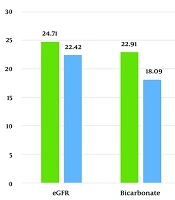
The comparison of serum bicarbonate, eGFR, serum albumin, and MAMC between Group 1 and Group 2 at 9 months is shown in Figure 2. The effects of sodium bicarbonate supplementation on serum bicarbonate, eGFR, serum albumin, and MAMC are presented in Tables 2-4. The mean between-group differences in eGFR, serum bicarbonate, serum albumin, and MAMC from baseline to 9 months are presented in Table 4.
Table 2.
Effect of Sodium Bicarbonate on eGFR Change, MAMC, and Serum Albumin After 9 Months in Group 1 (Treatment Group) a
| Parameters | Baseline | At 9 (mo) | P-Value |
|---|---|---|---|
| Bicarbonate (mEq/L) | 18.13 ± 1.59 | 22.91 ± 1.10 | < 0.01 |
| Serum creatinine (mg/dL) | 2.91 ± 0.73 | 2.84 ± 0.71 | 0.08 |
| eGFR (mL/min/1.73 m2) | 23.60 ± 6.69 | 24.71 ± 6.87 | < 0.01 |
| MAMC (cm) | 23.96 ± 0.85 | 24.80 ± 0.92 | < 0.01 |
| Albumin (g/dL) | 3.82 ± 0.58 | 4.13 ± 0.34 | < 0.01 |
a Values are expressed as mean ± SD. Abbreviations: eGFR, estimated glomerular filtration rate; MAMC, mid-arm muscle circumference; mEq/L, milliequivalents per liter; SD, standard deviation.
Table 3.
Change in eGFR and Nutritional Status in Group 2 at 9 Months a
| Variables | Baseline | At 9 (mo) | Mean Difference | t Value (Paired t Test) | P-Value |
|---|---|---|---|---|---|
| eGFR (mL/min/1.73 m2) | 24.29 ± 7.21 | 22.42 ± 6.96 | 1.867 | 21.305 | < 0.01 |
| Creatinine (mg/dL) | 2.82 ± 0.68 | 3.00 ± 0.71 | -0.178 | -3.084 | < 0.01 |
| Albumin (g/dL) | 4.04 ± 0.48 | 4.02 ± 0.45 | 0.022 | 1.00 | 0.32 |
| MAMC (cm) | 23.56 ± 0.73 | 23.49 ± 0.66 | 0.067 | 1.354 | 0.18 |
a Values are expressed as mean ± SD. Abbreviations: eGFR, estimated glomerular filtration rate; MAMC, mid-arm muscle circumference; SD, standard deviation.
Table 4.
Between-Group Comparison of Mean Change from Baseline to 9 Months a
| Parameters | Mean Change Group 1 | Mean Change Group 2 | Between-Group Difference | 95% CI | P-Value |
|---|---|---|---|---|---|
| Serum bicarbonate (mEq/L) | +4.78 ± 1.35 | -0.38 ± 0.49 | 5.16 | 4.73 to 5.59 | < 0.001 |
| eGFR (mL/min/1.73 m2) | +1.11 ± 0.93 | -1.87 ± 0.57 | 2.98 | 2.66 to 3.30 | < 0.001 |
| Serum albumin (g/dL) | +0.31 ± 0.47 | -0.02 ± 0.15 | 0.33 | 0.18 to 0.48 | < 0.001 |
| MAMC (cm) | +0.84 ± 0.64 | -0.07 ± 0.33 | 0.91 | 0.70 to 1.12 | < 0.001 |
a Values are expressed as mean ± SD. Abbreviations: CI, confidence interval; eGFR, estimated glomerular filtration rate; MAMC, mid-arm muscle circumference; mEq/L, milliequivalents per liter.
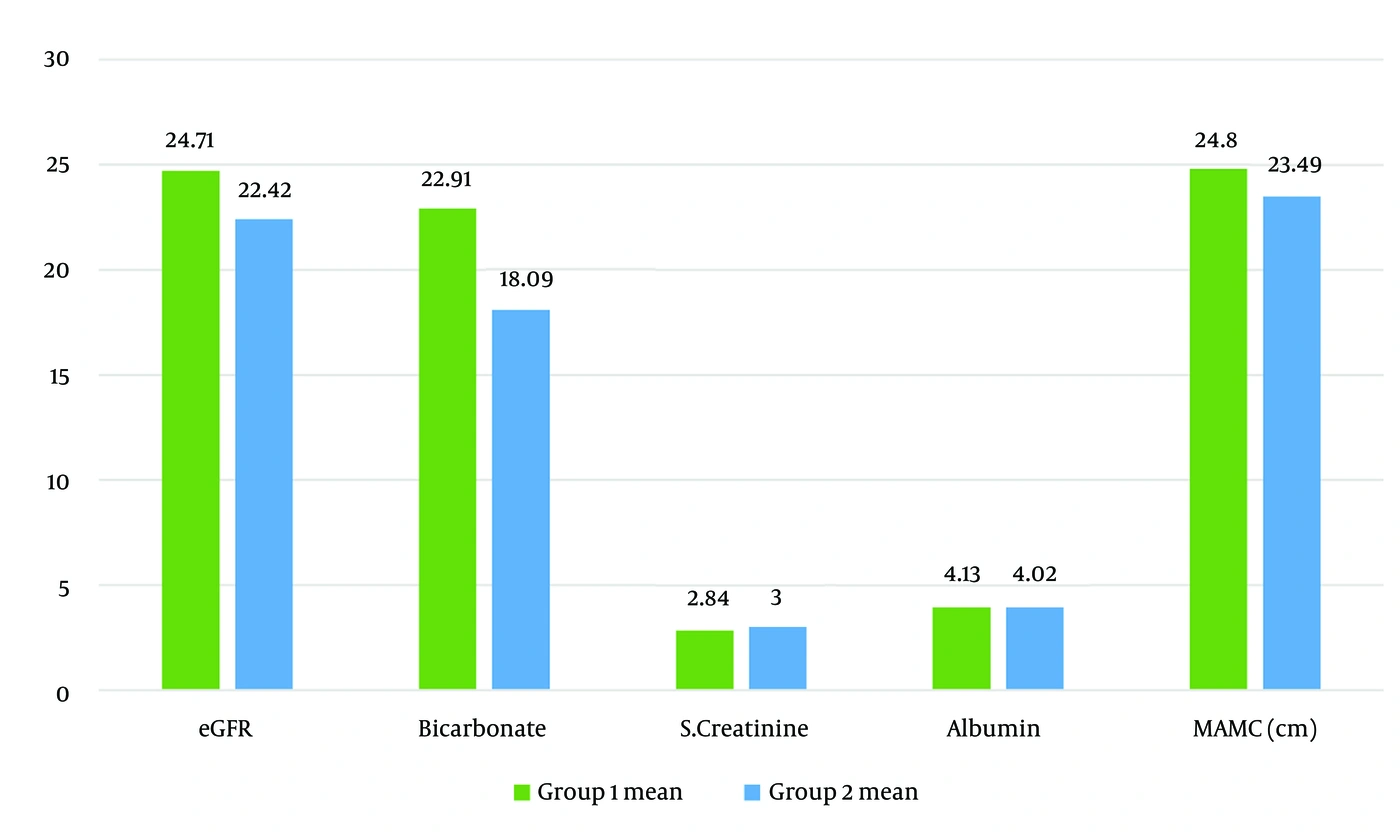
Figure 2.
Comparison of serum bicarbonate, eGFR, serum albumin, and MAMC at 9 months between Group 1 and Group 2.
Safety outcomes are shown in Table 5. Worsening hypertension, worsening edema, and increased diuretic requirement were numerically more frequent in Group 1; however, the between-group differences were not statistically significant. No patient in either group was hospitalized for congestive heart failure, and no patient progressed to end-stage renal disease during the 9-month follow-up.
Table 5.
Safety Outcomes During 9 Months of Follow-Up a
| Safety outcome | Group 1 | Group 2 | Risk Ratio | 95% CI | P-Value |
|---|---|---|---|---|---|
| Worsening hypertension | 16 (35.6) | 11 (24.4) | 1.45 | 0.76 to 2.78 | 0.358 |
| Worsening edema | 13 (28.9) | 7 (15.6) | 1.86 | 0.82 to 4.22 | 0.204 |
| Increased diuretic requirement | 15 (33.3) | 9 (20.0) | 1.67 | 0.81 to 3.41 | 0.233 |
a Values are expressed as No. (%). Abbreviation: CI, confidence interval.
5. Discussion
The evidence supporting bicarbonate therapy for metabolic acidosis in CKD remains limited owing to the lack of adequately powered, large-scale randomized controlled trials (RCTs) (11, 12). Consequently, the 2024 Kidney Disease: Improving Global Outcomes (KDIGO) CKD Work Group has not issued a graded recommendation for its routine use. However, the 2024 KDIGO CKD guideline suggests considering bicarbonate supplementation in patients with serum bicarbonate concentrations ≤ 18 mEq/L (12, 13).
Participants in the present study had low baseline serum bicarbonate concentrations, which may have increased the likelihood of benefiting from correction of acidosis. In predialysis patients with CKD and an eGFR of 15 - 45 mL/min/1.73 m2, the expected decline in eGFR over 9 months is approximately 1.5 - 3.8 mL/min/1.73 m2, depending on baseline clinical risk factors (8, 12). After 9 months, patients receiving sodium bicarbonate (Group 1) demonstrated a mean increase in eGFR of 1.11 mL/min/1.73 m2, whereas the control group (Group 2) showed a mean decline of 1.87 mL/min/1.73 m2. The resulting between-group difference of 2.98 mL/min/1.73 m2 was statistically significant. In similar CKD populations, annual eGFR decline may vary substantially depending on baseline CKD stage, diabetes, blood pressure, proteinuria, medication use, and dietary acid load. Therefore, the present findings indicate short-term preservation of renal function parameters and should not be overinterpreted as proof of durable renoprotection.
Improvement in nutritional status was another important finding. After 9 months, mean MAMC increased by 0.84 cm in Group 1, whereas no significant change was observed in Group 2. Serum albumin increased significantly from baseline in the treatment group, remained stable in Group 2, and showed a significant between-group difference. These observations are biologically plausible because chronic metabolic acidosis promotes muscle protein degradation, activates proteolytic pathways, and suppresses protein synthesis, leading to muscle wasting; in contrast, correction of acidosis may attenuate these catabolic effects and preserve skeletal muscle mass (5, 7). Serum albumin is influenced by inflammation, dietary protein intake, hydration status, hepatic synthesis, and disease severity.
Treatment adherence was good, with most participants achieving target serum bicarbonate concentrations through periodic monitoring and dose adjustment. Safety findings require a balanced interpretation. Patients were monitored for sodium-related adverse effects, including hypertension, edema, and fluid overload. Although mild increases in blood pressure or peripheral edema occurred in some participants, none developed decompensated heart failure or required hospitalization, suggesting that sodium bicarbonate can be administered safely with appropriate monitoring of blood pressure, edema, body weight, diuretic requirement, and electrolyte profile.
A meta-analysis by Ting-Ya Yang et al. reported that sodium bicarbonate therapy improved eGFR, particularly in Asian patients, individuals younger than 65 years, those treated for 6 - 9 months, and those achieving post-treatment serum bicarbonate levels ≤ 24 mEq/L (5). The analysis also demonstrated improvements in serum albumin, MAMC, and hospitalization rates but no survival benefit (5). The improvement in eGFR observed in the present study is consistent with findings reported by Avnish Kumar Dubey, Suhan Alva, Biagio R. Di Iorio, and Ione de Brito-Ashurst, who demonstrated beneficial effects of sodium bicarbonate therapy on renal function in CKD (5-8, 14-15). Similarly, the improvement in MAMC is consistent with studies by Avnish Kumar Dubey, Suhan Alva, and Ione de Brito-Ashurst (5-7, 15).
These findings support correction of metabolic acidosis as part of comprehensive predialysis CKD management. Oral sodium bicarbonate is inexpensive, widely available, and easy to administer; however, treatment should be individualized after considering cardiovascular status, blood pressure, and the risk of sodium-related complications.
5.1. Study Limitations
Several limitations should be considered. The study was conducted at a single center with a relatively small sample, limiting generalizability. The open-label design and lack of placebo control are important limitations. Because both physicians and participants were aware of allocation, behavioral changes, dietary modification, adherence, symptom reporting, and measurement of nutritional outcomes such as MAMC may have been influenced by performance or observer bias. The absence of a placebo also means that nonspecific treatment effects cannot be excluded. These limitations particularly affect subjective or behavior-sensitive outcomes, whereas laboratory outcomes such as serum bicarbonate are less vulnerable but are still influenced by adherence and diet. Metabolic acidosis was assessed using serum bicarbonate rather than arterial blood gas analysis, which provides a more comprehensive assessment of acid-base status. Dietary intake and dietary acid load were not standardized and may have influenced serum bicarbonate and nutritional outcomes (16, 17). Although the increase in MAMC was statistically significant, its long-term clinical relevance remains uncertain. The study was primarily powered to evaluate renal outcomes and may have been underpowered to detect differences in secondary nutritional parameters such as serum albumin. Finally, the 9-month follow-up was insufficient to assess long-term outcomes, including progression to end-stage kidney disease, dialysis initiation, or survival.
5.2. Conclusions
Despite its single-center design, modest sample size, and relatively short follow-up, this study suggests that oral sodium bicarbonate supplementation in predialysis patients with CKD and metabolic acidosis may correct metabolic acidosis, preserve kidney function, and improve muscle mass-related parameters over 9 months. These findings should be interpreted cautiously and confirmed in larger multicenter studies with longer follow-up.