
1. Background
Since the emergence of the new coronavirus disease (COVID-19) at the end of 2019 due to the severe acute respiratory syndrome coronavirus 2 (SARS-CoV-2), the world has witnessed a viral infection that rapidly reached pandemic status. The acute respiratory distress caused by this pathogen can lead to hospitalization, intensive care unit (ICU) admission, need for assisted ventilation, and death (1); and, due to its high transmission rate, COVID-19 has led to surges in hospital care demand with a noticeable burden of disease (2).
Identifying high-risk COVID-19 patients is crucial to decreasing the burden of the disease, better clinical management, and preventing serious complications or sequela, as well as more optimal allocation of costs and resources (3, 4). Patients with lower SpO2, older age, respiratory distress, and underlying diseases are at higher risk (5-7). In addition to clinical and medical conditions, chest computed tomography (CT) has played an important role during the COVID-19 pandemic, particularly in assessing pneumonia severity on admission and monitoring treatment response. Chest CT is also effective in diagnosing COVID-19 when complications arise, diagnostic challenges occur, or there is unresponsiveness to therapy (8). COVID-19 patients may show a constellation of abnormalities in the chest CT assessment. The most prevalent findings in chest CT scans are ground-glass opacities (GGO), consolidations, linear opacities, crazy-paving pattern, interlobular septal thickening, reversed-halo appearance, and subpleural sparing (9-13), with predominantly peripheral, multifocal, bilateral, and lower lobes involvement (5). Patients with diffuse distribution, multifocal, bilateral, or lower-lung involvement are more likely to be admitted to the ICU or die (5). Furthermore, the radiological severity of COVID-19 is shown to correlate with various risk factors indicating poor prognosis, e.g., inflammatory biomarkers, comorbidities such as diabetes (14), etc.
2. Objectives
Considering the promising utility of chest CT-derived findings in detecting high-risk COVID-19 patients, we sought to investigate the association between on-admission chest CT findings and poor hospital prognosis among COVID-19 patients in Southern Iran.
3. Methods
This retrospective cohort study was conducted on all hospitalized COVID-19 patients admitted to Namazi and Faghihi hospitals, affiliated with the Shiraz University of Medical Sciences, South of Iran, from October to December 2020. Patients confirmed with COVID-19 using RT-PCR, aged ≥ 18 years, who had an on-admission high-resolution chest CT (HRCT) in the PACS system, and underwent laboratory assessments on the first day of admission were included. Subjects were excluded if they had a clear HRCT or severe artifacts in the HRCT. The protocol of the study was approved by the Ethics Committee of Shiraz University of Medical Sciences (code: IR.SUMS.MED.REC.1400.094).
The imaging parameters of the CT machines were set at a tube voltage of 120 kVp, a tube current of 60 mA for an average weight of 70 kg, a gantry rotation time of 0.5 seconds, and image reconstruction via a kernel at a slice thickness of 2 mm, yielding an average radiation dose of 160 mGy received by the patients. All scans were performed through the standard scanning area, single breath-hold in the supine position, and evaluated through the lung window (window level of 1500 HU and window width of -500 HU).
A data collection form was developed by the research team and was filled using the hospital information system (HIS), hospital electronic health record (EHR), and PACS. The form consisted of two major sections.
The first section had three parts, including demographic data, comorbidities, on-admission vital signs [i.e., pulse rate (PR), respiratory rate (RR), core body temperature, systolic blood pressure (SBP), diastolic blood pressure (DBP), and blood oxygen saturation] and laboratory data (i.e., white blood cells (WBC) count, polymorphonuclear cells (PMN) and lymphocytes counts, hemoglobin (Hb) level, platelets (Plt) count, lactate dehydrogenase (LDH) level, blood gas analysis (PaCO2, pH, HCO3 levels), D-dimer level, C-reactive protein (CRP) level, ESR (erythrocyte sedimentation rate), bilirubin level, positive troponin level, sodium level, and potassium level), as well as short-term follow-up during the hospital stay (disease course and complications, imaging series, outcome).
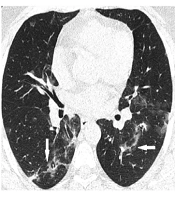
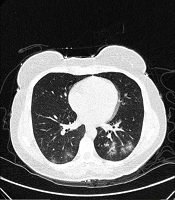
The second section was about the HRCT scan reports, including visual lung involvement (severity) score, distribution (peripheral, central, peripheral and central, none), area (anterior, posterior, anterior and posterior, none), main pattern GGO, crazy paving, consolidation, none), and related features (fibrosis, sub-pleural line, reversed halo sign, pleural effusion, lymphadenopathy). All of these parameters were separately assessed in each of the five lung lobes. High-resolution chest CTs were reviewed by two independent experienced radiologists according to the standard morphologic descriptors based on the recommendations of the Nomenclature Committee of the Fleischner Society. In case of discrepancy, it was resolved through consultation with a third independent radiologist.
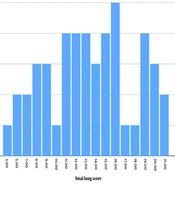
To assess the total visual lung involvement score, the percentage of involvement in each lobe's segment was first calculated relative to its total area; then, these values were averaged to calculate the lobe's severity score. The severity score for each lobe was classified into 0 (0% involvement), 1 (< 5% involvement), 2 (5 - 25% involvement), 3 (26 - 50% involvement), 4 (51 - 75% involvement), and 5 (> 75% involvement). Finally, these severity scores of the five lobes were summed to obtain the total lung severity score, yielding a range of 0 - 25. Moreover, if there was a specific dominant distribution, area, or main pattern of involvement in four or five lobes, that patient was considered positive for the presence of a specific dominant distribution, area, or main pattern of involvement, respectively.
The study endpoint was the patients’ prognosis during a hospital stay due to COVID-19. Patients who were admitted to the ICU, required invasive mechanical ventilation (IMV), developed acute respiratory distress syndrome, or died during the hospital stay were considered to have poor prognosis due to COVID-19.
For data handling, Microsoft® Excel (Microsoft Office Professional Plus [2016], Microsoft® Excel: Version 16.0.4549.1000, Santa Rosa, CA: © Microsoft Corporation) data entry software was used. Results are reported through frequency (percent) and median [interquartile range (IQR)] or mean ± standard deviation (SD). A statistically significant level of less than 0.05 was considered.
Statistical analysis was carried out using SPSS Statistics (SPSS Statistics Inc., Chicago, US) version 26.0. Univariable analysis was performed using the chi-square test for qualitative variables, and the independent t-test and Pearson’s correlation test for quantitative variables. If data were not normally distributed, as determined by the Kolmogorov-Smirnov test and visual evaluation of histogram graphs, non-parametric alternative tests were used, including the Mann-Whitney test and Spearman’s rho test.
In addition, variables with a P-value less than 0.2 in the univariable analysis were selected for multivariable analysis, which was conducted using logistic regression. The reported statistics for this analysis included the beta coefficient, standard error (SE), odds ratio (OR), 95% confidence interval (CI), and P-value. For the rates of hospital complications and outcomes, 95% CI was calculated using the bootstrap method.
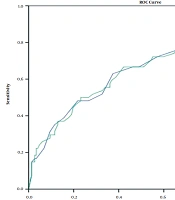
Furthermore, the visual lung involvement score was subjected to diagnostic test analysis, with sensitivity and specificity reported for in-patient COVID-19 poor prognosis at various cut-off values.
4. Results
After excluding 34 patients due to missing data in hospitalization records (n = 28) or severe artifacts in HRCT (n = 6), a total of 166 hospitalized COVID-19 patients (mean age 61.26 ± 16.12 years, 59% male) were included in the analysis. The rates of poor prognosis and mortality during hospital stays were 29.5% [95% CI: 22.3, 36.7] and 18.8% [95% CI: 12.7, 25.4], respectively.
The frequency of ICU admission and the need for IMV were 31 (18.7% [95% CI: 12.7, 24.7]) and 28 (16.9% [95% CI: 11.4, 22.3]), respectively. In addition, the most common complications during the hospital stay were superimposed bacterial pneumonia (5.4% [95% CI: 2.4, 9.0]), myocardial infarction (5.4% [95% CI: 2.4, 9.0]), and venous thromboembolism (4.8% [95% CI: 1.8, 8.4]).
Furthermore, the average hospital length of stay (LoS) was 7 [IQR: 4, 10] days (Appendix 1 in Supplementary File).
The COVID-19 patients with poor prognosis had a significantly higher visual lung involvement score compared to those without poor prognosis (20 [IQR: 14, 23] vs. 13 [IQR: 10, 17]; P < 0.0001). The two groups were not statistically different with regard to other HRCT findings. Specifically, while the poor prognosis group had a slightly higher frequency of mixed lung involvement distribution (93.9%), mixed lung involvement area (91.8%), crazy paving dominant pattern (18.4%), centimetric lymphadenopathy (69.4%), reversed halo sign (4.1%), and pleural effusion (16.3%) compared to those without poor prognosis (90.6%, 86.3%, 10.3%, 59.8%, 0.9%, and 8.5%, respectively), these differences were not statistically significant (P = 0.120, 0.524, 0.513, 0.477, 0.208, and 0.141, respectively) (Table 1).
Table 1.
| Variables | Total (N = 166) | Negative (n = 117) | Positive (n = 49) | P c |
|---|---|---|---|---|
| Distribution d | 0.120 | |||
| Dominantly peripheral | 11 (6.6) | 10 (8.5) | 1 (2.0) | |
| Dominantly central | 3 (1.8) | 1 (0.9) | 2 (4.1) | |
| Mixed distribution | 152 (91.6) | 106 (90.6) | 46 (93.9) | |
| Lung area | 0.524 | |||
| Dominantly anterior | 3 (1.8) | 2 (1.7) | 1 (2.0) | |
| Dominantly posterior | 17 (10.2) | 14 (12.0) | 3 (6.1) | |
| Mixed area involvement | 146 (88.0) | 101 (86.3) | 45 (91.8) | |
| Main pattern | 0.513 | |||
| Dominantly ground glass opacity | 68 (41.0) | 50 (42.7) | 18 (36.7) | |
| Dominantly crazy paving | 21 (12.7) | 12 (10.3) | 9 (18.4) | |
| Dominantly consolidation | 20 (12.0) | 15 (12.8) | 5 (10.2) | |
| Mixed pattern | 57 (34.3) | 40 (34.2) | 17 (34.7) | |
| Visual lung involvement score, median [IQR] e | 14 [11, 20] d | 13 [10, 17] d | 20 [14, 23] d | < 0.0001 f, d |
| Lymphadenopathy g | 0.477 | |||
| Centimetric LN | 104 (62.7) | 70 (59.8) | 34 (69.4) | |
| Sub-centimetric LN | 43 (25.9) | 32 (27.4) | 11 (22.4) | |
| Negative | 19 (11.4) | 15 (12.8) | 4 (8.2) | |
| Sub pleural line | 0.671 h | |||
| Positive | 6 (3.6) | 5 (4.3) | 1 (2.0) | |
| Negative | 160 (96.4) | 112 (95.7) | 48 (98.0) | |
| Fibrosis | > 0.99 h | |||
| Yes | 4 (2.4) | 3 (2.6) | 1 (2.0) | |
| No | 162 (97.6) | 114 (97.4) | 48 (96.8) | |
| Reversed Hallo sign | 0.208 h | |||
| Yes | 3 (1.8) | 1 (0.9) | 2 (4.1) | |
| No | 163 (98.2) | 116 (99.1) | 47 (95.9) | |
| Pleural effusion d | 0.141 | |||
| Yes | 18 (10.8) | 10 (8.5) | 8 (16.3) | |
| No | 148 (89.2) | 107 (91.5) | 41 (83.7) |
Abbreviation: IQR, interquartile range.
a Values are expressed as No. (%) unless otherwise indicated.
b Poor prognosis was defined as ICU admission, need for invasive mechanical ventilation, developing ARDS, or death.
c Chi-square test.
d Variables represent that they selected for the multivariable analysis.
e Maximum score of 25.
f Mann-Whitney test.
g Centimetric and sub-centimetric lymph nodes were defined as short axis ≥ 1 cm and < 1 cm, respectively.
h Underpowered analysis.
The lung involvement score was significantly higher among patients who were admitted to the ICU (20 [IQR: 13, 23] vs. 13 [IQR: 11, 20]; P = 0.002), required IMV (21.5 [IQR: 16.75, 24] vs. 13 [IQR: 11, 18]; P < 0.0001), developed complications during the hospital stay (17.5 [IQR: 13, 22] vs. 13 [IQR: 10.75, 20]; P = 0.001), had a higher hospital LoS (rho = 0.248; P = 0.001), had a poor prognosis (20 [IQR: 14, 23] vs. 13 [IQR: 10, 17]; P < 0.0001), and expired (21 [IQR: 16, 23] vs. 13 [IQR: 10.75, 19]; P < 0.0001) compared to their counter-groups.
Moreover, the lung involvement score was significantly correlated with several inflammatory markers, including lymphocyte proportion (rho = -0.328; P < 0.0001), D-dimer (rho = 0.379; P = 0.032), LDH (rho = 0.444; P < 0.0001), and ESR (rho = 0.223; P = 0.009) (Table 2).
Table 2.
Association Between COVID-19 Lung Involvement Score and Different Hospital Outcome Variables and Laboratory Prognostic Markers a
| Variables | Lung Involvement Score b | P Normality c | P d |
|---|---|---|---|
| ICU admission | 0.010 | 0.002 | |
| Yes | 20 [13, 23] | ||
| No | 13 [11, 20] | ||
| Need invasive mechanical ventilation | < 0.0001 | < 0.0001 | |
| Yes | 21.5 [16.75, 24] | ||
| No | 13 [11, 19] | ||
| Any complication during hospital stays | 0.009 | 0.001 | |
| Yes | 17.5 [13, 22] | ||
| No | 13 [10.75, 20] | ||
| Poor prognosis e | < 0.0001 | < 0.0001 | |
| Yes | 20 [14, 23] | ||
| No | 13 [10, 17] | ||
| Expired | < 0.0001 | < 0.0001 | |
| Yes | 21 [16, 23] | ||
| No | 13 [10.75, 19] | ||
| Troponin | 0.906 | 0.328 f | |
| Positive | 15.96 ± 5.16 | ||
| Negative | 14.94 ± 4.85 | - | |
| Hospital LoS | 0.248 g | - | 0.001 h |
| Lymphocytes proportion | -0.328 g | - | < 0.0001 h |
| Platelets count | 0.145 g | - | 0.064 h |
| D-dimer | 0.379 g | - | 0.032 h |
| Lactate dehydrogenase | 0.444 g | - | < 0.0001 h |
| C-reactive protein | 0.144 g | - | 0.080 h |
| Erythrocyte sedimentation rate | 0.223 g | - | 0.009 h |
a Values are expressed as mean ± SD or median [interquartile range (IQR)].
b Maximum score of 25.
c Kolmogorov-Smirnov.
d Mann-Whitney test.
e Poor prognosis was defined as ICU admission, need for invasive mechanical ventilation, developing ARDS, or death.
f P independent t-test.
g Spearman’s rho.
h Spearman’s P.
It should be noted that, compared to those without poor prognosis, the hospitalized COVID-19 patients with poor prognosis had significantly higher on-arrival respiratory rates, WBC counts, PMN proportions, as well as troponin, D-dimer, LDH, ESR, and creatinine levels. In addition, they had significantly lower oxygen saturation levels, lymphocyte proportions, and pH levels (Appendices 2 - 4 in Supplementary File).
According to the model developed based on 13 hospital on-arrival variables, the lung involvement score (OR: 1.197 [95% CI: 1.064, 1.348]; P = 0.003) was the only statistically significant independent variable for COVID-19 poor prognosis status during the hospital stay. This indicates that with every unit increase in the lung involvement score, the risk of COVID-19 poor prognosis status during the hospital stay increased by an odds ratio of 0.197 (Table 3).
Table 3.
Hospital’s On-arrival Variables for In-patient COVID-19 Poor Prognosis Using the Multivariable Logistic Regression Model a
| Variables | B | SE | OR | 95% CI | P |
|---|---|---|---|---|---|
| Diabetes | 0.823 | 0.511 | 2.277 | 0.836, 6.200 | 0.108 |
| Cardiovascular disease | 0.801 | 0.571 | 2.228 | 0.728, 6.818 | 0.160 |
| Respiratory rate | 0.036 | 0.060 | 1.037 | 0.921, 1.167 | 0.548 |
| Oxygen saturation | -0.034 | 0.027 | 0.967 | 0.917, 1.019 | 0.205 |
| White blood cells | 0.020 | 0.085 | 1.020 | 0.863, 1.206 | 0.813 |
| Polymorphonuclear cells proportion | 0.030 | 0.035 | 1.031 | 0.962, 1.104 | 0.389 |
| Lymphocytes proportion | < 0.001 | 0.034 | 1.000 | 0.936, 1.068 | 0.989 |
| PaCO2 | 0.031 | 0.039 | 1.031 | 0.956, 1.113 | 0.426 |
| Arterial blood HCO3 b | -0.039 | 0.071 | 0.962 | 0.836, 1.105 | 0.581 |
| Creatinine | -0.207 | 0.455 | 0.813 | 0.333, 1.983 | 0.649 |
| Pleural effusion | 1.099 | 0.716 | 3.000 | 0.737, 12.208 | 0.125 |
| Visual lung involvement score c | 0.180 | 0.060 | 1.197 | 1.064, 1.348 | 0.003 |
| Dominantly mixed distribution d | -1.580 | 1.082 | 0.206 | 0.025, 1.719 | 0.144 |
Abbreviations: SE, standard error; OR, odds ratio, CI, confidence interval.
a Poor prognosis was defined as ICU admission, need for invasive mechanical ventilation, developing ARDS, or death.
b Due to the presence of collinearity for PH, this variable was deleted and replaced with arterial blood HCO3.
c Variable represent significant independent variables for in-patient COVID-19 poor prognosis.
d Due to the presence of small sample sizes in the "dominantly peripheral distribution" and "dominantly central distribution" categories, these categories were combined into a single "non-mixed distribution" category (the reference category) to ensure the reliability of the estimates.
Furthermore, the sensitivity and specificity of the visual lung involvement score at the cut-off values of 13.5 to 19.5 for in-patient COVID-19 poor prognosis are presented in Appendix 5 in Supplementary File. Specifically, the optimum cut-off value for the visual lung involvement score was identified at approximately 18.5, with a sensitivity, specificity, positive predictive value, and negative predictive value of 67.3%, 78.6%, 56.9%, and 85.2%, respectively.
5. Discussion
This retrospective cohort study was conducted to assess the utility of early chest CT findings in predicting the short-term hospital outcomes of 166 hospitalized COVID-19 patients in Southern Iran. We observed that the visual lung involvement score was the only significant CT-derived finding for the prognosis of hospitalized COVID-19 patients. Additionally, visual lung involvement scores were associated with several hospital outcomes and inflammatory biomarkers. There was no significant prognostic role for the lung’s predominant distribution, area, or pattern of involvement, nor for miscellaneous findings such as fibrosis, sub-pleural line, reversed halo sign, pleural effusion, or lymphadenopathy.
We found that the on-admission visual lung involvement score was associated with various poor hospital outcomes in COVID-19 patients, while no such role was observed for other studied HRCT-derived findings. A significant body of evidence indicates that a high CT lung involvement score, indicative of a progressive condition, is a critical indicator of poor prognosis among hospitalized COVID-19 patients (5, 15-23). However, many of these studies were limited by small sample sizes, populations with varying ethnic and socio-demographic characteristics, the use of different CT scoring systems, and cohorts with differing dominant disease severities.
Lei et al. (15) studied initial chest CT findings to identify prognostic variables for mortality among 40 hospitalized COVID-19 patients. They reported that the visual lung involvement score and diffuse distribution rate were significantly higher in deceased patients. However, they did not find any differences between survivors and deceased patients regarding some common lung involvement patterns, such as GGO, consolidation, and crazy paving.
Yamada et al. (16) developed and evaluated a simple semi-automated visual classification method on the initial chest CT of 69 hospitalized COVID-19 patients. Their results showed that the distribution of lung involvement (i.e., peripheral, multifocal, and diffuse), lung compromise area score (defined as the sum of poorly and non-aerated volumes), number of affected lobes, and consolidation were significantly higher in patients who were intubated compared to those who were not. However, there was no significant difference regarding GGO, the crazy-paving pattern, or the reversed halo sign. Notably, the distribution of lung involvement was the only significant independent variable for intubation according to the multivariable model.
Jin et al. (17) demonstrated that the diffuse alveolar damage pattern and a visual lung involvement score ≥ 10 in chest CT were significantly correlated with adverse outcomes at 2 weeks, including the need for admission, mechanical ventilation, and death, in their multivariable model of 94 COVID-19 patients. However, no significant role was observed for GGO, consolidation, linear opacity, mixed patterns, or the number of affected lobes.
In a study of 224 hospitalized COVID-19 patients, Liu et al. (18) reported that the visual lung involvement score, distribution, consolidation, and air bronchogram were important on-arrival chest CT findings associated with adverse outcomes. They found no significant correlation for GGO, GGO with interstitial thickening, lymphadenopathy, or pleural effusion. These findings might be explained by the fact that GGO and similar patterns are among the most common initial CT findings in COVID-19 patients.
In general, it appears that a cumulative involvement score is more prognostic and practical than relying on a single pattern (e.g., consolidation, GGO, or crazy paving) or distribution (21).
Various semiquantitative CT-based scoring systems demonstrate good-to-excellent prognostic utility for predicting outcomes and guiding treatment plans among COVID-19 patients. In our study, we observed a sensitivity and specificity of 67.3% and 78.6%, respectively, at a cut-off value of 18.5 for the visual lung involvement score in discriminating hospitalized COVID-19 patients with short-term poor outcomes from those without poor outcomes.
Dilek et al. (24) reported an area under the curve (AUC) range of 0.74 - 0.88 for the prognostic performance of various scoring systems, including the visual lung involvement score, chest computed tomography severity score (CT-SS), total CT score, and early decision severity score (ED-SS). Similarly, Elmokadem et al. (25) found an AUC range of 0.86 - 0.90 for discriminating severe COVID-19 patients using the visual lung involvement score, CT-SS, chest CT score (CCTS), and 3-level chest CT severity score. Likewise, Inoue et al. (26) reported fair-to-good prognostic utility with an AUC range of 0.79 - 0.80 for the visual lung involvement score, CT-SS, and CCTS based on on-admission chest CT.
Overall, the visual total involvement score appears to be a valuable tool due to its relatively simple learning curve, practicality with a short evaluation time, and significant prognostic value for hospitalized COVID-19 patients as early as during the emergency ward stay.
Another finding of the study was the potential of various standard prognostic biomarkers (i.e., lymphocyte proportion, D-dimer, LDH, and ESR) for assessing the severity of COVID-19 disease, as evidenced by their significant association with the radiological severity score. Supporting this, a retrospective study of 200 hospitalized COVID-19 patients by Gupta et al. (27) demonstrated that more severe lung involvement was associated with higher levels of various inflammatory biomarkers, including D-dimer, LDH, CRP, and ferritin. Interestingly, they found the strongest correlation coefficient between LDH levels and lung involvement scores.
In another retrospective study conducted by Naik et al. (28) on 2,343 hospitalized COVID-19 patients, the majority (> 60%) exhibited moderate-to-severe lung involvement scores, and CRP levels were substantially increased in up to 70% of the patients. Levels of other inflammatory biomarkers such as ferritin, LDH, ESR, D-dimer, interleukin-6, and neutrophil-to-lymphocyte ratio also showed significant changes.
Moreover, Saeed et al. (20) found that the CT severity score in 902 hospitalized COVID-19 patients was positively correlated with lymphopenia and elevated serum levels of CRP, D-dimer, and ferritin. Similarly, Komurcuoglu et al. (22) reported a significant correlation between the radiological severity score and levels of CRP, D-dimer, AST, LDH, ferritin, and pro-BNP.
Additionally, Abrishami et al. (29) showed that increased neutrophil-to-lymphocyte ratio, platelet-to-lymphocyte ratio, and LDH levels, as well as a decreased lymphocyte-to-CRP ratio, were significantly associated with higher CT scores.
The present study had at least three limitations. First, it was conducted in two tertiary centers within a single city, which may limit the generalizability of the findings. Second, the sample size was relatively small. Third, the patients were selected during the peak of the more aggressive Delta variant, which might have introduced selection bias.
5.1. Conclusions
Early chest CT findings are strongly associated with poor prognosis and can therefore be used to guide treatment strategies in COVID-19 patients as early as upon admission.