
1. Background
Over the last several decades, global demand has increased for the development of new, natural, and effective alternatives to address pathogenic bacteria resistant to chemical antibiotics in the food industry. Accordingly, following the nanotechnology revolution, scientific committees have focused on developing alternatives with adaptive bioactivity to enhance antibacterial activity (1). One promising candidate in this regard is the use of metallic oxide nanoparticles (2). Zinc oxide (ZnO), among other compounds, has been identified by the Food and Drug Administration (FDA) as safe or generally recognized as safe (GRAS) and is an important semiconductor (1).
Zinc oxide is a valuable commercial and economic option because of its unique physicochemical attributes, small size, and high surface area-to-volume ratio, which make it suitable for various applications (3). Zinc oxide nanoparticles (ZnO NPs) have recently gained prominence in the scientific community because of their broad-spectrum applications, especially in agriculture, the food industry, biology, and the environment (4). Among metal nanoparticles, ZnO NPs have been widely investigated for numerous applications because of their optical properties, low cost, safety, biocompatibility, minimal cytotoxicity, ease of manufacture, semiconductivity, piezoelectricity, spintronic and photonic abilities, vulcanization stimulation, and antibacterial activity (5). The preparation of nanoparticles is a key topic that has recently gained attention. There are 3 methods for synthesizing ZnO NPs: physical, chemical, and biological methods (6). Despite the many advantages of metal nanoparticles, physical and chemical synthesis techniques continue to face several challenges, including the use of toxic chemicals, high production costs, and environmental problems. Consequently, to achieve sustainable development aims and reduce waste, green synthesis of nanoparticles has emerged as a novel, environmentally friendly, and safer alternative that has garnered considerable attention (7). In this approach, plant extracts are used not only as reducing agents but also as stabilizing agents. The presence of bioactive compounds, such as phenols, terpenes, and flavonoids, in the extracts plays a vital role in nanoparticle stabilization and formation. These compounds frequently have inherent antimicrobial properties that can act synergistically with the synthesized nanoparticles and significantly enhance their antibacterial activity (8).
Musk plant (Ducrosia anethifolia [DC.] Boiss.), belonging to the Apiaceae family, is a valuable medicinal plant with antimicrobial, antifungal, and antioxidant characteristics. Research has shown that essential oil extracted from the leaves of D. anethifolia is an excellent source of biologically active compounds, including coumarins, furanocoumarins, flavonoids, terpenes, tannins, and free phenols (9). Notably, scopoletin, one of the major components of the extract, shows inhibitory effects against a broad range of gram-positive and gram-negative bacteria by disrupting cell membrane integrity and inactivating vital enzymes (10). Studies have shown that aqueous and ethanolic extracts of D. anethifolia inhibit the growth of Pseudomonas aeruginosa, Escherichia coli, Bacillus subtilis, and Staphylococcus aureus (11, 12). Therefore, the phytochemical compounds of D. anethifolia appear to be ideal candidates for the biosynthesis of nanoparticles and could be considered significant factors influencing antibacterial properties. These phytochemicals not only impart intrinsic antibacterial properties but also function as reducing and stabilizing agents, thereby facilitating the synthesis of metal nanoparticles and enhancing their final stability.
Microbial foodborne pathogens are among the major public health challenges because of the high risk of microbial contamination of foods by several types of biological hazards, causing widespread outbreaks of disease and economic losses (13). Under such conditions, the use of natural and effective antimicrobial agents, particularly in the form of plant-based nanoparticles, is a promising strategy for combating these pathogens and can be used as a replacement for, or as a complementary, preservative in the food industry (14). Numerous recent studies have reported that green-synthesized ZnO nanoparticles are effective in inhibiting foodborne pathogens (15, 16).
2. Objectives
Given the importance of zinc oxide nanoparticles synthesized using D. anethifolia extract in inhibiting the growth and proliferation of foodborne pathogenic bacteria, this study aimed to determine the minimum inhibitory concentration and minimum lethal concentration of zinc oxide nanoparticles produced from D. anethifolia and to investigate the antibacterial mechanisms of ZnO nanoparticles against foodborne pathogens. The novelty of this research lies in leveraging a lesser-known medicinal plant for practical food safety applications and integrating green nanotechnology with traditional herbal knowledge.
3. Methods
3.1. Plant Material
This experiment was conducted using a completely randomized factorial design with 3 replications per treatment. The first factor was extract type at 2 levels, including the water extract of D. anethifolia and the water extract of D. anethifolia containing green zinc nanoparticles. The second factor was bacterial type at 5 levels, including S. aureus, P. mirabilis, Listeria monocytogenes, E. coli, and Vibrio cholerae.
Plant seeds were collected from the Balouchestan region, in the mountains around Iranshahr (Figure 1). The samples were transferred to the Plant Physiology Laboratory, Agricultural Research Institute of Zabol, Research Institute of Zabol, Zabol, Iran (Zbm1014), shade-dried at ambient room temperature, and then ground into fine particles using an electric grinder. For extraction by the cold maceration method, 20 g of powdered plant leaves was soaked separately in water and kept on a shaker for 24 hours. After 1 day, the material was filtered through Whatman filter paper No. 2. The active compounds in the aqueous plant extract were determined by gas chromatography-mass spectrometry.
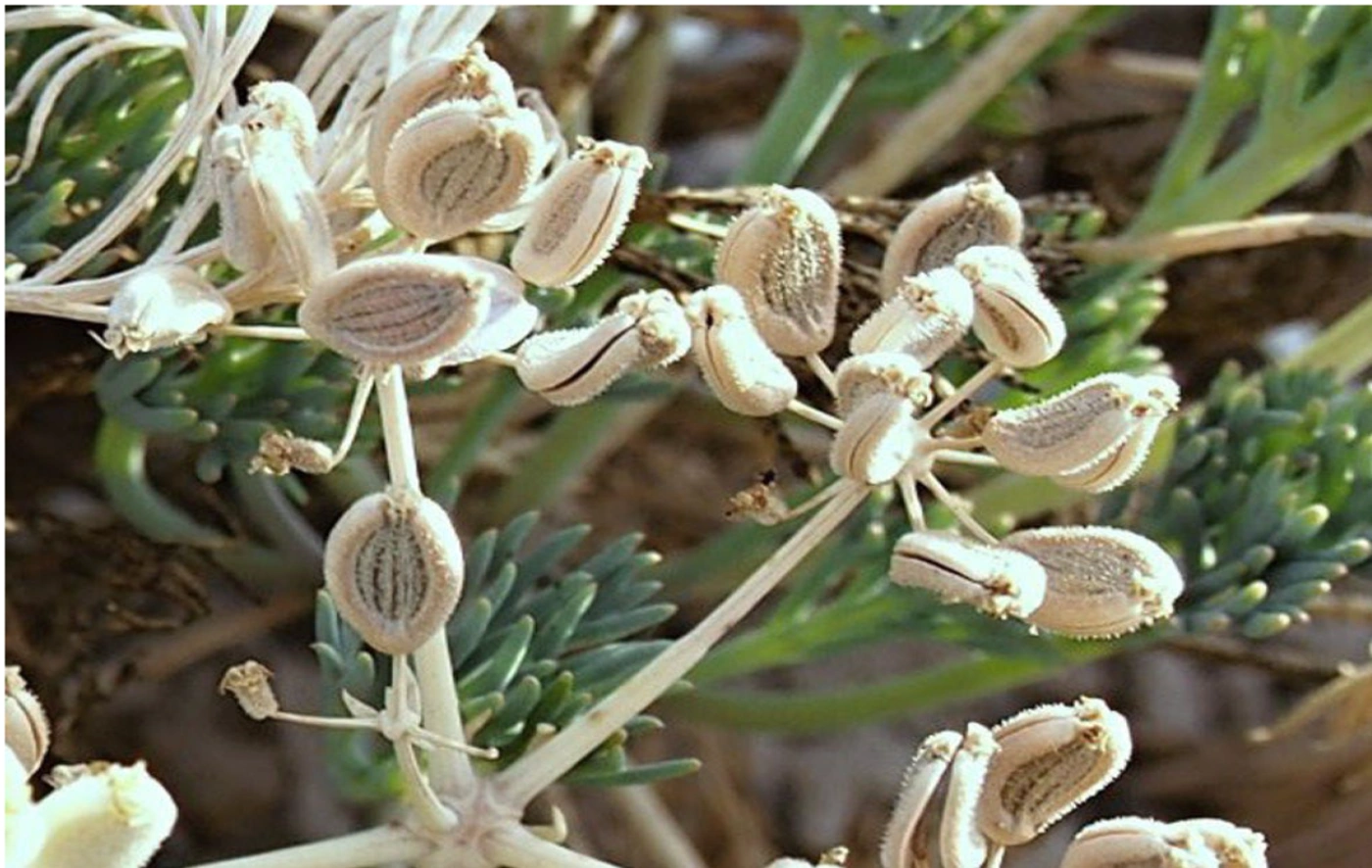
Figure 1.
Picture of Ducrosia anethifolia
3.2. Green Nanoparticle Synthesis
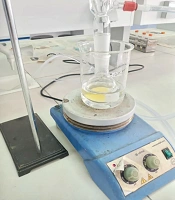
Five grams of fenugreek seeds was weighed and added to 100 mL of double-distilled water. The resulting mixture was extracted in a bain-marie for 20 minutes. To prepare zinc nanoparticles, 0.025 M zinc nanoparticles and fenugreek aqueous extract were combined in equal proportions and placed in a bain-marie at 40°C for 25 minutes. The reaction mixture was centrifuged, and the supernatant phase was separated and dried in an oven for 12 hours. The resulting dry powder was used to prepare the concentrations used in the experiment.
3.3. Total Phenol
The phenolic compound content was measured with slight modifications to the method of Nile and Park (2013). Briefly, 200 μL of hydroalcoholic extract, 400 μL of Folin-Ciocalteu reagent, and 400 μL of 7% sodium carbonate were mixed thoroughly in a test tube. After 30 minutes of incubation at ambient room temperature, the absorbance of the sample was read using a spectrophotometer. The results were reported as mg of gallic acid/g of dry matter.
3.1. Y = 0.014 + 0.002X
Y: Absorbance recorded by the spectrophotometer
X: Total phenol content
3.4. Total Flavonoids
Flavonoids were measured by spectrophotometry. For this purpose, the reaction mixture containing 500 μL of extract, 1.5 mL of 80% methanol, 100 μL of 10% aluminum chloride solution, 100 μL of 1 M potassium acetate solution, and 2.8 mL of distilled water was added to a test tube. After 40 minutes of incubation at room temperature, the absorbance of the reaction mixture was measured using a spectrophotometer at 415 nm, and the results were presented as mg quercetin equivalent/g dry matter.
3.2. Y = 0.018 + 0.005X
Y: Absorbance recorded by the spectrophotometer
X: Total flavonoid content
3.5. Antioxidant Activity
The DPPH free radical scavenging assay was used to estimate the antioxidant activity of the musk extract. In this reaction, the solution color changes from purple (2,2-diphenyl-1-picrylhydrazyl) to yellow (diphenyl-picrylhydrazine). Briefly, 750 μL of DPPH solution was added to 250 μL of plant extract. After 30 minutes of incubation in the dark at ambient room temperature, absorbance was read at 517 nm using a spectrophotometer, and the percentage of free radical scavenging was calculated using the following formula:
Free radical inhibition percentage = (Ac - As)/Ac × 100
Ac: Absorbance of the control measured by spectrophotometer
As: Absorbance of the extract containing green zinc nanoparticles
3.6. Antibacterial Activity
3.6.1. Bacterial Strains and Culture Conditions
Bacterial strains were purchased from the Iranian Fungal and Bacterial Collection Center. The bacterial strains used in this experiment included S. aureus, P. mirabilis, L. monocytogenes, E. coli, and V. cholerae; they were propagated on nutrient agar medium and stored at 4°C until use. First, Mueller-Hinton broth culture medium was prepared, and several bacterial colonies from fresh cultures were transferred to it. The optical absorbance of the cell suspension at half-McFarland concentration, containing 1.5 × 10⁸ bacteria per mL, was measured at 630 nm, and the absorbance was adjusted to 0.08 - 0.1. The antimicrobial effects of the extracts tested in this experiment, including the water extract of the musk plant and the water extract of the musk plant containing zinc nanoparticles, both at a dilution of 250 ppm, were evaluated using the agar diffusion method. First, bacteria were cultured on Mueller-Hinton agar with a turbidity of 1.5 × 10⁷. Then, 0.5-cm-deep wells were created, and the extracts (100 μL) were added separately to these wells. The positive control in this experiment was ciprofloxacin. The cultures were incubated at 37°C for 24 hours, and the inhibition zone was measured in millimeters. This experiment was repeated 3 times for each extract and each bacterium.
3.6.2. Determination of Minimum Inhibitory Concentration and Minimum Bactericidal Concentration of Zinc Nanoparticles Made From the Medicinal Musk Plant
The sensitivity of standard bacterial strains to the extracts examined in this experiment was assessed using the microdilution method. First, 100 μL of Mueller-Hinton broth (MHB) was dispensed into all wells, and 100 μL of the desired extract was added to the first well of the 96-well plate. The other concentrations examined in this test (50, 25, 12.5, 6.25, and 3.125) were prepared by serial dilution from the previous well. From the last well, 100 μL of culture medium was removed, and 100 μL of a microbial suspension containing 108 units per mL equivalent to 0.5 McFarland was added; the plate was then incubated at 37°C for 24 hours. The first tube showing no bacterial growth after incubation was considered the MIC. To confirm that the control well was free of bacteria, 10 μL was removed and transferred to Mueller-Hinton agar culture medium. After 24 hours, the first extract concentration that could kill 99.9% of the bacteria was defined as the MBC.
3.7. Data Analysis
Data obtained from this project were analyzed using SAS version 9.1 software. In this study, the LSD test was used to compare means.
4. Results
4.1. Scanning Electron Microscopy
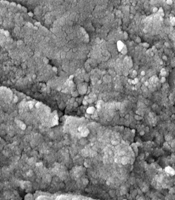
Scanning electron microscopy (SEM) was used to confirm the authenticity of the green zinc nanoparticles produced using fenugreek extract (Figure 2).
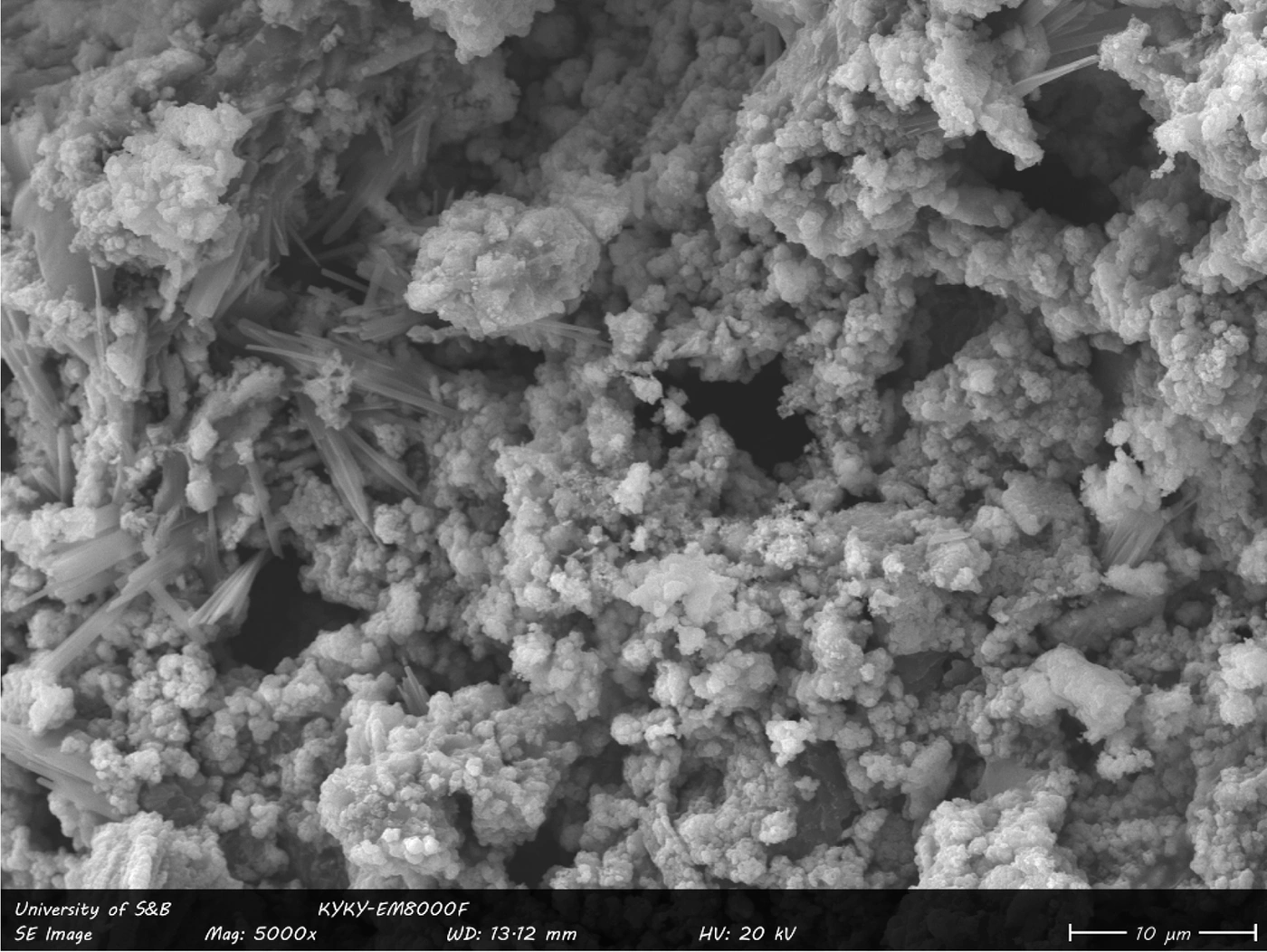
Figure 2.
Green zinc nanoparticles synthesized in aqueous extract of musk plant (Ducrosia anethifolia)
4.2. Essential Oil Profile
4.2.1. Total Phenol, Total Flavonoid, and Antioxidant Activity
The results showed that the total phenol content in the water extract of the musk plant was 49.36 ± 2.81 mg GA/g D.W., the total flavonoid content was 1.1 ± 0.11 mg Q/g D.W., and the antioxidant activity, equivalent to DPPH free radical scavenging, was 65.8 ± 0.21% (Table 1). The synthesis of green zinc nanoparticles increased total phenols by 10%, total flavonoids by 9%, and antioxidant activity by 18%.
Table 1.
Evaluation of Total Phenol, Total Flavonoids, and Antioxidant Activity of Ducrosia anethifolia Plant Extracts a
| Type of Extract | Total Phenol, mg GA/g D.W. | Total Flavonoids, mg Q/g D.W. | Antioxidant Activity, DPPH Free Radical Scavenging (%) |
|---|---|---|---|
| Water extract of the musk containing green zinc nanoparticles | 54.99 ± 3.19 | 1.2 ± 0.10 | 78.02 ± 0.47 |
| Water extract of the musk | 49.36 ± 2.81 | 1.1 ± 0.11 | 65.8 ± 0.21 |
a Values are expressed as mean ± SD.
Pearson correlation coefficient analysis showed a strong positive correlation between total phenols and antioxidant activity (P = 0.99) and, similarly, between total flavonoids and antioxidant activity (P = 0.77) (Table 2).
Table 2.
Pearson Correlation Coefficient Between Total Phenol, Total Flavonoid, and Antioxidant Activity
| Variables | Total Phenolic Content | Total Flavonoid Content | Antioxidant Activity |
|---|---|---|---|
| Total phenolic content | 1.000 | 0.80 | 0.99 |
| Total flavonoid content | - | 1.000 | 0.77 |
| Antioxidant activity | - | - | 1.000 |
The antimicrobial test results indicated that the main effects of bacterial strain and extract concentration were significant at the 5% probability level (P ≤ 0.05), and the interaction effect of strain × extract concentration was significant at the 1% probability level (P ≤ 0.01) (Table 3).
Table 3.
Analysis of Variance Between Extract Concentration and Antimicrobial Activity
| Sources | DF | SS | MS | F | P |
|---|---|---|---|---|---|
| Strain | 4 | 0.26879 | 0.08960 | 14.00 | 0.0000 |
| Concentration | 1 | 1.05984 | 0.21197 | 33.12 | 0.0000 |
| Strain × concentration | 4 | 0.17098 | 0.01140 | 1.78 | 0.01 |
| Error | 48 | 0.30720 | 0.00640 | ||
| Total | 71 | 1.80680 |
The antibacterial test results indicated that the inhibitory activity against bacteria increased with increasing extract concentration. The largest inhibition zone diameter (20 mm) was observed for the sample containing green zinc nanoparticles synthesized at the highest concentration (1024 μg/mL) against P. mirabilis, and the most susceptible strain was E. coli. The aqueous extract of the musk plant had no inhibitory effect against S. aureus, L. monocytogenes, and E. coli at 256 μg/mL (Table 4).
Table 4.
Inhibition Zone Diameter of Green Zinc Nanoparticles Synthesized in Aqueous Extract of Ducrosia anethifolia Plant at Different Concentrations on Different Bacteria (mm) a
| Strains of Bacteria | 256 μg/mL Water Extract | 256 μg/mL GZN Extract | 512 μg/mL Water Extract | 512 μg/mL GZN Extract | 1024 μg/mL Water Extract | 1024 μg/mL GZN Extract |
|---|---|---|---|---|---|---|
| Staphylococcus aureus | 0 | 1 | 3 | 5 | 6 | 8 |
| Proteus mirabilis | 5 | 10 | 12 | 15 | 15 | 20 |
| Listeria monocytogenes | 0 | 1 | 2 | 3 | 5 | 5 |
| Escherichia coli | 0 | 0 | 1 | 3 | 4 | 5 |
| Vibrio cholerae | 3 | 5 | 10 | 13 | 14 | 15 |
a GZN: Aqueous extract of musk plant containing green zinc nanoparticles; Water extract: Water extract of the Ducrosia anethifolia plant.
As shown in Table 5 and 6, the lowest MIC and MBC concentrations (0.2240 and 0.3265, respectively) were observed for the E. coli strain, indicating the high resistance of this bacterium to natural antibiotic compounds. As shown in Table 7 and 8, the highest MBC was observed for P. mirabilis, with no statistically significant difference compared with V. cholerae in the water extract of the musk plant.
Table 5.
Minimum Inhibitory Concentration of Aqueous Extract of Musk Plant Containing Green Zinc Nanoparticles on Bacterial Strains
| Strains of Bacteria | Mean | Homogeneous Groups |
|---|---|---|
| Proteus mirabilis | 0.5490 | A |
| Vibrio cholerae | 0.4653 | B |
| Staphylococcus aureus | 0.3625 | C |
| Listeria monocytogenes | 0.2638 | D |
| Escherichia coli | 0.2240 | E |
Table 6.
Minimum Bactericidal Concentration of Aqueous Extract of Ducrosia anethifolia Plant Containing Green Zinc Nanoparticles on Bacterial Strains
| Strains of Bacteria | Mean | Homogeneous Groups |
|---|---|---|
| Proteus mirabilis | 0.7395 | A |
| Vibrio cholerae | 0.7385 | A |
| Staphylococcus aureus | 0.6112 | B |
| Listeria monocytogenes | 0.4480 | C |
| Escherichia coli | 0.3265 | D |
Table 7.
Minimum Inhibitory Concentration of Water Extract of Ducrosia anethifolia Plant on Bacterial Strains
| Strains of Bacteria | Mean | Homogeneous Groups |
|---|---|---|
| Proteus mirabilis | 0.5328 | A |
| Vibrio cholerae | 0.4112 | A |
| Staphylococcus aureus | 0.3232 | B |
| Listeria monocytogenes | 0.2522 | C |
| Escherichia coli | 0.2123 | CD |
Table 8.
Minimum Bactericidal Concentration of Water Extract of Ducrosia anethifolia Plant on Bacterial Strains
| Strains of Bacteria | Mean | Homogeneous Groups |
|---|---|---|
| Proteus mirabilis | 0.6118 | A |
| Vibrio cholerae | 0.6025 | A |
| Staphylococcus aureus | 0.5940 | B |
| Listeria monocytogenes | 0.4023 | C |
| Escherichia coli | 0.3118 | D |
5. Discussion
In a study investigating the antimicrobial properties of musk, the essential oil of this plant showed high inhibitory activity against S. aureus (17). Other research has shown that musk essential oil produced an inhibition zone diameter of 14 - 32 mm against foodborne pathogens (18). In a study investigating the synthesis of synthetic nanozinc in eucalyptus, the inhibition zone diameter against S. aureus was 17.2 ± 0.1 mm. The minimum inhibitory concentration of synthetic nanoparticles in the aqueous extract of Cambogia was 25 μg/mL (19).
5.1. Conclusions
Our results showed that the total phenolic content (54.99 mg GA/g D.W.), total flavonoid content (1.2 mg Q/g D.W.), and antioxidant activity (78.02%) in musk plant extract containing green Zn nanoparticles were higher than those in the control sample, which was the aqueous extract of musk. The antimicrobial test results showed that the highest inhibitory activity was against P. mirabilis, and the most susceptible strain was E. coli. Therefore, green ZnO NPs synthesized in musk plant extract using environmentally friendly techniques can be used for various environmental and biomedical applications.