
1. Introduction
Vitamin C is the most commonly used vitamin. It is a vitamin which takes part in many biochemical processes in organisms. It is highly soluble in water and functions as an effective reluctant. Pioneering work in the field of vitamin C was conducted by Linus Pauling and his group. Based on their studies, vitamin C is necessary for human health (The reader is referred to http://lpi.oregonstate.edu/infocenter/vitamins/vitaminC/). The importance of vitamin C was first discovered in 1747; the disease was discovered in the 16th century when Navy sailors died from it. Ascorbate is derived from scurvy. This term was used to describe its ability to prevent scurvy. Scurvy is a disease caused by a deficiency of vitamin C. This vitamin is essential for many biochemical processes. Some mammals including humans are not able to biosynthesize vitamin C, because they lack the limited enzyme L-gulonolactone oxidase, therefore it is essential in the human, however, in rodents and guinea pigs it is synthesized [1]. Figure 1 shows biosynthesis process of vitamin C. Vitamin C is chemically capable of reacting with most of the physiologically important radicals and oxidants and acts as a proven hydrosoluble antioxidant [2]. Vitamin C has been associated with fertility for many years and may have evolutionary significance [3]. Dawson et al. (1990) indicated an improvement in sperm viability, decreases in agglutination and percentage of abnormality, and increases in motility and in total mature sperm count in men above age 25 years, when dietary intake of ascorbic acid was increased [4]. Luck et al. (1995) reported that ascorbate should be considered as an essential biochemical in the reproductive process and as a potentially significant factor in human fertility [5]. Jelodar et al. (2013) reported that testes are extremely sensitive to a decrease in body levels of ascorbic acid [6]. Vitamin C also contributes to the support of spermatogenesis at least in part through its capacity to reduce α-tocopherol and maintain this antioxidant in an active state. Vitamin C is itself maintained in a reduced state by a GSH-dependent dehydroascorbate reductase, which is abundant in the testes [7, 8]. It also plays the role of coenzyme of oxidation enzymes such as proline hydroxylase, lysine hydroxylase, 4-hydroxyphenylpyruvate dioxygenase, dopamine-β-hydroxylase, tryptophan hydroxylase, and ƴ-butyrobetaine hydroxylase [9]. Through these enzymatic reactions, ascorbate is involved in the metabolism of neurotransmitters, lipids, and collagen. Ascorbate involves many metabolic processes; however, its mechanism remains to be clarified.
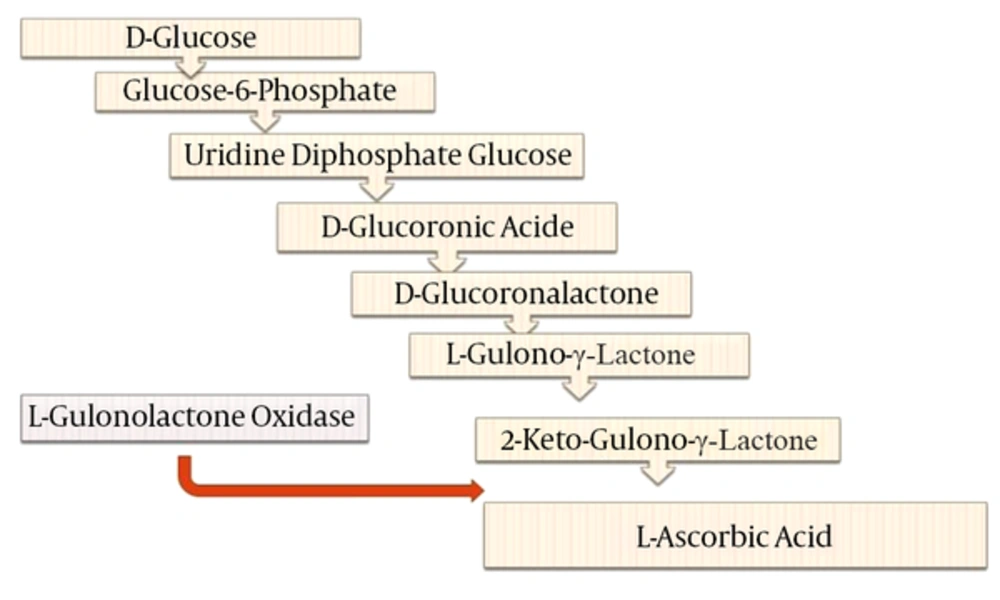
Figure 1.
Biosynthesis Process of Vitamin C in Mammalian (For More Information see Linster and Van Schaftingen 2007)
2. Vitamin C Chemistry and Recycling
Vitamin C is a six-carbon lactone ring structure with 2, 3- enediol moiety [10]. It has two forms in biochemical processes;L-ascorbic acid (ascorbate) is a reduced form of vitamin C and DHA is the oxidized form of it, both L-ascorbic acid and dihydroascorbic acid retain the vitamin C activity (Figure 2). The antioxidant activity of ascorbic acid comes from 2, 3-enediol [10]. Ascorbic acid serves as a one-electron donor, generating the ascorbate free radical. The ascorbate free radical is reduced back to ascorbate within cells by enzymes NADH- and NADPH dependent reductases that have a high affinity for the low concentrations of the radical generated [11]. When the ascorbate free radical accumulates significantly in areas not accessible to these enzymes, or if its concentration exceeds their capacity, two molecules of the ascorbate free radical react with each other, and or these molecules dismutate to form one molecule each of ascorbate and dehydroascorbic acid [12]. The latter is the two-electron-oxidized form of ascorbate, which is very unstable, having a half-life in blood and physiologic buffers of 2 - 6 minutes [13, 14]. Dehydroascorbic acid can also be recycled back to ascorbate by many mechanisms within cells, including direct reduction by GSH and enzymatic reduction by various thiol transferases or NADPH-dependent reductases [15]. Ascorbate is recycled from both its oxidized forms within cells [16, 17]. Both L-ascorbic acid and dihydroascorbic acid retain the vitamin C activity. Ascorbic acid is highly susceptible to oxidation in the presence of metal ions such as Cu2+ and Fe3+ [10]. Oxidation of ascorbic acid is also influenced by heat, light exposure, pH, oxygen concentration, and water [10]. Cytochrome b561 (Cyt b561), initially identified in the chromaffin granules of bovine adrenal medullae, is a transmembrane ascorbate-dependent oxido-reductase that plays a key role in ascorbate recycling and iron absorption. Cyt b561 is the only membrane-embedded oxido-reductase that relies on ascorbate as the electron donor [18].
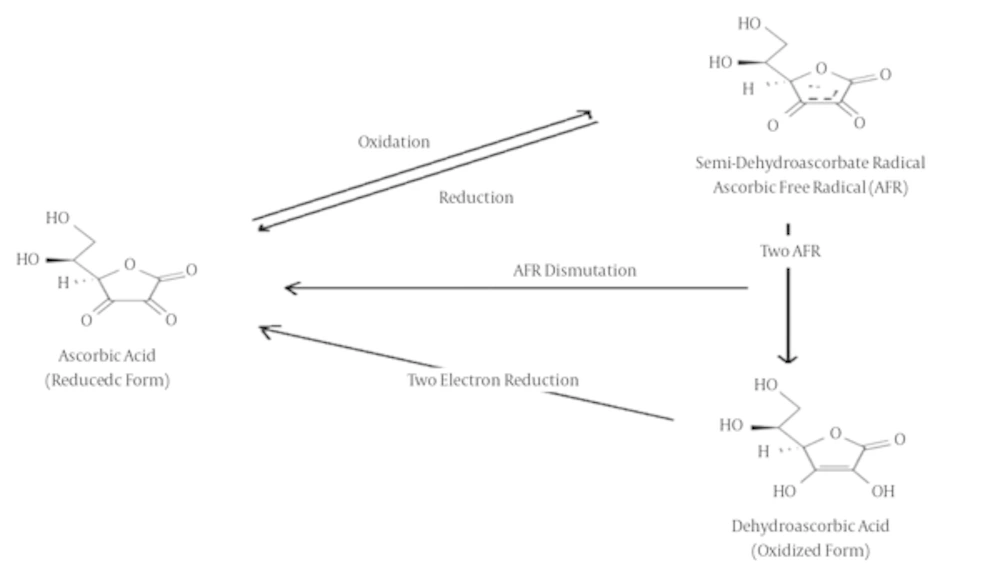
Figure 2.
Chemical Ascorbate Structures and Reactions Are Shown (With Permission from Harrison and May 2009)
3. Absorption and Transport
Plasma protein binding of vitamin C is negligible; it appears that vitamin C freely transports. Vitamin C is a hydrophilic molecule and has negative charge at physiologic pH; it seems to do so slowly over several hours in the absence of an influx mechanism [19]. Absorption of ascorbate is done by specific transporters. It is absorbed by both active transport and facilitated diffusion. The mechanism of active transport is sodium-dependent active transport-sodium-ascorbate co-transporters (SVCTs) and facilitated diffusion ascorbate is done by hexose transporters (GLUTs) [20]. Two isoforms of these transporters are known, and although similar in amino acid sequence and structure, they have different tissue distributions [20]. The sodium-dependent vitamin C transporter type 1 (SVCT1) product of the SLC23A1 gene in humans (http://www.ncbi.nlm.nih.gov/gene/9963) is responsible for absorption and re-absorption of the vitamin C in intestinal and renal tubular cells, respectively [20]. SVCT1 exists mainly in apical brush border membranes entrocytes and tubular cells. The SVCT2 product of the SLC23A2 gene in humans (http://www.ncbi.nlm.nih.gov/gene/9962) is located in cells of most other tissues [1, 20, 21]. This transporter is especially important in brain and adrenal gland. It has been shown that mutant mice lacking SVCT2 have severely reduced (99%) ascorbic acid levels in both brain and adrenals. Both transporters mediate high-affinity, sodium- and energy-dependent ascorbate transport into cells,thedriving force for this transport is provided by K+-Na+ ATPase [20, 21]. In addition to uptake on the SVCT proteins, DHA can enter and leave cells by facilitated diffusion on the ubiquitous glucose transporters of the GLUT family (GLUTs). DHA forms a bicyclic hemiketal in solution [22]. Ascorbate is not transported on the GLUTs. GLUT1 and GLUT3 transfer just the DHA form of Vitamin C [23]. When DHA entersit is cells rapidly reduced to ascorbate [24]. In the body, it appears that SVCTs are the predominant system for vitamin C transport. With regular intake the absorption rate varies between 70 and 95%. However, the degree of absorption decreases as intake increases. At high intake (1.25 g), fractional human absorption of ascorbic acid may be as low as 33%; at low intake (< 200 mg) the absorption rate can reach up to 98% [25]. The concentration of vitamin C is varied in different tissues, in adrenal glands (4 - 10 mM), brain (2 - 10 mM), liver (0.8 - 1 mM), muscle (0.4 mM), CSF (200 - 400 μM), plasma (40 - 60 μM) and RBC (40 - 60 μM) [1]. GLUTs and SVCTs are widely expressed in the brain and adrenal glands [1]. Ascorbate concentrations over renal re-absorption threshold pass freely into the urine and are excreted. Although the body’s maximal store of vitamin C is largely determined by the renal threshold for blood, there are many tissues that maintain vitamin C concentrations far higher than in blood. Plasma binding protein of vitamin C is negligible [26]. Ascorbic acid is a water-soluble vitamin and normally its excess is excreted in urine and its concentration in serum is affected by recent intake [25]. The degradation of vitamin C in mammals is initiated by the hydrolysis of dehydroascorbate to 2, 3-diketo-l-gulonate, which is spontaneously degraded to oxalate, CO2 and l-erythrulose [26].
4. Functions of Vitamin C
Vitamin C has many wide functions in human and other mammals. In addition to its well-known role as an antioxidant, the vitamin serves as a cofactor in several important enzyme reactions, including those involved in the synthesis of catecholamines, carnitine, cholesterol, amino acids, and certain peptide hormones.
4.1. Vitamin C as an Antioxidant
Vitamin C plays an important role in protection against oxidative stress on various tissues [6, 27, 28]. Oxidative stress refers to conditions of imbalance between productions of reactive oxygen species (ROS) and antioxidant defense mechanism which include enzymatic antioxidants (superoxide dismutase, catalase and glutathione proxidase) and non-enzymatic antioxidants (vitamins A, Cand E), proteins like albumin, transferrin, melatonin and glutathione (GSH). Ceruloplasmin and transferrin also play important roles by sequestering free iron ions and so inhibit the Fenton reaction and production of OH [29, 30]. Reactive species of oxygen, free radicals and peroxide are produced in the cell when metabolism of oxygen is incomplete in the mitochondrial respiratory chain. Regarding the antioxidant functions, ascorbate acts directly to scavenge oxygen or nitrogen based radical species generated during normal cellular metabolism [10]. The antioxidant mechanisms of ascorbic acid are based on hydrogen atom donation to lipid radicals, quenching of singlet oxygen, and removal of molecular oxygen [2, 10]. Scavenging aqueous radicals and regeneration of α–tocopherol from the tocopheroxyl radical species are also well known antioxidant mechanisms of ascorbic acid [2, 10]. Ascorbic acid is an excellent electron donor because of the low standard 1-electron reduction potential (282 mV), the generation of relatively stable semi-dehydroascorbic acid, and the easy conversion of DHA acid to ascorbic acid [10]. Semi-dehydroascorbateis is reconverted to ascorbate in the cytosol by cytochrome b reductase and thioredoxin reductase in reactions involving NADH and NADPH, respectively [26]. The kinetics of electron or hydrogen atom transfer reactions is rapid, resulting in ascorbic acid being an excellent antioxidant. For example, ascorbic acid can donate a hydrogen atom to a tocopheroxyl radical at the rate of 2 × 10⁵ Mol/sec (The following will be discussed) [31]. Trans-membrane electron transfer systems using ascorbate or NADH as electron donors serve to reduce semidehydroascorbate present in secretory vesicles and in the extracellular space [26, 31]. Dehydroascorbate is reduced spontaneously by glutathione, as well as enzymatically in reactions using glutathione or NADPH. Intracellular ascorbate concentrations in the low millimolar range (much higher than that in plasma) seem to be necessary to support its role as an antioxidant [32] and as a cofactor for dioxygenase enzymes [33]. Whether vitamin C functions as an antioxidant or pro-oxidant is determined by at least three factors: 1) the redox- potential of the cellular environment; 2) the presence/absence of transition metals; and 3) the local concentrations of ascorbate [34-36]. The last factor is particularly relevant in treatments that depend on the antioxidant/ pro-oxidant property of vitamin C, because it can be readily manipulated and controlled in vivo to achieve desired effects [34]. The antioxidant activity of vitamin C is dose-dependent. Studies have shown that high doses of vitamin C have antioxidant activity. Senthil Kumar et al. (2004) showed that 100 (mg/kg bw/day) of vitamin C has antioxidant role. [37]. Recent studies have shown that vitamin C at dose 200 (mg/kg bw/day) can have antioxidant properties in various tissues of rat [5, 27, 38-40]. We showed that exposure to RFW (900MHz) emitted from BTS (4 h/day, for 45 days) decreased the antioxidant enzymes activity and increased lipid peroxidation in the various tissues of rat and led to oxidative stress. We also showed that administration of vitamin C (200 mg/kg bw/day) improves antioxidant enzymes activity and decreases lipid peroxidation in these tissues and prevents oxidative stress (Figures 3-6) [5, 27, 38-40].
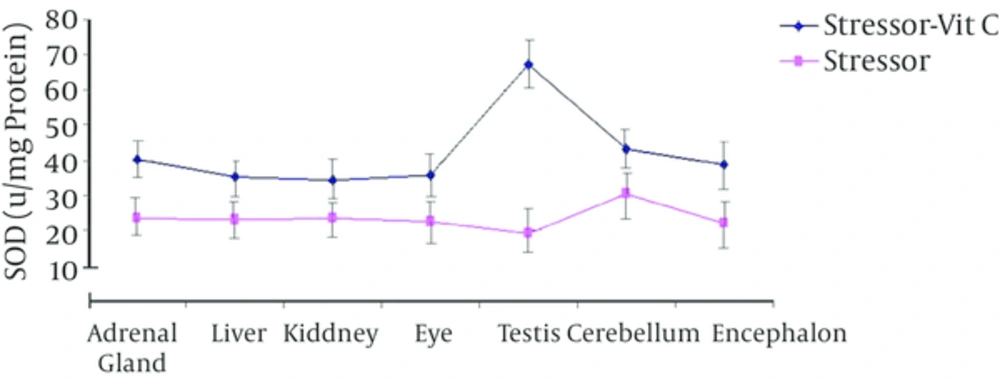
Figure 3.
Stressor is exposure to radiofrequency wave.
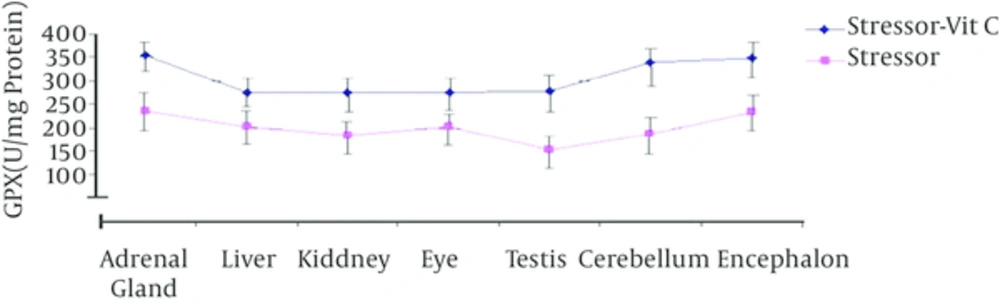
Figure 4.
Stressor is exposure to radio frequency wave.
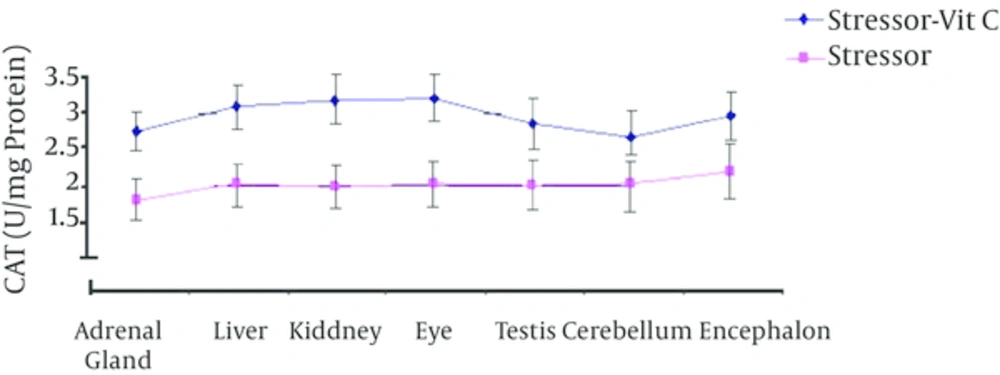
Figure 5.
Stressor is exposure to radio frequency wave.
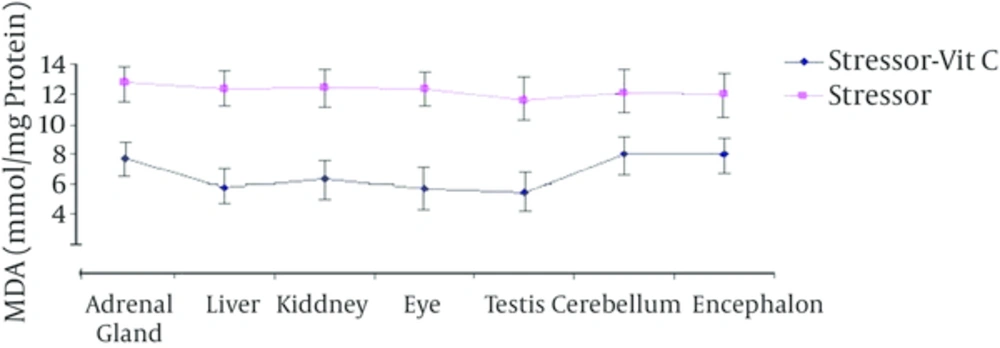
Figure 6.
Stressor is exposure to radiofrequency wave.
4.2. The Relationship Between Radical Reactions, Fenton Reaction, Lipid Peroxidation and Antioxidant Properties of Vitamin C
Radical reactions refer to free radicals that react with in extracellular macromolecules such as proteins, nucleic acids and unsaturated fatty acids. In these reactions, free radicals are caused by the activity of the electron transport chain in mitochondria. The transfer of electrons along the enzymes of the respiratory chain is not totally efficient, and leakage of electrons onto molecular oxygen, in particular from complexes I and III, results in the formation of superoxide anion [41, 42]. The rate of formation is determined by the number of electrons present on the chain, and so is elevated under conditions of hyperoxia and of raised glucose, as in diabetes [41]. Under normal conditions, 2% of oxygen consumed is converted to superoxide anion in the mitochondria [43]. Similarly, superoxide can also be generated through leakage of electrons from the shorter electron transport chain within the endoplasmic reticulum. Other sources of superoxide under physiological conditions include the enzymes nicotinamide adenine dinucleotide phosphate (NADPH) oxidase, cytochrome P450 oxidase, and other oxidoreductases. In this series an oxygen molecule (triplet state) with one electronreacted and produced superoxide anion (reactive oxygen). Superoxide anionhas an electron in the valence band and it isvery reactive. Two superoxide anions are converted by superoxide dismutase (SOD) into oxygen and hydrogen peroxide, which is the reduced state oxygen by reaction with 2 electrons and 2 protons [29]. Hydrogen peroxide undergoes the so-called Fenton reaction in the presence of transition metal ions, especially Fe (II), to produce hydroxyl radical, an extremely reactive radical, as shown in reaction (1). The resulting Fe (III) is reduced by reducing agents, such as superoxide, ascorbic acid or others, and Fe (II) is reproduced (reaction 2) [44]. Therefore, iron is a dangerous metal despite its being an essential element. Iron binding proteins such as transferrin and ferritin may contribute to keep free Fe (III) concentration in the biological fluid low [44].
(1)H2O2 + Fe (II) → HO + Fe (III) + -OH (1)
(2)Fe (III) + Reducing agents (O2-, ascorbic acid, etc.) → Fe (II) (2)
Lipids are considered to be the most susceptible macromolecules and are present in plasma membrane in the form of polyunsaturated fatty acids (PUFA), fatty acids that contain more than two carbon = carbon double bonds. Most membrane PUFA contain unconjugated double bonds that are separated by methylene groups. The presence of a double bond adjacent to a methylene group makes the methylene carbon-hydrogen bond weaker, and as a result, the hydrogen is more susceptible to abstraction. When this abstraction has occurred, the radical produced is stabilized by the rearrangement of double bonds. The PUFA rearranges to form a conjugated diene radical that subsequently can be oxidized [45]. The PUFA are necessary for the plasma membrane fluidity and normal physiological function. ROS attack PUPA in the cell membrane leading to a chain of chemical reactions called lipid peroxidation. The reaction occurs in three distinct steps-initiation, propagation and termination. During initiation, the free radicals react (designated as X. in Figure 7) with fatty acid chain and release lipid free radical. This lipid radical further reacts with molecular oxygen to form lipid alkyl peroxy radical (LOO.), which is scavenged by vitamin E resulting in the formation of lipid hydro peroxide (LOOH) and α-tocopheryl radical (Toc.). Alkyl peroxyl radicals (LOO.) also abstract a hydrogen atom from lipids to generate LOOH, this reaction is propagated. LOOH has a sufficient lifetime to migrate and finally generate reactive radicals by the reaction with metal ions to damage cellular components [44]. In this way, LOOH extends radical reactions to cellular constituents apart from the membrane. In addition, LOOH oxidizes cellular components such as thiol, amine, olefin, and sulfide [44]. Therefore, LOOH is a probable candidate as a functional molecule that transports oxidative power to protein and DNA. During termination, the two radicals react with each other, and the process comes to an end. This process of fatty acid breakdown produces hydrocarbon gases (ethane or pentane) and aldehydes. Malondialdehyde (MDA) is one of the byproducts of lipid peroxidation. This byproduct has been used in various biochemical assays to monitor the degree of peroxidative damage [45].

Figure 7.
The Relationship Between a Radical Reactions, Fenton Reaction, Lipid Peroxidation and Antioxidant Properties of Vitamin C (With Little Changes and Permission from Kojo 2004)
The cells have defense mechanisms such as antioxidants and enzymes. Vitamin C (L-Ascorbic Acid), vitamin E and glutathione are non-enzymes antioxidants that prevent oxidative stress. Vitamin C has a potent physiological role, also it has a very low standard reduction potential (282 mV) andis able to regenerate intracellular compounds such as glutathione (GSH), NADH and NADPH [10]. GSH is a predominant endogenous antioxidant and is used as a cofactor to remove hydrogen peroxide and lipoperoxides by the glutathione peroxidase during which GSH is converted into oxidized form of glutathione (GSSG). Oxidized glutathione is converted back into GSH by another rate controlling enzyme; the glutathione reductase (GR) thereby maintains the intracellular GSH levels. This optimum level of GSH is an utmost criterion in maintaining the structural integrity and physiology of cell membranes [46]. Vitamin C also removes hydrogen peroxide and other free radicals, thus adjusting the activity of glutathione peroxidase and catalase [46]. Alpha-tocopherol, ascorbic acid, and reduced glutathione are important chain breaking antioxidants responsible for scavenging the free radicals and suppression of peroxidation in aqueous and lipid region of the cell [10, 28, 31].
Regeneration of tocopherol radicals to tocopherols by ascorbic acid has been known since the 1940s. Ascorbic acid can donate a hydrogen atom to a tocopheroxyl radical at the rate of 2 × 10⁵ Mol/sec because of the difference of 1-electron reduction potential between ascorbic acid (282 mV) and it (480 mV) [10]. The phenol group of tocopherol is located near the interface of a biological membrane water phase, and ascorbic acid can easily access the antioxidant active site of tocopherols and regenerate tocopherols from tocopherol radicals [31].
4.3. Other Biological Function of Vitamin C
Another important biological function of ascorbate is to serve as a co-substrate for several hydroxylase and oxygenase enzymes such as prolyl and lysyl hydroxylase, dopamine β-hydroxylase, ascorbate peroxidase, and cytochrome b561 (Cyt b561), maintaining their active center metal ions in a reduced state (as an electron donor) for optimal enzyme activity [34]. One of these enzymes is dopamine β-hydroxylase (DBH), which in different neuroendocrine tissues synthesizes nor-adrenaline through hydroxylation of dopamine [47]; ascorbate serves as a cofactor for dopamine β-hydroxylase in the conversion of dopamine to norepinephrine. Catecholamine synthesis is an ascorbate-dependent function and ascorbate levels are known to be in the millimolar range in the adrenal gland. Ascorbate in chromaffin granules is then secreted concomitant with catecholamines from cultured chromaffin cells [47] and in vivo by human adrenal glands, the latter in response to adreno-corticotrophin stimulation [48].
Ascorbate is a neuromodulator; it releases into the extracellular fluid of the brain and regulates dopaminergic and glutamatergic transmission. Ascorbate is released from glutamatergic neurons as part of the glutamate reuptake process, in which the high-affinity glutamate transporter exchanges ascorbate for glutamate [49]. This hetero-exchange process, which also may occur in glial cells, ensures a relatively high level of extracellular ascorbate in forebrain [49, 50]. Hence it protects nerve cells against glutamate excitotoxicity. The cooperation of ascorbic acid and glutamate is important for neuron metabolism so ascorbic acid participates as a metabolic switch that modulates neural metabolism between resting and activation periods [1]. Furthermore,ascorbic acid release is regulated by glutamate from astrocyte in the CNS [51].
It seems ascorbic acid may act like a dopamine antagonist in some areas of brain [52]. High doses of ascorbate (1 g/kg) blocked dopamine mediated circling behavior, something that may also be achieved through dopamine receptor blockers [1];ascorbate inhibit binding of specific D1 and D2 receptors [13]. Recently, it has been reported that treatment with vitamin C prevents compression-induced blood-brain barrier (BBB) disruption and both low and high vitamin C levels have an impact on the number and size of mitochondria [53], as BBB disruption and mitochondrial dysfunction are well-known risk factors for oxidative stress and Alzheimer disease pathogenesis [54].
Neuroprotective actions of vitamin C have been investigated in other studies. Most recently, Akbari et al. (2014) showed that vitamin C protects rat cerebellum and encephalon from oxidative stress following exposure to radiofrequency wave generated by BTS mobile antenna [40]. Naseer et al. (2011) indicated that vitamin C can prevent some of the deleterious effects of seizure and neuronal degeneration induced by PTZ in adult rat brain [55]. Santos et al. (2008) also suggested that neuroprotective effects of vitamin C in adult rats can be the result of reduced lipid peroxidation levels and increase of catalase activity after seizures and status epilepticus induced by pilocarpine [56]. Shokouhi et al. (2004) showed that vitamin C has a significant effect on lowering MDA levels after nerve trauma in rats and potentially could have major therapeutic benefits, and there is no dose dependent level of protection [57].
Finally, we suggest that vitamin C, as a readily available and safe agent, could be used for the treatment and prevention of the neurodegenerative diseases in CNS. Also, evaluation of motor function and measuring nerve conduction velocity could be performed to confirm the therapeutic benefits of vitamin C in future studies [57].
Ascorbic acid positively affects the synthesis of collagen, the most abundant extracellular protein. It is a required component in the synthesis of hydroxyproline and hydroxylysine in collagen. Hydroxyproline serves to stabilize the collagen triple helix; its absence results in structurally unstable collagen which is not secreted from cells at a normal rate. Hydroxylysine is necessary for formation of the intermolecular cross-links in collagen. In addition, specific carbohydrate residues are linked glycosidically to collagen through hydroxylysine, a process that may be important in the regulation of crosslink formation [58, 59].
The immune system is strongly influenced by the intake of nutrients. Supplementation of vitamin C was found to improve components of the human immune system such as antimicrobial and natural killer cell activities, lymphocyte proliferation, chemotaxis, and delayed-type hypersensitivity. Several cells of the immune system can indeed accumulate vitamin C and need the vitamin to perform their task, especially phagocytes and t-cells [60]. Thus a vitamin C deficiency results in a reduced resistance against certain pathogens whilst a higher supply enhances several immune system parameters. Vitamin C concentrations in the plasma and leukocytes rapidly decline during infections and stress. Vitamin C also contributes to maintaining the redox integrity of cells and thereby protects them against reactive oxygen species generated during the respiratory burst and in the inflammatory response [60, 61].
5. Conclusions
Vitamin C is an essential nutrient for human's and it might be said that it is the most important vitamin in the body. It takes part in many biochemical processes in organism. Chemically, the pharmacophore of vitamin C is the ascorbate that is capable of reacting with most of the physiologically important radicals and oxidants, so that it acts as a reducing agent and antioxidant. However, its pro-oxidant activity is different antioxidant activity. It is to serve as a co-substrate for several hydroxyls and oxygenize enzymes, maintaining their active center metal ions in a reduced state. In catecholamine biosynthesis of brain and adrenal provides reducing equivalents for dopamine β-hydroxylase in the conversion of dopamine to nor-epinephrine, and protects the brain against glutamate mediated excitotoxicity by decreasing the available amount of extracellular glutamate.It can interfere with glutamatergic, dopaminergic, cholinergic and GABAergic transmission and related behaviors. These neurotransmitter systems have a basic and crucial role in many processes in CNS. Ascorbic acid is essential for normal collagen formation by virtue of the fact that it is a required component in the synthesis of hydroxyproline and hydroxylysine in collagen. It also improves components of the human immune system such as antimicrobial and natural killer cell activities, lymphocyte proliferation, chemo taxis, and delayed-type hypersensitivity. Together, ascorbate involves many biologic and metabolic processes so its mechanism remains to be clarified and perhaps it should be mentioned that this vitamin is not well known. Therefore, further investigation is necessary to evaluate the exact mechanism(s) underlying the effect of vitamin C in order to discover its further effects in the body. Given the wide role of vitamin C in relation to the prevention and treatment of many diseases and disorders, it is recommended that future research studies be conducted on the increased half-life and bio-availability of vitamin C as a medicine.