Fulltext
The full text of this article is available on the PDF file.
Zahedan Journal of Research in Medical Sciences
The Official Journal of Zahedan University of Medical Sciences
Image Credit:Zahedan J Res Med Sci
Authors
Background : Cardiac resynchronization therapy (CRT) has introduced as new treatment strategy in heart failure (HF) patients and some of its effects have been investigated. The aim of this study was to study the effectiveness of CRT in the improvement of left ventricular systolic function indicated by left ventricular ejection fraction (LVEF) in HF patients.
Materials and Methods : In our prospective study 22 HF patients with NYHA class III and above, QRS duration>120 ms and EF (ejection fraction) ≤35% who were candidates for CRT enrolled. Patients were evaluated for NYHA class, QRS width, left ventricular end-systolic volume (LVESV), left ventricular end-diastolic volume (LVEDV) and LVEF before and two months after the CRT procedure. Paired-t test analysis used to compare the before and post-CRT data statistically.
Results : Initial evaluation showed that all of the patients were in NYHA class III before CRT. Two months after CRT, all of the patients improved their NYHA class in a way that 18 patients (82%) were in NYHA class I and the other 4 (18%) were in NYHA class II. The mean (SD) QRS width decreased significantly after biventricular (BiV) pacing (p<0.001). Also a significant decrease in LVESV, LVEDV and increase in LVEF was shown in HF patients after CRT (p<0.001).
Conclusion : The present study showed the efficacy of CRT in improvement of LVEF in HF patients with wide QRS after two months from CRT.
© 2013, Author(s). This open-access article is available under the Creative Commons Attribution 4.0 (CC BY 4.0) International License (https://creativecommons.org/licenses/by/4.0/), which allows for unrestricted use, distribution, and reproduction in any medium, provided that the original work is properly cited.
Kheirkhah J, Toulabi V, Moladoust H, Assadian-Rad M, Reza Bonakdar H, et al. Effects of Cardiac Resynchronization Therapy on Mitral Regurgitation in Heart Failure Patients. Zahedan J Res Med Sci. 2015;17(1):e1919. doi:
Trepa M, Baggen-Santos R, Fontes-Oliveira M, Silveira I, Costa R, et al. Determinants and Clinical Outcomes of Functional Mitral Regurgitation Improvement Following Cardiac Resynchronization Therapy. Int Cardiovasc Res J. 2020;14(1):e100773. doi:
Valipoor R, Eslami M, Sattarzadeh-Badkoubeh R, Shahmohamadi E, Rezaei M, et al. Evaluation of Response to Cardiac Resynchronization Therapy in Patients with Non-Ischemic Cardiomyopathy Based on Echocardiographic Features Including Sphericity Index and Global Longitudinal Strain. Int Cardiovasc Res J. 2021;15(2):e114876. doi:
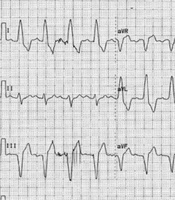
Payami B, Zoroufian A, Majidi S, Bidarvand Heidari R. Predictive Value of QRS Complex Morphology in Treatment Response to Cardiac Resynchronization. Jundishapur J Chronic Dis Care. 2025;14(3):e161174. doi: https://doi.org/10.5812/jjcdc-161174
Wahab A, Alvi S, B.Panwar R, R.Gavade S. Cardiac Resynchronisation Therapy in Heart Failure. Int Cardiovasc Res J. 2017;5(4):e11204. doi:
More by these authors
Last Update: 1 week ago
Last Update: 1 week ago
Last Update: 1 week ago
Last Update: 3 hours ago
Last Update: 7 hours ago
Last Update: 5 days ago