Fulltext
The full-text is available in pdf.
International Cardiovascular Research Journal
An annual journal in scientific affiliation with the Cardiovascular Research Center, Shiraz University of Medical Sciences
Image Credit:Int Cardiovasc Res J
Authors
 1, Masoud Eslami1, Roya Sattarzadeh-Badkoubeh1, Elnaz Shahmohamadi2, Mehdi Rezaei3, Reza Mollazadeh1,*
Background:
In patients with Non-Ischemic Cardiomyopathy (NICM), Cardiac Resynchronization Therapy (CRT) has been shown to improve Left Ventricular Ejection Fraction (LVEF) and NYHA functional class. However, in some patients who received CRT, the results were not satisfying.
Objectives:
This study aimed to evaluate echocardiographic features as a predictor of positive response to CRT in patients with NICM.
Methods:
This case series study was conducted on 11 consecutive patients with NICM who were eligible for CRT at Imam Khomeini Hospital Complex. The patients’ basic demographic and echocardiographic data including Septal Flash (SF), Sphericity Index (SI), and Global Longitudinal Strain (GLS) were recorded and followed for six months. Data analysis was done using the SPSS software, and paired t-test was used for comparison of the study variables.
Results:
The results revealed an improvement in the median NYHA functional class from 3 (interquartile range: 2 - 4) to 1 (interquartile range: 1 - 2) (P < 0.001) at the follow-up. Assessment of LVEF through the Simpson method also showed a significant improvement from 28.25% to 39.31% (P < 0.001). Moreover, GLS improved and SI and SF decreased post CRT implantation.
Conclusions:
The results demonstrated that a GLS of less than -10.48 before device implantation, but not SI or SF, might be a predictor of a positive response to CRT in patients with NICM. In these patients, higher GLS at baseline might add data to the existing criteria for selecting suitable patients for CRT implantation.
© 2021, Author(s). This open-access article is available under the Creative Commons Attribution 4.0 (CC BY 4.0) International License (https://creativecommons.org/licenses/by/4.0/), which allows for unrestricted use, distribution, and reproduction in any medium, provided that the original work is properly cited.
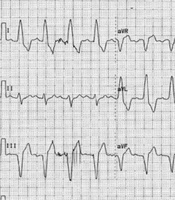
Payami B, Zoroufian A, Majidi S, Bidarvand Heidari R. Predictive Value of QRS Complex Morphology in Treatment Response to Cardiac Resynchronization. Jundishapur J Chronic Dis Care. 2025;14(3):e161174. doi: https://doi.org/10.5812/jjcdc-161174
Hassaniani Z, Kheirkhah J, Moladoust H, Bonakdar H, Assadian-Rad M, et al. Evaluation of Left Ventricular Systolic Function after Cardiac Resynchronization Therapy in Heart Failure Patients. Zahedan J Res Med Sci. 2013;15(9):e92847. doi:
Trepa M, Baggen-Santos R, Fontes-Oliveira M, Silveira I, Costa R, et al. Determinants and Clinical Outcomes of Functional Mitral Regurgitation Improvement Following Cardiac Resynchronization Therapy. Int Cardiovasc Res J. 2020;14(1):e100773. doi:
Kheirkhah J, Toulabi V, Moladoust H, Assadian-Rad M, Reza Bonakdar H, et al. Effects of Cardiac Resynchronization Therapy on Mitral Regurgitation in Heart Failure Patients. Zahedan J Res Med Sci. 2015;17(1):e1919. doi:

Nikoo MH, Jorat MV, Aslani A, Barzegar S, Anvaree M. Left Axis Deviation: A Sign of Poor Prognosis in Patients with Cardiac Resynchronization Therapy. Int Cardiovasc Res J. 2020;14(2):e103014. doi:
Last Update: 1 month ago
Last Update: 1 month ago
Last Update: 1 month ago
Last Update: 5 hours ago
Last Update: 9 hours ago
Last Update: 4 days ago

