Fulltext
The full text of this article is available on the PDF file.
Zahedan Journal of Research in Medical Sciences
The Official Journal of Zahedan University of Medical Sciences
Image Credit:Zahedan J Res Med Sci
Authors
Background: Calcium induces apoptosis in intestinal epithelial cells and subsequently prevents colorectal cancer through ion calcium receptor. Calcium-sensing receptor mutation reduces the expression of this receptor, and subsequently in reduces calcium transportation. Many studies have shown that Calcium-sensing receptor gene polymorphism may increase the risk of colorectal cancer. The purpose of this study is to assess the prevalence of calcium-sensing receptor polymorphisms (rs 1801725) in Iran society and to examine the role of this polymorphism in the increased risk of colorectal cancer (CRC).
Materials and Methods: The research was a case-control study. 105 patients with colorectal cancer and 105 controls were randomly studied using polymerase chain reaction and restriction fragment length polymorphism. χ2 test and software 16- SPSS were used for statistical analysis.
Results: In patient samples, the frequency of the genotypes TT, GT, GG in gene CASR rs 1801725 was respectively 64.8, 32.4, and 2.9 and the frequency of this polymorphism in control samples was respectively 51.2, 45.7, and 2.9. Frequency of allele G in patient samples was 0/48 and frequency of allele T was 0.25. In addition, Frequency of allele G in control samples was 0.74 and Frequency of allele T was calculated 0.19.
Conclusion: The results show that calcium-sensing receptor variant (1801725 rs) is not associated with increased risk of colorectal cancer.
© 2012, Author(s). This open-access article is available under the Creative Commons Attribution 4.0 (CC BY 4.0) International License (https://creativecommons.org/licenses/by/4.0/), which allows for unrestricted use, distribution, and reproduction in any medium, provided that the original work is properly cited.
Dabiri R, Mahmoudi T, Farahani H, Nobakht H, Zali MR. Alanine to Serine Variant at Position 986 of Calcium Sensing Receptor and Colorectal Cancer Risk. Int J Cancer Manag. 2016;9(4):e8098. doi: https://doi.org/10.17795/ijcp-8098
Arkani M, Safaei A, Karimi K, Arbabi E, Rostami F, et al. Association of the insulin gene polymorphism and colorectal cancer. koomesh. 2012;13(2):e152505. doi:
Khanzadeh H, Khoshdel AR, Irvani S, Majidzadeh-A K, Soleimani M. Genetic Polymorphism of Thr241Met and Other Risk Factors Related with Gastric Cancer in Iranian Military Population: A Pilot Case Control Study. J Arch Mil Med. 2019;7(1-2):e92673. doi: https://doi.org/10.5812/jamm.92673
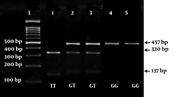
Adibmanesh A, Bijanzadeh M, Mohammadzadeh G, Alidadi R, Rashidi M, et al. The Correlation of Endothelial Nitric Oxide Synthase Gene rs1799983 Polymorphisms with Colorectal Cancer. Int J Cancer Manag. 2020;13(5):e97220. doi: https://doi.org/10.5812/ijcm.97220
Nobakht H, Mahmoudi T, Mirakhorli M, Dabiri R, Zali MR. A Common Promoter Polymorphism (-23HphI) in Insulin Gene and Susceptibility to Colorectal Cancer. Int J Cancer Manag. 2017;10(6):e10079. doi: https://doi.org/10.5812/ijcm.10079
More by these authors
Last Update: 2 weeks ago
Last Update: 2 weeks ago
Last Update: 2 weeks ago
Last Update: 3 hours ago
Last Update: 1 day ago
Last Update: 4 days ago