Fulltext
The full text of this article is available on the PDF file.
Zahedan Journal of Research in Medical Sciences
The Official Journal of Zahedan University of Medical Sciences
Image Credit:Zahedan J Res Med Sci
Authors
ackground: Female urinary and genital systems have anatomic and embryologic similarities
and both structures and other pelvic floor organs may be damaged during pregnancy and delivery.
Other factors such as age and BMI may also affect pelvic floor functions. Pelvic floor disorders
such as urinary incontinence, (stress, urgent or mixed type), anal incontinence, pelvic organ
prolapse and sexual abnormalities are common problems. The purpose of this study was to define
the prevalence of pelvic floor disorders and to determine predisposing factors including ageparity,
BMI (Body mass index) and mode of delivery.
Methods and Materials: This prospective study was done on 612 randomly selected women aged
15 years or higher that referred to the gynecologic clinic of Ali-ebn-Abitaleb Hospital. These
women were questioned about age parity, delivery method, and pelvic floor disorders including
urinary incontinences, flatus and fecal incontinences, disparonia, hemorrhoids, based on which
questionnaire was completed. Also women's weight and height were measured and BMI was
defined. The data were analyzed with SPSS software and X2 test.
Results: most of these 612 women occurred in age between 26-35 years (38.5%), and the lowest
common age range was 56 years or higher(11.4%). 50.9% of the women had one pelvic floor
disorder, 68.6% had two pelvic floor disorders, and 31.4% had three or more pelvic floor
disorders. All types of pelvic floor disorders increased after the next deliveries. There was a
significant difference between Body Mass Index and pelvic floor disorders including urinary
incontinence (P=0.001), Constipation (P=0.001) and fecal incontinence. (P=0.014)
But there was no significant difference between disparonia (p=0.33), vaginal relaxation
(P=0.58), vaginal dryness (P=0.96), hemorrhoid (P=0.25) and Body mass Index and also the
proportion of hemorrhoid, Constipation, fecal incontinence and urinary incontinence were higher
in women with vaginal deliveries compared with other kinds of deliveries (caesarean- instrumental
delivery). The lowest proportion was in cesarean delivery. Also disparonia in the instrumental
delivery group was two times higher than the cesarean and vaginal delivery group.
Conclusion: Pelvic floor disorders are very common and are associated with female aging, BMI,
and parity. Caesarean delivery is not associated with a significant reduction in long – term pelvic
floor morbidity compared with spontaneous, and instrumental vaginal delivery.
© 2006, Author(s). This open-access article is available under the Creative Commons Attribution 4.0 (CC BY 4.0) International License (https://creativecommons.org/licenses/by/4.0/), which allows for unrestricted use, distribution, and reproduction in any medium, provided that the original work is properly cited.
seifoleslami M, Heidari F. Assessing risk factors associated with pelvic inflammatory disease in Iranian women: a study in Tehran. Ann Mil Health Sci Res. 2015;13(2):e62603. doi:
Farzaneh F. Near Term Pregnancy in a Patient with Total Uterine Prolapse. Zahedan J Res Med Sci. 2016;18(12):e4054. doi: https://doi.org/10.17795/zjrms-4054
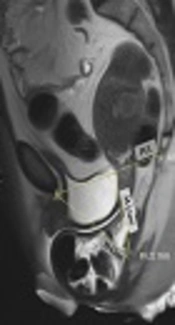
Arian A, Ghanbari Z, Deldar Pasikhani M, Eftekhar T, Gity M, et al. Agreement of Manual Exam (POP-Q) with Pelvic MRI in Assessment of Anterior Pelvic Organ Prolapse. I J Radiol. 2017;14(4):e38542. doi: https://doi.org/10.5812/iranjradiol.38542
Salmani Z, Tadayon M, Alavifazel K. Prevalence and etiology of orgasm disorders in women. J Kermanshah Univ Med Sci. 2010;14(1):e79545. doi:
Shohani M, V Carson K, Sayehmiri K, Shohani F. Effective Factors on Urinary Incontinence in Natural Menopausal Women. Thrita J Neu. 2015;4(4):e29754. doi: https://doi.org/10.5812/thrita.29754
Last Update: 3 weeks ago
Last Update: 3 weeks ago
Last Update: 3 weeks ago
Last Update: 3 hours ago
Last Update: 7 hours ago
Last Update: 4 days ago