1. Background
More than 80% of patients who undergo surgery still experience acute pain. Prescribing narcotics by the patient-controlled pain pump method is a well-known method of postoperative pain control that has replaced the bolus doses of narcotics and other analgesics in most medical centers. However, there is a need for a more accurate assessment of pain scores, timely treatment, and attention to individual differences in postoperative pain control. However, common narcotics can cause side effects, such as nausea, vomiting, drowsiness, respiratory failure, and delayed discharge (1).
Treatment of kidney stones through extracorporeal shock wave lithotripsy (ESWL) reduces the length of hospital stay, as it eliminates the need for surgery (2). This is a noninvasive technique, but shock waves can cause severe and deep pain and visceral discomfort (3).
Dexmedetomidine has sedative and analgesic effects, unlike many analgesics/sedatives and drugs, such as opioids, benzodiazepines, and propofol, without respiratory depression. This drug is suitable and optimal for sedation for non-painful methods, but when used alone for painful methods, it is largely unsuccessful in creating sufficient analgesia. To overcome these shortcomings, several agents can be used in combination with dexmedetomidine for monitored anesthesia care (MAC) during invasive procedures. Ketamine is an adjunct that has sedative, metabolic, and sympathomimetic effects. The combination of ketamine with dexmedetomidine can not only reverse the slow onset of sedation but is also effective in preventing bradycardia and hypotension when dexmedetomidine is used alone (4). Simultaneous injection of dexmedetomidine reduces the need for anesthesia, shortens the postoperative recovery period, and reduces the sympathetic response due to surgical stimulation. Because of these effects, dexmedetomidine can be a suitable sedative agent for ESWL, which is a gentle, low-pain procedure (5, 6). Although dexmedetomidine is generally effective in sedation in noninvasive methods, it has not been successful as the sole agent for invasive sedation. Due to its analgesic effects, dexmedetomidine does not seem to be an ideal agent for painful treatments. Studies have shown that the combination of dexmedetomidine with ketamine is a desirable and acceptable method for intraoperative sedation. When dexmedetomidine and ketamine are used together, the patient's heart rate and blood pressure may be controlled, while ketamine alone may prevent bradycardia and hypotension (7).
2. Objectives
In this study, comparing the effects of dexmedetomidine-ketamine (DK) and midazolam-ketamine (MK) compounds in the sedation of children, the dominant option with the most desirability and clinical effectiveness during and after surgery was selected. Additionally, due to the lack of sufficient evidence in the world health system that each of the common treatment methods is effective for treating patients, conducting research based on data and local drugs is important in this field. Therefore, anesthesia treatment interventions play an important role in decision-making to provide clinical guidance on the use of existing clinical technologies, as well as scientific evidence regarding anesthesia interventions in children undergoing ESWL.
3. Methods
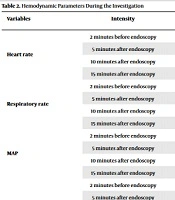
This randomized, double-blind clinical trial was conducted on children aged 2 to 6 years with renal stones undergoing ESWL referred to Hasheminejad hospital in Tehran in 2020. Patients with respiratory or psychiatric disorders, sensitivity to any of the drugs used in this study, second- or third-degree heart block, history of seizures, or liver failure were all excluded from the study. Patients were selected by purposive convenience sampling and then randomly divided into 2 groups. Each group received one of the therapeutic compounds. In all patients, the treatment process was keep vein open (KVO) with an injection of 0.9% NaCl solution. Baseline values for heart rate, systolic and diastolic blood pressure, respiration rate (RR), and SpO2 were measured before administration of both drugs that were given immediately after the sedative injection and every 5 minutes after administration. The treatment in each group was as follows: In the first group, patients received 0.5 mcg/kg of dexmedetomidine for 10 minutes and, after achieving the desired sedation (RSS (Ramsay Sedation Scale), 4 of 6), received 0.5 mg/kg bolus of ketamine for analgesia. In the second group, patients received midazolam at a dose of 0.05 mg/kg for 3 minutes and, after achieving optimal sedation (RSS, 4 of 6), received 0.5 mg/kg bolus of ketamine. In both groups, additional ketamine was used at a dose of 0.5 mg/kg as needed. The criteria for adequacy of analgesia were the lack of movement of the patient during the procedure and the satisfaction of the operator. Both groups were injected with atropine (0.02 mg/kg) before the control injection to control ketamine-induced secretions. The patients were evaluated and followed up using RSS. This scale is the first criterion defined for anesthetized patients and has 6 levels. It is a simple and clear visual scale with a wide range of uses not only in the intensive care unit (ICU) but also in any treatment process where sedatives and narcotics are used. An RSS value of 4 out of 6 is accepted as a sufficiently acceptable sedative level; once an RSS value of 4 out of 6 is obtained, ESWL begins. At the end of the ESWL, the recovery time and awakening were assessed using the Aldrete scoring system by another anesthesiologist who was not in the operating room during the operation. This criterion is a common scale used to determine when a patient can be safely transferred from the recovery room to the postoperative ward. The main scales of recovery parameters were verbal response time, collaboration time, and time interval between the end of the method and achieving the Aldrete criterion of 8 out of 10. Side effects were also recorded, including bradycardia (decreased by more than 20% compared to baseline), hypotension (decreased by greater than 20 mmHg), decreased oxygen saturation (less than 92%), nausea/vomiting, agitation, and hallucinations.
For statistical analysis, results are presented as mean ± SD for quantitative variables and summarized as frequency (percentage) for categorical variables. Continuous variables were compared using the t test or Mann-Whitney test whenever the data did not appear to have normal distribution or when the assumption of equal variances was violated across the study groups. Categorical variables were compared using the chi-square test. The change in quantitative variables was assessed using the repeated measure analysis of variance (ANOVA). P values of ≤ 0.05 were considered statistically significant. SPSS version 23.0 (IBM, Armonk, New York) was used for statistical analysis.
4. Results
In the present study, 2 sedative-analgesic drug combinations were evaluated in 2 groups (ie, DK group (n = 30) and MK group (n = 30)). The 2 groups were matched for male gender (63.3% vs 73.3%; P = 0.405) and average age (4.13 ± 0.56 years vs 4.23 ± 0.46 years; P = 0.600). The changes in hemodynamic parameters during the procedures are presented in Table 1. The mean heart rate before and immediately after drug administration did not differ between the 2 groups; however, 5, 10, and 15 minutes after administration and at the end of the procedure, the mean heart rate was significantly less in the DK group than in the MK group. Mean systolic blood pressure before and 10 minutes after drug administration did not differ between the 2 groups; however, it was significantly lower in the DK group than in the MK group from 15 minutes after drug administration to the end of the procedure. Also, mean diastolic blood pressure before and 10 minutes after drug administration did not differ between the 2 groups; however, it was significantly lower in the DK group than in the MK group from 15 minutes after drug administration to the end of the procedure. The mean arterial oxygen saturation from before drug administration to the end of the procedure did not differ between the 2 groups. The statuses of child cooperation and operator satisfaction in the 2 groups are shown in Table 2. There was no difference in the status of cooperation at the time of the separation of children from parents between the 2 groups. Based on the RSS values, the mean relaxation time in children was significantly shorter in the MK group than in the DK group. Also, no differences were found in patient cooperation and operator satisfaction during the procedure between the 2 groups. The DK regimen increased analgesia compared to the MK regimen (Table 3). Also, recovery time was significantly shorter in the DK group than in the MK group. However, there were no differences in the average start of verbal response and the average time of cooperation in the recovery room between the 2 methods. No side effects were reported in the groups, including bradycardia, decreased SpO2, nausea/vomiting, agitation, or hallucinations.
Table 1.
Hemodynamic Changes in the Studied Regimens
| Parameter | DK Group | MK Group | P Value |
|---|---|---|---|
| Mean heart rate (minute) | |||
| Before drug administration | 129.10 ± 26.73 | 133.30 ± 26.38 | 0.546 |
| Immediately after drug administration | 127.67 ± 32.00 | 130.51 ± 20.31 | 0.680 |
| 5 minutes after drug administration | 118.50 ± 20.87 | 130.00 ± 13.96 | 0.014 |
| 10 minutes after drug administration | 117.19 ± 17.83 | 126.22 ± 12.09 | 0.024 |
| 15 minutes after drug administration | 120.55 ± 14.98 | 131.62 ± 12.85 | 0.003 |
| At the end of the procedure | 123.22 ± 12.11 | 134.56 ± 18.69 | 0.008 |
| Mean systolic blood pressure (mmHg) | |||
| Before drug administration | 99.67 ± 6.55 | 97.50 ± 6.66 | 0.209 |
| Immediately after drug administration | 95.83 ± 4.37 | 95.33 ± 4.72 | 0.972 |
| 5 minutes after drug administration | 91.17 ± 4.67 | 92.67 ± 5.37 | 0.253 |
| 10 minutes after drug administration | 92.50 ± 4.50 | 93.33 ± 3.03 | 0.404 |
| 15 minutes after drug administration | 92.17 ± 2.84 | 94.83 ± 3.82 | 0.003 |
| At the end of the procedure | 93.00 ± 2.49 | 95.17 ± 4.45 | 0.023 |
| Mean diastolic blood pressure (mmHg) | |||
| Before drug administration | 67.00 ± 7.26 | 66.17 ± 8.27 | 0.680 |
| Immediately after drug administration | 64.23 ± 6.11 | 64.17 ± 6.63 | 0.968 |
| 5 minutes after drug administration | 67.63 ± 6.64 | 64.33 ± 6.74 | 0.701 |
| 10 minutes after drug administration | 61.67 ± 9.00 | 61.50 ± 9.97 | 0.946 |
| 15 minutes after drug administration | 62.67 ± 4.86 | 66.17 ± 5.03 | 0.008 |
| At the end of the procedure | 63.41 ± 3.93 | 67.67 ± 4.45 | 0.002 |
| Mean SaO2 (%) | |||
| Before drug administration | 96.47 ± 1.50 | 96.37 ± 2.02 | 0.829 |
| Immediately after drug administration | 96.00 ± 1.98 | 96.67 ± 2.22 | 0.225 |
| 5 minutes after drug administration | 98.20 ± 1.94 | 97.77 ± 1.75 | 0.368 |
| 10 minutes after drug administration | 98.43 ± 2.26 | 98.10 ± 1.09 | 0.472 |
| 15 minutes after drug administration | 98.70 ± 2.14 | 98.37 ± 0.89 | 0.433 |
| At the end of the procedure | 98.67 ± 1.72 | 98.50 ± 0.90 | 0.641 |
Abbreviations: MK, midazolam-ketamine; DK, dexmedetomidine-ketamine.
Table 2.
The Degree of Child Cooperation and Operator Satisfaction in the 2 Groups
| Parameter | DK Group | MK Group | P Value |
|---|---|---|---|
| Separation of the child from the parents | 0.197 | ||
| Easily | 26 (86.7) | 22 (73.3) | |
| With crying but without resistance | 4 (13.3) | 8 (26.7) | |
| The average rest time of the child | 1.50 ± 0.50 | 1.20 ± 0.58 | 0.038 |
| Child cooperation during the procedure | 0.237 | ||
| No cooperation with the movement | 0 (0.0) | 3 (10.0) | |
| Full cooperation without moving | 30 (100) | 27 (90.0) | |
| Operator satisfaction with the operation | 0.688 | ||
| Full | 27 (90.0) | 26 (86.7) | |
| Relative | 3 (10.0) | 4 (13.3) |
Abbreviations: MK, midazolam-ketamine; DK, dexmedetomidine-ketamine.
Table 3.
Analgesia and Recovery Status of Patients in the 2 Groups
| Parameter | DK Group | MK Group | P Value |
|---|---|---|---|
| Sufficient analgesia during the procedure | 0.015 | ||
| Sufficient analgesia | 12 (40.0) | 4 (13.3) | |
| Need an extra dose of ketamine | 18 (60.0) | 22 (86.7) | |
| Need a higher dose of ketamine | 0 (0.0) | 4 (13.3) | |
| Average length of stay in the recovery room | 23.83 ± 8.57 | 27.33 ± 8.06 | 0.043 |
| Average onset of verbal response | 12.87 ± 11.02 | 12.10 ± 7.41 | 0.753 |
| Cooperation time in the recovery room | 12.40 ± 10.52 | 17.07 ± 9.23 | 0.073 |
Abbreviations: MK, midazolam-ketamine; DK, dexmedetomidine-ketamine.
5. Discussion
The ESWL procedure is accepted as the most common technique in the treatment of urinary stones at all ages and is an effective and completely safe method. However, sometimes due to the need to use high-energy and high-frequency shock waves, as well as the need to calm the patient (especially among children), it is necessary to use a variety of sedative/analgesic drugs during the procedure. Various sedation/analgesic regimens have been proposed to relieve pain and improve relaxation during ESWL, but no standard regimen has yet been proposed among children with ESWL. This is especially important in children because, first, it is sometimes difficult to separate children from their parents to perform the procedure; in addition, children do not have enough cooperation with the operator during the procedure. This will delay the patient's recovery and cause complications during and after the procedure. In the present study, we evaluated 2 sedation/analgesic regimens, including ketamine with dexmedetomidine and ketamine with midazolam, to relieve pain and improve relaxation. However, due to the fact that the use of pain intensity assessment methods (such as VAS (Visual Analog Scale)) is not very reliable for children, the evaluation of the effectiveness of the 2 methods was considered by evaluating other factors, including recovery time, sufficient analgesia (as needed), subsequent doses of ketamine, the duration of the patient's verbal response during recovery, the degree of patient cooperation during the procedure /recovery, and operator's satisfaction with the patient's cooperation. Also, since these compounds may be associated with side effects (such as changes in heart rate, blood pressure, and SaO2), evaluation and monitoring of these parameters are essential during the procedure.
The results showed that ketamine with dexmedetomidine was more analgesic than ketamine with midazolam; therefore, the use of subsequent doses of ketamine was effectively reduced. However, regarding the children’s sedation rate, the mean time of relaxation based on the RSS values was lower in the MK group than in the DK group, which was not clinically significant. Second, there was no difference in the status of cooperation at the time of the separation of children from parents, patient cooperation during the procedure, and operator satisfaction with the operation between the 2 groups. Also, the DK regimen increased analgesia compared to the MK regimen, reducing the need for additional doses of ketamine. Also, there was a difference in the average length of stay in the recovery room between the 2 methods; the average length of stay in the recovery room was lower in the DK group than in the MK group. There was no difference in the mean of the onset of verbal response and the mean time of cooperation in the recovery room between the 2 methods. There were no side effects during treatment. Therefore, in interpreting the results, it can be said that although both combined sedation-analgesic regimens are valuable in improving the quality of analgesia and sedation in children during ESWL, it seems that the use of ketamine with dexmedetomidine is more effective than the ketamine with midazolam.
Few studies have compared combination therapies for pain relief and early pediatric sedation for the ESWL procedure. In Mehrabi et al. (8) study comparing fentanyl with pethidine and midazolam for pain control in ESWL, fentanyl with pethidine and midazolam for pain control in ESWL had similar efficacy and safety. Javaherforoosh et al. (9) showed that in comparison with 3 single drug analgesic methods (including fentanyl, ketamine, and midazolam), first, fentanyl had the highest amount of SaO2; however, there was no difference in heart rate, relaxation time, and acceptance of the child during the separation between the 3 groups. Chun et al. (10) compared the DK with dexmedetomidine-midazolam-fentanyl (DMF) in MAC during chemotherapy injection, showing no difference in length of stay in the recovery room, insufficient analgesia, hypotension, and heart rate between the groups; however, the satisfaction of patients, surgeons, and anesthesiologists was significantly higher in the DMF group than in the DK group (10). Also, in a similar study by Koruk et al. (11), the results of DK and MK in the sedation of children treated with ESWL were assessed, showing that recovery time, verbal response time, and time to cooperation were shorter in the DK group than in the MK group; in addition, the heart rate in the first 20 minutes of surgery was lower in the DK group than in the MK group.
5.1. Conclusions
Ketamine with dexmedetomidine is more analgesic than ketamine with midazolam. Although the decrease in heart rate and blood pressure within minutes of the procedure was more significant in the DK group than in the MK group, this reduction was not bradycardic or hypotensive; therefore, there is no need for intervention for hemodynamic stability. There is no difference in the duration of the patient's verbal response in the recovery room, degree of patient cooperation during the procedure, and degree of operator satisfaction with the patient's cooperation between the 2 protocols. Finally, it should be concluded that ketamine with dexmedetomidine is associated with greater analgesia and shorter recovery time; however, sedation time was longer (insignificant) in ketamine with midazolam than in ketamine with dexmedetomidine. Thus, ketamine with dexmedetomidine is more preferred.