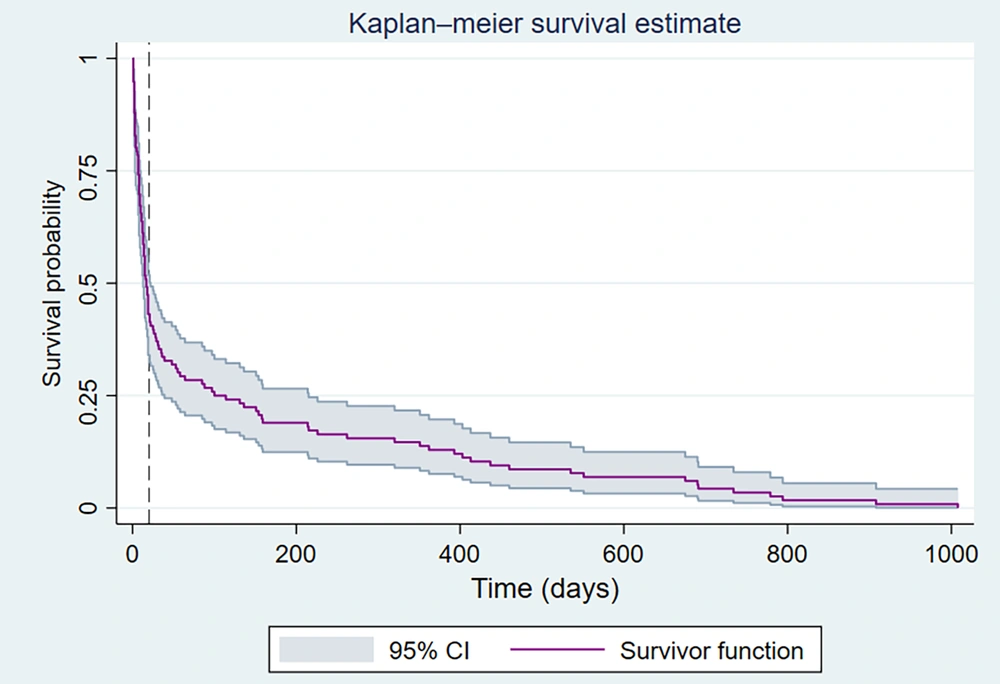
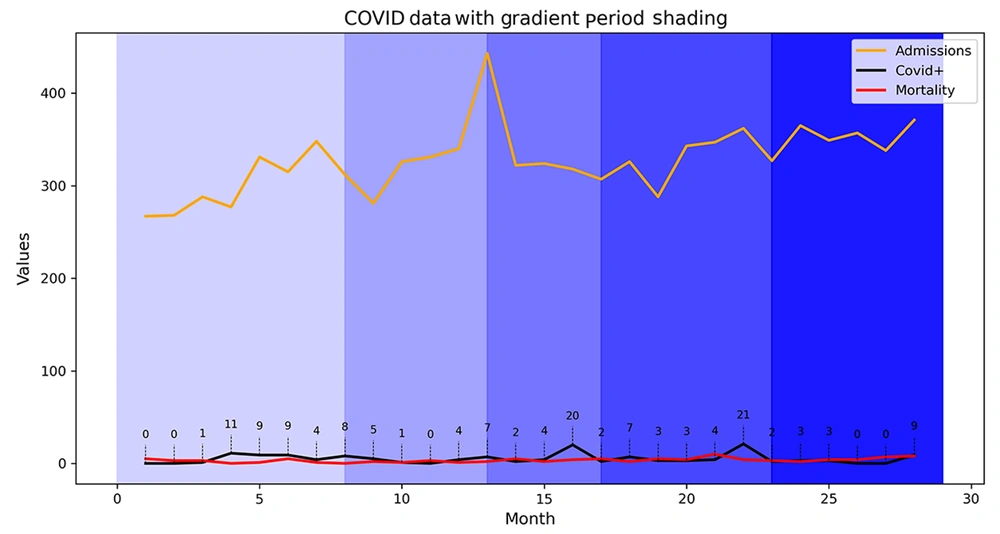
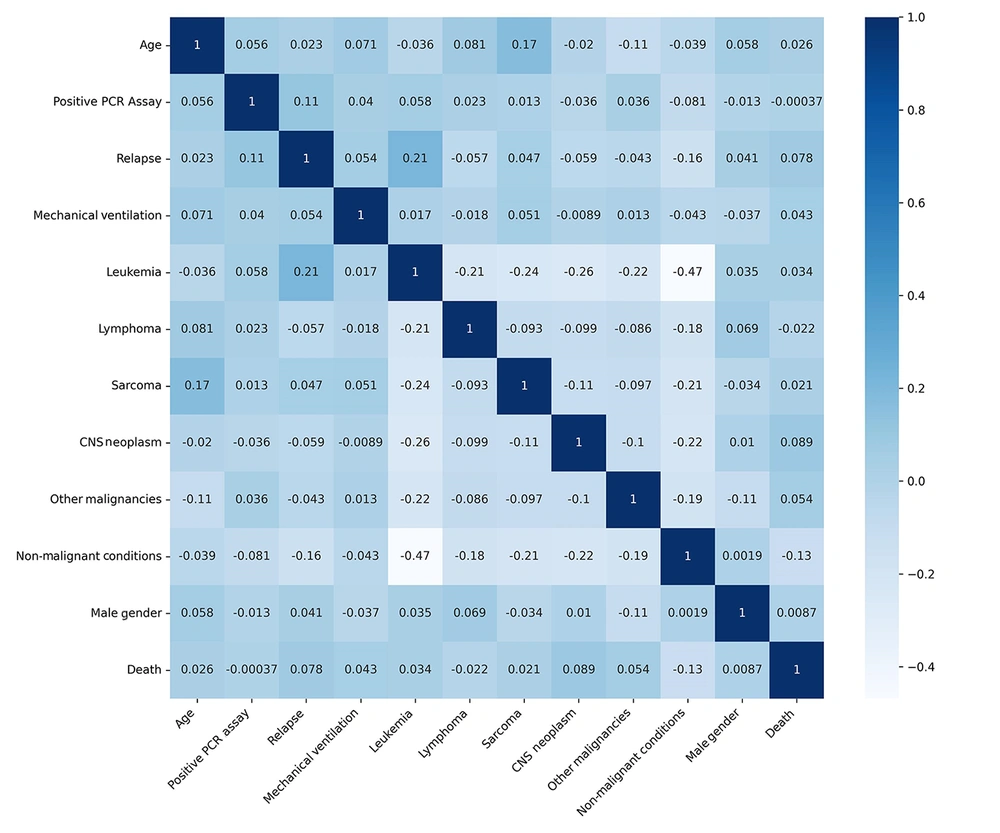
This study aimed to assess the impact of COVID-19 on pediatric oncology patients, with a particular focus on survival, relapse, and disease progression. The results indicate that while COVID-19 has significant implications for pediatric oncology patients, the severity of illness, underlying malignancy, and treatment protocols play crucial roles in determining outcomes. These findings are consistent with emerging evidence of the vulnerability of immunocompromised populations to COVID-19 and highlight the need for tailored clinical approaches to manage these patients during the pandemic.
The mortality rate among COVID-19-positive patients was 15%, which is higher than that in many high-income countries (HICs). However, the higher mortality rate observed among pediatric oncology patients with COVID-19 in Iran aligns with findings from other low- and middle-income countries (LMICs). This is largely due to systemic healthcare limitations, such as treatment delays, limited ICU and ventilator access, and shortages of supportive care. These resource constraints complicate the management of vulnerable patients and may confound mortality data. Addressing these healthcare disparities is crucial for improving survival and reducing inequities in pediatric cancer care, especially during the pandemic (
14-
16).
The observed high mortality rate among pediatric oncology patients with COVID-19 was not independently attributed to COVID-19 infection after adjusting for confounding factors such as age, cancer relapse, malignancy type, and clinical severity. This aligns with other studies showing that underlying health conditions and cancer-specific factors have a greater impact on mortality risk than the viral infection itself, emphasizing the necessity of thorough risk adjustment in analyzing outcomes in complex patient groups (
17-
19). Additionally, our findings underscore the need to strengthen infection prevention, early detection, and care for pediatric cancer patients in Iran, thereby providing valuable data for regional policymakers and clinicians managing similar populations in the future. Our study adds to the evidence from Iran and the Middle East, helping to fill the gap in region-specific data and inform contextually relevant clinical and public health interventions in the region.
In this cohort, COVID-19 was detected in 7.5% of the hospitalized children. The demographic analysis revealed no significant differences in age and sex between COVID-19-positive and COVID-19-negative patients, aligning with the existing literature that indicates sex does not significantly influence COVID-19 susceptibility in pediatric populations (
20). Most COVID-19-positive pediatric oncology patients in our study presented with mild-to-moderate symptoms, with the most common complaints being fever, general weakness, and cough. These findings mirror the general trend in pediatric COVID-19 cases, where most children experience mild illness with low rates of severe complications (
21). The requirement for mechanical ventilation in 1.54% of cases and ICU admission in 0.7% of cases suggests that a small subset of pediatric oncology patients experienced severe illness. This proportion is consistent with data from large-scale studies that reported a lower incidence of critical COVID-19 among children (
22,
23). In line with these findings, our study suggests that most pediatric oncology patients with COVID-19 can recover with minimal intervention.
Our analysis indicated that 15% of COVID-19 patients died, highlighting a higher mortality rate among pediatric oncology patients with COVID-19 in LMIC. A systematic review of 21 studies examining COVID-19 outcomes in pediatric cancer patients reported an overall pooled mortality rate of 9%. Mortality varied significantly by income level in the region, with rates of 3% in HIC, 12% in upper-middle-income countries, and 13% in lower-middle-income countries (
24). A multicenter international study involving 1,660 pediatric cancer patients from 91 hospitals across 39 countries examined the impact of COVID-19 on pediatric cancer care. Patients in LMICs face significantly higher mortality risks than those in HICs. The aORs for death at 30 and 90 days were 15.6 and 7.9 times higher, respectively, in LMICs (
16). These results emphasize the importance of addressing global healthcare inequalities and enhancing oncology care systems, especially in LMICs, to mitigate disparities in outcomes for pediatric cancer patients during and after the pandemic.
Multivariate analysis revealed that male sex, cancer relapse, younger age, mechanical ventilation requirements, and specific malignancies, such as neuroblastoma, were significant predictors of mortality. These findings echo prior research showing that certain cancer types may carry higher risks of adverse outcomes during the COVID-19 pandemic, particularly in LMICs. Among pediatric cancer patients who died within 30 days of presentation, the most common cancer types were ALL and non-Hodgkin’s lymphoma. These findings indicate that hematologic malignancies are linked to higher mortality risks, highlighting the heightened vulnerability associated with these conditions during the pandemic (
16). Patients with relapsed cancer, in particular, showed a substantially higher mortality risk, which can be explained by the weakened immune system due to previous chemotherapy cycles and bone marrow suppression. Neuroblastoma, a malignancy known for its aggressive nature and challenging treatment course, was also associated with poor outcomes in this study cohort. These findings emphasize the need for close monitoring and aggressive management strategies in high-risk groups, particularly those with relapsed cancer or specific malignancies known for poor prognosis. The absence of a direct association between COVID-19 positivity and mortality suggests that other factors, such as cancer type, stage, immune status, and treatment regimens, may be more influential in determining outcomes than the viral infection itself.
A study conducted at the Memorial Sloan Kettering Cancer Center explored the impact of COVID-19 on patients with cancer (
25). They found that certain patient characteristics and cancer treatments were associated with an increased risk of hospitalization and severe COVID-19 outcomes. Treatment with immune checkpoint inhibitors (ICIs) is a significant predictor of severe COVID-19 outcomes, including hospitalization and the need for mechanical ventilation. This suggests that ICIs, which modulate the immune system, may increase susceptibility to severe infection. Unlike age and ICI treatment, chemotherapy or major surgery was not associated with a higher risk of severe COVID-19 outcomes in this study. This finding contrasts with earlier reports suggesting that cancer treatments may increase vulnerability to COVID-19 (
26,
27), although this study did not find this correlation in its cohort (
25). Patients with hematological cancer and metastatic lung cancer also appear to be at the greatest risk of severe complications and mortality due to COVID-19 (
28).
It is crucial to account for the temporal sequence of events when interpreting the association between cancer relapse and SARS-CoV-2 infection. Relapses occurring before COVID-19 diagnosis likely reflect reverse causality, whereby immunosuppression induced by cancer relapse and its related treatments predispose patients to increased susceptibility to SARS-CoV-2 infection, rather than COVID-19 acting as a precipitating factor for relapse. Acknowledging this temporal framework is crucial for an accurate and nuanced understanding of the complex interactions between oncologic disease progression and COVID-19.
It is important to clarify that relapses occurring before the COVID-19 pandemic are not attributed to the effects of SARS-CoV-2. Instead, our findings suggest that patients who experienced relapse before contracting COVID-19 had an increased risk of SARS-CoV-2 infection during their subsequent treatment course. This association likely reflects the greater degree of immunosuppression and healthcare exposure among patients with relapsed malignancies rather than a causal relationship between COVID-19 and prior relapse.
This study had several limitations. First, as a retrospective cohort study, it is subject to inherent biases, such as selection and information bias, due to reliance on existing medical records. Some relevant clinical or laboratory data may have been missing or inconsistently recorded. Second, although we performed multivariate regression analyses to adjust for key confounders (e.g., age, sex, underlying malignancy, and treatment variables), residual confounding from unmeasured or unknown factors may still be present. Third, the single-center design and relatively small number of COVID-19-positive pediatric oncology patients limit the generalizability of our findings to other settings and populations. Finally, a precise temporal alignment between key clinical events, such as cancer diagnosis, relapse, and death, is lacking. This limitation restricts our ability to establish causal relationships between COVID-19 infection and subsequent outcomes (we could not reliably determine whether the deaths were directly attributable to COVID-19, underlying malignancy, treatment complications, or a combination of these factors).
Although our analysis identified associations between certain risk factors and adverse outcomes, the retrospective design and timing of data collection precluded definitive causal conclusions. We addressed potential confounders by including relevant covariates in our statistical models and conducting sensitivity analyses where feasible. Future multicenter prospective studies with larger sample sizes and standardized data collection are needed to validate our findings and minimize bias.
5.1. Conclusions
In this cohort of pediatric oncology patients, a 15% mortality rate was observed among those with COVID-19. However, after adjusting for confounding factors, COVID-19 was not an independent predictor of increased relapse or mortality. These findings suggest that while COVID-19 poses a risk to this vulnerable population, its direct impact on relapse and mortality may be less significant than initially expected by researchers. Ongoing surveillance and further multicenter studies are needed to better understand the long-term and indirect effects of COVID-19 in pediatric oncology.