
1. Background
With the increasing number of immigrations worldwide, the immigrants’ health assessment has a pivotal role in community health status (1). Afghanistan, Pakistan, Turkmenistan, and Iraq have the highest number of immigrations to Iran (2). The immigrants residing in Iran may have various problems such as disqualification to possess national identification card, temporary identity cards, and lack of legal work permit and medical insurance. These problems lead to inaccessibility of these groups to national health facilities, which in turn, may result in numerous health inadequacies, particularly among children. Such families chiefly live in slums and their children tend to work in areas such as metros, warehouses, grocery shops, Tailors’shops, supermarkets, farms, and even in houses to provide some goods. According to the last description, the children and youth that work and live in streets are known as working children (3). Due to the difficult circumstances in their family, most of these children are forced to work on the streets and insecure places in order to earn money for family expenses (4). Working children are at risk of infectious diseases including human immunodeficiency virus (HIV), hepatitis B virus (HBV), and hepatitis C virus (HCV) due to their exposure to the infectious agents (5-7). According to the previous studies, 20,000 to 2 million working children are living in Iran (6). Moreover, the prevalence of hepatitis B, hepatitis C, and HIV was high in working children (6). A few studies in several countries reported the prevalence of HBV, HCV, HIV, and other infections in working children (8-10).
2. Objectives
The current study aimed at assessing the prevalence of HBV, HCV, and HIV infections in working children of Afghan immigrants in two supporting centers in Tehran and Alborz provinces in 2017.
3. Methods
3.1. Study Population
The current cross-sectional study was conducted on working children of Afghan immigrants in two supporting centers in Alborz and Tehran provinces (Agh-Tappeh and Sarasiab supporting centers) using convenience sampling method in October 2017. The study inclusion criteria were the members of the two centers, aged 6 - 18 years old, working regularly to earn money for family expenses, and born to Afghan immigrants in Iran. All of the participants were born in Iran and benefited from supporting education and healthcare services in these centers. The questionnaire included items on demographic information such as gender, age, education, parental status, work category, working with garbage and sharp objects, and also the risk factors for transmission of blood-borne infections (BBI) such as alcohol and drug use, injecting drugs, addiction in family members, being harassed, and sexual contact. The questionnaire was filled by researchers through a confidential interview with participants. The Ethics Committee of the Baqiyatallah Research Center for Gastroenterology and Liver Diseases approved the study protocol, and all children participants signed written consent forms. The authors asserted that all procedures contributing to the current study comply with the ethical standards of the relevant national and institutional committees on human experimentation as well as those of the Helsinki Declaration of 1975, as revised in 2008.
3.2. Diagnostic Tests for HIV and Viral Hepatitis B and C
According to the sterile conditions, finger-stick blood samples were examined for HBV, HCV, and HIV via Advanced quality, one step multi-infectious disease test (InTec, China). In the study, venous blood samples from rapid diagnostic test (RDT)-reactive individuals were collected, and quickly stored at 4°C and kept until further examinations. Reactive samples for HBsAg (hepatitis B surface antigen) were tested for HBsAg and HBcAb using the enzyme-linked immunosorbent assay (ELISA) (Dia.pro, Italy) in laboratory; reactive samples for HCVAb (hepatitis C virus antibody) were checked for HCVRNA using RT-PCR (the artus HCV RG RT-PCR Kit, QIAGEN), and reactive samples for HIVAb (HIV antibody) were confirmed using the 4th generation ELISA kit (Dia.pro, Italy).
3.3. Statistical Analysis
Qualitative data were expressed as the number and percent, while quantitative data were expressed as mean ± standard deviation (SD). Statistical analyses were conducted using SPSS version 17.
4. Results
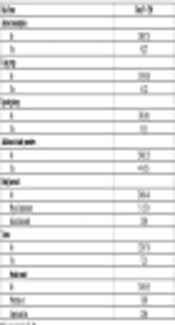
In the current study, 339 working children of Afghan immigrants in the age range of 6 to 18 years (mean ± SD age of 12.83 ± 2.83) in Sarasiab and Agh-Tappeh supporting centers of Tehran and Alborz provinces were evaluated; 54% were male and 46% female; they were mostly studying (95%), and had parents living together (89.4%). They also had some risk factors including drug use (1.2%), alcohol consumption (2.7%), addiction in family (14.5%), being harassed (15.6%), tattooed (2.1%), and unprotected sexual contact (0.6%). Characteristics of individuals and risky behaviors are listed in Tables 1 and 2.
Table 1.
Characteristics of the Study Participantsa
| Variable | Total (N = 339) |
|---|---|
| Gender | |
| Male | 183 (54) |
| Female | 156 (46) |
| Age, y | |
| Mean ± SD | 12.83 ± 2.83 |
| Range (min - max) | 6 - 18 |
| Education | |
| Illiterate | 11 (3.2) |
| Studying | 322 (95) |
| Dropout | 4 (1.2) |
| Not announced | 2 (0.6) |
| Parental status | |
| Living together | 303 (89.4) |
| Divorced | 31 (9.1) |
| Not announced | 5 (1.5) |
| Category of work | |
| Food industry | 52 (15.3) |
| Vendor | 58 (17.1) |
| Tailor | 37 (10.9) |
| Mechanic | 17 (5) |
| Work at home | 7 (2.1) |
| Not announced | 131 (38.6) |
| Others | 37 (10.9) |
| Working with garbage | |
| No | 317 (93.5) |
| Yes | 22 (6.5) |
| Working with sharp objects | |
| No | 259 (76.4) |
| Yes | 80 (23.6) |
aValues are expressed as No. (%) unless otherwise indicated.
Table 2.
Risky Behaviors for Transmission of Blood-Borne Infections
| Risk Factor | Total (N = 339) |
|---|---|
| Alcohol consumption | |
| No | 330 (97.3) |
| Yes | 9 (2.7) |
| Using drugs | |
| No | 335 (98.8) |
| Yes | 4 (1.2) |
| Injecting drugs | |
| No | 339 (100) |
| Yes | 0 (0) |
| Addiction in family members | |
| No | 290 (85.5) |
| Yes | 49 (14.5) |
| Being harassed | |
| No | 286 (84.4) |
| Physical harassment | 51 (15.0) |
| Sexual harassment | 2 (0.6) |
| Tattoo | |
| No | 332 (97.9) |
| Yes | 7 (2.1) |
| Sexual contact | |
| No | 334 (98.5) |
| Protected sex | 3 (0.9) |
| Unprotected sex | 2 (0.6) |
aValues are expressed as No. (%).
In the study participants, HBsAg was detected in two (0.59%, 95% confidence interval (Cl) = 0.16% - 2.13%) individuals, as confirmed by testing HBsAg and HBcAb on plasma samples in laboratory. Furthermore, all of the participants were negative for HCVAb and HIVAb (0%, 95% Cl = 0% - 1.12%).
5. Discussion
There are not enough data regarding the prevalence of infectious diseases among working children of Afghan immigrants in Iran. The current study found the prevalence of HBV infection in working children of Afghan immigrants in Sarasiab and Agh-Tappeh supporting centers as 0.6%, while no cases of HCV and HIV infections were observed. In another study in Tehran, Foroughi et al. (6) found that 4.5% of working children were HIV infected, 1.7% were infected with HBV, and 2.6% with HCV. Having drug-addicted parents, being infected with HCV, and having experience of trading sex significantly increased the rate of HIV infection among the street children of Tehran (6). Hadland et al. (10) studied the injection of opioid and the risk of HCV infection, in relation to the abuse of traditional drugs in the street youth of Canada in a prospective cohort. The results of this study showed that HCV seropositivity was 10.6% among the examined children (10). The study by Roy et al. (11) surveyed risk factors for HCV infection among street youths in the Montreal. Many of the subjects reported behaviors that put them at risk of BBIs: 45.8% injected drugs, 56.5% had at least one tattoo, and 78.3% had body piercing. In the latter study, the overall prevalence of HCV infection was 12.6% (11). In a study conducted by Fallah et al. (5) on 203 street children, six (3%) cases were positive for HBsAg, 54 (26.6%) cases for HBsAb, 16 (8%) cases for HBcAb, and seven (3.5%) cases for HCVAb. A meta-analysis estimated the prevalence of HCV infection among street children in Iran 2.4% (12). The differences in the results of the studies mentioned above may be due to the following reasons: differences in nationality (the studied population was Afghan) and differences in sampling locations. In the current study, infection with viruses was less frequent than the previous studies on the working children in Iran mainly due to the sampling in the population covered by the supporting centers with less involvement in high-risk behaviors, and better socioeconomic status as well.
It was estimated that 1.9% and 1.1% of Afghan general population were infected with HBV and HCV, respectively (13). However, the prevalence of HBV, HCV, and HIV was observed as high as 9.2%, 36.8%, and 5.9%, respectively in Afghan refugees residing in two camps in Pakistan (14). The prevalence of HBsAg was very high (60.8%) in Afghan refugees residing in a camp in Iran (15). It seems that the issue of BBIs is very concerning in refugees residing in camps; however, there is little known about the population of refugees living outside the camps including their children that mostly do not receive the regular healthcare services.
Despite the HBV vaccination and prevention of mother-to-child transmission (PMTCT) program in Iran, Afghan immigrants do not have access to such health facilities. Afghan pregnant females should be evaluated for HBV and their neonates should receive birth-dose HBV vaccination even if they do not have an ID card to stop the maternal transmission of HBV.
Children in the current study were covered by supporting centers and they were not street children. These conditions may refer to better socioeconomic and health status compared to the street and working children in Iran. Hence, the current study population cannot be representative for working children in Iran. Future studies can avoid this selection bias by sampling among the street and working children out of supporting centers.
In conclusion, result of the current study showed that HBV, HCV, and HIV had a low prevalence in children of Afghan immigrants in Iran, but their health status is important for public health of the community. Furthermore, the supervision of the family and a supporting center is important and very influential for infection control in the Afghan immigrant population. The need for implementation of HBV vaccination and PMTCT in Afghan immigrants in Iran is crucial and urgent.