Efforts are globally underway to create an efficient vaccine or drug for prevention or treatment of the SARS infection (
31-
33). In this context, many reports showed that Mpro is an ideal target for drug design and development (
34-
36). The well-characterized inhibitors of Mpro can be classified into 2 classes based on their chemical structures. The first class includes a peptide chain with an ending reactive group. This kind of inhibitor fits the catalytic site of the enzyme by making a covalent link with Cys145 via its reactive group and therefore it blocks the substrate entry to the active site (
37,
38).
The 2nd class involves small organic compounds that bind to the enzyme active site groups and/or to groups in its vicinities so that they competitively prevent a substrate entrance to the active site cavity. Anti-protease inhibitors approved for viral infection treatment are interesting examples in this connection. Recently, these inhibitors are screened for their capability to inhibit Mpro and treat SARS infection using in vivo, in vitro, and in silico experiments (
34-
39). The clinical trial of LPV showed a significant decrease in virus titer, reduced rate of death, and improved clinical recovery (
40-
42). In this direction, it deemed appropriate to study in detail the molecular interactions between Mpro coordinate structure and HIV-1 protease inhibitors using femtosecond snapshots of MD simulations trajectories. Accordingly, this study primarily aimed to draw a detailed prospective from HIV-1 protease inhibitors-Mpro complexes to help design more effective inhibitors for the SARS infectious.
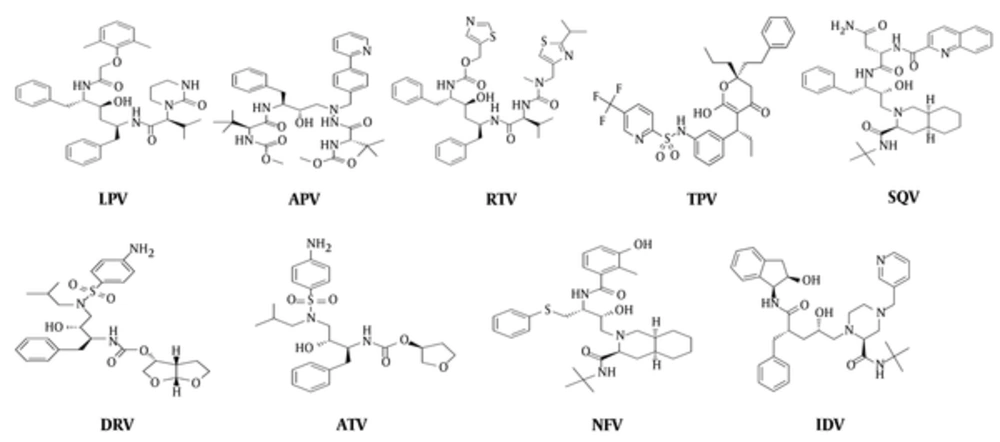
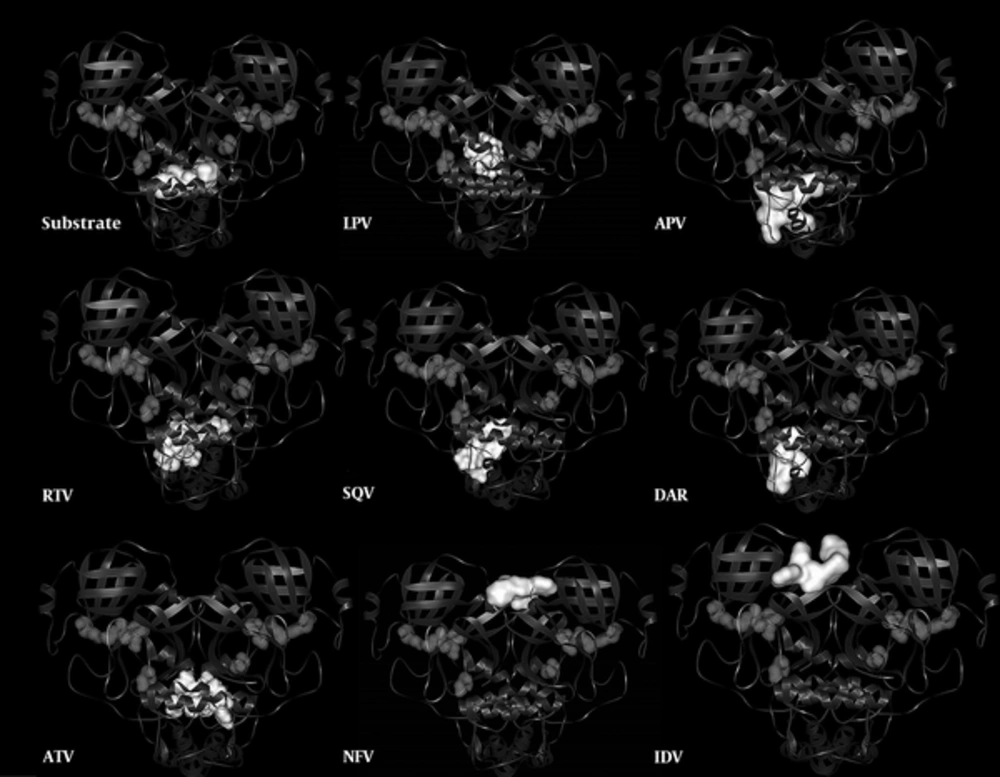
Our data indicated that among the 9 tested inhibitors, 5 could bind to sites that resemble their preferred active sites with more than 50% similarities (
Table 1). Our structural inspection revealed that there are 2 factors affecting inhibitors’ binding efficacy. The first factor is the extent of similarity of the inhibitor specific binding site to Mpro active site, e.g. the more similarity exists the more effective inhibition of enzyme occurs. The 2nd important factor is Mpro structural complexity and spatial accommodation required for inhibitors binding. Therefore, adopting a complex structure of maximum similarity to its specific binding site upon interaction with Mpro, LPV causes maximum decrease in RMSF (
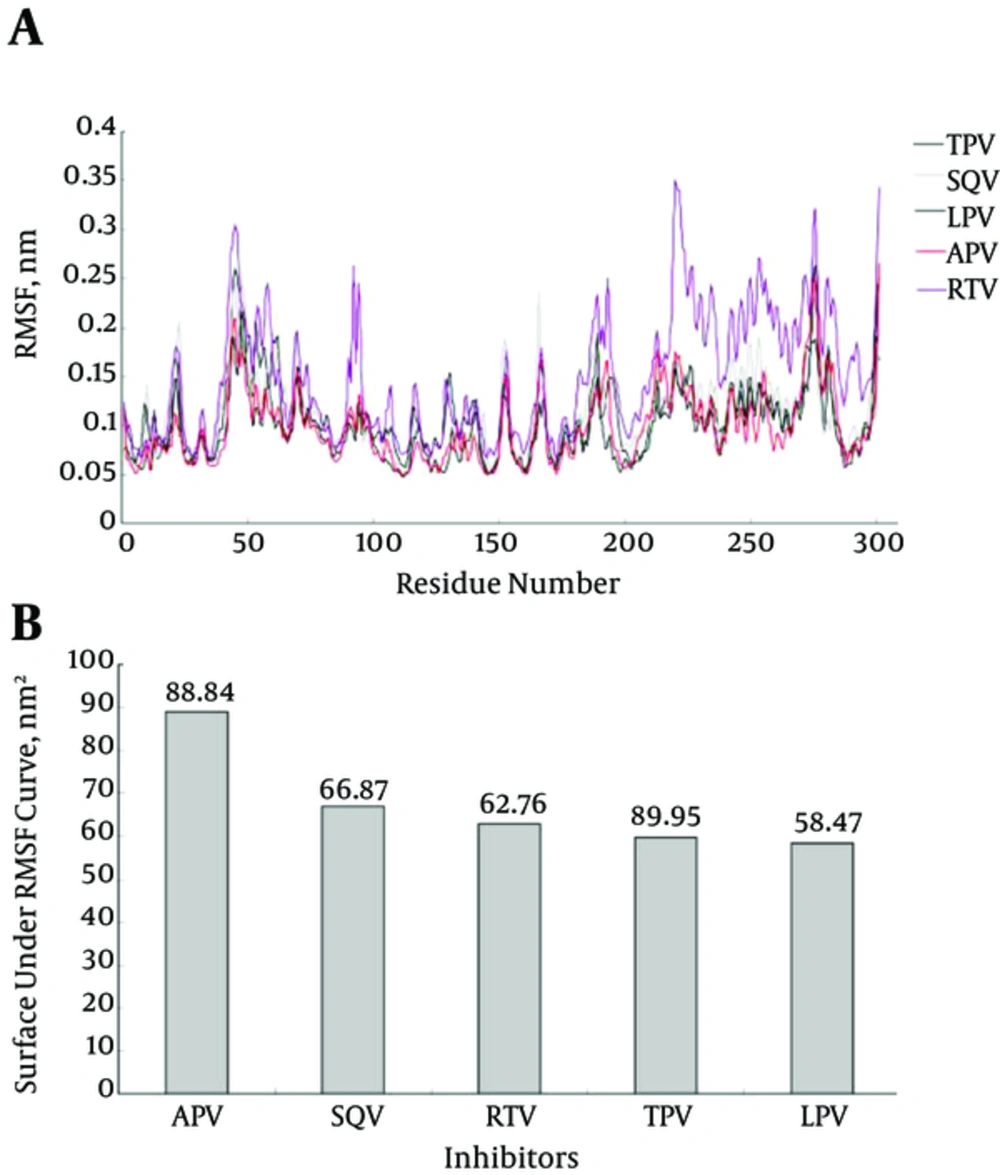
Figure 5B) and maximum inhibitory effect.
Although, LPV showed the highest binding energy (-413.99 ± 29.31KJ/Mol) and maximum similarity (66.67%) to the enzyme active site, no significant correlation was found between binding energy and binding site similarity or molecular weight for other tested inhibitors. These findings reveal that the binding energy of inhibitors is not merely determined by binding site similarity or by inhibitors molecular weight. Instead, it is likely determined by the mode of spatial binding of inhibitors to enzyme binding site and the arrangement of their functional groups to their counter groups on the enzyme active site.
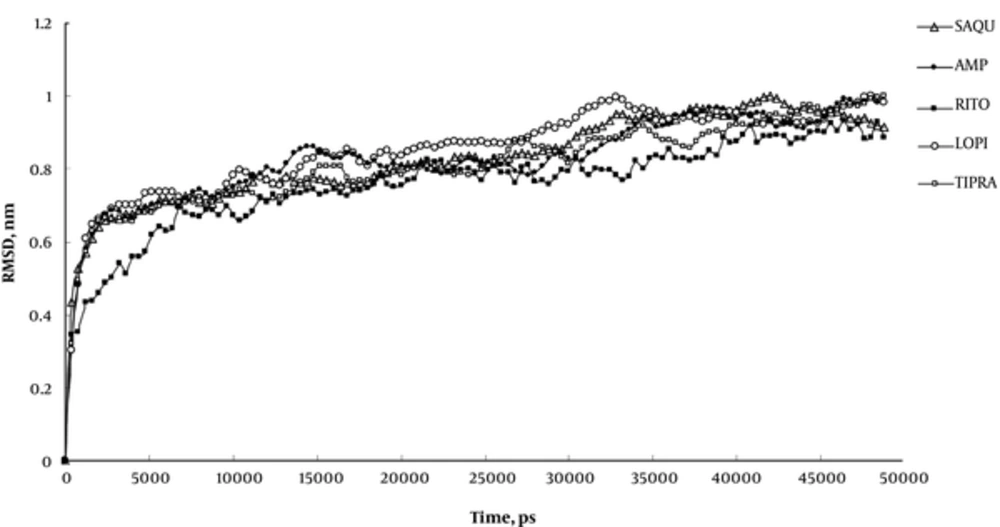
The same change in RMSD curves of inhibitors (
Figure 4) assures that the systems experience equal conformational changes; therefore, it could be used for a comparative study. As indicated, only LPV reduces the total RMSF of protein to its minimum amount, which means that LPV is the strongest inhibitor of Mpro (
42,
43).
Figure 5A plots the average fluctuation of each alpha carbon during 50ns period of simulation. Alpha carbons, with high fluctuation comprise hot points or flexible points for Mpro protein. The high fluctuating curve for Mpro, in the presence of certain inhibitors, indicates that the inhibitor does not restrict or limit protein flexibility (weak inhibitor). Conversely, a strong inhibitor is expected to restrict enzyme flexibility with lower average of fluctuation for the enzyme active site (
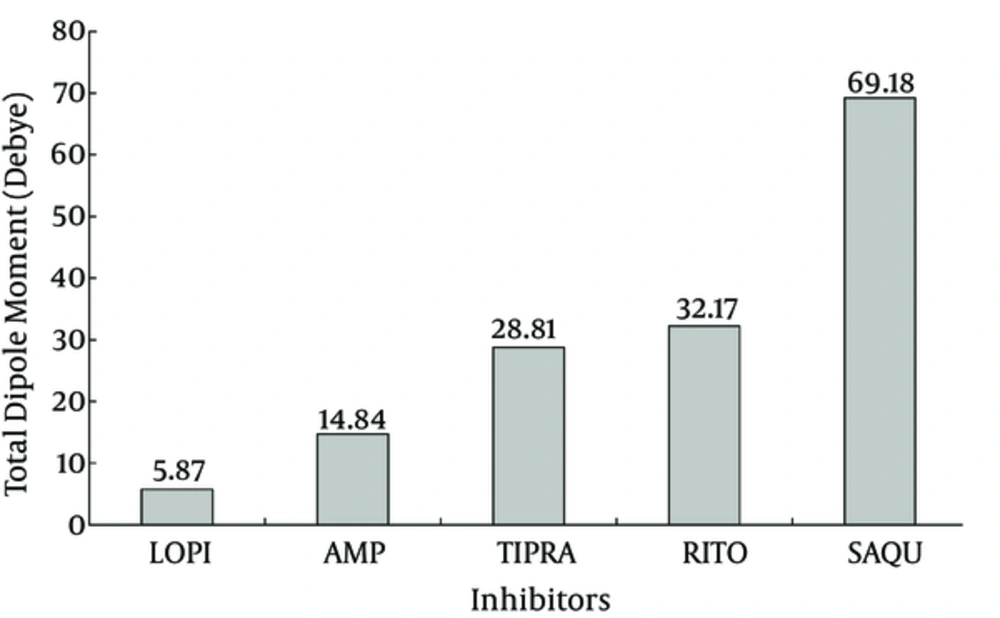
Figure 5B). Inhibitor hydrophobicity was calculated in situ as a dipole moment of inhibitors by g_dipol command of the GROMACS software. According to these data (
Figure 6), in contrast to other inhibitors, LPV expresses more hydrophobic property. This results in effective binding of LPV to Mpro and therefore, a steeper decrease in RMSF of LPV (
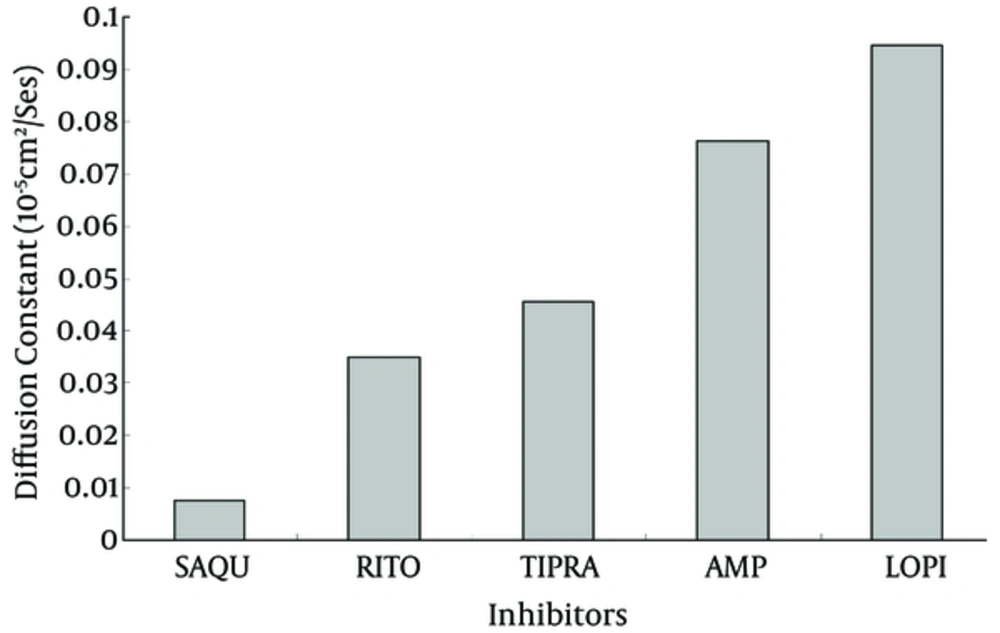
Figure 5B). As expected, among other inhibitors, LPV shows the highest diffusion constant, which reconfirm its efficient inhibition character (
Figure 7).
While RMSF and dipole moment are inversely proportional to inhibitory potency and diffusion coefficient of inhibitors, the hydrogen bonds formed between binding site groups and the level of their residual similarity are directly proportional to inhibitory power (
Table 2). Each set of data were normalized and averaged for each inhibitor as an inhibitory index. The data show that inhibitory potency or the index for inhibitors are as follow: LPV < RTV < APV < TPV < SQV, in which LPV and SQV have the highest and the lowest potency for Mpro inhibition.
| APV | SQV | RTV | TPV | LPV |
|---|
| RMSF | 88.83 | 66.87 | 62.76 | 59.94 | 58.46 |
| Dipole Moment | 14.83 | 69.18 | 32.17 | 28.81 | 5.87 |
| Binding site Hydrophobicity | 13.4 | 7.2 | 13.3 | 16.4 | 21.7 |
| Diffusion Coefficient | 0.076 | 0.007 | 0.035 | 0.045 | 0.094 |
| H.Bond | 3 | 1 | 6 | 2 | 5 |
| Binding Site Similarity | 55.56 | 51.85 | 55.56 | 51.58 | 66.67 |
| Shape Energy | -331.23 | -400.87 | -381.93 | -398.55 | -413.99 |
| Index | 0.58 | 0.48 | 0.64 | 0.51 | 0.76 |
Reports on in vivo and in vitro applications of LPV in SARS treatment provided evidence that LPV and RTV may improve the Ribavarin effect on SARS infections in a dose dependent manner and reduce the death rate by about 20% - 30% (
43,
44). Also, NFV, an anti HIV-1 protease, showed to prevent coronavirus replication and limit its cytotoxic effect on host cells (
31-
33,
44).
4.1. Conclusions
Taking into consideration our findings and the available clinical evidences on the usefulness of anti HIV-1 protease inhibitors for SARS infection treatment, tested inhibitors can be ranked based on their inhibitory potency as follows: LPV < RTV < APV < TPV < SQV. In the absence of even a single effective drug for SARS treatment, our findings represent a promising pharmaceutical perspective for the disease therapy via Mpro inhibition.