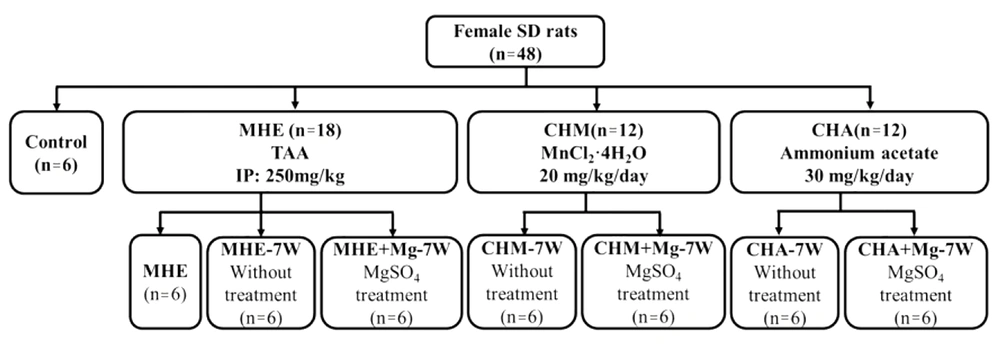
To explore the possibility of an interaction between brain Mn and ammonia in HE, we used TAA to induce an MHE rat model. This model was constructed for the most common type of HE, type C HE. Brain Mn accumulation has been confirmed in HE (
5,
6). In addition to the commonly recognized ammonia, Mn has been found to play an important role in the development of HE. Furthermore, we constructed CHM and CHA rat models in which brain Mn or ammonia is considered an independent pathogenic factor. Consequently, the roles of Mn, ammonia and their interaction can be separately investigated in CHM and CHA rat models and can be comprehensively investigated in the MHE model.
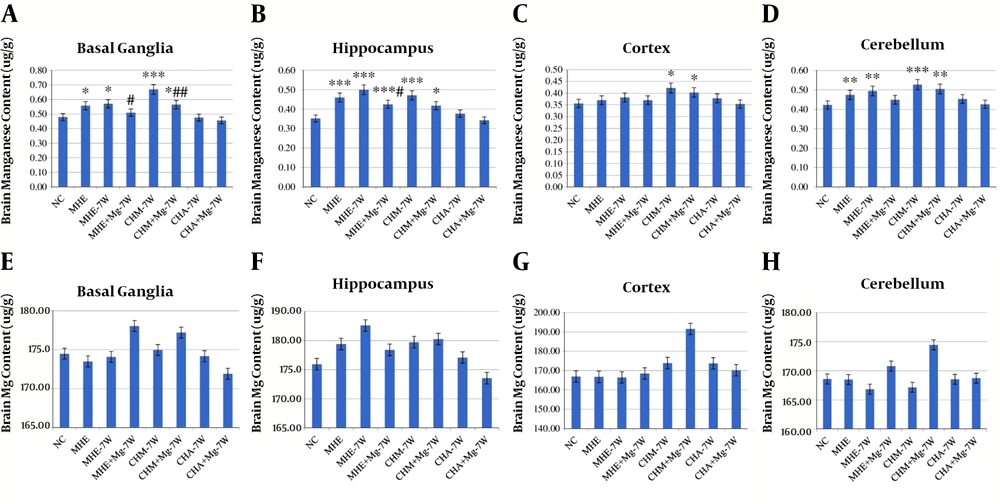
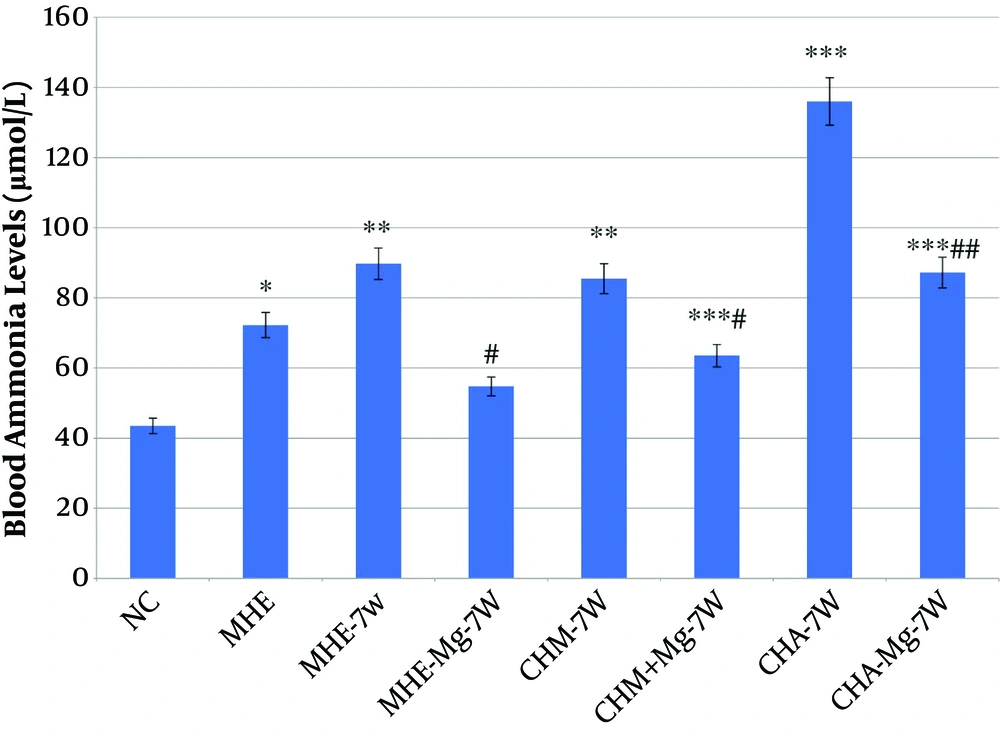
In CHA rats, blood ammonia levels and GLN content were higher than in control rats. The brain Mn content showed no significant difference between CHA rats and control rats. The results indicated that the increase in ammonia did not lead to an increase in the brain Mn content. After MgSO4 treatment, blood ammonia levels and GLN content decreased in CHA rats. The brain Mn content showed no significant difference between CHA + Mg and CHA rats. The results indicated that the decrease in ammonia did not lead to a decrease in the brain Mn content. Our study suggests that the change in the ammonia level does not affect the content of brain Mn.
In CHM rats, the brain Mn content was significantly higher than in control rats. Blood ammonia level and brain GLN content were also higher in CHM rats than in control rats. The results indicated that the increase in brain Mn content could lead to an increase in blood ammonia levels and brain GLN contents. After MgSO4 treatment, brain Mn content significantly decreased in basal ganglia in CHM rats. Blood ammonia level and brain GLN content in basal ganglia were also lower in CHM + Mg-7W rats than in CHM-7W rats. The results indicated that the decrease in brain Mn content could lead to decreases in blood ammonia level and brain GLN content. However, brain Mn contents in the cortex and hippocampus were not significantly lower in CHM + Mg-7W rats than in CHM-7W rats. This might be because the treatment duration was not long enough, and the dose of Mg was relatively low. Our study suggests that changes in brain Mn content can affect the ammonia level.
The brain Mn content was higher in basal ganglia than in the hippocampus, cortex, and cerebellum in all rats. This finding was consistent with the findings of previous studies that have shown basal ganglia is the main site affected by Mn deposition in the brain (
21,
22). This finding could also explain the results that only brain Mn content in basal ganglia was significantly decreased after MgSO
4 treatment in CHM and MHE models.
Our results also showed that MgSO
4 could decrease blood ammonia levels and brain GLN content. As the brain Mg content showed no significant difference among groups, we speculated that a direct impact of MgSO
4 on decreasing ammonia was less likely. As we concluded above, the change in ammonia level did not affect brain Mn content, while the change of brain Mn content affected the ammonia level. By further considering previous studies (
17,
23), which revealed that MgSO
4 could significantly increase fecal Mn excretion to reduce brain Mn content, we speculated that MgSO
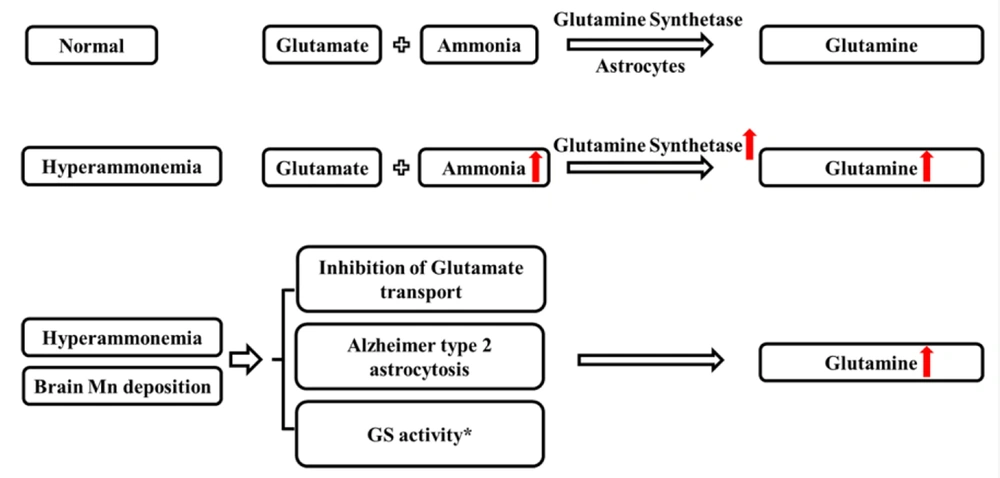
4 decreased the blood ammonia level and brain GLN content by increasing the amount of fecal Mn excretion to decrease the brain Mn content and by regulating brain GS activity.
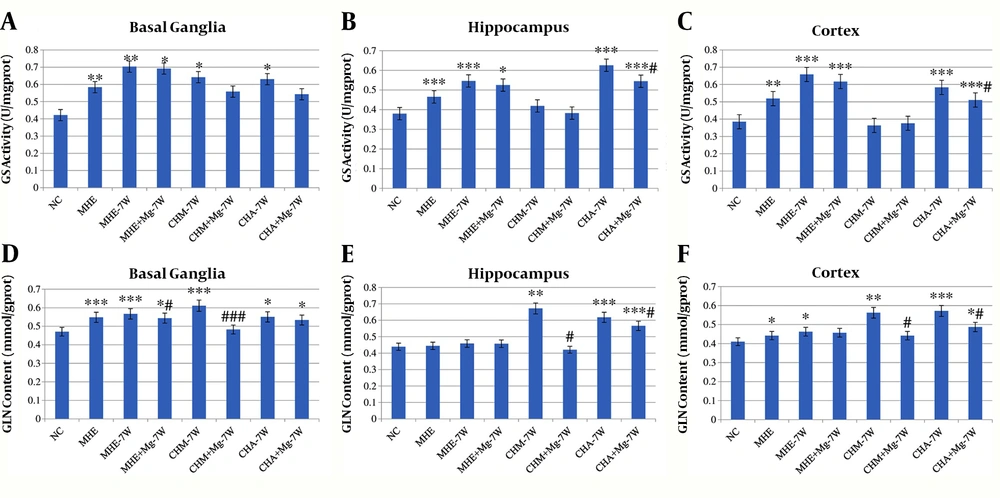
Previous studies have demonstrated that both Mn and ammonia can regulate GS activity (
8,
17). The GS activity was significantly higher in CHA groups than in the control group in basal ganglia, hippocampus, and cortex, which was consistent with previous studies (
24,
25). Considering that no significantly different Mn contents were found between the CHA group and the control group, we speculated that the higher GS activity was related to hyperammonemia rather than a high Mn content. In addition, the GS activity in the hippocampus and cortex significantly decreased in CHA rats after MgSO
4 treatment. These results indicated that MgSO
4 decreased the blood ammonia level by downregulating brain GS activity. The GS activity showed no significant differences in the CHM groups (except the CHM-7W group in the basal ganglia) compared with the control group. The results were in accordance with those of previous studies, which showed that relatively high brain Mn deposition significantly inhibited GS activity (
10,
26). Furthermore, the GS activity in the CHM groups showed no significant differences after MgSO
4 treatment. This may be because the originally low GS activity in the CHM-7W group could not be further decreased; however, a previous study showed that Mg could also regulate the activity of GS (
27). Therefore, the effect of Mg on GS activity could be ignored in this study because the Mg content showed no significant difference among groups.
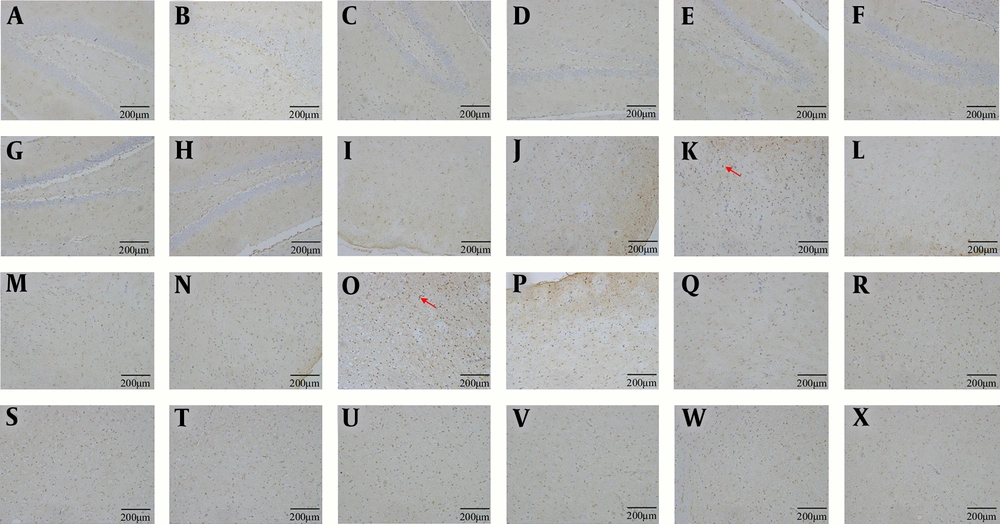
Changes in the brain GS activity resulted in changes in brain GLN content. Indeed, GLN is a product of the glutamine/glutamate cycle that can reflect brain ammonia contents. The GLN contents in the hippocampus and cortex in CHA groups were significantly increased, while the brain Mn content showed no significant difference compared with the control group. These results further confirmed that the increasing brain ammonia level could not increase the brain Mn content. In contrast, the reduction in the brain Mn content could reduce the brain ammonia content, as the GLN content was significantly lower in the CHA + Mg-7W group than in the CHA-7W group, and in the CHM + Mg-7W group than in the CHM-7W group despite no difference in GS activity between the CHM groups. This might be because the blood ammonia level decreased after MgSO4 treatment, leading to a decrease in brain ammonia in the glutamine/glutamate cycle. The changes in the brain GS activity were consistent with the changes observed from GS immunohistochemistry that showed the number of GS-positive cells increased in MHE rats, CHM rats, and CHA rats compared with control rats and decreased after MgSO4 treatment in basal ganglia and cortex. The results indicated that the brain Mn deposition or ammonia accumulation could upregulate the activation of GS-positive cells, while MgSO4 treatment could decrease the brain Mn content and downregulated the activation of GS-positive cells.
In MHE rats, an increase in Mn accumulation and hyperammonia occurred simultaneously. The brain Mn contents in basal ganglia and hippocampus, and the blood ammonia level were significantly higher in MHE rats than in control rats and were significantly decreased after MgSO4 treatment. The brain GS activities were significantly increased in MHE rats, and insignificantly decreased after MgSO4 treatment. A significant increase in cortical GS activity was found in MHE rats compared with control rats; however, there were no significant increases in the cortical brain Mn content. The possible reason for this result is that ammonia plays a more important role than Mn in affecting GS activity in the cortex of MHE rats. The GLN content in the basal ganglia was significantly lower in MHE rats after decreasing brain Mn content by MgSO4 treatment. Therefore, we speculated that ammonia might play a more important role than Mn in the pathogenesis of MHE at this time point.
This study had some limitations. First, the design of the experiment could be improved. We only focused on the effect of reducing brain Mn treatment in manganism and hyperammonemia rats. Further studies should be performed to investigate the effect of reducing brain ammonia treatment in manganism rats to complementally confirm that the accumulation of brain ammonia has no effect on the content of brain Mn. Second, although we speculated that ammonia might play a more important role than Mn in the pathogenesis of MHE at this limited time point, it was impossible for this study to determine if ammonia or Mn is the dominant factor in the pathogenesis of HE, and therefore, further studies should be performed.
In this study, we confirmed that brain Mn accumulation could increase brain ammonia levels, while the accumulation of brain ammonia had no effect on the content of brain Mn. Ammonia might play a more important role than Mn in the pathogenesis of MHE at this time point. MgSO4 may decrease blood ammonia levels and GLN content by increasing the excretion of fecal Mn to decrease the brain Mn content and by regulating brain GS activity.