


1. Background
2. Objectives
3. Patients and Methods
3.1. Inclusion and Exclusion Criteria
3.2. Literature Search
3.3. Indicators of Therapeutic Efficacy
3.4. Data Extraction and Quality Assessment
3.5. Statistical Analysis
4. Results
4.1. Characteristics and Quality of Included Studies
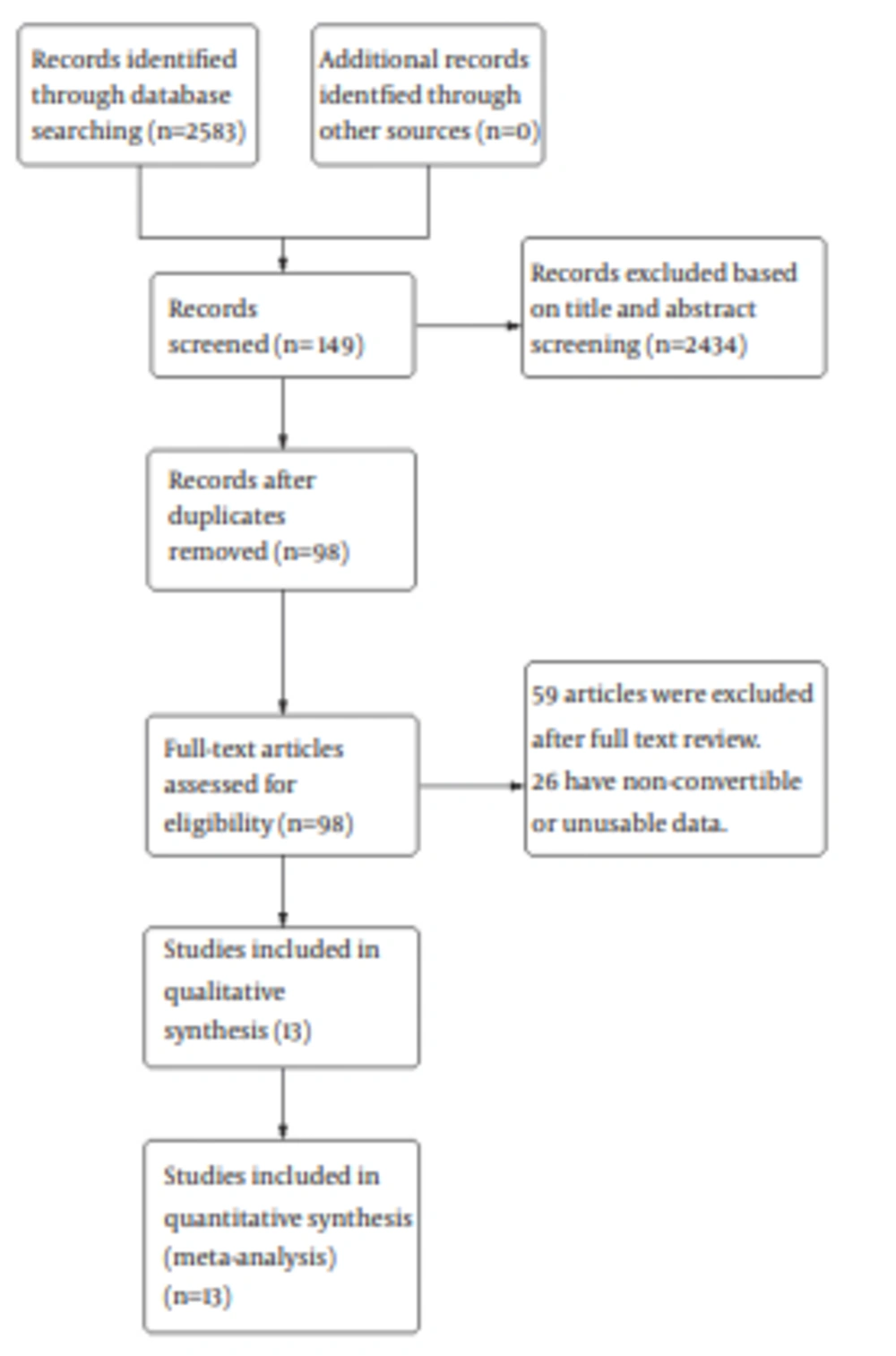
Flow-Chart Identifying Eligible Studies
| Study Year | Study Design | Region | Language of Paper | Number of Patients | Male | Female | Reported Endpoints |
|---|---|---|---|---|---|---|---|
| Fang Li 2008 (21) | Retrospective cohort | China | Chinese | 143 | 112 | 31 | mortality, TBIL, ALT and HBVDNA |
| Liya Huo 2008 (10) | Retrospective cohort | China | Chinese | 44 | 33 | 11 | mortality, TBIL, ALT, PTA and HBVDNA |
| Qiheng Xu 2009 (22) | Retrospective cohort | China | Chinese | 116 | NA | NA | survival, HBVDNA and TBIL |
| Cuijun Peng 2010 (23) | Retrospective cohort | China | Chinese | 92 | 63 | 29 | mortality, TBIL, and PTA |
| Jinhua Hu 2010 (18) | RCT | China | Chinese | 218 | 155 | 63 | survival, HBVDNA and MELD score |
| Xiaomin Wang 2010 (20) | RCT | China | Chinese | 74 | 62 | 12 | mortality, HBVDNA, PTA and TBIL |
| Yaoli Cui 2010 (24) | Retrospective cohort | China | English | 67 | 6 | 61 | survival, recurrence , HBV DNA and MELD score |
| Hongbo Gao 2011 (25) | Retrospective cohort | China | Chinese | 183 | NA | NA | survival, TBIL, PTA and HBVDNA |
| Tianyan Chen 2012 (26) | Retrospective cohort | China | English | 72 | 56 | 16 | mortality , recurrence and HBVDNA |
| Zhiyong Yang 2012 (19) | RCT | China | Chinese | 40 | NA | NA | survival, HBVDNA and MELD score |
| Lei Fan 2013 (11) | RCT | China | Chinese | 120 | NA | NA | mortality, TBIL, ALT PTA and HBVDNA |
| Jing Lai 2013 (12) | Retrospective cohort | China | English | 182 | 163 | 19 | mortality, MELD score and YMDD mutations |
| Junshuai Wang 2014 (27) | Retrospective cohort | China | English | 198 | NA | NA | survival, MELD score and TPPM score |
a Abbreviations: TBIL, total bilirubin; ALT, alanine transaminase; PTA, prothrombin activity; RTC, randomized controlled trial.
| Studies Included | Randomization | Allocation Concealment | Blinding | Incomplete Outcome Data | Selective Reporting | Other Sources of Bias |
|---|---|---|---|---|---|---|
| Jinhua Hu 2010 (18) | Unclear | High risk | High risk | Low risk | Low risk | Unclear |
| Xianmin Wang 2010 (20) | Unclear | Unclear | Unclear | Low risk | Low risk | Unclear |
| Zhiyong Yang 2012 (19) | Unclear | Unclear | Unclear | Low risk | Low risk | Unclear |
| Lei Fan 2013 (11) | Unclear | Unclear | Unclear | Low risk | Low risk | Unclear |
| Studies Included | Selection | Comparability | Outcome | Scores | ||||||
|---|---|---|---|---|---|---|---|---|---|---|
| 1 | 2 | 3 | 4 | 5 | 6 | 7 | 8 | 9 | ||
| Fang Li 2008 (21) | √ | √ | √ | √ | √ | √ | √ | √ | √ | 9 |
| Liya Huo 2008 (10) | √ | √ | √ | √ | √ | √ | √ | √ | √ | 9 |
| Qiheng Xu 2009 (22) | √ | √ | √ | √ | √ | √ | √ | 7 | ||
| Cuijun Peng 2010 (23) | √ | √ | √ | √ | √ | √ | √ | √ | √ | 9 |
| Yaoli Cui 2010 (24) | √ | √ | √ | √ | √ | √ | √ | √ | √ | 9 |
| Hongbo Gao 2011 (25) | √ | √ | √ | √ | √ | √ | 6 | |||
| Tianyan Chen 2012 (26) | √ | √ | √ | √ | √ | √ | √ | √ | √ | 9 |
| Jing Lai 2013 (12) | √ | √ | √ | √ | √ | √ | √ | √ | 8 | |
| Junshuai Wang 2014 (27) | √ | √ | √ | √ | √ | √ | √ | √ | √ | 9 |
a For cohort studies, 1 indicates exposed cohort truly representative; 2, non-exposed cohort drawn from the same community; 3, ascertainment of exposure; 4, outcome of interest not present at start; 5, cohorts comparable based on TBIL and PTA; 6, cohorts comparable on other factors; 7, quality of outcome assessment; 8, follow-up long enough for outcomes to occur; and 9, adequacy of follow-up of cohorts
4.2. Survival Comparison Between ETV and LAM Treatment Groups
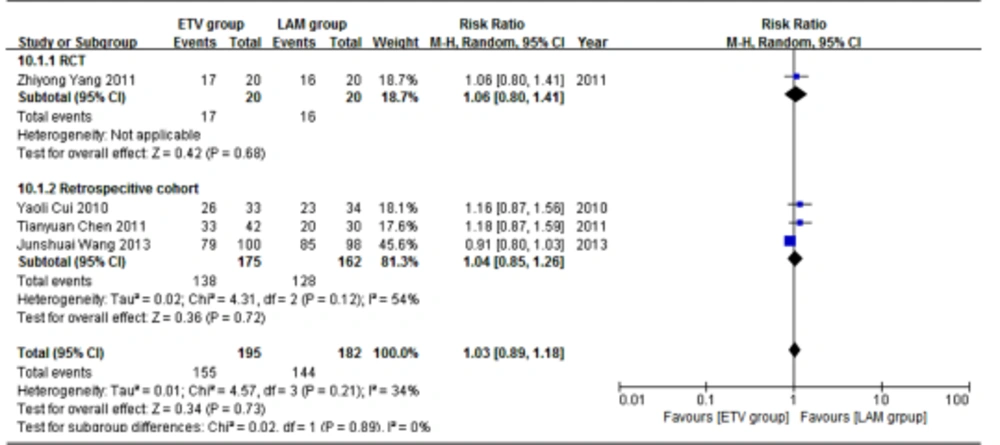
Comparing Four Weeks Survival Between ETV and LAM Treatment Groups
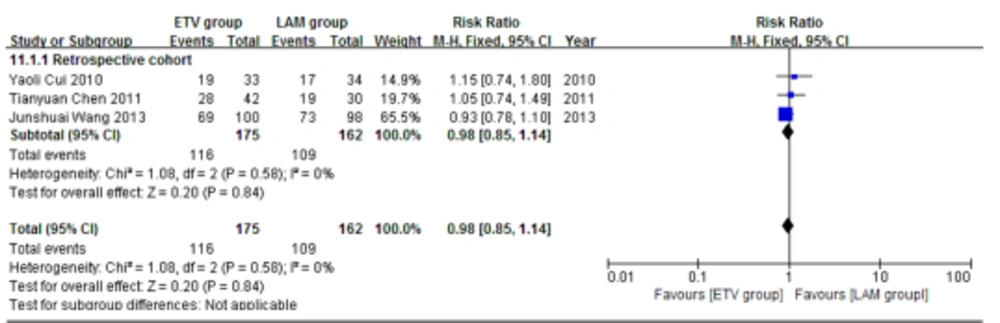
Comparing Eight Weeks Survival Between ETV and LAM Treatment Groups
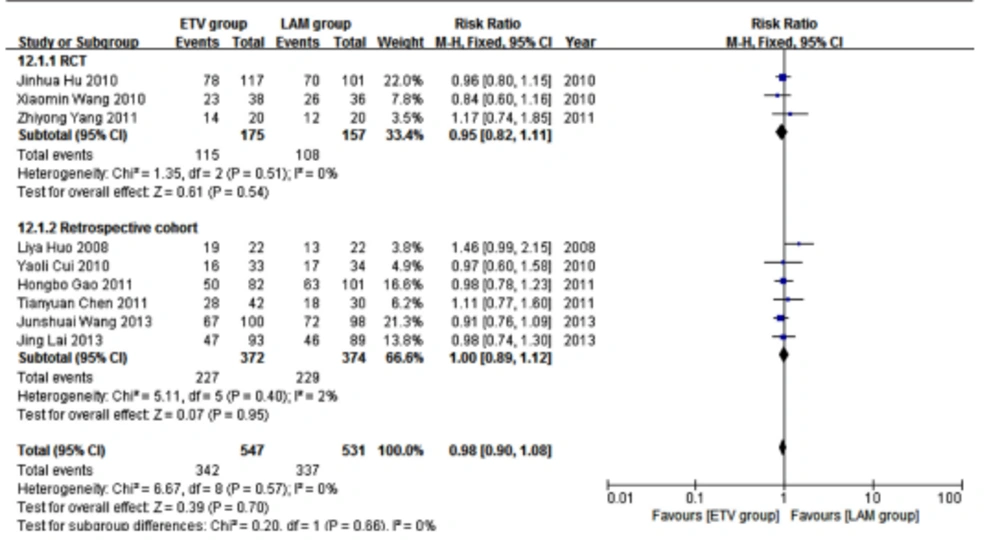
Comparing Twelve Weeks Survival Between ETV and LAM Treatment Groups
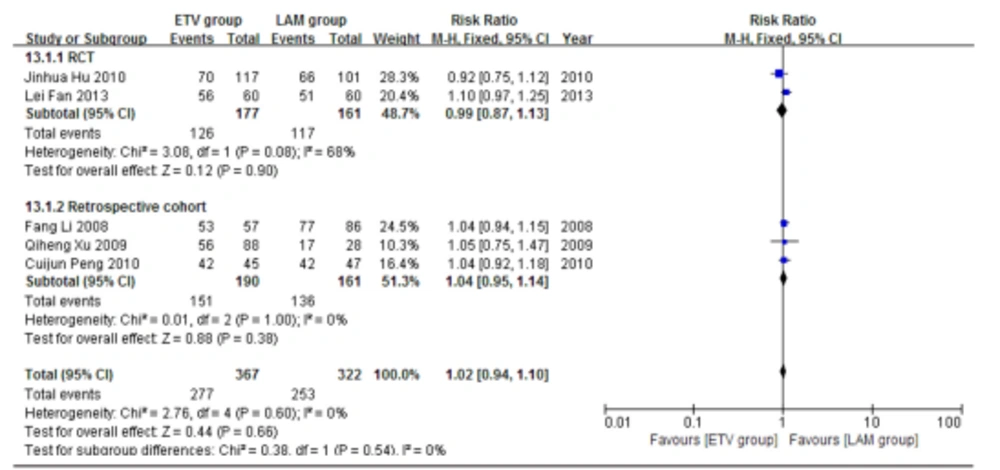
Comparing 24 Weeks Survival Between ETV and LAM Treatment Groups
4.3. Comparing TBIL, PTA and HBV DNA Negative Change Rates Between ETV and LAM Treatment Groups
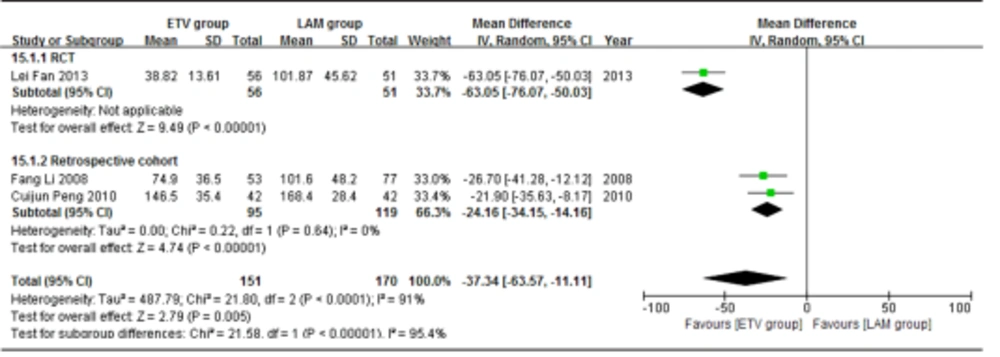
Comparing 24 Weeks TBIL Levels Between ETV and LAM Treatment Groups
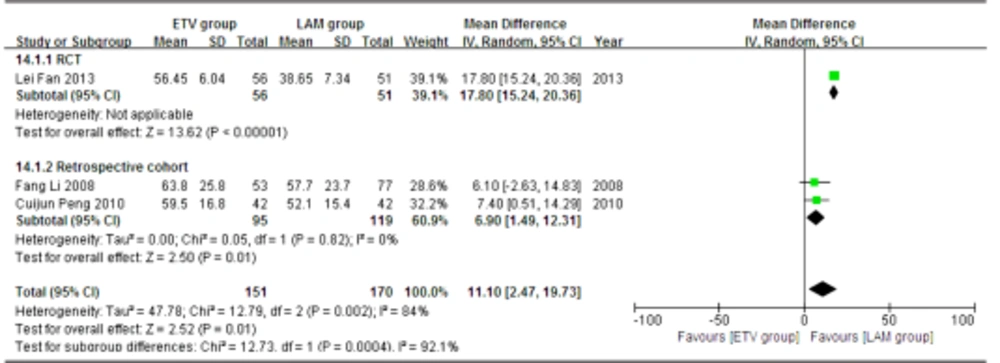
Comparing 24 Weeks PTA Levels Between ETV and LAM Treatment Groups
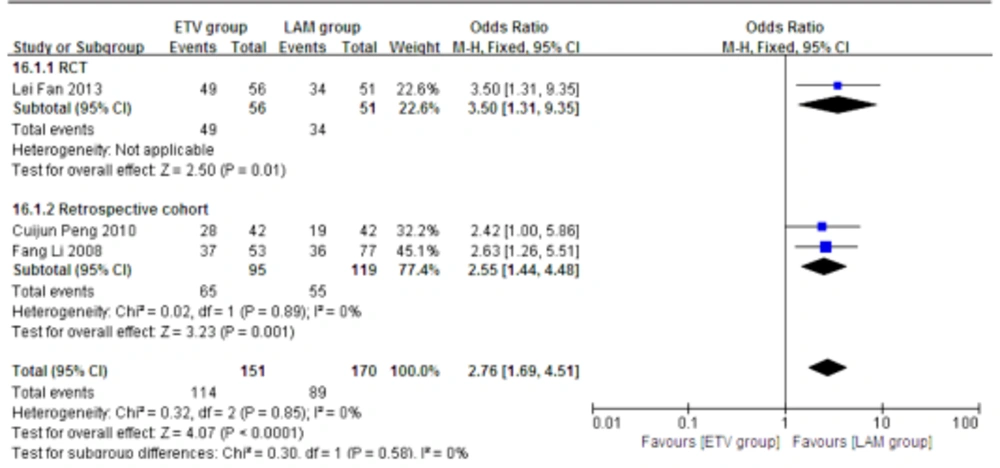
Comparing 24 Weeks HBV DNA Negative Rates Between ETV and LAM Treatment Groups
4.4. Safety
4.5. Sensitivity Analysis
4.6. Publication Bias
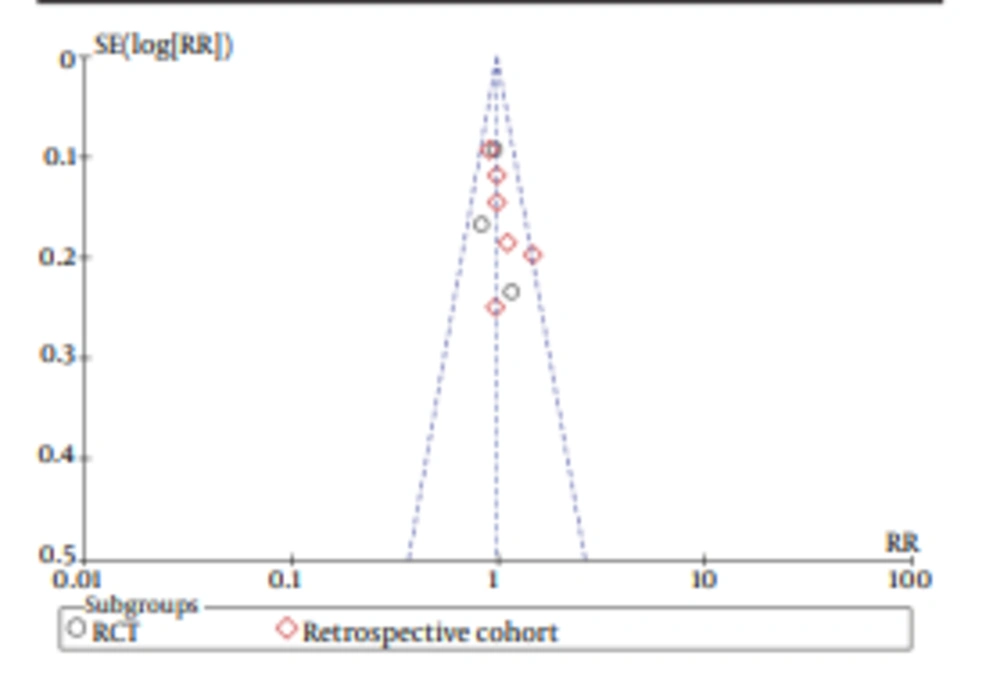
Funnel Plots for Studies Evaluating Twelve Weeks Survival.
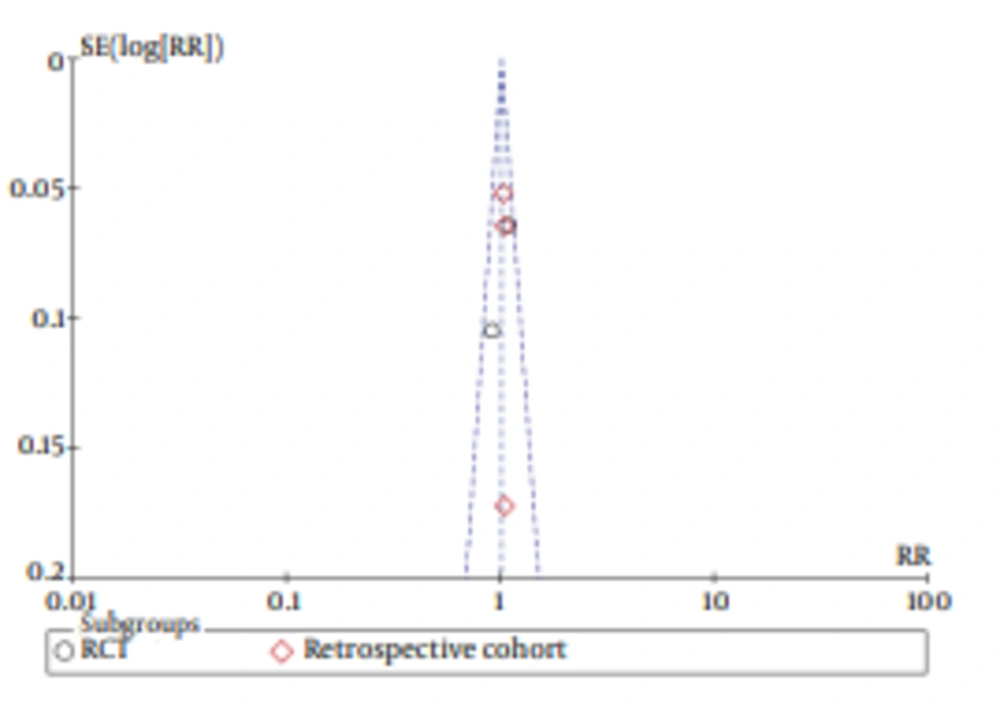
Funnel Plots for Studies Evaluating 24 Weeks Survival
