
Reporting Quality Assessment of Randomized Controlled Trials Published in Hepatitis Monthly

Authors

Alireza Karambakhsh1, Alireza Mehrazmay1, Mahmood SalesiMahmood Salesi ORCID2,*
1Behavioral Sciences Research Center, Baqiyatallah University of Medical Sciences, Tehran, IR Iran
2Research Center for Prevention of Oral and Dental Diseases, Baqiyatallah University of Medical Sciences, Tehran, IR Iran
*Corresponding Author: Mahmood Salesi, Research Center for Prevention of Oral and Dental Diseases, Baqiyatallah University of Medical Sciences, Tehran, IR Iran. Tel/Fax: +98-9196805469, E-mail: Email: [email protected]

Hepatitis Monthly:Vol. 16, issue 6; e58752
Published online:Jun 12, 2016
Article type:Letter
Received:Dec 23, 2015
Accepted:Apr 16, 2016
How to Cite:Karambakhsh A, Mehrazmay A, Salesi M. Reporting Quality Assessment of Randomized Controlled Trials Published in Hepatitis Monthly. Hepat Mon. 2016;16(6):e58752. doi: https://doi.org/10.5812/hepatmon.35736

Dear Editor,
It is important that randomized clinical trials (RCTs), as the most valuable research method for assessing the efficacy of treatments, are reported with the highest possible level of quality (1). To evaluate the quality of published RCTs reported in Hepatitis monthly, we examined whether there was a change in the quality of reporting over time. Of the 610 articles published from 2010 to 2014, 583 non-trial or non-human trials were screened, and 27 trials were identified. Within these 27 trials, ten reports were without a control group and failed to meet our eligibility criteria. Therefore, 17 RCTs were identified. We completed a comprehensive quality assessment of each report using the short form of the CONSORT 2010 checklist (www.consort-statement.org) and a five-point quality assessment instrument called the Jadad scale (2).
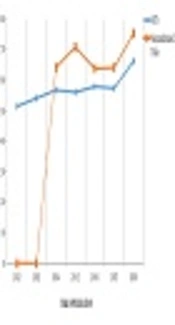
According to the Jadad score, the items including randomized, method of randomization, blinding, method of blinding, and dropouts/withdrawal of the Jadad scale were reported in 82.4%, 70.6%, 47%, 47%, and 94.1% of RCTs, respectively. According to this scale, the quality score of reporting was 3, 2.67, 3, 3.25, and 5 in the years 2010, 2011, 2012, 2013, and 2014, respectively, showing a decrease in 2011 with an increase in quality of reporting thereafter. However, according to the CONSORT checklist, only two studies earned full points. The quality reporting score was 5, 5, 5.75, 6, and 5.67, in the years 2010, 2011, 2012, 2013, and 2014, respectively. The 12 RCTs submitted from Iran demonstrated higher quality than the others (Table 1).
Table 1.
Randomized Controlled Trials Published in Hepatitis Monthly, According to the Year of Publication
Controlled TrialsYears20102011201220132014TotalCountry
IranOther
n3344317125
Jadad scaleMean score32.6733.2554.073.53
CONSORT statementMean of number of appropriate reported items555.7565.675.485.755
In conclusion, in this assessment, we observed moderate quality scores in the reports of this journal. Training courses for reviewers, editorial use of standard reporting tools such as the CONSORT 2010 Statement, and consultation with methodologists can improve the quality of published RCTs.
Acknowledgments

Footnotes

  • Authors’ Contribution:Alireza Karambakhsh and Alireza Mehrazmay contributed to data extraction, analysis, and interpretation of the data in the article. Mahmood Salesi contributed to critical revision and final approval of the study.

References

  • 1.
    Begg C, Cho M, Eastwood S, Horton R, Moher D, Olkin I, et al. Improving the quality of reporting of randomized controlled trials. The CONSORT statement. JAMA. 1996;276(8):637-9. [PubMed ID: 8773637].
  • 2.
    Martyn-St James M, Carroll S. Meta-analysis of walking for preservation of bone mineral density in postmenopausal women. Bone. 2008;43(3):521-31. [PubMed ID: 18602880]. https://doi.org/10.1016/j.bone.2008.05.012.

Copyright

Copyright © 2016, Kowsar Corp. This is an open-access article distributed under the terms of the Creative Commons Attribution-NonCommercial 4.0 International License (http://creativecommons.org/licenses/by-nc/4.0/) which permits copy and redistribute the material just in noncommercial usages, provided the original work is properly cited.

Similar Articles

1
Jul
2015

Reporting Quality Assessment of Randomized Controlled Trials Published in Nephrology Urology Monthly Journal

Alireza Mehrazmay,
Alireza Karambakhsh,
Mahmood Salesi

Mehrazmay A, Karambakhsh A, Salesi M. Reporting Quality Assessment of Randomized Controlled Trials Published in Nephrology Urology Monthly Journal. Nephro-Urol Mon. 2015;7(4):e58774. doi: https://doi.org/10.5812/numonthly.28752

1
Jan
1970

The Quality of the Reporting of Randomized Controlled Trials after CONSORT Statement in the Prestigious Journals

Jamal Ahmadzadeh,
Shahab Rezaeian,
Kazhal Mobaraki

Ahmadzadeh J, Rezaeian S, Mobaraki K. The Quality of the Reporting of Randomized Controlled Trials after CONSORT Statement in the Prestigious Journals. Shiraz E-Med J. 1970;14(2):130-138. doi:

9
Mar
2019
Evaluation of Experimental Studies Published in the Jundishapur Journal of Chronic Disease Care: A Brief Report

Evaluation of Experimental Studies Published in the Jundishapur Journal of Chronic Disease Care: A Brief Report

Kourosh Zarea,
Shahnaz Rostami,
Mahin Gheibizadeh,
Leila Roohi Balasi,
Pouran Tavakoli,
Samira Beiranvand

Zarea K, Rostami S, Gheibizadeh M, Roohi Balasi L, Tavakoli P, et al. Evaluation of Experimental Studies Published in the Jundishapur Journal of Chronic Disease Care: A Brief Report. Jundishapur J Chronic Dis Care. 2019;8(2):e84757. doi: https://doi.org/10.5812/jjcdc.84757

17
Mar
2013

Criteria to Assess a Randomized Controlled Pilot Study: Response to Letter

Sonia Oveisi

Oveisi S. Criteria to Assess a Randomized Controlled Pilot Study: Response to Letter. Hepat Mon. 2013;13(4):e10867. doi: https://doi.org/10.5812/hepatmon.10867

11
Apr
2009

Randomized Controlled Trials As Sources Of Information In Evidence Based Medicine

Seed Amir Mohsen Rezaiee

Rezaiee SAM. Randomized Controlled Trials As Sources Of Information In Evidence Based Medicine. J Med Edu. 2003;2(2):e105010. doi: https://doi.org/10.22037/jme.v2i2.884

More by these authors

Alireza KarambakhshPubMedScholar
Alireza MehrazmayPubMedScholar
Mahmood SalesiPubMedScholar
Share
Cited by
Metrics