An increase in the T/DHT ratio is a biochemical marker broadly used in clinical settings to diagnose 5ARD2. There have been many studies elaborating the role of the T/DHT ratio in diagnosing 5ARD2; however, some have reported conflicting results (
14,
19,
26) due to false-negative responses or variations in determining cutoff values. Bertelloni et al. (
27) reported that the T/DHT ratio was more profound after the hCG test. Variable cutoff values of the T/DHT ratio have yielded a wide range of sensitivity and specificity in 5ARD2 diagnosis. Despite these issues, the T/DHT ratio is mainly employed in clinical practice.
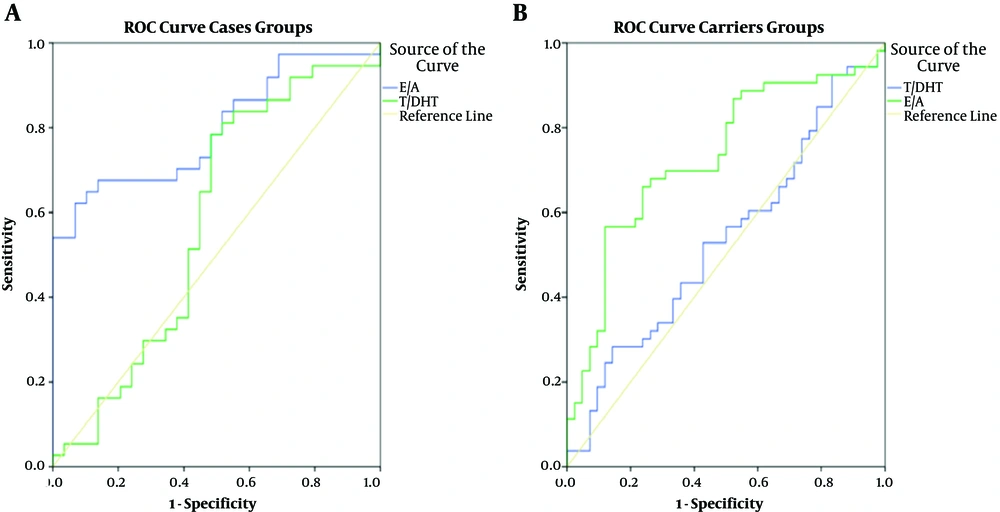
The accuracy of the T/DHT ratio obtained in this study was beyond our expectations (
Tables 1 and
2, and
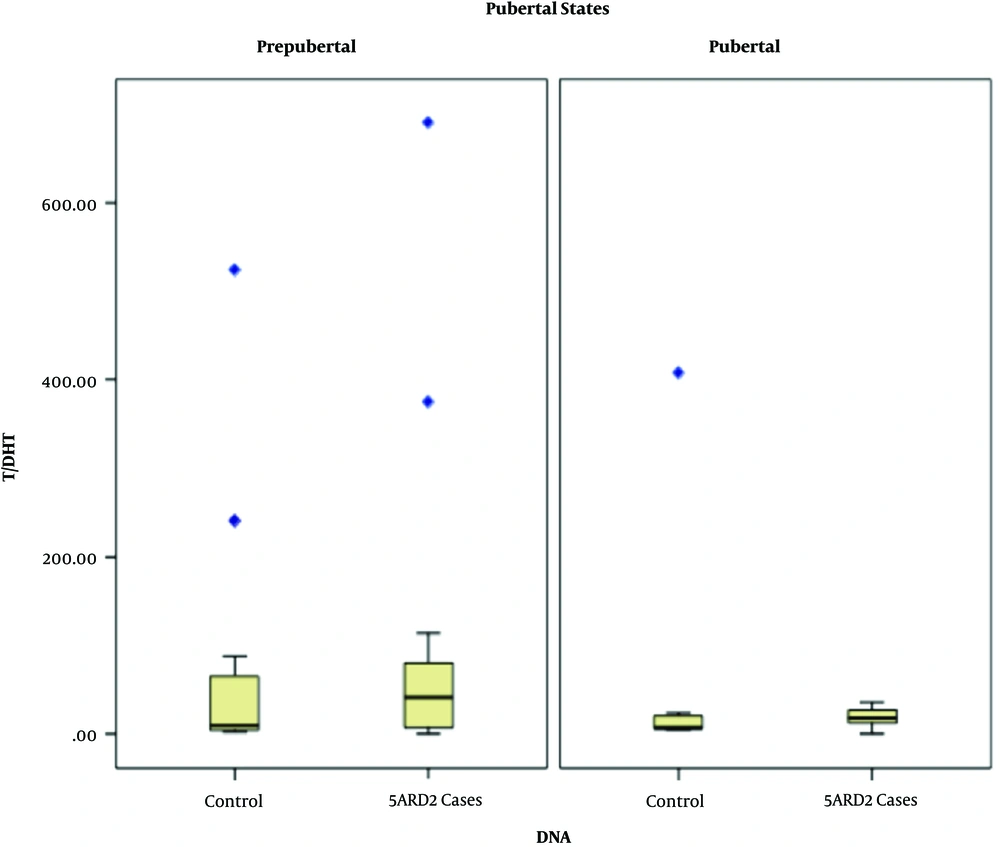
Figure 1). First, we considered that not performing the hCG stimulation test for all prepubertal patients was the cause of this result. However, after analyzing the ratio separately by pubertal stage, the result was similar (
Figure 2). In contrast, the urinary Et/An ratio revealed promising results. The urinary Et/An ratio is the only test available for assessing the urinary 5β/5α steroid metabolite ratio in Indonesia. Despite the low sensitivity of this ratio in detecting 5ARD2 patients and carriers, having this result may add evidence to implement the ratio in clinical practice, especially if molecular diagnostic services are not accessible.
Since we did not have any reference values for our normal individuals, we applied cutoff values, which were determined by a linear graph of sensitivity and specificity from the ROC curve data. Using these cutoff values for detecting 5ARD2 patients (≥ 0.95) and carriers (≥ 0.99), the sensitivity and specificity of the urinary Et/An ratio for diagnosing patients were 67.57% and 86.2%, respectively, while for diagnosing carriers, the sensitivity was 67.92% and the specificity was 73.81%. These results were lower than those in other published studies (
19,
21,
28). This discrepancy may have been caused by different study methods, the severity of the cases included, and lack of controls in the studies. Twelve of the 16 5ARD2 patients reported by Chan et al. (
19) carried deteriorating mutations in both alleles. Meanwhile, in Lucas-Herald et al.’s report (
21), only two 5ARD2 patients, who lacked data on molecular defects, were detected among 84 patients. Approximately half of the cases in our series were mild (17 out of 37), which may have led to equivocal hormonal results (
18). This might also explain the insignificant difference in cutoff values of the ratios for detecting patients and carriers. The p.Val89Leu variation in the
SRD5A2 gene is considered a polymorphism because it is also detected in normal individuals. However, several studies have reported its specific characteristics, which could decrease enzymatic activity by 30% (
9,
29,
30), and further reduction may occur if it is combined with other damaging
SRD5A2 gene mutations.
In diagnosing 5ARD2, we proposed to use cutoff values of the urinary Et/An ratio based on the diagnostic value calculated in
Table 3 instead of the reference values. Considering the influence of ethnic background on urinary metabolite ratios (
31), we used the reference value determined by Chan et al. (
19) to make a comparison with our results, as our patients were Asian. Using the cutoffs determined in this study, the sensitivity and accuracy of the test yielded better results.
The urinary Et/An ratio showed interesting results. Although the diagnostic value did not appear sufficiently convincing, we believe this may lead to a more obvious path in diagnosing carriers, especially when other 5β/5α steroid metabolite ratios are added. This study added informative data with cutoffs of the metabolite ratio, which may be implemented in clinical settings. To date, there have been no tests that can determine 5ARD2 carriers, except USP and molecular analysis. Since molecular analysis is not available in most regions in our country and still considered costly, the urinary Et/An ratio is an alternative test in detecting more patients and carriers and may contribute to genetic counseling of 5ARD2 patients.