
1. Background
Patients with diabetes need permanent self-care (1). These patients have to cope with the disease throughout their whole life, affecting many aspects of their lives. Therefore, parents have an important responsibility in children’s self-care and taking care of them from the beginning of the diagnosis (1).
Development of a chronic disease in children confronts parents with great stress which has a negative effect on their quality of life (2, 3). Mothers interact more with their children and thus bear the greatest impact thereby experiencing more stress (4). This stress can affect their health and that of all family members, necessitating proper management (5).
From Lazarus and Folkman’s point of view, a stressor alone cannot predict or cause physical or mental diseases, but how the stressor is assessed depends on their individual perceptions. Therefore, studying perceptions of individuals is a necessary step to determine the impact of stress in the process of designing educational interventions, and health researchers should apply an effective model in this regard (6).
The transactional model of stress and coping is one of the most comprehensive frameworks for stressors. This model is a structure for evaluating the process of coping with stressful events, which includes the following components:
Primary appraisal (individual analysis of threatening factors and losses), secondary appraisal (individual analysis of ability to change stressful situations and management of emotional responses), coping strategies (cognitive and behavioral efforts to manage or reduce stress), moderators (including three aspects: information seeking, optimism, and social support), and coping outcome (the results of a person’s coping with a stressful situation, and behavioral functions) (7). Several studies have indicated that there is a significant difference between the perceived stress in mothers of children with type 1 diabetes and mothers of healthy children. However, in this study, mother’s perceptions and effects of other constructs of the model on the behavioral or mental health of mothers were not mentioned (1, 8).
Few studies in the world have focused on stress and coping of mothers with a sick child, especially children with diabetes. Also, the transactional model of stress and coping has not been fully utilized in this regard. The unknowns about mothers’ perceptions, coping strategies, optimism, social support, etc., and the impact of these variables on the behavioral function of mothers necessitate a study in this regard. Since mothers’ behaviors have a great impact on the health and self-care of children with type 1 diabetes (3, 9).
2. Objectives
Thus, this study aimed to investigate the factors associated with behavioral functions in mothers of children with type 1 diabetes mellitus based on transactional stress and coping model.
3. Methods
3.1. Measures
The questionnaire of this study was designed in three sections: the first part contained demographic characteristics such as parents’ age and education, the child’s age, etc. The second part included questions related to the constructs of the transactional model, designed by the research team with confirmed validity and reliability. The third part included questions about health promotion behaviors, the HPLPII scale, designed by Walker et al. was used.
First, an extensive library search and literature review was conducted. Then, based on the scales associated with the topic (7, 10-12), a questionnaire was developed for model constructs. In order to assess the face validity via a qualitative method, 10 mothers were individually interviewed in terms of difficulty of questions, relevancy, and ambiguity, and their views were then used to edit the questions. In the next step, through the quantitative method, the impact score was used and 10 subjects were asked about the importance of each item whose results were recorded. The impact score of all items was higher than 1.5 (13).
The content validity index (CVI) and content validity rate (CVR) were used in the quantitative method of assessing the content validity. To assess CVR, the questionnaire and a checklist were given to 10 expert faculty members and they were asked to score each item based on a three-point Likert scale (necessary, useful but not necessary, and not necessary). According to the Lawshe’s table, to determine the minimum CVR value, a CVR of > 0.62 was recorded (12, 13).
The stability was evaluated by a test-retest method. The intra-class correlation coefficient was reported to be 0.99 based on a single measurement with two-way mixed model for the test as a whole and between 0.84 to 0.98 for the different sections (14).
Finally, the instrument was finalized with 50 questions including the following constructs: primary appraisal (6 questions), secondary appraisal (8 questions), problem-focused coping (8 questions), emotion-focused coping (7 questions), meaning-based coping (6 questions), information seeking (4 questions), and optimism (5 questions), and social support (6 questions) was distributed among 180 mothers of children with type 1 diabetes. The answer to each question was scored based on a 5-point Likert scale (from “not at all” = 1, to “always” = 5) and a separate score was calculated by the sum of scores for each construct.
The third part of the questionnaire included questions about health promotion behaviors. For this purpose, the HPLPII scale was used. The Persian version of this questionnaire was revised and validated by Mohammadi Zeidi et al. (15). This scale has 6 dimensions and in this study, three dimensions of health responsibility (9 questions), interpersonal relationships (9 questions), and stress management (8 questions) were used (15).
3.2. Participants and Procedure
The study population consisted of all mothers of children with type 1 diabetes who were members of the Diabetes Association of Karaj and Endocrinology and Metabolism Research Centre of Tehran in 2017.
Using G power software with 99% confidence and 90% power to reach 20% for R-square and 20 independent variables for predicting the dependent variable (mothers’ behaviors) in the linear regression method, 175 samples were required to conduct the study.
The sample size was calculated proportional to the population covered by each center. Then, the researcher referred to the centers and selected them according to the inclusion criteria of the study through the convenience sampling method. After thorough explanation of the research title and objectives to the participants, the researcher asked them to complete the questionnaires. The inclusion criteria for this study were having a child with type 1 diabetes, diagnosed since at least for one year and consent for participating in the study. The exclusion criteria were reluctance to respond to the questionnaire and a positive history of depression and psychological distress.
3.3. Data Analysis
The data were analyzed using SPSS software (version 19), through Pearson correlation coefficient, independent t-test, one-way ANOVA, and linear regression. The significance level was considered as P < 0.05.
4. Results
The mean ± SD age of mothers, fathers, and children was 38.69 ± 6.4, 44.38 ± 6.2, and 11.12 ± 2.8 years, respectively. Further, 67.8% of the children were the first child of the family and 62.2% were girls. The mean ± SD age of diagnosis of diabetes in children was 7.03 ± 2.7 years. The mean ± SD interval between the parents’ marriage and the child’s birth was 5.4 ± 3.6 years. Also, 80% of the mothers were housewives and 41.7% of the fathers had a freelance job. Considering education, 43.3% of mothers and 42.8% of fathers had diploma. Most mothers (35.6%) with academic degree had studied accounting-management while most fathers (31.6%) with academic degree had studied engineering. Also, most mothers (43.3%) had a family income of 20 - 30 million IRR per month.
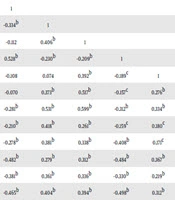
To examine the relationship between the model constructs, Pearson correlation coefficient was used. According to Table 1, it was found that the relationship between the primary appraisal and problem-focused coping (r = -0.112, P = 0.136), meaning-based coping ( = 0.108, P = 0.149) and information seeking (r = -0.070, P = 0.352), as well as the relationship between the secondary appraisal and the meaning-based coping structures (r = 0.074, P = 0.324), were not statistically significant, but other structures had a significant relationship (P < 0.05).
Table 1.
Pearson’s Correlation Coefficients for the Constructs of Transactional Model of Stress and Copinga
| Primary Appraisal | Secondary Appraisal | Problem-Focused Coping | Emotion-Focused Coping | Meaning-Based Coping | Information Seeking | Optimism | Social Support | Interpersonal Relationships | Health Responsibility | Stress Management | Total Behavior Scale | Values | |
|---|---|---|---|---|---|---|---|---|---|---|---|---|---|
| 1 | 1 | 12.22 ± 5.8 | |||||||||||
| 2 | -0.334b | 1 | 20.51 ± 5.2 | ||||||||||
| 3 | -0.112 | 0.406b | 1 | 22.11 ± 5.4 | |||||||||
| 4 | 0.528b | -0.230b | -0.209b | 1 | 10.66 ± 3.9 | ||||||||
| 5 | -0.108 | 0.074 | 0.392b | -0.189c | 1 | 14.08 ± 4.3 | |||||||
| 6 | -0.070 | 0.373b | 0.517b | -0.157c | 0.276b | 1 | 12.75 ± 2.9 | ||||||
| 7 | -0.281b | 0.531b | 0.599b | -0.312b | 0.334b | 0.526b | 1 | 14.28 ± 4.4 | |||||
| 8 | -0.210b | 0.418b | 0.261b | -0.159c | 0.180c | 0.300b | 0.494b | 1 | 12.14 ± 5.1 | ||||
| 9 | -0.278b | 0.381b | 0.338b | -0.408b | 0.171c | 0.389 b | 0.434b | 0.549b | 1 | 13.80 ± 4.4 | |||
| 10 | -0.482b | 0.279b | 0.312b | -0.484b | 0.367b | 0.333b | 0.391b | 0.301b | 0.504b | 1 | 12.74 ± 5.3 | ||
| 11 | -0.381b | 0.361b | 0.336b | -0.330b | 0.219b | 0.340b | 0.408b | 0.309b | 0.596b | 0.517b | 1 | 9.58 ± 4.2 | |
| 12 | -0.465b | 0.404b | 0.394b | -0.498b | 0.312b | 0.424b | 0.493b | 0.460b | 0.830b | 0.838b | 0.825b | 1 | 36.13 ± 11.6 |
aValues are expressed as mean ± SD.
bCorrelation is significant at the 0.01 level (2-tailed).
cCorrelation is significant at the 0.05 level (2-tailed).
The mean ± SD total score of behavior was significantly higher among working mothers than housewife mothers (41.25 ± 13.89 vs. 34.85 ± 10.65, P = 0.013). The interval between parents’ marriage and the child birth had a significant negative correlation with mother’s behavior (r = -0.154, P = 0.039). Mothers with doctorate degree had a higher mean score of behavior than those with secondary school education (49.29 ± 7.91 vs. 32.60 ± 10.01, P = 0.001). Also, the best status of maternal health promotion behaviors was observed in fathers with master’s degree compared to the fathers with primary school education (43.21 ± 8.75 vs. 21.40 ± 11.72, P = 0.001). In mothers with an academic degree, the best status of health promotion behaviors was in mothers studying medical-health sciences, compared to accounting-management (45.91 ± 10.44 vs. 32.23 ± 10.19, P = 0.002).
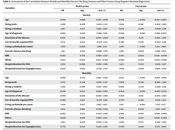
To examine the predictors of mothers’ behavior as coping outcomes, variables which had a significant relationship (mother’s job, the interval between parents’ marriage until child’s birth, mother and father’s educational level, mother’s field of study, and model constructs), were introduced into the regression model step by step (Table 2). In the regression model R-square accounts for 53.7% of the variance.
Table 2.
Stepwise Multiple Regression Analysis Examining Factors Related to Mothers’ Behavior (Coping Outcomes)
| Model | Coefficients | P Value | 95% CI | |
|---|---|---|---|---|
| B | Lower Bound | Upper Bound | ||
| Constant | 27.45 | 0.0001 | 19.74 | 33.81 |
| Mother education (Master/PhD) | 6.40 | 0.024 | 3.39 | 10.91 |
| Emotion-focused coping | -0.74 | 0.0001 | -1.09 | -0.38 |
| Social support | 0.64 | 0.0001 | 0.39 | 0.89 |
| Seeking information | 1.10 | 0.0001 | 0.68 | 1.52 |
| Primary appraisal | -0.44 | 0.0001 | -0.68 | -0.19 |
Collinearity increased with the increase of variables in the model and the decrease in the number of observations, and in our data set, with condition index values between 1 and 15.52 the collinearity was classified as weak (16).
5. Discussion
This study investigated the constructs of the transactional model of stress and coping and their association in mothers of children with type 1 diabetes in Karaj and Tehran (Iran). Regarding the primary appraisal, mothers earned almost half of the maximum score, suggesting medium levels of vulnerability as well as physical and mental imbalance in them.
A number of studies have indicated that mothers of children with type 1 diabetes have worry and fear of the disease complications and these feelings are common among mothers (2, 3), which are consistent with the results of the present study.
Based on our findings, the secondary appraisal structures, mothers had almost a high score, which signifies high understanding and ability to accept events change in situations, control negative emotions, and high self-efficacy. This result reveals a better state than the study by Mazloomy Mahmoodabad et al. (17) about teachers’ job stress in Yazd (Iran). The reason for this difference can be attributed to the increased responsibility of mothers for their child and their efforts to control their negative emotions, and to understand their ability to manage situations better.
Relating to coping strategies, the higher mean score of problem- than emotion-focused strategies in the present study suggested that mothers try to change and improve their stress level. In studies by Whittemore et al. (3), Matsuo and Sato (18) and Sullivan-Bolyai et al. (19), the findings are in line with the results of the present study. Mothers used problem-focused coping approaches more than emotional-focused approaches concerning their child’s disease.
Regarding the information-seeking construct, in this study, mothers had a favorable condition, indicating that the majority of them looked for more information about their child’s disease and learn the details of care which is consistent with the study by Matsuo and Sato (18). In this study, the mothers’ optimism was relatively favorable, and the result was in line with the findings of Faulkner in mothers of children with type 1 diabetes (18, 20).
Considering the social support construct in this study, participants earned almost half the maximum score, suggesting that they received average support from family members and friends as well as social and health systems for controlling their child’s disease, which is consistent with the findings of studies by Edmonds-Myles et al. (21) and Bowes et al. (22). However, in the study by Matsuo and Sato (18), mothers perceived more social support than the present study. This difference can be due to the difference in children’s diseases between the two studies, and definitely, better and more advanced health systems in Japan, which provide better support for patients and their families, as 61% of the perceived social support was provided by community health systems in their study.
In the present study, the primary appraisal construct had a negative impact on coping outcomes (behaviors), showing that the more the mothers considered themselves vulnerable to their child’s disease and regarded the events more stressful, the worse their health-related behaviors would be. Hassall et al. (23) studied parents of children with intellectual disabilities and concluded that cognitive assessments are associated with stress and parental behaviors which could also affect the child behaviors. In the study of Kovacs et al. (24), it was reported that mothers who believed that having a child with diabetes and controlling the disease was more difficult, suffered from higher levels of psychological distress. The findings of the study by Mazloomy Mahmoodabad et al. (17) on teachers’ job stress, and Gill and Loh (25) on new primiparous mothers are in agreement with the results of the present study.
In the regression model of the present study, use of emotion-focused coping approaches had a negative correlation with the coping outcomes. In the study of Matsuo and Sato (18), similar to our findings, it was found that greater use of problem-focused and efficient coping methods was associated with better health-related behaviors, and those who used emotion-focused coping approaches had more unhealthy behaviors.
Based on our findings, information seeking had a positive effect on maternal behaviors, which is consistent with the findings of the study by Matsuo and Sato (18) and Mazloomy Mahmoodabad et al. (17). These results indicate that obtaining more information about a stressful event will improve both the coping outcomes and healthy behaviors. The lack of information and unknowns can undermine the process and coping outcome through difficult and unrealistic evaluation of the degree of the threat (6).
Self-report of information and unwillingness of some mothers to respond to questions about their child’s disease were the main limitations of this study.
5.1. Conclusions
The results of this study suggested that the transactional model of stress and coping is an appropriate framework for explaining the health-related outcomes for mothers of children with type 1 diabetes. Based on the findings of regression analysis, mothers’ attempts to improve understanding of diabetes and reduce their vulnerability, receiving training to use coping strategies for better management of conditions, increasing information on proper disease control, and inter-sectoral interventions for attracting sufficient (emotional, financial, therapeutic, etc.) support from patients’ families can be hopeful in improving mothers’ function and health.