1. Introduction
Pathological adnexal masses (not including physiological corpus luteal cysts during the first 14 weeks of gestation) are noted in 1% - 2% of pregnancies, and 11% of these are endometriomas (1). Concurrent with routine usage of transvaginal ultrasound during the first trimester, ovarian mass detection during pregnancy is not uncommon. This often poses a diagnostic challenge. Decidualization is a process that occurs during pregnancy induced mainly by progesterone, which causes hypertrophy of the endometrial stromal cells and eventual formation of the highly vascular decidual lining of the gravid uterus (2). Pregnant women with endometriosis undergo a similar process within the endometriotic foci, which consist of ectopic stromal endometrial cells. These cells are also stimulated by hormones causing the production of solid highly vascular nodules within the endometriotic foci. Decidualized tissue can increase in size during pregnancy whilst producing a gross and sonographic appearance mimicking malignancy (3). The usage of magnetic resonance imaging (MRI) in pregnancy to assist in further characterization of adnexal masses is now increasingly common and has developed due to the improvement in sequences allowing accelerated acquisition during a single breath hold and overall enhancement of imaging quality (4). We hereby present a case of a decidualized endometrial cyst that grew during the first trimester of pregnancy requiring surgical intervention with further discussions on the sonographic and MRI findings. In our literature search, only a small number of case reports have been mentioned that describe the imaging characteristics of these cystic lesions (3, 5-9).
2. Case Presentation
A 22-year-old gravida 1, para 0 woman was initially found to have a 5 cm left hemorrhagic ovarian cyst containing both cystic and solid components with internal echoes (Figure 1), following which an elective surgery was scheduled for the patient. However, two days prior to the surgery she had a positive pregnancy test and the surgery was cancelled. The elective surgery was rebooked for a later date to avoid the risk of miscarriage, as this was a wanted pregnancy. Serial first trimester follow up sonograms were subsequently performed.
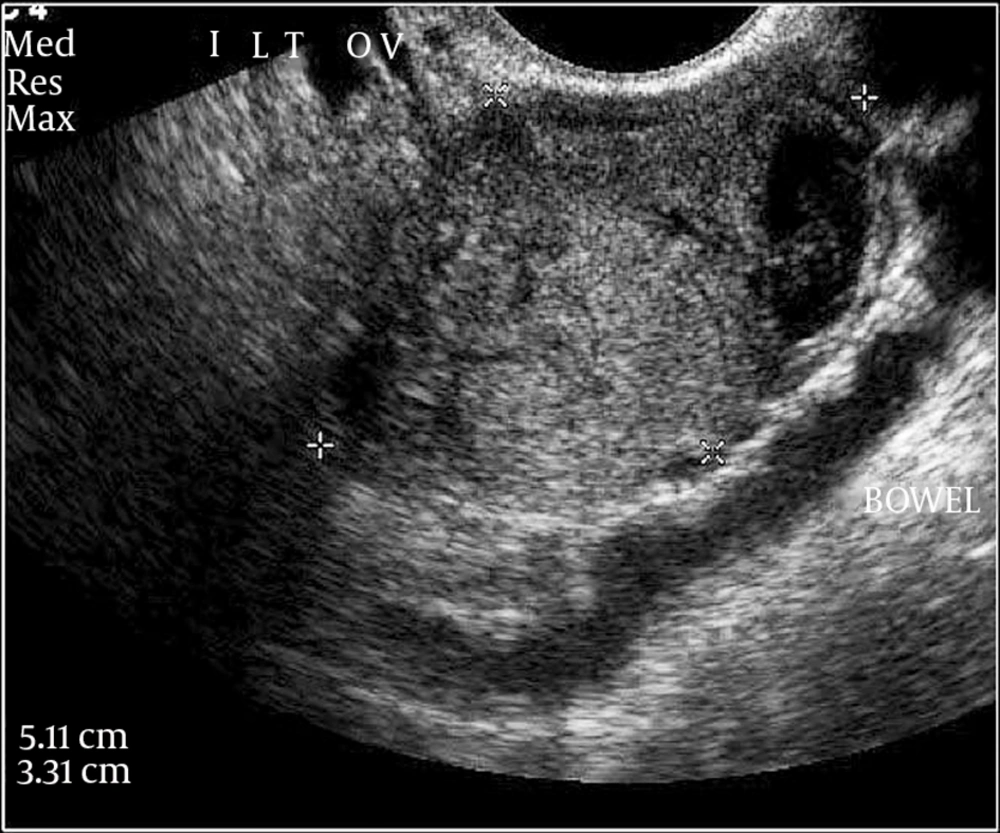
Figure 1.
A 22-year-old gravida 1, para 0 woman with a left hemorrhagic ovarian cyst. Prepregnancy transvaginal ultrasound shows a 5 cm well-defined left-sided complex adnexal mass with thick walls, regular margins of mixed solid and cystic components with low-level internal echoes. No internal septations and no ascites was noted. A normal appearing left ovary is not seen separate from this mass. Diagnosis of hemorrhagic ovarian cyst was initially made.
At 12 weeks gestation, the patient presented to the emergency department with acute abdominal pain. Transabdominal and transvaginal ultrasound demonstrated enlargement in diameter of the left ovarian cyst to 12 cm with diffuse low-level internal echoes and a mural nodule with solid, lobulated appearance as well as marked increased vascularity on color Doppler (Figure 2). Sonographic appearances were suspicious for a malignant lesion. MRI was then performed using a 1.5 T superconducting magnet (twin gradient, Signa HDX; GE Healthcare, Milwaukee, WI). Gadolinium was not administered due to pregnancy and the potential risk of teratogenic effect on the fetus. The MRI showed a large cystic blood containing left adnexal mass, which demonstrated high signal intensity on T1-weighted images and fat saturation imaging. It was causing mass effect with displacement of the bladder and uterus anteriorly. There was a focal mural nodularity of the cyst wall at the anterosuperior aspect with similar signal intensity to the adjacent decidualized endometrium of the gravid uterus on T2-weighted sequences (Figure 3). There was also a hemorrhagic cyst at the right posterolateral aspect of the large lesion with T2 shading (Figure 4). The serum cancer antigen (CA-125) was 28 U/mL (normal, < 35 U/mL) and this remained unchanged in subsequent assessments. Based on these findings, decidualized ovarian endometrioma was considered to be the more likely diagnosis than ovarian cancer. Decision for expectant conservative management was made and the patient was discharged.
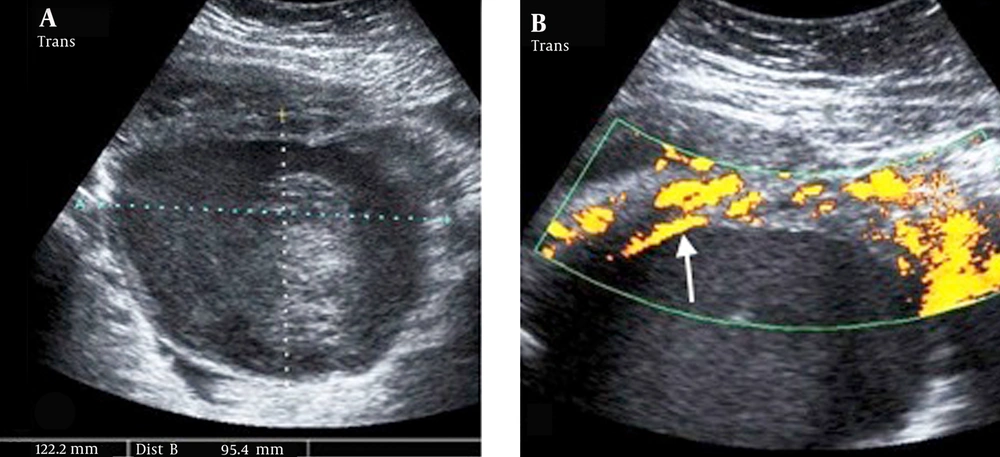
Figure 2.
A, Follow up ultrasound at 12 weeks gestation showed that the left adnexal mass grew to 12 cm. B, Internal papillary excrescences that are smoothly lobulated mural nodules with prominent internal vascularity on color and spectral Doppler images are noted (arrow).
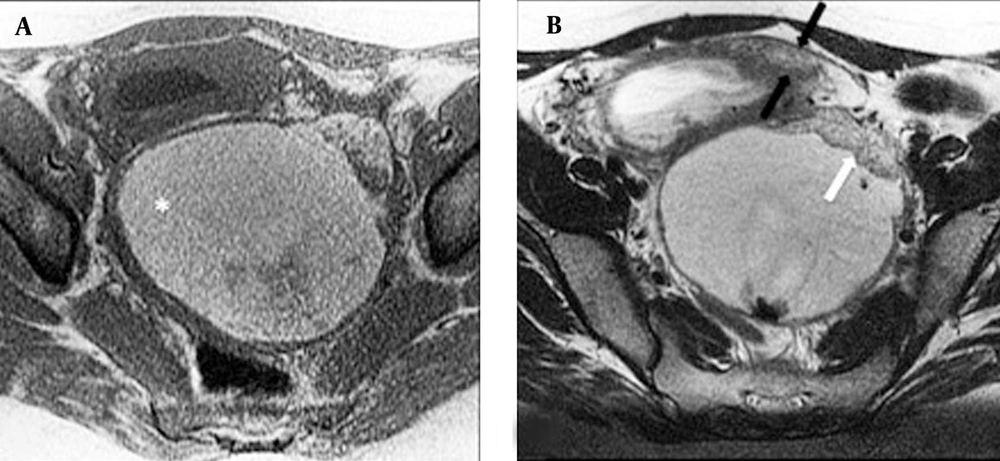
Figure 3.
A, Axial T1-weighted MR image shows the fluid within the cystic part of the mass. It is of high T1 signal intensity (asterisk) and does not suppress with fat suppression and is consistent with blood. B, Axial T2-weighted MR image shows the solid mural nodularity of the cyst wall at the anterosuperior aspect (white arrow). It is strikingly similar to the decidualized endometrium (between black arrows) of the gravid uterus, both with respect to signal intensity and texture.
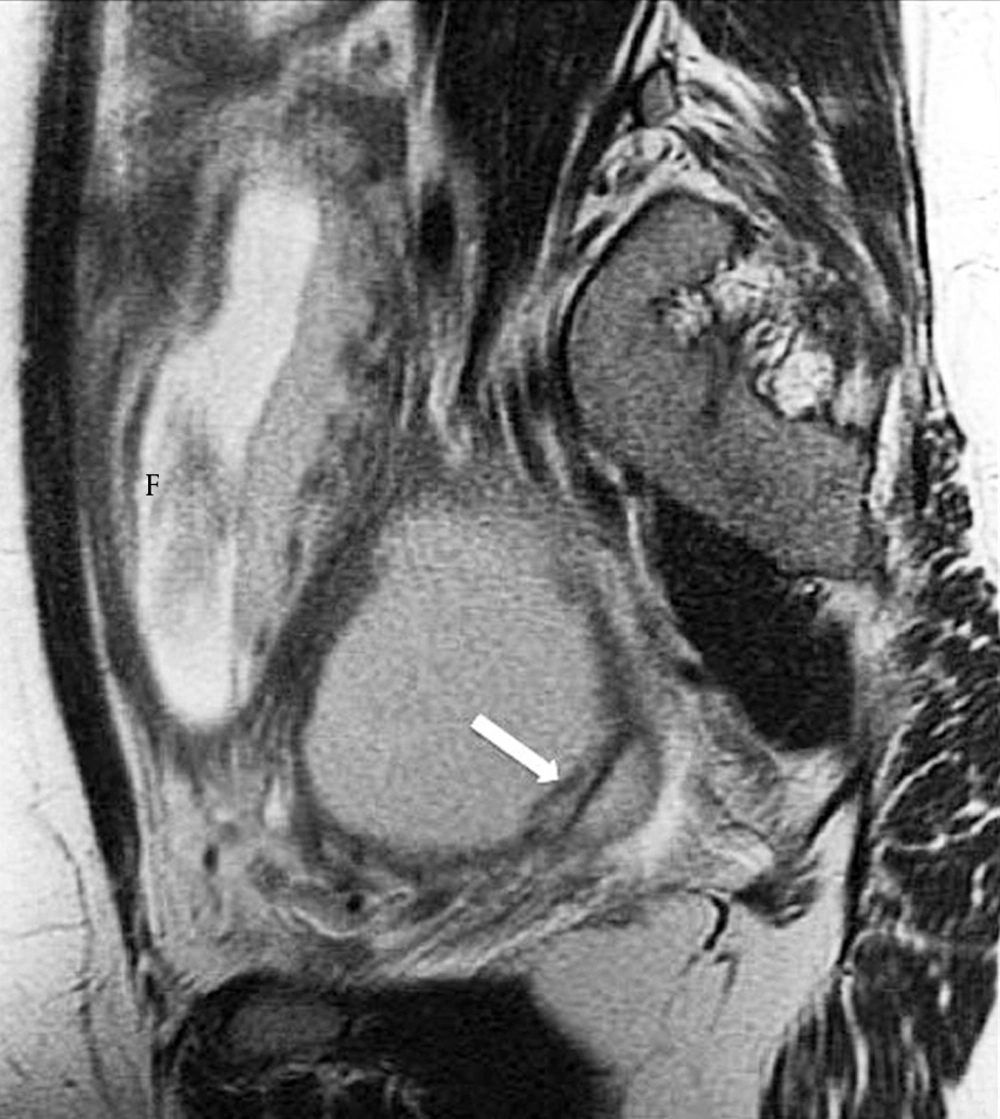
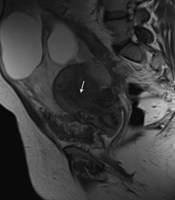
Figure 4.
Sagittal T2-weighted image demonstrates a unilocular hemorrhagic cyst (arrow) at the posterolateral aspect of the large, dominant cystic mass with reduced T2 signal intensity (“T2 shading”). An intrauterine fetus is also noted (F).
The patient however, represented to the emergency department at 15 weeks gestation with further excruciating abdominal pain requiring large doses of opiates. An emergency laparotomy was performed as torsion or rupture of the cystic lesion was suspected. The exploratory laparotomy revealed a gravid uterus corresponding to the gestational age with a large cystic mass and posterior uterine wall adherence. A large amount of free fluid was seen in the pouch of Douglas in keeping with an acute rupture of the cyst. The adhesions were bluntly dissected and further intraoperative rupture of the cyst was made during the dissection and thick chocolate fluid and large clots were removed from the abdomen. Left salpingo-oophorectomy was also performed to achieve adequate hemostasis. The postoperative course was uneventful and the rest of the pregnancy proceeded smoothly.
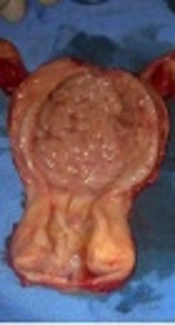
Macroscopic pathological inspection showed that the left adnexal specimen consisted of a collapsed ovarian cyst (172 g) with thickened ovarian cyst wall measuring up to 1.5 cm in thickness accompanied with a dilated fallopian tube (10 g). Its serosal surface had multiple adhesions with a nodular appearance of the inner lining and presence of hemorrhagic adhesions. Microscopically, the appearances were consistent with an endometriotic cyst with hemorrhage and granulation tissue with mixed inflammation in association with extensive decidual changes of the cyst wall (Figure 5).
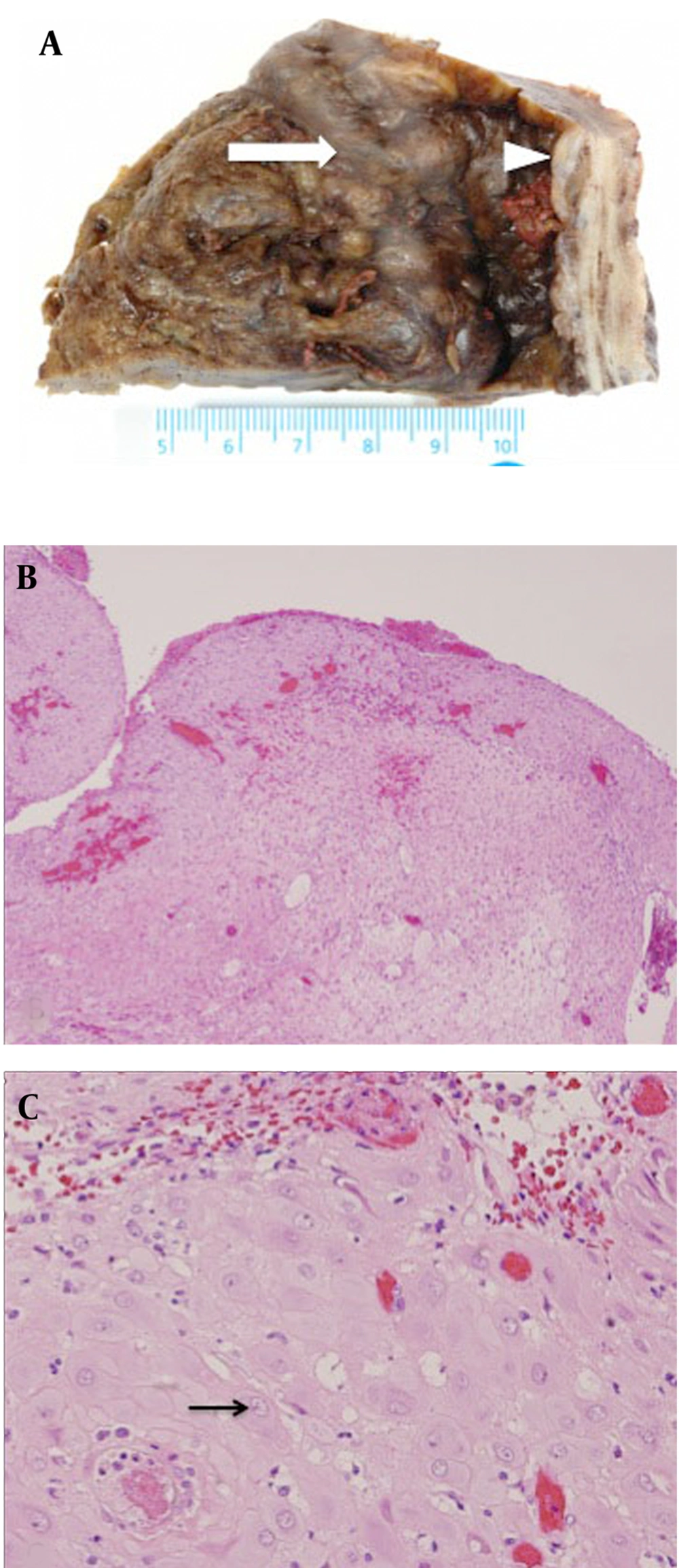
Figure 5.
A, Photograph of the left ovarian mass shows areas of decidualized tissue (arrow) adherent to a dilated fallopian tube (arrow head). B, The low-power histological slide of the mural nodule (hematoxylin and eosin stain) shows edematous vascularized decidualized endometrial tissue with abundant cytoplasm of the stromal cells. No atypical cell was detected (hematoxylin-eosin, original magnification × 100). C, The high-power histological slide of the stromal cells shows characteristic features of decidualization, polygonal sheets and spindle shaped cells arrow with distinctive eosinophilic granular cytoplasm and round nuclei with nucleoli, embedded in an edematous myxoid background (hematoxylin-eosin, original magnification × 200).
3. Discussion
Adnexal masses discovered in pregnancy are commonly benign in nature with conservative management being the norm after careful imaging evaluation. The percentage of malignant adnexal masses is less than 1%. However, even benign masses can be symptomatic and cause obstetric complications (1). Recommendations for conservative or surgical intervention during pregnancy are largely dependent on the clinician’s assessment of the patient. Factors such as perceived risk of ovarian cancer, gestational age at presentation as well as risk of adverse events for the mother or fetus require consideration. It is crucial to make an informed decision about the risk of malignancy, as managing suspected ovarian cancer in pregnancy needs extensive multidisciplinary expertise and cooperation of specialists in neonatology, perinatology, gynecology, oncology, and obstetric anesthesiology Fortunately, most malignant ovarian neoplasms during pregnancy are detected at an early stage with a fairly good outcome for both mother and child (10).
In pregnancy, decidual changes of the endometrium are predominantly caused by high levels of progesterone. Ovarian endometriosis is commonly seen in pregnancies, but ovarian endometrioma decidualization is very rare (3). The high progestin state of pregnancy is generally thought to have beneficial effect with regression of endometriosis, however, as in this particular case, paradoxical progression with growth and rupture of the cystic lesion may occur (7).
Although ultrasonography remains the primary method for detection and assessment of adnexal masses in pregnancy due to its ease of access and safety features, the findings are often nonspecific. These nonspecific cases in which sonography is unable to produce a definitive diagnosis of the adnexal masses usually require MRI as an adjunct (4). MR imaging in pregnancy is usually performed without gadolinium enhancement due to the potential risk of teratogenic effect to the fetus (11).
In the presence of excess of endogenous and exogenous estrogens, ovarian endometriosis can undergo malignant transformation in 0.7% to 1% of cases (12). Endometrioma with malignant transformation during pregnancy has not been reported yet to our knowledge. Solid nodule formation within an endometrioma remains a potential concern and could indicate superimposed malignancy in all patients irrespective of pregnant status. Furthermore, as in this case, both the ultrasound and MRI signs of a decidualized ovarian endometrioma can resemble malignant tumors,which often poses a diagnostic challenge.
However, prospective imaging differentiation of decidualization from malignant transformation may be feasible. Suggested imaging criteria from a few case reports have been made in the past. In sonography, the imaging finding that may help to suggest decidualization is the presence of smooth and lobulated solid nodules within an endometrioma with marked internal vascularity that are detected during early pregnancy and do not grow significantly on serial imaging. In contrast, the solid components in ovarian cancer are often irregular, found within a fluid-containing complex adnexal mass. These solid components also demonstrate increased Doppler vascularity. Increased vascularity, one of the sonographic signs of suspicious pelvic tumors, occurs in decidualized tissue due to thickening of the stroma and procurement of an extensive vascular supply. Three dimensional (3D) sonography enhances the images obtained, allowing the papillary appearance of the tumor to be clearly outlined via transvaginal 3D surface rendering, and also clear rendering of the rich vascularity through the use of 3D power Doppler imaging (5, 8).
In MR imaging, decidualized endometriomas and decidualized endometrium of the gravid uterus share strikingly similar appearances in terms of marked high signal intensity and the overall texture. In contrast, in malignant transformation, the mural nodules on T2 weighted imaging are slightly high to intermediate intensity (7). In a recent article, the authors have reported utilizing diffusion-weighted MR imaging (DWI) and apparent diffusion coefficient (ADC) measurements as a diagnostic aid for this rare entity. It was reported in the article that the high signal intensity on DWI was non-specific for either decidualized endometrial tissues or malignant mural nodules. However, the ADC values of the two entities allowed differentiation as decidualized endometrial tissues had significantly higher values compared to that of malignant ovarian tumors. This manifestation is likely due to the rich cytoplasmic content of the stromal cells within the edematous vascularized decidualized endometrial tissue that leads to prolonged T2 and higher ADC values in comparison to those of malignant tumors. The restricted diffusion in malignant tumors is due to the higher cellularity and diminished extracellular space that causes suppressed water motion (13).
The CA-125 level is elevated during pregnancy, which is a physiological occurrence. Therefore, this marker, which is normally useful in the assessment of malignant tumors, becomes limited in value during pregnancy. However, serial assessment with unchanged values may be able to predict the benignity of the lesion (14). Additionally, as illustrated in this case, complications due to rupture of the large endometrioma can occur. In our case, rupture of the cyst could be postulated secondary to the increase in tension on the cyst as the uterus enlarged to accommodate the growing fetus thus reducing the abdominal space and presence of dense adhesions between the ovary and the surrounding structures, compounding the tension. Other theories include the effect of increased blood flow to the ovaries during pregnancy resulting in cyst enlargement and possible directly bleeding into the cyst itself, leading to rupture. Decidualization of the stroma may also lead to softening of the cyst and eventual rupture during pregnancy (15).
In conclusion, decidualized ovarian endometrioma in pregnancy tends to present as a complex adnexal cystic mass, which can mimic ovarian malignancy. However, awareness of its occurrence and the specific imaging findings using the combination of both ultrasonography and MR examination, a prospective diagnosis may be possible for this rare entity, thus allowing appropriate clinical management to be made.