A 63-year-old man with a history of hypertension and diabetes was referred to our vascular laboratory for a carotid ultrasound examination. One week prior to admission, the patient experienced intermittent limb weakness, aphasia, and dizziness, with no history of recent trauma or syncopal episodes. On the day of hospital admission these symptoms worsened, prompting evaluation in the emergency department. The patient described a significant impact on his daily activities and quality of life, with the uncertainty surrounding his symptoms causing considerable emotional distress and anxiety.
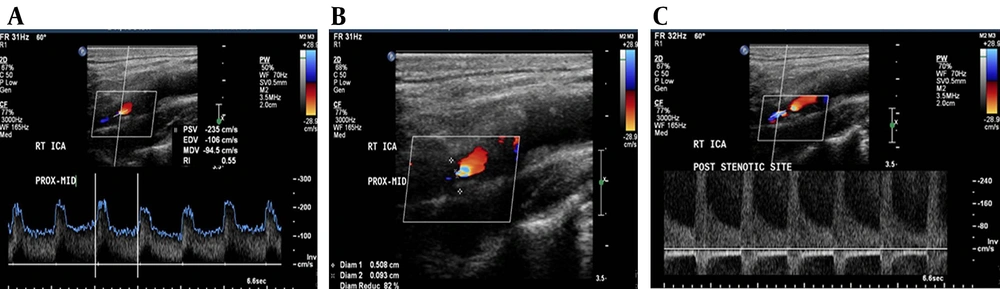
Total cholesterol, triglycerides, low-density lipoprotein cholesterol, and high-density lipoprotein cholesterol were 4.43 mmol/L, 5.15 mmol/L, 2.42 mmol/L, and 0.64 mmol/L, respectively. CT brain imaging revealed no evidence of acute infarction or hemorrhage. Duplex ultrasound examination revealed > 70% right ICA stenosis with a peak systolic velocity (PSV) of 235 cm/s and an end-diastolic velocity (EDV) of 106 cm/s at the stenotic site (
Figure 1A,
B), and turbulent post-stenotic flow (
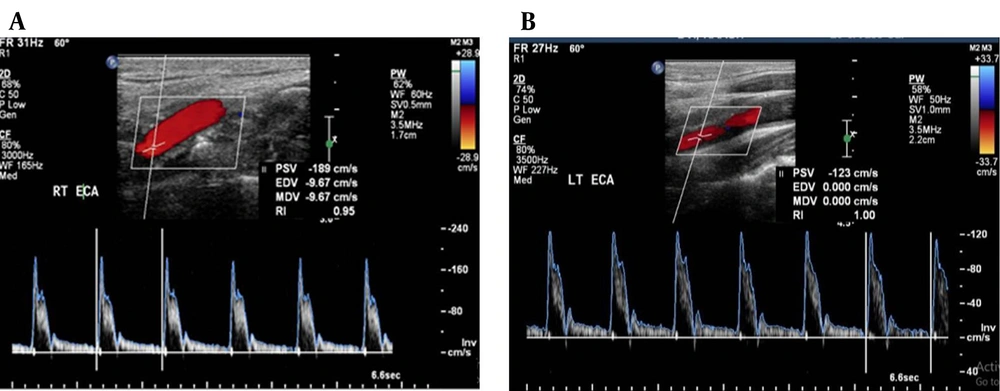
Figure 1C) caused by an atherosclerotic plaque with low-level echogenicity. Vessels on the right side are considered ipsilateral to the stenosis, while vessels on the left side are contralateral to the stenosed right ICA. The ipsilateral ECA had a PSV of 189 cm/s (
Figure 2A), which was 66 cm/s higher (+53.66%) than the contralateral ECA, which had a PSV of 123 cm/s (
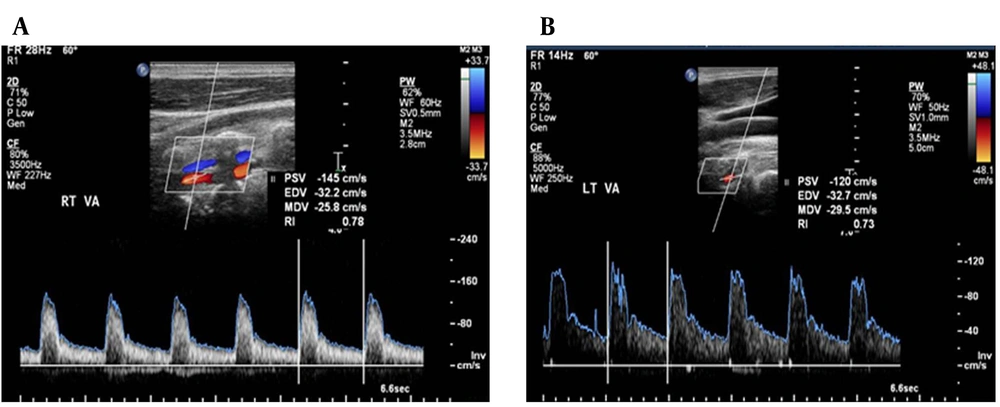
Figure 2B). Similarly, the ipsilateral VA had a PSV of 145 cm/s (
Figure 3A), showing a 22 cm/s increase (+17.24%) compared to the contralateral VA, which had a PSV of 120 cm/s (
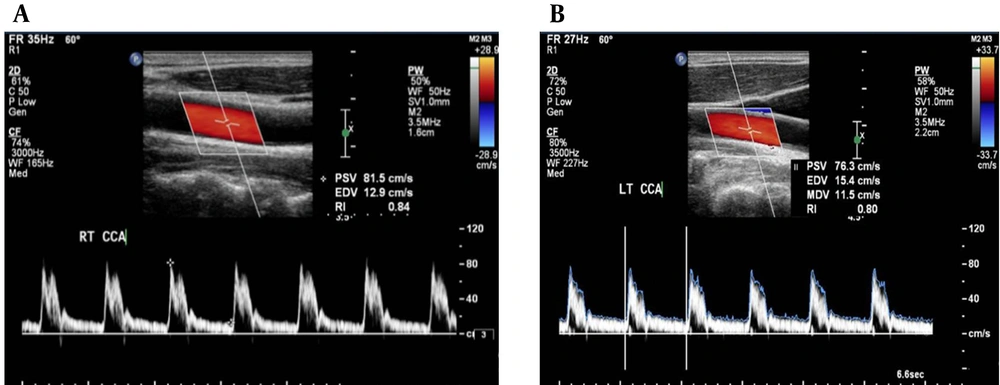
Figure 3B). Additionally, the ipsilateral CCA had a PSV of 81.5 cm/s (
Figure 4A), 5.2 cm/s higher (+6.38%) than the contralateral CCA, which had a PSV of 76.3 cm/s (
Figure 4B). A PSV difference of ≈ 20 cm/s or more between corresponding arteries may indicate compensatory flow changes and vascular adaptation. These findings indicate a compensatory increase in flow velocity in the ipsilateral extracranial arteries in response to severe ICA stenosis.
The patient was treated with antiplatelet agents (aspirin and clopidogrel) and statins to mitigate stroke risk and prevent disease progression. While carotid endarterectomy or stenting can be beneficial in cases of severe ICA stenosis, the patient was not deemed fit for surgical intervention due to his overall condition and anesthetic risk. The patient is monitored at regular follow-ups to track disease progression and reassess intervention if necessary.
The study was conducted in full compliance with ethical standards protecting patient confidentiality. Verbal informed consent was obtained from the patient before inclusion in this case report. The study received ethical approval from the Unit of Biomedical Ethics Research Committee at King Abdulaziz University (reference No: 584-21).