1. Context
Benign prostatic hyperplasia (BPH) is the most common proliferative disorder among aging males. Androgens play a major role in the development and growth of the male genital tract preferring differentiation and propagation of stromal and epithelial cells of the prostate gland. According to the published articles, variation between growth factors and the steroid hormone may change the equilibrium between proliferation and cell death prominent to progress of BPH (1). Tamsulosin was first introduced in 1996 and the United States expired its patent in 2009. Other brand names of the drug are Flomax® and Omnic®. It was first explored by Yamanouchi Pharmaceuticals that is currently a division of Astella Pharma and was accepted by U.S food and drug administration (FDA) in 2010 (2). Long-term benefit of tamsulosin pharmacotherapy (either monotherapy or polypharmacy) needs a well-meaning of clinical pharmacokinetics parameters in terms of absorption, distribution and elimination phase after tamsulosin-exposure. Table 1 shows pharmacokinetics data related to tamsulosin. With a molar mass of 408.51, the formula of drug is C20H28N2O5S. Its route of administration is oral with 100 % bioavailability. Half-life of drug seems to vary from 9 - 13 hours depending on different individuals. The drug is metabolized through liver and 76% of the metabolized form of the drug is excreted through kidneys (2, 3). Study showed that there was no major alteration in the pharmacokinetics of tamsulosin HCl between pediatric patients (age range 2 - 16 years) and adults when the effect of body weight was considered (4). Related to the mechanism of action of tamsulosin, there are alpha 1A-adrenergic and alpha 1B-adrenergic receptors, in the prostate and blood vessels, respectively. Therefore, tamsulosin could be used as an antagonist of alpha 1A-adrenergic receptor for symptomatic management of BPH. By blocking alpha 1A-adrenergic receptors in the neck of bladder and prostate, the repose in smooth muscles could cause less confrontation to urinary flow (5). Djavan et al. (6) noted that combination therapy by dutasteride and tamsulosin was a highly efficacious treatment for ≥ 4 years, in patients with moderate-to-severe lower urinary tract symptoms (LUTs) due to BPH. The study on the efficacy of 0.2 mg/day tamsulosin in patients with nocturia associated with LUTs/BPH by Yoshida et al. (7), showed significant clinical improvements in the nocturnal frequency within the frequency volume chart and the international prostate symptom score. There was a significant difference in the hours of uninterrupted sleep, the intermission among the time of sleeping and the first occurrence of nighttime voiding, the capacity of urine in the first nightly voiding incident, nocturnal urine capacity, nocturnal polyuria index, daily urine volume, maximum and middling flow rates and post-void remaining. Finally as suggested by previously published articles, the new strategy based on pharmacotherapy that used alpha 1-adrenergic antagonists such as tamsulosin seems to be more efficacious for short and long-term treatment of BPH than conventional drug-therapy strategies.
Table 1.
Clinical Pharmacological Properties of Tamsulosin
| Variables | Values |
|---|---|
| Route of administration | Oral |
| Dosage: Once daily prescription of 0.4 or 0.8 mg shows maintenance of efficacy for up to 6 years. | |
| Bioavailability (F) | 100% |
| Elimination half-life (t1/2) | 9 - 13 h |
| Metabolism | hepatic |
| Excretion | 76% renal |
| Reported side effects: Dizziness, abnormal ejaculation (most common) and asthenia, postural hypotension and palpitations (less frequently) |
As the international burden of prostate disorders is increasing, in addition to lifestyle modifications (8-10), understanding safety, efficacy and side-effects of tamsulosin may help timely intervention of disease and proper treatment in males with prostate disorders. Therefore, clarifying effectiveness of tamsulosin in the patients with BPH was the main objective of the current review.
2. Evidence Acquisition
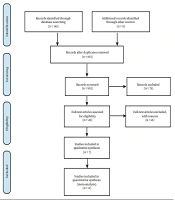
According to the authors’ previous clinical experiences associated with efficacy, safety and side-effects of drugs used in clinical practice (11-15), United States national library of medicine (PubMed, NLM) were searched. The Mesh terms were: 1) tamsulosin, 2) tamsulosin pharmacokinetics in urology, 3) tamsulosin in BPHand 4) clinical pharmacokinetics of tamsulosin in BPH". There were: 1) 1506 articles from September 1988 to November 2015, 2) 17 articles from December 1995 to October 2014, 3) 760 articles from April 1991 to March 2016 and 4) 18 articles from December 1996 to May 2015. Research and review articles relevant to clinical and pharmacological properties of tamsulosin were reviewed up to March 2016.
3. Results
Considering the disorders of prostate, BPH is the fourth most frequently identified health disorder in the elderly (6) and about 8 million patients are assessed to visit an urologist with the judgment of primary or secondary BPH (16). Because of infection, the shadowed and untreated acute inflammation could lead to chronic inflammation that subsequently results in changes in hormonal and metabolic states of males’ body (1, 17). Bashir in 2015 reported that the most common malignancy among males worldwide is the prostate cancer. An estimated 1.1 million new cases and 307,000 deaths were reported in 2012. Advancing age, race, positive family history, diet based use of fat items, obesity, physical activity, sexual activity, smoking and occupation are mentioned as the highest risk factors for prostate cancer (10). The selective adrenoceptor (alpha1A) blocker, tamsulosin by the relaxation of smooth muscles, predominate in the prostate gland, prostatic capsule, prosthetic urethra and bladder that could be subsequently associated with an improvement of maximal urine flow (Qmax) and alleviation of urinary tract systems in patients with BPH. Prescription of 0.4 or 0.8 mg/day shows maintenance of efficacy for up to six years. Dizziness and abnormal ejaculation are noted as the most common adverse events, with asthenia, postural hypotension and palpitations reported less frequently (18-21). Zhong et al. (19), studied costs and effectiveness of treatments for BPH, including polypharmacy based on finasteride and tamsulosin, transurethral 2 micron laser resection of the prostate and transurethral resection of the prostate (TURP). It was reported that polypharmacy was the better option for patients with BPH, and the transurethral 2 micron laser resection of the prostate, the cost of which is lower than that of pharmaceuticals, was a safe and effective surgery. Yu et al. (20), investigated that a combination of tamsulosin plus low dose sildenafil could be a beneficial treatment for post implantation progression of LUTS. The study of efficacy and safety of tamsulosin 0.2 mg by a meta-analysis and meta-regression performed by Shim et al. (21), clarified that tamsulosin 0.2 mg has similar efficacy and fewer adverse events compared with other alpha-blockers as an initial treatment strategy for males with lower urinary tract symptoms. Dimitropoulos et al. (22) confirmed that polytherapy based on a fixed-dose of tamsulosin 0.4 mg and dutasteride 0.5 mg is approved and released for clinical use in males with BPH. Pharmacotherapy based on polytherapy used solifenacin and tamsulosin also communicated with progress in patient detailed outcomes such as urinary nerve growth factor and creatinine levels (23). Investigation of Choi et al. (24) showed that combination therapy comprising of α-blockers and 5α-reductase inhibitors in patients with a transitional zone index (TZI) of ≥ 0.5 is expected improvement linked to greater maximum urinary flow rates (Qmax). As a final point according to the published articles tamsulosin-therapy based on inter- and intra- individual assumption for BPH, seem to be safe and effective to improve the related symptoms and quality of life in patients.
4. Conclusions
The challenges related to pharmacotherapy and surgical strategy of BPH is altering due to a superior thought about the disorder and the growth of the practical perception of LUTS (25). The subtype-selective alpha 1A- and alpha 1D-adrenoceptor antagonist tamsulosin-therapy were useful clinical management in the population with BPH. The study on patients receiving tamsulosin 0.4 or 0.8 mg/day specified the preserve of effectiveness for up to six years. Tamsulosin 0.4 mg/day was of comparable efficiency to alfuzosin 2.5 mg three times daily, with fewer inclinations to cause hypotensive effects, in a double-blind randomized 12-week trial (18). The urodynamic results of tamsulosin as an alpha1A antagonism, in patients with lower urinary tract symptoms (LUTS) conventionally linked to BPH as a matter of urological subject are discussed in terms of efficacy and side-effects. The studies in 2016 showed that primary end-point of variation in bladder outlet obstruction index (BOOI) by a mean change of -14.27 (P < 0.002) related to pharmacotherapy used tamsulosin (26). The results of randomized clinical trials on 118 patients with symptomatic BPH within two groups related to prescription of 0.2 mg tamsulosin alone and group two with 0.5 mg dutasteride daily for 12 months showed that in group two, there was a considerably superior reduction in prostate volume (P < 0.001), TZI volume (P < 0.001) and prostate-specific antigen (PSA; P < 0.001) (24). Hayashi et al. (27), confirmed that ejaculation dysfunction may be attributed to the α1A-AR antagonist-mediated suppression of nerve-evoked contractions in the seminal vesicle, as the early tightening started by neuronal excitations were covered by silodosin and tamsulosin. The study on the effectiveness of single half-dose silodosin and single full-dose tamsulosin in Japanese males with LUTS/BPH showed that prescription of single half-dose silodosin had a similar efficacy to full-dose tamsulosin (28). To determine the preliminary necessity for pharmacotherapy strategy or surgical intervention, it is recommended to verify BPH patients with high risk of alpha 1-adrenoceptor antagonist monotherapy failure based on sonographic measurements of bladder wall thickness, ultrasound estimated bladder weight and intravesical prostatic protrusion (29). In conclusion, tamsulosin-therapy seems to be a respected beneficial decision (1-31) with both verified and impending compensations over older nonselective agents, in the supervision of patients with LUTS connected with BPH.