1. Background
Spirulina platensis is a spiral-shaped, multicellular filamentous cyanobacteria (1). This microalgae is a rich source of minerals, vitamins, unsaturated fatty-acids and proteins; therefore, it is used as a dietary supplement for both animals and humans (2). Up to 50% of Spirulina total proteins are phycobiliproteins (PBPs), a family of light-harvesting proteins (3). PBPs are water soluble proteins, tightly associated αβ heterodimers in which each subunit carries bilin (s) thioether-linked to particular cysteinyl residues (4). These proteins are classified into four classes based on their spectrum properties: allophycocyanin, phycoerythrin, phycoerythrocyanin and phycocyanin (5, 6).
C-phycocyanin (C-PC) is a major light-harvesting biliprotein in S. platensis and is produced in substantial amounts in the cell; at levels up to 20% of the total protein (7). C-phycocyanin of Spirulina, a natural blue protein, has potential application in food and cosmetic coloring (8). Its antioxidant, anti-inflammatory (9, 10), radical scavenging (11) and hepatoprotective (12) properties gives it a spectrum of pharmaceutical applications. Previous studies have demonstrated that C-PC of Spirulina has an anti-tumor activity by inducing apoptosis. In fact, C-PC induces apoptosis by promoting changes in the Bcl-2/Bax ratio, releasing cytochrome c from mitochondria to the cytosol and the cleavage of Poly (ADP) Ribose Polymerase (PARP), which contributes an important mechanism for apoptosis (13-15). Furthermore, in recent studies, it has been demonstrated that recombinant C-PC/β is also an inhibitor of cell proliferation and an inducer of cancer cell apoptosis by promoting cytoskeleton depolymerization and activating caspase activities, which are associated with the extrinsic cell death pathway (16).
The function of the β-subunit is different from that of the whole C-PC protein and it seems that the C-PCβ may be more effective in inhibition of cell proliferation and apoptosis induction than α/βC-PC. The C-PC/β also shows a greater effect on metastatic cancer cells compared to non-metastatic cancer cells. This property may indicate the potential application of C-PC/β as a cancer prevention and/or treatment agent and its use for preventing tumor metastasis (16). Expression of C-PC in bacteria reduces the cost and time for protein production, and the recombinant protein could be further developed to obtain a more efficient protein for therapeutic purposes. Among the systems available for heterologous protein production, Escherichia coli expression systems have been preferred as an option for producing many recombinant proteins (17-20). Escherichia coli facilitates protein expression by its relatively simple, inexpensive and fast high-density cultivation, and its well-known genetics and large number of compatible tools available for biotechnology (21). In this study, E. coli could be an appropriate system for production of C-PC/β, since C-PC/β can be expressed and purified as soluble recombinant protein in E. coli (16). Furthermore high codon usage similarity exists between E. coli and S. platensis (data not shown here), thus codon optimization in E. coli expression system is not required. Therefore, it is attractive to clone and express cpcB gene to generate and purify recombinant proteins in large quantities for pharmaceutical and biomedical purposes.
2. Objectives
The purpose of this study was to clone phycocyanin beta subunit gene of S. platensis in E. coli expression vector. Moreover, expression of recombinant beta subunit of C-PC in E. coli was examined by Sodium Dodecyl Sulfate Polyacrylamide Gel Electrophoresis (SDS-PAGE) and immunoblot analysis.
3. Materials and Methods
3.1. Spirulina Culture and Genomic DNA Extraction
Living cyanobacteria, S. platensis, was obtained from a shrimp center at Bushehr. The bacteria were cultured in Zarrouk medium at 30°C. Chemical salts used for preparing Zarrouk medium were obtained from Merk Co. (Germany). The light intensity was 50 μmolm-2s-1 with photoperiod of 12 light/12 dark cycle (22). The filaments were harvested at log phase and the total genomic DNA was extracted using the technique described by Berrendero (23). Briefly, the cells were harvested by centrifugation and resuspended in 400 μL of extraction buffer (100 mM Tris/HCl, pH 8.0, 20 mM ethylenediaminetetraacetic acid (EDTA), 2.5% (w/v) hexadecyltrimethylammonium bromide (CTAB), 1.4 M NaCl, and 0.2% (v/v) 2-mercaptoethanol). Samples were frozen at -70°C and then homogenized in the extraction buffer using a hand-operated homogenizer. Next, samples were incubated at 60°C for 30 minutes, followed by three extractions with chloroform. Supernatant phases were placed in new tubes to which an equal volume of 2-propanol was added, and were then frozen at -20°C for one hour. The samples were centrifuged and the pellet was resuspended in 400 μL of sterile water and the DNA was precipitated again by addition of 0.1 volume of 3 M sodium acetate and two volumes of ethanol and resolved in 20 μL of sterile water, and stored at -20°C (23).
3.2. Primer Design and Polymerase Chain Reaction
The published gene sequence of the cpcB of S. platensis with a size of 519 bp was obtained from www.pubmed.com (accession No. AY804216). The designed primers according to the gene sequences of cpcB were: forward primer 5’-ACTGTGTACATATGTTTGATGC CTTCACCAAGGTGTTTC-3’ (With NdeI site underlined) and reverse primer: 5’-ATATATATGCGGCCGCGGAAACTGCAGCACATGCACGATC-3’ (With NotI site underlined). At the C-terminus, the stop codon was eliminated and replaced with a NotI restriction site so that the expressed C-PC/β would bind to herpes simplex virus (HSV) epitope tag and 6 × His-tag.
Polymerase chain reaction (PCR) was carried out with a thermal cycler (BioRad) using amplicycle reagents in the presence of 100 ng of extracted template DNA, 1.5 mM MgCl2, 0.2 mM dNTP, 1.5 U Taq DNA Polymerase, 2.5 μL of 10 × PCR buffer (All from Cinagen, Iran) and 0.4 μM of each primer (Takapouzist Co, Iran). Reaction conditions included an initial cycle of denaturation at 94°C for five minutes, followed by 35 cycles of denaturation at 94°C for 30 seconds, annealing at 57.6°C for 30 seconds and extension at 72°C for 35 seconds. The resulting PCR product was extended for a further 10 minutes at 72°C. The PCR products were analyzed on 1% agarose gel (Cinagen, Iran) stained with 0.5 μg/mL ethidium bromide (24).
3.3. Construction of the Expression Vector
The pET43.1a+ (Novagen, USA) and PCR product were digested with NdeI and NotI restriction enzymes according to the manufacture’s protocol. The digested fragments were electrophoresed in 0.7% agarose gel and purified from the gel using the gel extraction kit (BIONEER). The purified cpcB gene and the pET43.1a+ vector were ligated using T4 DNA Ligase (TAKARA) at 16°C, overnight. Ligation mixtures were transformed to E. coli DH5α (Novagen, USA) by the CaCl2 method (24) and were selected by plating on LB medium containing 100 μg/mL ampicillin. The obtained colonies from the transformation experiment were used in a colony-PCR assay using specific primers. Next, the plasmids of positive colonies from the PCR-screening experiment were digested with the same enzymes used for cloning. The recombinant strains were selected and confirmed by sequencing.
3.4. Expression of the Recombinant Protein
The pET43.1a+ expression vector containing phycocyanin beta subunit gene, was transformed to E. coli BL21 (DE3) expression host (Novagen, USA) using the CaCl2 transformation method (24). A recombinant strain colony containing cpcB gene was selected to be used in the protein expression experiment, and for comparison with E. coli BL21 (DE3) containing pET43.1a+, as the control, the selected clones were grown at 37°C overnight in Terrific broth (TB) containing 100 μg/mL ampicillin. The cultures inoculated in TB containing the same antibiotic concentration were grown in a shaking incubator at 37°C and 250 rpm. Isopropyl-β-D-thiogalactoside (IPTG) was added in a final concentration of 1 mM to cultures with OD 0.4 at wavelength of 600 nm (25). Cultures were shaken at 30°C and 250 rpm for 10 hours. Bacterial samples were collected before induction and after one, two, four, eight and ten hours from induction point and lysed in 2x sample buffer (100 mM Tris-HCL pH 8, 20% glycerol, 4% SDS, 2% 2-mercaptoethanol (2-ME), 0.2% bromophenol blue). Samples were analyzed by 12.5% SDS-PAGE, and protein bands were visualized by staining with Coomassie blue R250. All solutions of SDS-PAGE and staining were prepared according to instructions specified by Roche Applied Science (26).
Next, the samples were transferred to nitrocellulose membrane and immunodot blot analysis was carried out by anti-His6-peroxidase and 3,3’-diaminobenzidine (DAB) substrate. Solution preparation and the methods were described by Roche Company (the manufacturer of anti-His6 peroxidase). Lysed bacteria were directly spotted onto nitrocellulose membrane. After drying, western blocking solution 1X was added, followed by incubation for one hour at 25°C. The solution was poured out and replaced with anti-His6-peroxidase, followed by incubation for 90 minutes. The solution was poured out and pellet was washed with 1x tris buffered saline tween
strate were added and then the nitrocellulose membrane was washed with washing solution and checked ininduced strain (E.coli containing pET43.1a+ plus cpcB gene), (TBST) for five minutes and this was repeated three times. In the next step, anti-His6-peroxidase and DAB subnon-induced E.coli strain (E.coli containing pET43.1a+ plus cpcB gene) and control strain (E. coli containing pET43.1a+).
4. Results
4.1. Genomic DNA Extraction and Cloning of cpcB Gene
Genomic DNA from the cultured S. platensis cells was extracted (Figure 1) and subjected to PCR amplification. The specific primers amplified a ~ 543 bp fragment (Figure 2). The digested PCR product was then ligated with digested pET43.1a+ vector (with NdeI and NotI) (Figure 3) by T4 DNA ligase. The constructed vector was then transformed to E. coli DH5α, which was selected on the basis of ampicillin resistance. Recombinant plasmid was confirmed by both colony PCR (Figure 4) and enzyme digestion methods followed by sequencing.
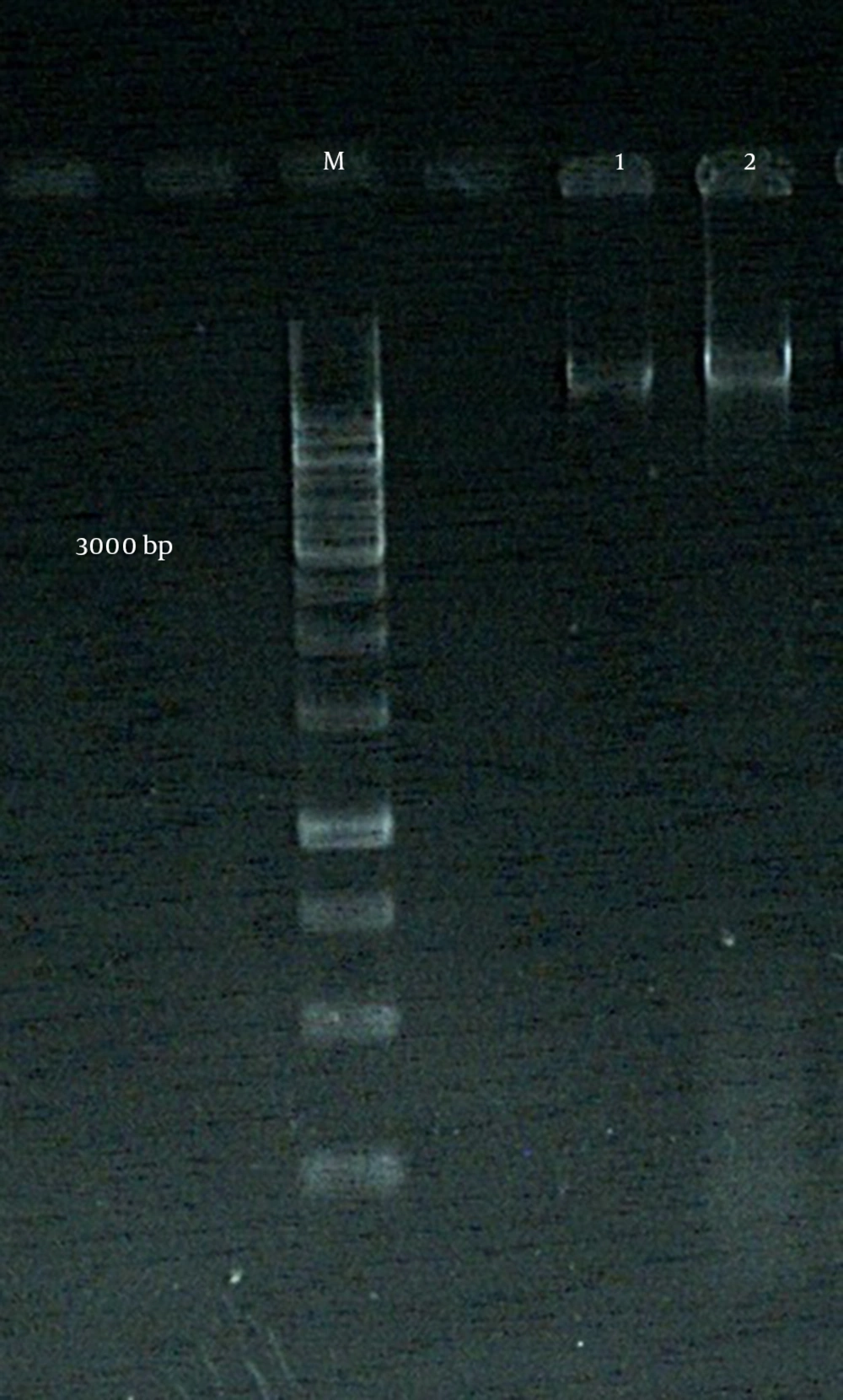
Figure 1.
Lane M: GeneRuler™ 1 kb DNA ladder (fermentas); lane 1, 2: extracted genome of S. platensis.
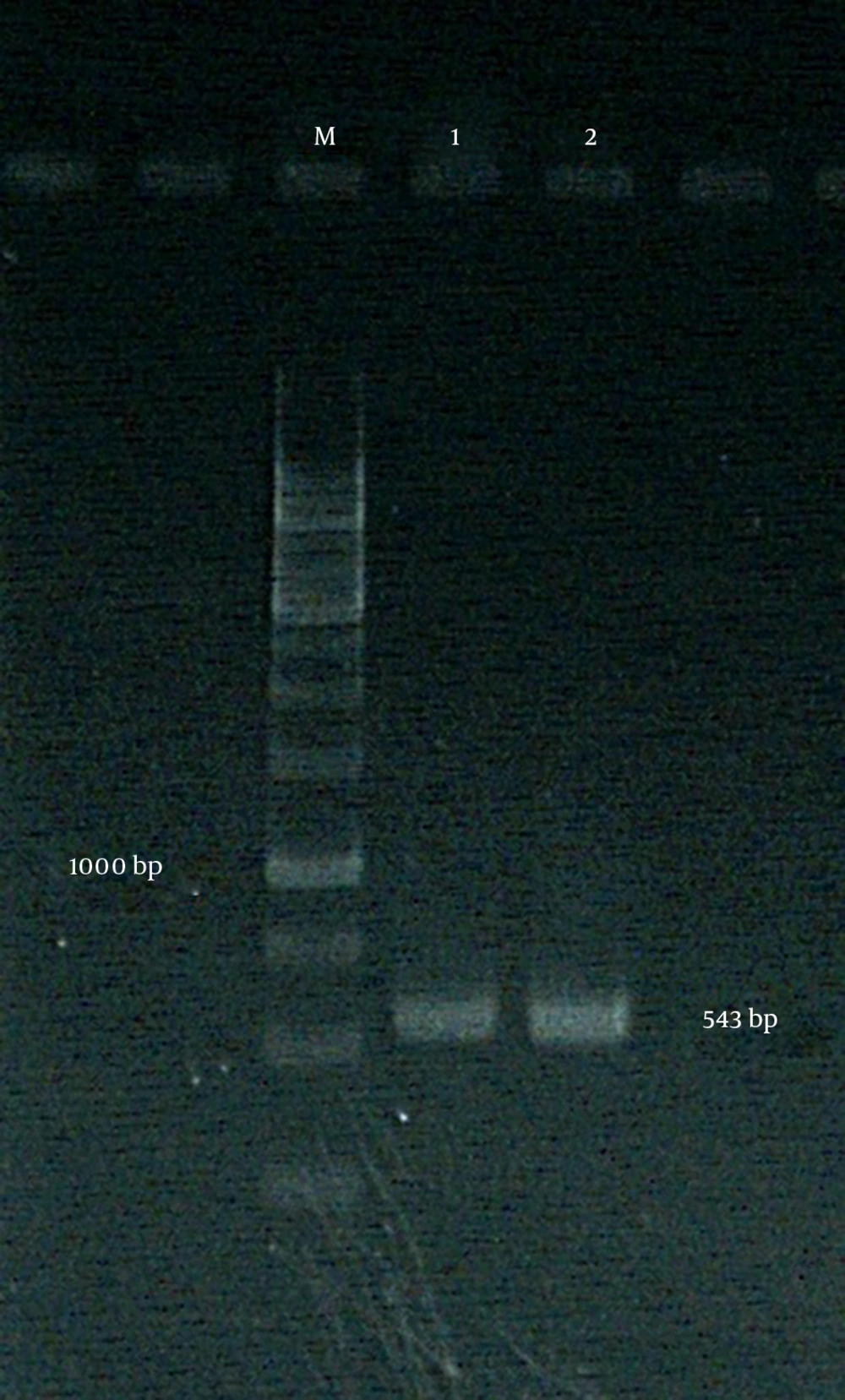
Figure 2.
Lane M: GeneRuler™ 1 kb DNA ladder (fermentas); lane 1: cpcB PCR product.
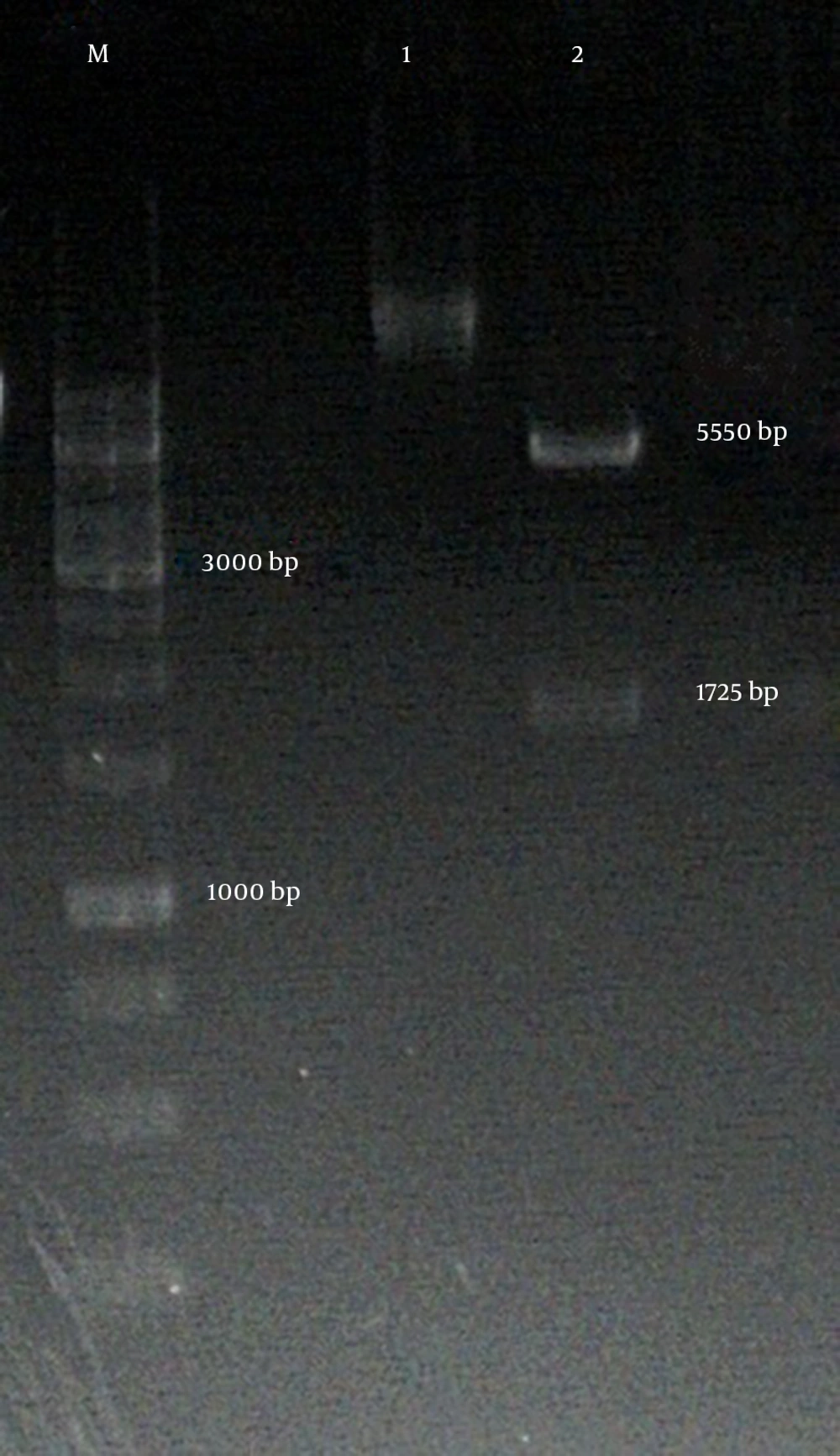
Figure 3.
Lane M: GeneRuler™ 1 kb DNA ladder (fermentas); lane 1: pET43.1a+ (control); Lane 2: double digestion of pET43.1a+ by NdeI and NotI enzyme.
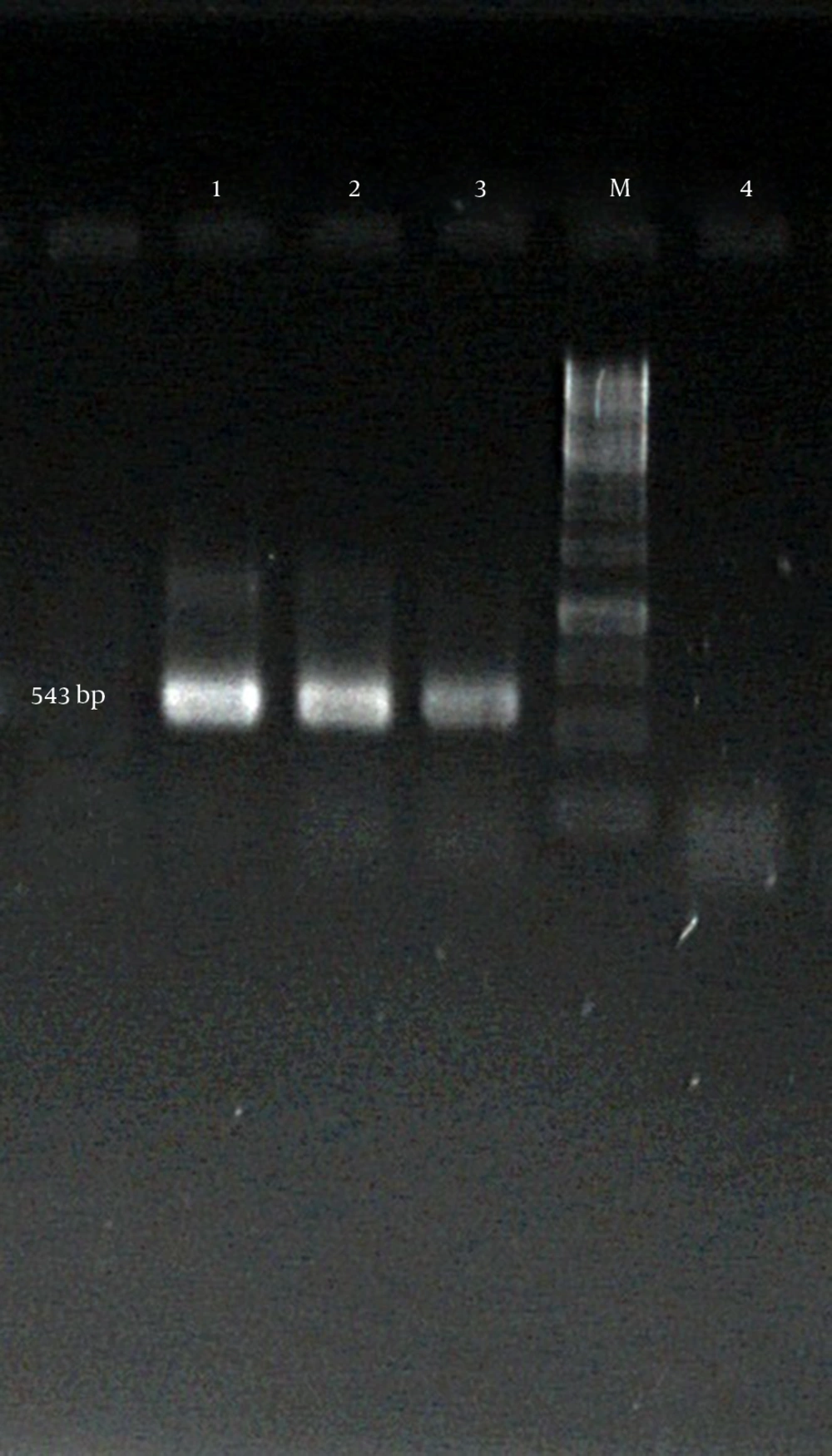
Figure 4.
M: GeneRuler™ 1 kb DNA ladder (fermentas); lanes 1 - 3: randomly selected colonies; lane 4: negative control (colony containing pET43.1a+ without cpcB gene)
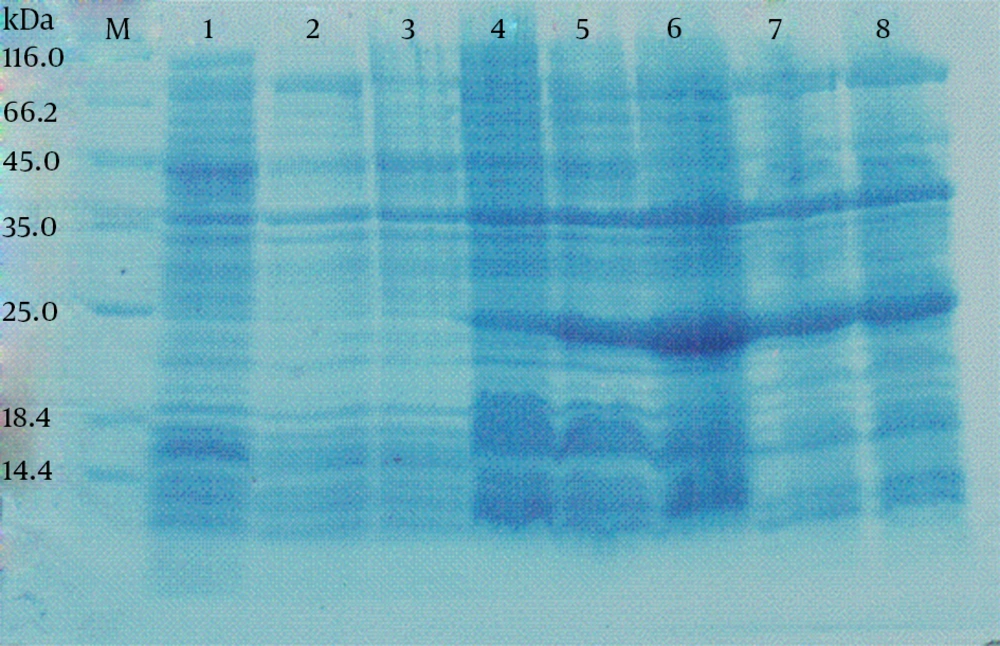
Figure 5.
Lane M: protein marker; lane 1, 2: E. coli (BL21) containing pET43.1a+ not induced and induced by IPTG, respectively; Lane 3: cells containing constructed vector not induced; Lane 4 - 8: cells containing constructed vector induced by IPTG for 1, 2, 4, 8 and 10 hours, respectively.
Also, recombinant protein expression was analyzed by immunodot blot. The comparison of the dot blot results confirmed the expression of the C-PC/β protein (Figure 6). The expression of C-PC/β, which has a His tag in the C-terminus and can be detected by anti His tag peroxidase, changed the substrate color, while the proteins from E. coli BL2 (DE3) containing pET43.1a+ did not show any change of color in the dot blot assay.
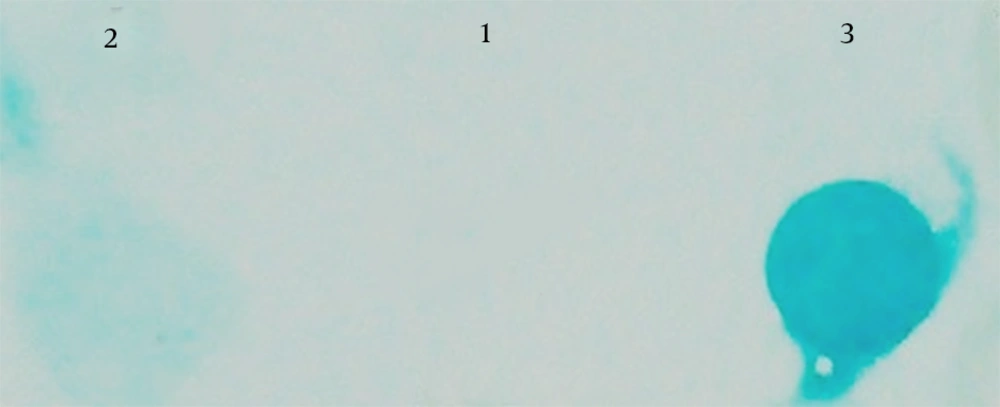
Figure 6.
Dot 1: E. coli BL21 (DE3) containing pET43.1a+; Dot 2: non-induced recombinant strain containing pET43.1a+plus cpcB gene; Dot 3: induced recombinant strain containing pET43.1a+ plus cpcB gene.
5. Discussion
For more than 150 years, PBPs, which are antennae-protein pigments involved in light harvesting, have been extensively studied. Researchers are still fascinated by some noticeable properties of PBPs, such as their structure, fitting to harvest and transfer of light energy to the photosynthetic reaction centers, and will certainly continue for a long time to hold captivating interest for mankind (6).
The C-PC is one type of PBPs that has gained increasing attention owing to its various biological and pharmacological properties. This protein has been shown to be hepatoprotective, antioxidant, radical scavenger, antiarthritic and anti-inflammatory in both in vitro and in vivo experimental models (5, 27). Therefore, much research has been conducted to clone and express the genes encoding phycobiliproteins in bacteria. Recombinant C-PC/α- and β-subunits have been expressed in E. coli (16, 28). For instance, Wang et al. biosynthesized phycocyanin beta subunit from Anabaena, using pGEX-2T vector with the Tac promoter. They found that the recombinant C-PC/β has anti-cancer properties (16). Also, apo-allophycocyanin has been expressed in E. coli using pMALTM-p2X under the Lac promoter (29, 30). The final product yields in E. coli have reached 0.9 g. L-1 for recombinant apo-C-PC β-subunit (16) and 2.75 g. L-1 for recombinant apo-APC (30). However, the expression vectors, which have been used in these studies contained weaker promoters than some other vectors.
Here, we cloned the phycocyanin beta subunit gene from S. platensis, which was successfully over-expressed in E. coli BL21 strain. Although recombinant phycocyanin or PBPs have been previously expressed in E. coli system, the present study describes the expression of CPC/β of S. platensis in E. coli with a different vector and using some treatments for reaching high product yields. We used pET43.1a+ expression vector, which includes strong and inducible T7 promoter. The T7 RNA polymerase, which was cloned in the pET43.1a+ vector, is five times faster than the E. coli RNA polymerase (21) and causes high levels of expression of cpcB. Also, we replaced the Luria-Bertani (LB) medium by TB medium, which supports a high cell density of E. coli and consequently leads to the highest cell density and the over-expression of recombinant proteins (31). Most recombinant proteins over-expressed in E. coli tend to accumulate in the form of insoluble aggregation and the most common way to improve the solubility of recombinant proteins in E. coli is to reduce the induction temperature (32). In order to obtain soluble proteins, we also optimized the culture conditions by reducing the incubation temperature during protein expression.
In addition, the inserted cpcB gene was positioned upstream and in frame with sequences that encode C-terminal fusion peptides. These sequences include an HSV tag and a polyhistidine tag. The HSV tag is an epitope tag that can be used for labeling, detection and purification of HSV-tagged fusion proteins by ELISA and immunoblotting. The presences of 6 × His tag sequences in the target protein also provide the possibility for convenient purification through anti-histidine tags and an Immobilized Metal Affinity Chromatography (IMAC) procedure. Finally, over-expression of the synthetic beta subunit phycocyanin in a bacterial system (E. coli BL-21) showed that we could produce a large amount of this desired protein in Iran, in the near future.