Leishmaniases are NTDs being endemic in 98 countries with over 350 million at-risk individuals. However, the occurrence of this infection is more than expected, due to under-diagnosis and/or non-compulsory infection report (
6). Previously, the diagnosis was mostly based on traditional identification of lesions, as well as biological classification and isoenzyme typing. More recently, unprecedented nucleic acid-based techniques have facilitated the determination of
Leishmania species/strains (
8). The cutaneous disease due to
Leishmania is the most prevalent form with an incidence rate of 20000 people annually in Iran (
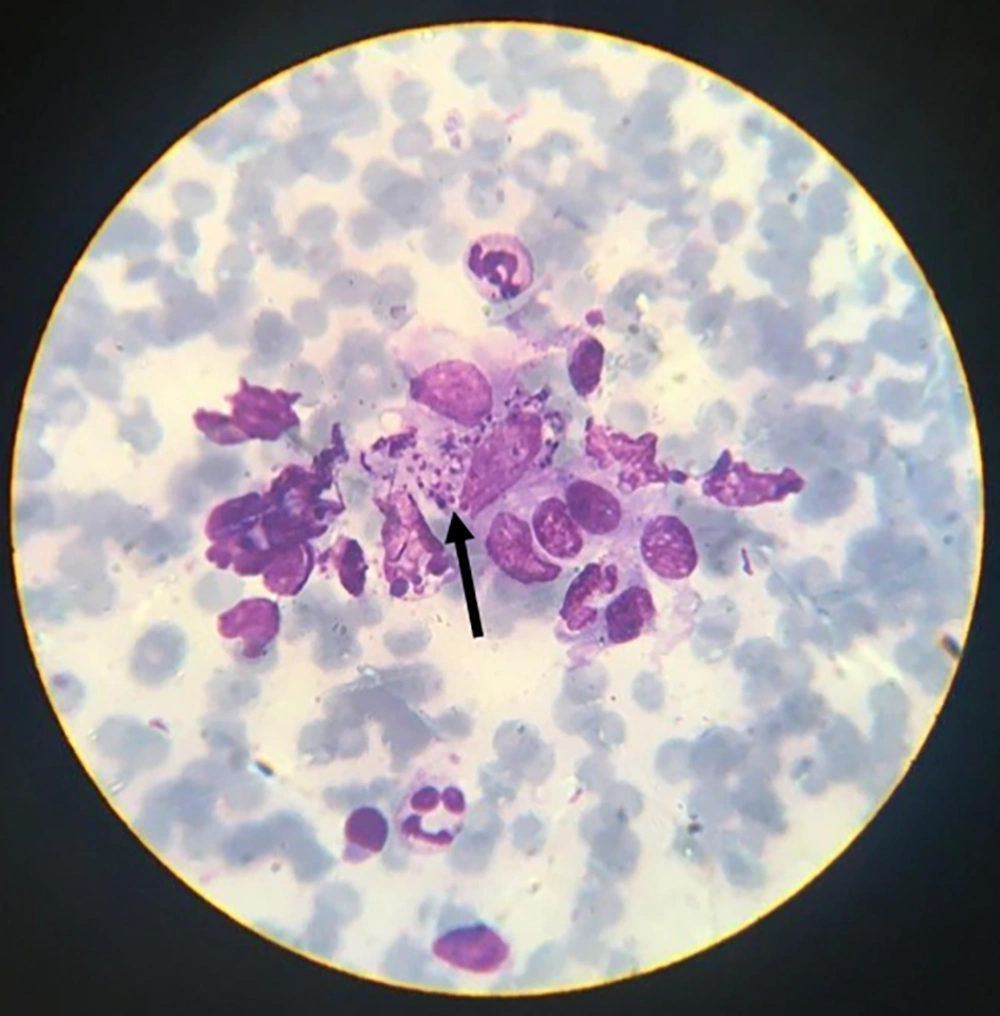
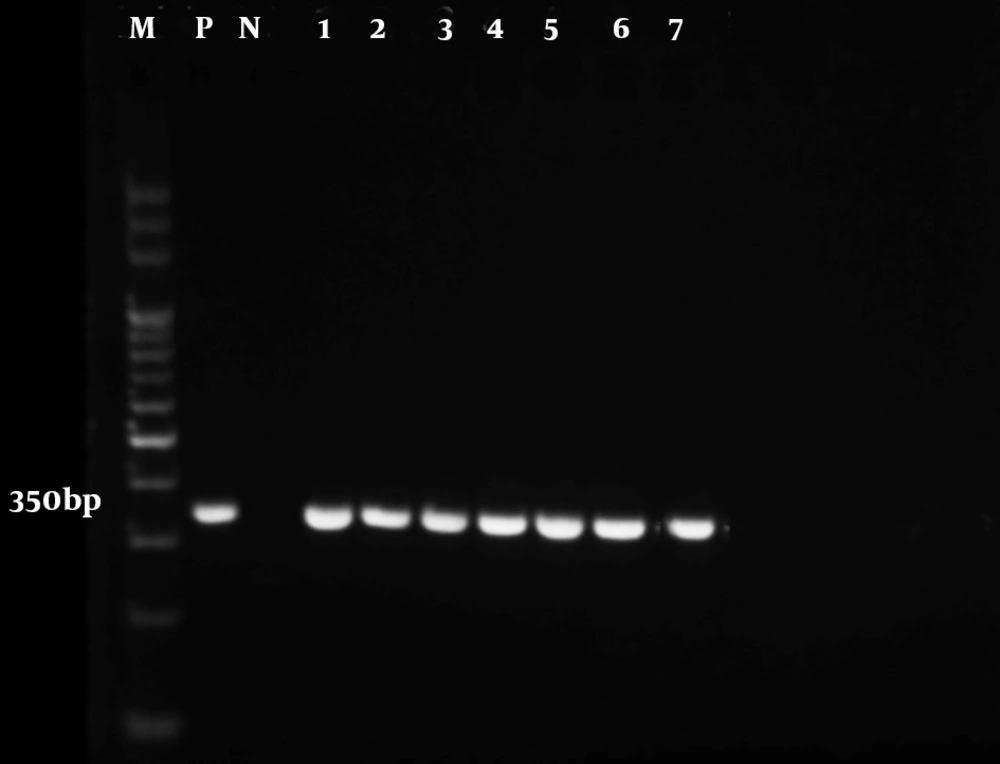
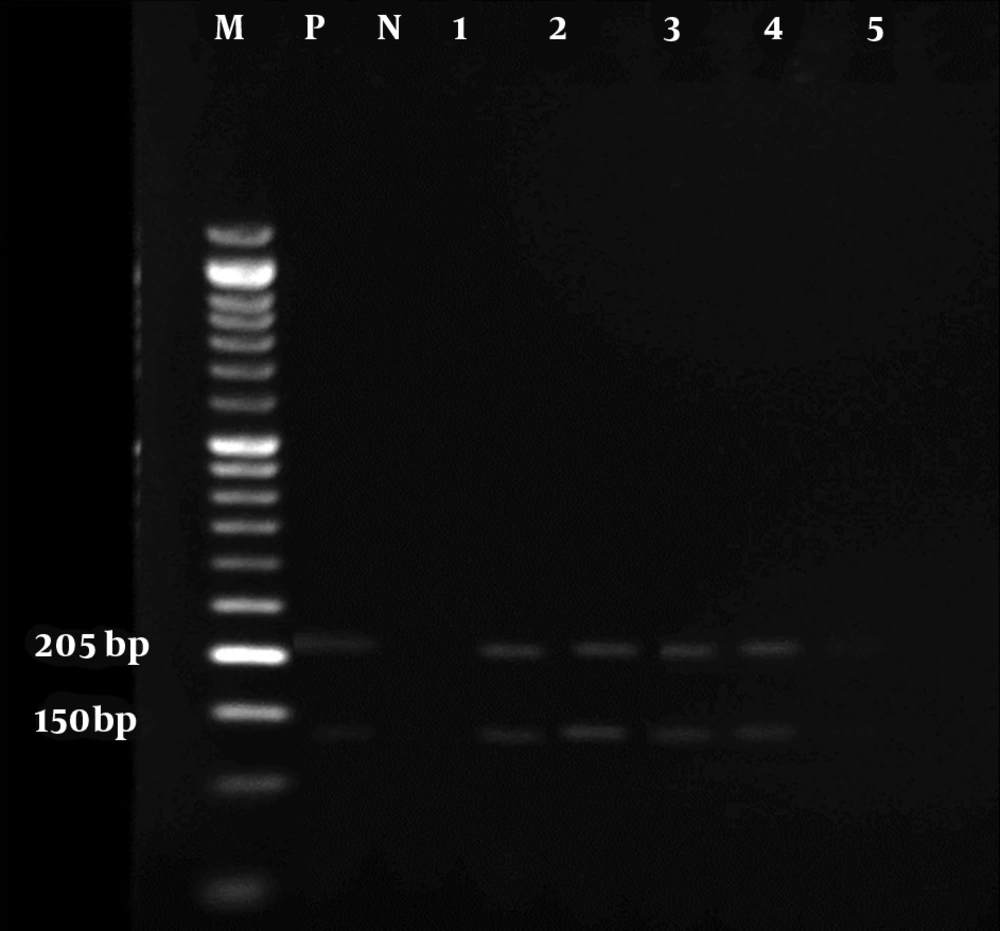
3). The current study aimed to address the species/strains of cutaneous leishmaniasis causative agents in people referring to the health centers of Dasht-e-Azadegan, Khuzestan province, using ITS1 PCR-RFLP in 2016. According to our findings, all samples showed a 350 bp band following ITS1-PCR, suggesting the molecular identification of genus
Leishmania by the LITSR and L5.8S primer pair, which is consistent to Schonian et al research (
15). Similarly, most studies in Iran have used this primer pair for the molecular detection of
Leishmania (
9,
16-
20).
However, Mohammadiha et al. also used another ITS-specific primer pair yielding 800 - 850 bp PCR product (
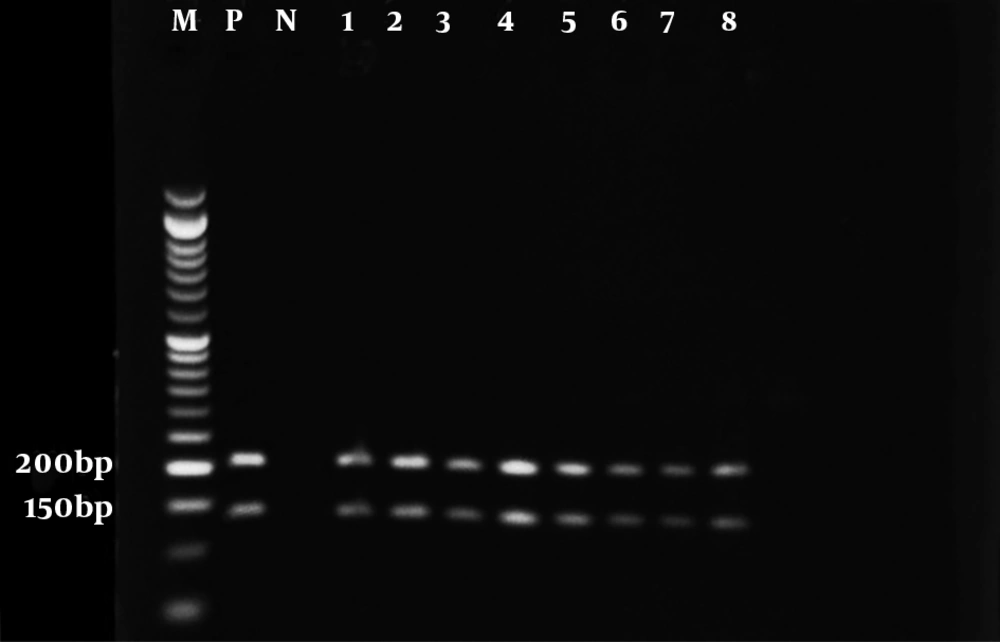
21). Next, species-dependent digestion using
HaeIII produced 150 and 200 bp bands belonging to
L. major.
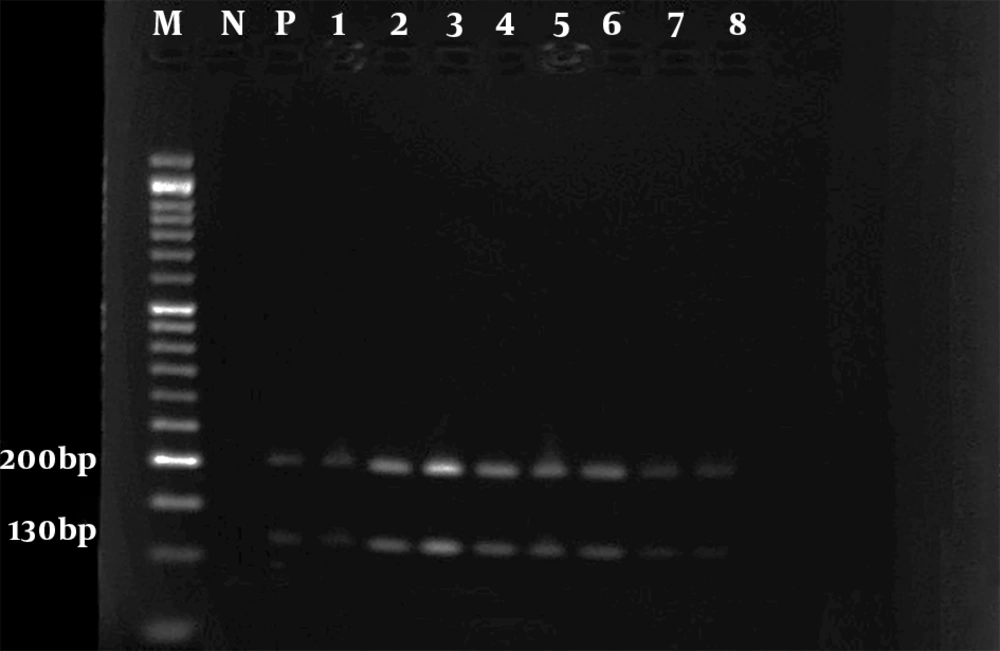
TaqI digestion revealed the A1 strain of
L. major with digestion range of 120 to 210 bp. Moreover, no mutation site was determined in the obtained isolates by
DpnI and
HpaII digestion (
22). Thus, all 80 samples isolated from suspected cases were identified by PCR-RFLP as LmA1 strains. In a similar investigation in Ilam province, Kermanjani et al. determined all microscopically confirmed clinical isolates as
L. major; however, strains and mutations were not analyzed (
9).
Many studies have documented
L. major and other species in Iran and around the globe. For instance, Mahmoudzadeh-Niknam et al. found 341
Leishmania isolates including 58
L. tropica isolates and 283
L. major isolates in 11 geographical territories of Iran (
23). Another study in Ahvaz, Dasht-e-Azadegan, Shush, Hendijan, and Ramhormoz revealed 14
Leishmania samples with 2
L. tropica isolates and 12
L. major isolates (
13). According to Maraghi et al. 90% of the isolates from Shush county were
L. major, while the remaining 10% were
L. tropica (
24). Based on previous studies in the province, it could be expected that
L. major is the predominant species in the area. On the other hand, the traits of
Tatera indica (reservoir) and
Phlebotomus papatasi (vector) in the area, as well as various documentations from Khuzestan province, implicate this province along with Ilam and Bushehr provinces as the most highlighted regions for zoonotic cutaneous leishmaniasis in Iran (
3,
25-
27).
Mohammadiha et al. amplified ITS1 by MO-F and MO-R primers and made digestion using
TaqI, yielding
L. major (33 cases) and
L. tropica (61 cases) in all clinical samples. They could also identify
L. tropica (43 cases) and
L. major (12 cases) using LITSR and L5.8S primers and
HaeIII digestion (
21). In addition, Doudi et al. used
HaeIII and
TaqI digestion in isolates from Isfahan and Bam, resulting in two
L. major (LmA and LmB) and two
L. tropica (LtA and LtB) strains, with digestion patterns similar to ours (140 and 210 bp); however,
TaqI digestion generated 150 and 200 bp fragments, indicating a difference between central Iran isolates and isolates from Dasht-e-Azadegan (
10). Tashakori et al. determined the genotype heterogeneity in zoonotic cutaneous leishmaniasis endemic areas of the country (Damghan, Dehloran, Dezful, and Kashan) and identified five strains (LmA, LmB, LmC, LmD, and LmE). Their results suggested that LmA is dispersed throughout Iran, especially in the southwestern part. LmC, LmD, and LmE were found only in Damghan and LmB was the exclusive isolate in Kashan (
28).
Averting possible mutations, development of drug resistance, and subsequent generation of new strains would be dependent on the genetic persistence of a microorganism in reservoir hosts, thus preventing the impact of harsh environments. Consequently, LmA of
L. major with rodent reservoir hosts naturally occurs in areas with
L. major dominance. Furthermore, it is suggested that LmA is the most ancient strain with significant adaptive capabilities to conditions of new foci and other genotypes have deduced from LmA. On the contrary, anthroponotic
L. tropica does not possess reservoirs; thereby, it is more exposed to hostile milieu (environmental, seasonal, treatments, etc.) and probable mutations in the genome. Hence, the formation of novel strains is more likely to occur in
L. tropica than in
L. major (
8,
10,
29).
Previously, a number of molecular studies on the diagnosis of cutaneous leishmaniasis were done in the Southwestern endemic region, particularly Khuzestan province. In a comparative study by Khademvatan et al. in some parts of the province, 216 skin biopsies from cutaneous leishmaniasis patients were examined using microscopy, culture, and mini-exon PCR; the authors remarked that the molecular technique is the gold standard technique that could diagnose both
L. major and
L. tropica (
11). Another molecular study used real-time PCR and melt-curve analysis by Kinetoplast DNA primers on 102 archived slides, emphasizing
L. major as the predominant strain (93.75%), based on our results in the southwest of Iran (
30). A nested-PCR approach was also performed on 146 clinical samples in four geographical regions of the province by Maraghi et al., again with
L. major as the prevailed species (94.5%), followed by
L. tropica (5.5%) (
31). In addition, a mini-exon PCR-RFLP study was conducted on 14 clinical cutaneous lesions of suspected patients from a different region of the province; the results identified 12 cases as
L. major and only two cases as
L. tropica. The authors used
EaeI and
HaeIII, whereas they did not determine parasite strains, unlike to our study we did (
13).
5.1. Conclusions
In total, our results obtained by the PCR-RFLP method showed leishmaniasis, in particular, due to L. major, is predominated in Dasht-e-Azadegan region, Khuzestan province, suggesting the importance of zoonotic cutaneous leishmaniasis in the west and southwest endemic foci particularly with the presence of rodent reservoir hosts in the Khuzestan plain. Hence, future preventive measures should be taken into account. It is also suggested that the species/strains of Leishmania parasites be identified in isolates from rodents and sand fly vectors dwelling the area.