Some antibiotics, such as GEN, may decrease liver function and cause hepatotoxicity with chronic use. Early diagnosis and treatment methods can help to clear the liver and prevent further risks. Various models of liver injury have shown that KTF has antioxidant and anti-inflammatory properties (
22). Considering the antioxidant and anti-inflammatory effects of KTF as well as the side effects of GEN, in this study, the anti-inflammatory and antioxidant effects of KTF against GEN-induced hepatotoxicity via suppression of the NF-κB pathway were investigated. Bulboaca et al. showed in their study that administration of GEN at a dose of 80 mg/kg for 7 days led to an increase in liver enzyme levels (
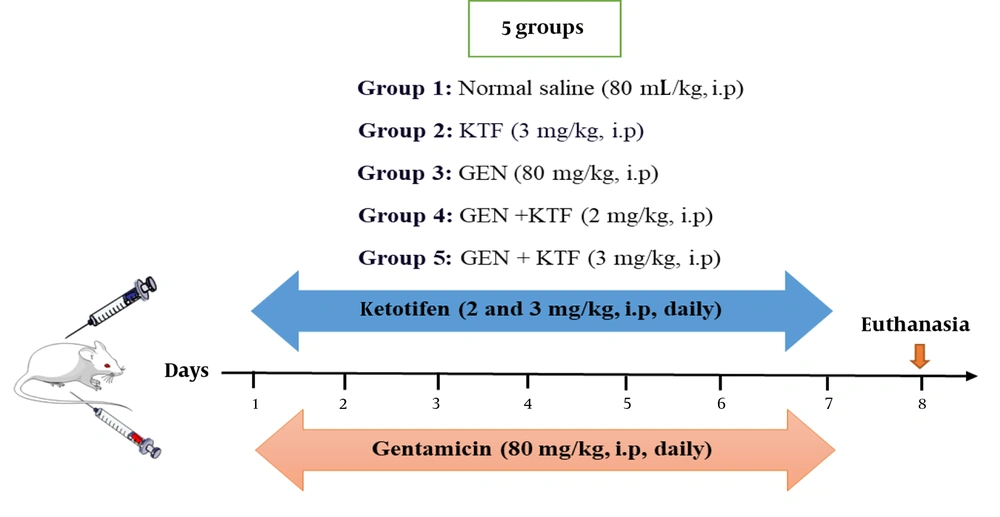
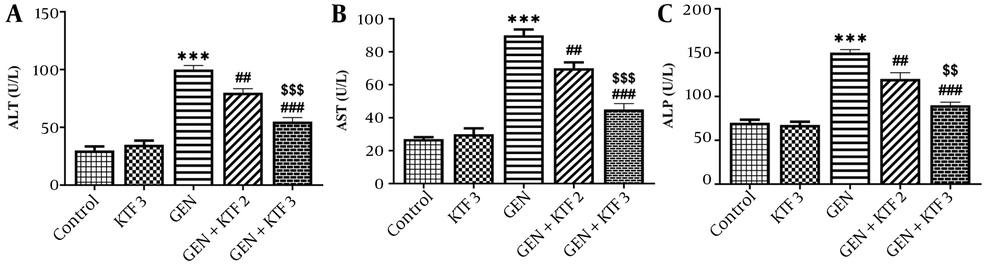
24). In this study, GEN injection for 7 days led to increased levels of liver enzymes ALT, AST, and ALP in serum and ultimately liver damage. To modulate GEN hepatotoxicity, KTF was administered at doses of 2 mg/kg and 3 mg/kg, which resulted in a decrease in liver enzyme levels. However, KTF at a dose of 3 mg/kg showed more protective results. Abdelzaher et al. investigated the protective effect of KTF, a mast cell stabilizer, on cyclophosphamide-induced hepatotoxicity. Based on the results, KTF significantly reduced liver enzymes and improved liver dysfunction (
29). The results of this study were in line with our results.
Gentamicin can increase the production of reactive oxygen species (ROS) such as superoxide and hydrogen peroxide. Increased ROS production can overwhelm the antioxidant defense system of the liver and lead to oxidative stress. Oxidative stress can damage cellular components such as lipids, proteins, and DNA and contribute to liver dysfunction and toxicity. According to previous studies, the hepatotoxicity of GEN is partly attributed to the production of free radicals and increased oxidative stress. In other words, GEN can increase the level of liver enzymes and reduce the activity of antioxidant enzymes (
30). Subsequently, the antioxidant defense mechanisms of cells are activated to neutralize free radicals (
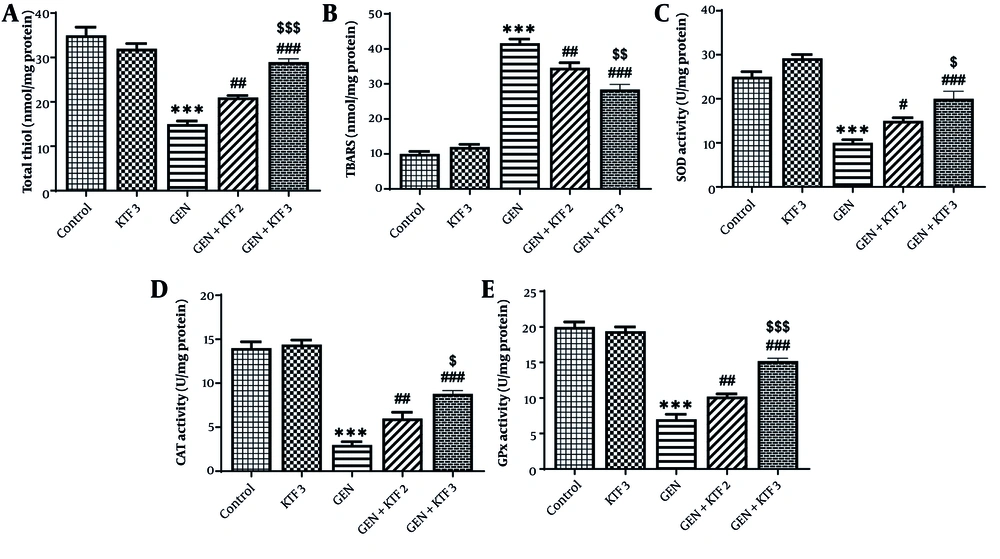
31). Ketotifen can help reduce oxidative stress and maintain liver health due to its antioxidant effects. In the present study, the total thiol level and the activities of SOD, CAT, and GPx enzymes in hepatocytes were decreased after GEN administration, indicating the use of these enzymes to neutralize free radicals. In the study by Khaksari et al., liver and kidney malondialdehyde increased in the GEN group and glutathione decreased (
15). Ketotifen reduced GEN-induced oxidative stress by increasing antioxidant enzyme activities and total thiol levels. Ketotifen 3 mg/kg was significantly more effective than KTF 2 mg/kg. Gentamicin administration also increased TBARS level in liver tissue. Ketotifen treatment significantly reduced TBARS level. Refaie et al. investigated the effect of KTF on methotrexate toxicity and the mechanisms involved. In this study, KTF significantly increased the level of reduced glutathione and the activities of antioxidant enzymes CAT and SOD, and decreased the level of malondialdehyde, which was consistent with our study (
32).
According to the study of Ali et al., GEN led to the exacerbation of inflammatory reactions and the increase of proinflammatory cytokines in liver tissue through the increase of NF-κB-p65 and TNF-α expression along with the decrease of IL-10 (
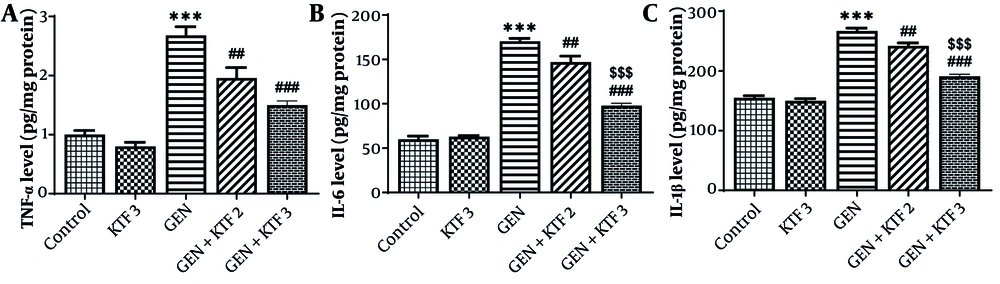
14). In this study, GEN led to the increase of inflammatory factors IL-6, IL-1β, and TNF-α in liver tissue. In contrast, KTF improved these changes with its anti-inflammatory effects. In the study of Chen et al., KTF at a dose of 0.09 mg/kg was able to significantly reduce the levels of IL-6, TNF-α, and MDA and increase the activity of SOD (
33).
The NF-κB regulatory network is a complex system that controls the activity of NF-κB transcription factors, which play a critical role in various cellular processes, including inflammation, immune responses, cell survival, and proliferation. This network involves multiple regulatory layers, including interaction with inhibitory proteins (IκBs), activation of IκB kinases (IKKs), and various post-translational modifications. In addition, NF-κB activity is influenced by other signaling pathways and regulatory molecules, forming complex feedback loops and crosstalk with other cellular networks (
34). The NF-κB transcription factor is a key regulator of inflammatory responses induced by the proinflammatory cytokines IL-6 and TNF-α (
35). NF-κB plays an important role in mediating the cellular response to these cytokines by influencing the expression of genes involved in inflammation. NF-κB activation is one of the hallmarks of inflammatory liver diseases (
36). Research has shown that NF-κB is activated through both “focal” and “non-focal” pathways. IAB kinase acts as a key regulator of NF-κB activity and is involved in liver and GEN-induced inflammation and apoptosis. Gentamicin hepatotoxicity can be reduced by regulating NF-κB and related immune pathways (
37).
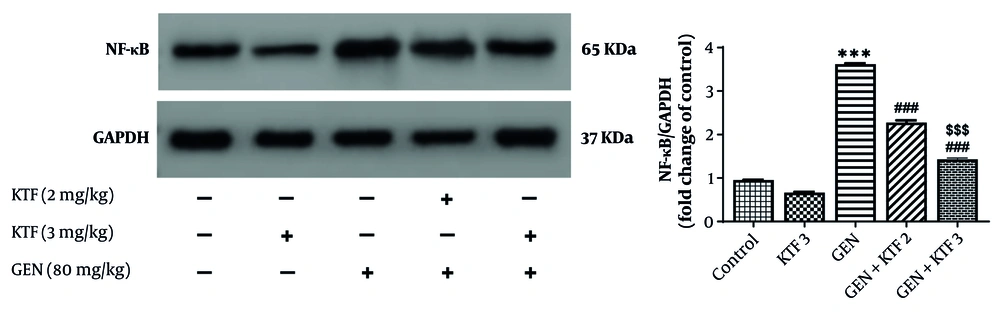
In this study, GEN exposure resulted in increased expression of NF-κB protein in liver tissue. This suggested that GEN could activate an inflammatory pathway or affect cell survival mechanisms in the liver. Increased NF-κB expression could be a direct result of GEN exposure or a secondary effect mediated by other factors (
14). In this study, KTF treatment significantly reduced NF-κB protein expression in liver tissue. The reduction in protein expression in the 3 mg/kg KTF treatment group was greater than that in the 2 mg/kg KTF group. These results indicate the protective effect of KTF on the liver in inflammatory processes and acquired stress. Zhang et al. showed that KTF significantly improved liver inflammation by reducing oxidative stress and inhibiting NF-κB associated with the accumulation of mast cells and macrophages (
38).
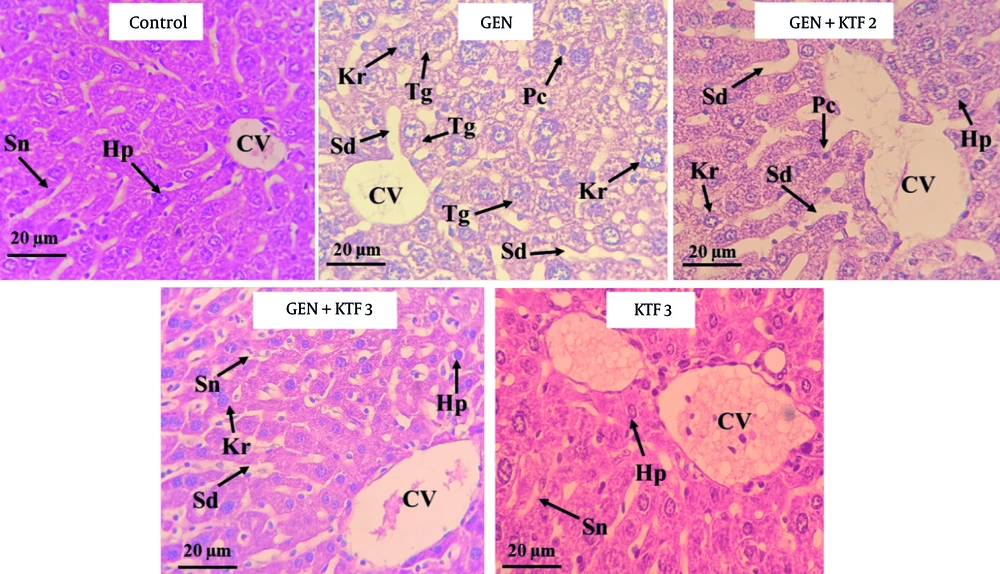
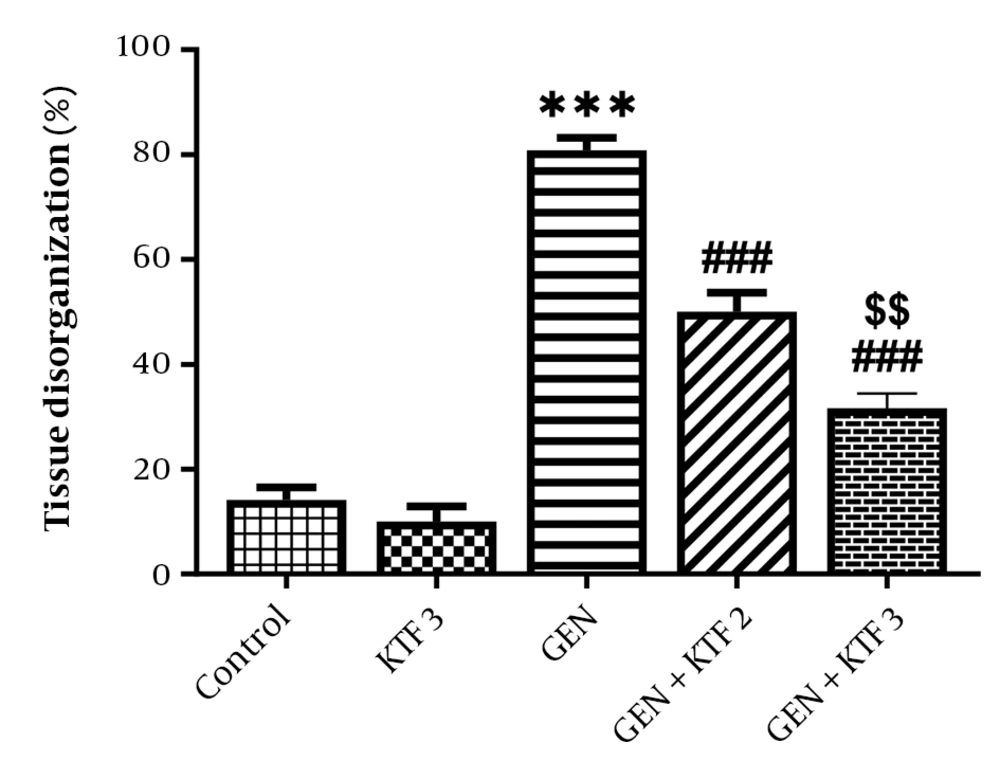
In H&E staining of liver tissue, distinct histological changes were observed in the GEN group compared to the control group, including sinusoidal dilation, asymmetry in hepatic lobules, pyknic and karyolitic nuclei, and cell protrusion. Ketotifen treatment significantly reduced these histological changes. The results of this study showed that GEN administration led to an increase in the oxidant factor TBARS, a decrease in the antioxidant factors CAT, GPx, and SOD, an increase in the inflammatory markers IL-6 and TNF-α, and an increase in the expression of the NF-kB protein in the liver. Ketotifen significantly improved these parameters due to its antioxidant and anti-inflammatory properties and mast cell membrane stabilization and showed protective effects against GEN-induced damage.
N-acetylcysteine (NAC) and silymarin are hepatoprotective agents that have been suggested in various studies. The results of the effect of NAC on GEN-induced hepatoprotection indicate that this substance acts by restoring glutathione levels and combating free radicals (
39). Silymarin, derived from milk thistle, has shown potential in mitigating GEN-induced liver and kidney damage due to its antioxidant and anti-inflammatory properties. Studies suggest that silymarin can help protect against GEN-induced nephrotoxicity and hepatotoxicity by reducing oxidative stress and inflammation (
40). Both KTF and silymarin have been investigated for their potential to mitigate GEN-induced hepatotoxicity in animal models, but with different mechanisms and varying degrees of effectiveness.
In-depth studies of the biochemical pathways of GEN using multi-omics approaches in in vitro hepatotoxicity studies, such as transcriptomics, proteomics, and metabolomics, provide a more comprehensive understanding of the effects of xenobiotics at the cellular level. By simultaneously analyzing the levels of multiple types of biomolecules, such as genes, proteins, and metabolites, insights can be gained into the complex interactions between GEN and KTF and the underlying biological processes that are affected. However, further research is needed to mitigate the impact of existing technical limitations that hinder reproducibility, standardization, comparison of data across laboratories, and compatibility with in vitro models.
5.1. Conclusions
The results of this study showed that KTF can significantly improve GEN-induced liver injury in mice. The hepatoprotective mechanism of KTF is through inhibiting inflammation, reducing oxidative stress, and modulating the NF-κB signaling pathway. The present study can provide a new approach to the treatment of liver injury and help identify new drugs.