Fulltext
The full text of this article is available on PDF
Journal of Kermanshah University of Medical Sciences
Peer-reviewed Medical Quarterly
Authors
Introduction: Subarachnoid hemorrhage is the forth most frequent cause of cerebrovascular disorder, which is rare in children .The peak incidence of this disorder occurs between age 35 to 65. The most frequent cause of nontraumatic subarachnoid hemorrhage is saccular aneurysm. Rupture of saccular aneurysm has a wide range of clinical presentations from mild headache to death. So, this disorder can be fatal and worth considering. The incidence of some disorders such as aortic coarctation is increased among patients suffering from saccular aneurysm.
Case Report: In October 2003 a 12 year- old- boy was admitted to hospital with severe headache and transient loss of consciousness. There was no history of headache. He had signs of meningeal irritation without fever. Clinical presentation and brain ct scan showed that hemorrhage originated from aneurysm of anterior communicating artery . He was hypertensive and pulses of lower limbs were not detected .He had a 3/6 systolic murmur. By doing echocardiography the presence of aortic coarctation was documented.
Discussion and Conclusion: 80%of non-traumatic subarachnoid hemorrhage cases are related to saccular aneurysms and the rest are related to arteriovenous malformation or mycotic aneurysms. Approximately 90 to 95% of saccular aneurysms lie in the anterior part of the circle of Willis. The most common site is anterior communicating artery . Saccular aneurysms sometimes are accompanied by some disorders such as polycyctic kidney , fibro muscular dysplasia, Ehler Danlos syndrome, Osler Weber Randu syndrome and aortic coarctation. So these accompanied disorders should be taken in to account in a patient with subarachnoid hemorrage.
© 2004, Journal of Kermanshah University of Medical Sciences. This open-access article is available under the Creative Commons Attribution-NonCommercial 4.0 (CC BY-NC 4.0) International License (https://creativecommons.org/licenses/by-nc/4.0/), which allows for the copying and redistribution of the material only for noncommercial purposes, provided that the original work is properly cited.
Hajsadeghi S, Chitsazan M, Rahbar H. Suprarenal Abdominal Aortic Coarctation Diagnosed During Pregnancy. Int Cardiovasc Res J. 2010;4(4):e61911. doi:
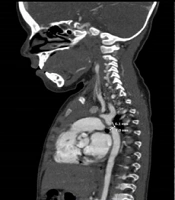
Mirshahi A, Kafian Atary S, Riasi HR, Salehi F. Cerebral Infarction Following Correction of Aortic Coarctation Surgery in Children. J Compr Ped. 2022;13(1):e119717. doi: https://doi.org/10.5812/compreped.119717
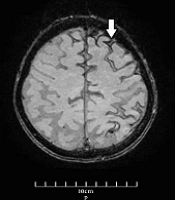
Hashemilar M, Forghani N. Cerebral Amyloid Angiopathy with Cortical Subarachnoid Hemorrhage as a Mimic for Transient Ischemic Attack: A Case Report. Arch Neurosci. 2021;8(2):e111362. doi: https://doi.org/10.5812/ans.111362
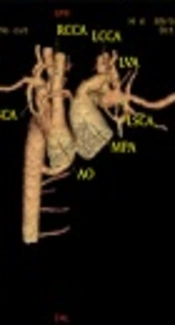
Soleimantabar H, Sabouri S, Salajeghe S, Salajeghe S. Right Sided Aortic Arch with Type C Aortic Arch Interruption: CT Angiography Findings. I J Radiol. 2018;15(1):e57877. doi: https://doi.org/10.5812/iranjradiol.57877
Khazaei M, Bahari P, Mazaheri S, Moradi A. Differences in Clinical and Demographic Characteristics in Subarachnoid Hemorrhage Patients with and Without an Aneurysm: A Cross-Sectional Study in Western Iran. Shiraz E-Med J. 2020;21(11):e98853. doi: https://doi.org/10.5812/semj.98853
Last Update: 1 day ago
Last Update: 1 day ago
Last Update: 1 day ago
Last Update: 3 days ago