




1. Background
On March 11, 2020, the World Health Organization (WHO) declared the global COVID-19 pandemic, caused by severe acute respiratory syndrome coronavirus 2 (SARS-CoV-2) (1, 2). By October 27, 2020, approximately 43,777,000 COVID-19 cases and 1,164,514 deaths had been confirmed in 216 countries (3). Concurrent with the official declaration of the spread of COVID-19 infection in Iran, the Iranian Ministry of Health and Medical Education made efforts to mitigate disease transmission and attempted to educate the general population about preventive behaviors that decrease the risk of transmission, including staying at home, regular hand washing with water and soap or alcohol-based hand rub, and wearing a face mask in public (4). Although these actions led to the epidemic subsiding, they may have increased obsession and anxiety in society (5).
The Centers for Disease Control and Prevention (CDC) recommended hand-washing with the proper procedure at the correct time as sufficient for COVID-19 infection prevention (6, 7). However, individuals susceptible to obsessive-compulsive disorder were more likely to use stronger disinfectants or wash for longer duration in response to worries of potential or mental contamination and anxiety (8-10). Conversely, decreased perceived susceptibility to illness in the community and inappropriate hand hygiene can lead to epidemic resurgence (11, 12).
2. Objectives
Recognizing the importance of hand hygiene in preventing COVID-19 transmission, this cross-sectional study investigated changes in hand-washing behaviors and associated factors among the population of northern Iran during the first peak and subsequent decline of the COVID-19 pandemic.
3. Methods
3.1. Study Design
In this cross-sectional study, subjects were recruited by simple random sampling from the prospective epidemiological research studies in Iran (PERSIAN) Guilan cohort study (PGCS) population. The full details of the PGCS have been described elsewhere (13). In summary, the PGCS was a multistage probability sample of the northern Iranian population, enrolling 10,520 individuals aged 35 to 70 since 2014 as part of the PERSIAN (14, 15). The sample size was estimated using G*Power version 3.1.9.7 software and calculated to be 571 participants, based on an effect size (f2) of 0.05, the number of related factors (25 independent variables), a confidence level of 95%, and a test power of 80%.
The inclusion criteria for participants were participation in PGCS and willingness to complete the questionnaires, while exclusion criteria included 20% missing data in the questionnaire. Data were collected using a phone interview format by trained interviewers during two periods. The first period was conducted between March 23, 2020, and March 30, 2020, corresponding to the first peak of the COVID-19 pandemic in Iran. The second period of data collection was conducted between May 3, 2020, and May 10, 2020, during the initial decline of the COVID-19 pandemic in Iran.
3.2. Measurements
In the first period of the study, general characteristics of participants were collected, including age, education, gender, occupation, residency, marital status, underlying diseases (including cardiovascular disease, uncontrolled high blood pressure, uncontrolled diabetes, respiratory diseases, and BMI > 40), immune deficiency conditions (such as corticosteroid use, chemotherapy, malignancies, organ transplants, and HIV), pregnancy, and past history of COVID-19 infection in participants or their families. Information about hand-washing behavior and beliefs was collected twice: During the first period of the study (peak of the COVID-19 pandemic) and the second period (subsidence of the COVID-19 pandemic).
A data-gathering questionnaire was designed to assess hand-washing behavior and beliefs, based on recommendations for appropriate hand-washing by the WHO (16) and CDC (17), and obsessive-compulsive disorder criteria in the DSM-5 (18). The content validity of the questionnaire was confirmed by 20 experts, with a Content Validity Index (CVI) of 0.8 and a content validity ratio (CVR) of 0.71. A pilot study was conducted with 40 participants prior to the main study to confirm the face validity and reliability of the questionnaire. The results of this pilot study confirmed the face validity and reliability of the questionnaire, with a Cronbach’s alpha of 0.86.
3.3. Statistical Analysis
Collected data were entered and analyzed using the statistical package for the social sciences (SPSS) for Windows, version 17 (SPSS Inc., Chicago, IL, USA). A P-value < 0.05 was considered significant.
4. Results
The demographic characteristics of the 571 participants enrolled in this study are outlined in Table 1. The average age of the participants was 52.87 ± 8.67 years. The majority of the participants were male (55.3%), married (94.4%), employed (55.9%), residing in urban areas (80.2%), and had a diploma or less level of education (64.3%) (Table 1).
Table 1.Demographic Characteristics of the Study Population (N = 571)
| Variables | No. (%) |
|---|---|
| Gender | |
| Male | 316 (55.3) |
| Female | 255 (44.7) |
| Educational level | |
| Diploma and less | 367 (64.3) |
| More than diploma | 204 (35.7) |
| Residency | |
| Rural | 113 (19.8) |
| Urban | 458 (80.2) |
| Occupation | |
| Unemployed | 252 (44.1) |
| Employed | 319 (55.9) |
| Marital status | |
| Not married /widowed /divorced | 32 (5.6) |
| Married | 539 (94.4) |
| Age | |
| ≤ 50 | 248 (43.4) |
| > 50 | 323 (56.6) |
| Underlying disease a | |
| No | 390 (68.3) |
| Yes | 181 (31.7) |
| Immune deficiency condition b | |
| No | 561 (98.2) |
| Yes | 10 (1.4) |
a Cardiovascular disease, uncontrolled high blood pressure, uncontrolled diabetes, respiratory diseases and BMI > 40.
b Corticosteroids use, chemotherapy, malignancies, organ transplants and HIV.
The comparison of the frequency of hand-washing, type of detergents, procedure of hand-washing, circumstances of hand-washing, and obsessive-like behaviors at the first peak of the COVID-19 pandemic and at the first subsidence of the COVID-19 pandemic are presented in Appendix 1 in Supplementary File. The daily frequency of hand-washing and the hand-washing procedure score at the subsidence of the COVID-19 pandemic were significantly lower than at the peak of the COVID-19 pandemic (P = 0.0001). Additionally, 49.9% of participants reported a decrease in the frequency of hand-washing from the peak to the subsidence of the COVID-19 pandemic (Appendix 1 in Supplementary File).
Correlations of obsessive-like behaviors with the frequency, procedure, and circumstances of hand-washing are shown in Table 2. There was a significant but weak positive correlation between the obsessive-like behavior score and all frequencies, procedures, and circumstances of hand-washing scores (Table 2).
Table 2.Correlations of Obsessive-Like Behaviors with Frequency, Procedure and Circumstances of Hand-Washing
| Variables | Obsessive-Like Behaviors Score | |
|---|---|---|
| Correlation Coefficient (r) | P-Value | |
| Frequency of daily hand-washing | 0.265 | 0.001 |
| Procedure of hand-washing score | 0.239 | 0.001 |
| Circumstances of hand-washing score | 0.237 | 0.001 |
The comparison of the reduction in hand hygiene behaviors over time from the peak to the subsidence of the COVID-19 pandemic according to the demographic characteristics of participants is shown in Appendix 2 in Supplementary File. Although males were significantly more likely to reduce obsessive-like behaviors, there was no significant difference between males and females in the reduction of procedure, circumstances, and frequency of daily hand-washing (Appendix 2 in Supplementary File).
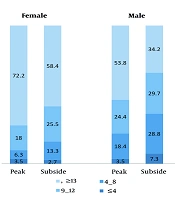
Changes in the frequency of daily hand-washing over time from the peak to the subsidence of the COVID-19 pandemic, stratified by gender, are presented in Figure 1. Both groups reported a significant decrease in the frequency of hand-washing over time. At both times, the frequency of daily hand-washing was higher in females, with statistical significance determined by chi-square analysis (P < 0.05).
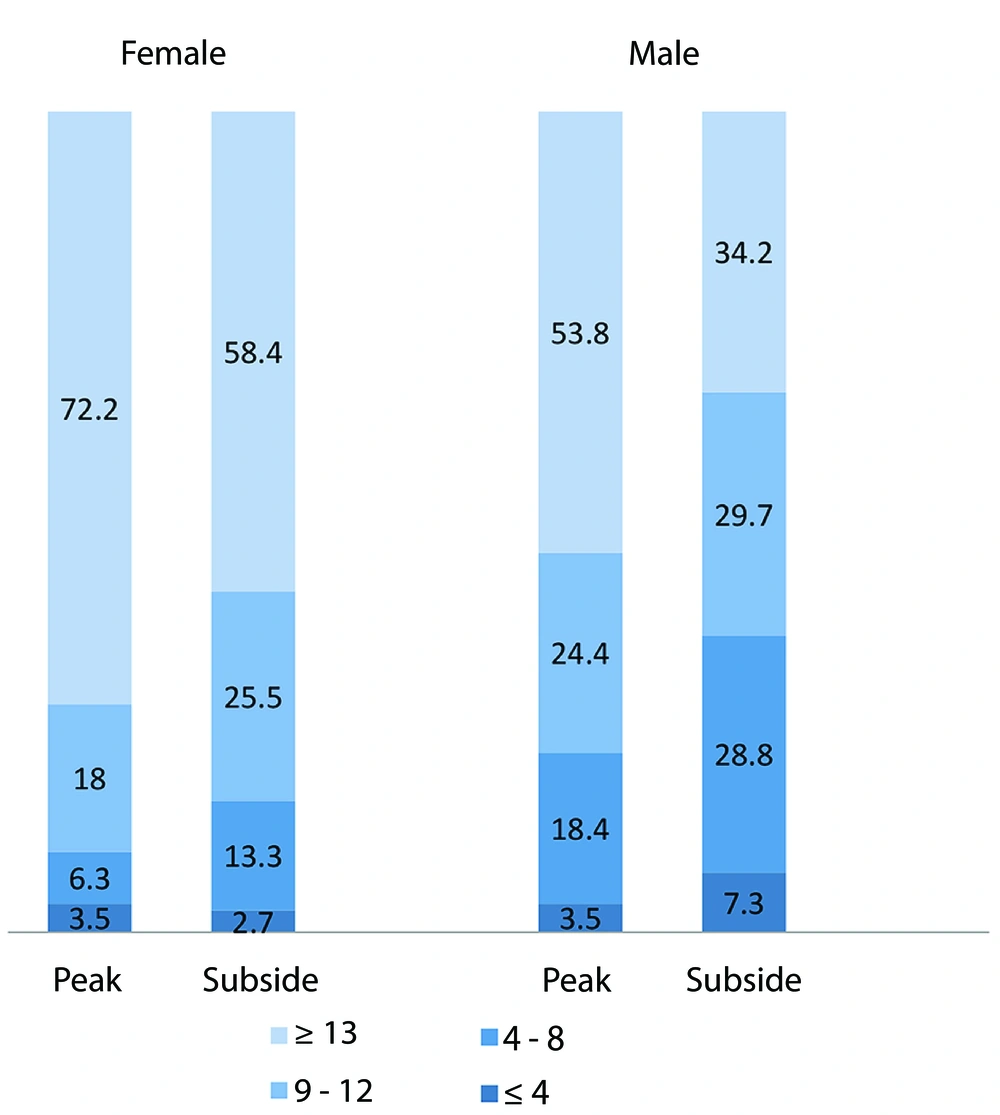
Figure 1.
Change in frequency of daily hand-washing over time from peak to subsidence of COVID-19 pandemic stratify by gender in northern Iranian population (P = 0.001 by Wilcoxon Test in both gender)
The comparison of the procedure of hand-washing score, circumstances of hand-washing score, and obsessive-like behaviors score over time from the peak to the subsidence of the COVID-19 pandemic, stratified by gender, is shown in Table 3. The score for circumstances of hand-washing at both times and the score for obsessive-like behaviors at the first subsidence of the COVID-19 pandemic were significantly higher in females (Table 3).
Table3.Procedure of Hand-Washing Score, Circumstances of Hand-Washing Score, Obsessive-Like Behaviors Score and Reduction in Hand Hygiene Behaviors Over Time from Peak to Subsidence of COVID-19 Pandemic Stratify by Gender in Northern Iranian Population a
| Variables | Gender | P-Value b | |
|---|---|---|---|
| Male | Female | ||
| At the first peak of COVID-19 pandemic | |||
| Procedure of hand-washing score | 4.20 ± 0.8 | 4.21 ± 0.8 | 0.432 |
| Obsessive-like behaviors score | 3.67 ± 1.3 | 3.79 ± 1.4 | 0.322 |
| Circumstances of hand-washing score | 10.32 ± 3.6 | 11.38 ± 3.1 | 0.001 |
| At the first subsidence of COVID-19 pandemic | |||
| Procedure of hand-washing score | 3.77 ± 0.8 | 3.71 ± 0.8 | 0.430 |
| Obsessive-like behaviors score | 2.61 ± 1.5 | 2.99 ± 1.5 | 0.004 |
| Circumstances of hand-washing score | 10.61 ± 4.3 | 11.40 ± 3.2 | 0.015 |
a Values are expressed as mean ± SD.
b P < 0.05 was considered statistically significant.
Appendix 3 in Supplementary File reveals the results of univariate and multivariate logistic regression analyses to explore factors associated with the reduction in the frequency of daily hand-washing over time from the peak to the subsidence of the COVID-19 pandemic, stratified by gender. In females, only a negative family history of coronavirus disease was identified as an independent factor associated with a reduction in the frequency of daily hand-washing. Females with a negative family history of coronavirus disease had greater odds (adjusted OR = 2.19, P = 0.03) of reducing the frequency of daily hand-washing.
In males, younger age and a reduction in the procedure of hand-washing were identified as independent factors associated with a reduction in the frequency of daily hand-washing. Males younger than 50 years old had greater odds (adjusted OR = 1.71, P = 0.02) of reducing the frequency of daily hand-washing. Additionally, males who reduced the procedure of hand-washing had greater odds (adjusted OR = 2.16, P = 0.001) of reducing the frequency of daily hand-washing (Appendix 3 in Supplementary File).
5. Discussion
Our study demonstrates that, over time from the first peak to the first subsidence of the COVID-19 pandemic in Iran, the frequency and procedure of hand-washing regressed, and obsessive-like behaviors were reduced. The effect of appropriate hand hygiene behaviors in preventing COVID-19 is reflected in a worldwide interest in this issue and has been shown as an indicator for policies to enhance population health literacy and reduce transmission (19). It is claimed that proper hand-washing behavior could break the transmission cycle of respiratory infectious diseases and decrease the risk by 6% to 44% (20). Therefore, the second peak of the COVID-19 pandemic in Iran could be attributed to reduced hand hygiene during the first subsidence of the pandemic. The second peak of COVID-19 in Iran occurred one month after the first subsidence (21).
Although hand-washing is recommended as a low-cost and affordable protective behavior for the prevention of some viral respiratory infections (22), and studies have reported increased frequency of hand-washing during the peak pandemic periods of COVID-19 and H1N1 influenza (23, 24), it is challenging to maintain high hand-washing compliance (25). We found a positive correlation between obsessive-like behaviors and hand hygiene behaviors. These findings align with previous studies that revealed a positive dose-response gradient between levels of anxiety and personal protective behaviors (26-29). Thus, a reduction in obsessive-like behaviors may indicate a decrease in perceived susceptibility to illness in the community, potentially leading to poor hand hygiene and an epidemic outbreak.
Our findings have shown that males were more likely to reduce obsessive-like behaviors; therefore, special attention should be paid to maintaining men's perceived susceptibility during epidemics. Our findings revealed that during both the peak and subsidence of the COVID-19 pandemic, males reported hand-washing less frequently than females. Similar findings have been reported in previous studies (30, 31). However, the reduction in the frequency of hand-washing was not different between males and females.
The results of regression analyses in the current study demonstrate that, among male participants, younger age and a reduction in the procedure of hand-washing were independent predictors for a reduction in the frequency of hand-washing. Males younger than 50 years old and those with a reduced hand-washing procedure were more likely to decrease the frequency of daily hand-washing. Some previous studies have also determined that older adults are more likely to follow recommended behaviors, including hand-washing, to prevent the transmission of infectious diseases (30).
In female participants, a negative family history of coronavirus disease was the only independent predictor for a reduction in the frequency of hand-washing. Close experience of risk in a family member can maintain a high perceived susceptibility to illness (32). The strengths of this study include population-based data and a large sample size. However, social-desirability bias due to over-reporting to 'look good' and recall bias of past experiences are limitations of all self-reporting surveys. Additionally, there is a possibility of non-contact bias due to hard-to-reach individuals who are not at home most of the time, which is a limitation of household telephone surveys.
Moreover, our study was conducted during a period of rapid change related to the COVID-19 pandemic. The two data collection periods (March 23 - 30, 2020, and May 3 - 10, 2020) may have been influenced by seasonal differences (e.g., temperature, humidity) and changes in public health policies (e.g., easing of restrictions, changes in public messaging). These factors could have independently contributed to the observed decrease in hand hygiene behaviors. While our study did not specifically collect data on these potential confounders, we believe that changes in risk perception and public health messaging related to the pandemic were likely the dominant drivers of the observed behavioral changes. Further research is needed to disentangle the relative contributions of these various factors. The influence of these seasonal differences and other changes in data collection times is one of our study's limitations.
5.1. Conclusions
The results of this study indicated that the northern Iranian population decreased their frequency and quality of hand-washing and obsessive-like behaviors over time from the first peak to the first subsidence of the COVID-19 pandemic. The factors that independently predicted a reduction in the frequency of hand-washing in the male population were younger age and a reduction in the procedure of hand-washing, while in the female population, it was a negative family history of coronavirus disease. Thus, special attention should be paid to maintaining the general population’s perceived susceptibility to illness, especially in younger men, during the pandemic.