Fulltext
Full-text is available in PDF format.
Journal of Nursing and Midwifery Sciences
The Official Journal of Mazandaran University of Medical Sciences
Authors
Context: The evidence suggests that the communication skills of the emergency department personnel are not optimal, and the employees are not prepared to deal with the violent behaviors of patients and their relatives.
Aims: This study aimed to determine the effect of anger management training on controlling the perceived violence and aggression of nurses in emergency departments.
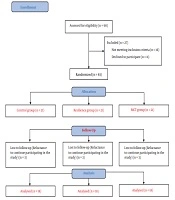
Setting and Design: This quasi-experimental study was conducted on 112 nurses in emergency departments of educational healthcare centers of Gorgan, Iran, in 2017.
Materials and Methods: Nurses were randomly divided into test and control group. In the test group, training of anger management skills was carried out in person, followed by 2-month virtual training, including short messages related to the skill of anger management delivered via Telegram. No specific measure was obtained in the control group. The subjects filled out an anger management skill questionnaire before and after the intervention.
Statistical Analysis: Data were analyzed using paired t-test, Wilcoxon test, and Mann–Whitney U-test with P < 0.05.
Results: The mean ages of the subjects in the test and control groups were 30.25 ± 3.02 and 28.58 ± 4.16 years, respectively. The comparison of exposure level to verbal violence in the control group was low in the beginning of the study, which had a significant increase at the end of the investigation (P = 0.001). There was a significant difference between the level of exposure to physical violence in the test group before and after the intervention (P = 0.007), whereas no change was observed in the control group (P = 0.91). Only in the test group, there was a reduction in the level of exposure to sexual anger, and the difference was statistically significant (P = 0.006).
Conclusion: According to the results of the present study, running workshops and following the trainings via the internet reduced the score of exposure to physical and sexual aggression in nurses.
2018 Journal of Nursing and Midwifery Sciences. This is an open access journal, and articles are distributed under the terms of the Creative Commons Attribution‑NonCommercial‑ShareAlike 4.0 License, which allows others to remix, tweak, and build upon the work non-commercially, as long as appropriate credit is given and the new creations are licensed under the identical terms.

Farahani M, Ebadie Zare S. Effectiveness of Cognitive-Behavioral Anger Management Training on Aggression and Job Satisfaction on Nurses Working in Psychiatric Hospital. Zahedan J Res Med Sci. 2018;20(2):e55348. doi: https://doi.org/10.5812/zjrms.55348
Hasani H, Zarei B, Danaie Z, Mahmoudi Rad GH. Resilience Skills Training Versus Metacognitive Therapy: A Comparison of Effectiveness on Anxiety in Nurses Working in Intensive Care Units and Emergency Department. Mod Care J. 2020;17(3):e106905. doi: https://doi.org/10.5812/modernc.106905
Koohkan A, Sanagoo A, Pahlavanzadeh B, Badeleh Shamooshaki MT, Mahasti Jouybari L. The relationship between anger with general health in emergency personnel. J Nurs Midwifery Sci. 2021;8(4):e140702. doi: https://doi.org/10.4103/jnms.jnms_108_20
Sheikhi M, Sareechloo M, Javadi A, Moradi M. Effect of nurses empowerment on coping with job stresses. J Inflamm Dis. 2024;12(4):e155435. doi:
Vahidi Sabzevar A, Robat Sarpoosh H, Esmaeili F, Khojeh A. The effect of emotional intelligence training on employed nurses. J Nurs Midwifery Sci. 2016;3(3):e141228. doi: https://doi.org/10.18869/acadpub.jnms.3.3.46
Last Update: 1 week ago
Last Update: 1 week ago
Last Update: 1 week ago
Last Update: 2 days ago