


1. Background
Cardiovascular diseases are among the most common chronic illnesses. Heart failure is considered the terminal stage of cardiac disorders. It is a complex clinical syndrome where, due to ventricular dysfunction, the heart loses its ability to pump blood in accordance with the body’s needs (1). The prevalence and incidence of heart failure have significantly increased worldwide, affecting approximately 37.7 million people globally (2). In Iran, heart failure has a prevalence of over 8%, which is higher compared to other Asian countries (3), and its prevalence in the city of Isfahan is 19.4% (4).
Heart failure impacts various aspects of life and health, leading to poor prognosis, physical activity limitations, social interaction disruptions, psychological distress, reduced vitality, increased dependency, early retirement, and decreased quality of life (5). Repeated hospitalizations, numerous symptoms, disease severity, and the feeling of impending death can cause mood disorders characterized by anxiety, fear, and worry (6). Additionally, this disease induces various physical and psychological stresses such as pain, loss of health, job loss, sensory deprivation, and depression, resulting in feelings of worthlessness and reduced self-esteem in patients. The prevalence of mood disorders in heart failure patients ranges from 15% to 36%, with reports as high as 77.5% (7).
Mood refers to a pervasive and sustained emotional state that significantly influences an individual’s behavior and perception of the world (8). Humans typically experience a wide spectrum of moods and exhibit diverse emotional manifestations. Mood can be categorized as normal, elevated, or depressed. While ordinary individuals are generally capable of regulating their moods and emotions (9), in mood disorders, this ability is diminished, leading to severe suffering and distress for the individual (10).
There is growing evidence that emotional factors are associated with cardiovascular health. Mood states have been related to the long-term etiology of coronary heart disease and may act as acute triggers of cardiovascular events (11). Emotional states in everyday life may also contribute to episodes of cardiac dysfunction, including transient myocardial ischemia and ventricular tachycardia, in patients with established coronary artery disease. Mood status is a critical factor in the treatment and prevention of disease progression in heart failure patients (12).
Studies indicate that psychological factors play a crucial role in the lives of cardiac patients and may act as either risk factors or supportive elements. Therefore, examining the psychological status of these patients is a significant challenge (13). One factor that may influence psychological status is individuals’ perspectives on themselves, specifically self-compassion (14). Self-compassion plays an important role in emotional regulation (15). It is significant in two ways: Self-compassion and compassion for others. Self-compassion involves being kind and non-judgmental towards oneself while also caring for others (16).
Another study suggests that compassion-based studies may reduce stress in patients with chronic physical illnesses (17). Rushforth et al.’s 2022 study showed that a compassion-based approach improves mood disorders and post-traumatic stress (18). Given the physical and psychological conditions of cardiac patients, they have needs beyond mere physical care (19). The high prevalence of heart failure highlights the importance of addressing this issue in this patient group.
Considering the presented evidence, cardiac patients face needs that extend beyond addressing physical ailments due to their psychological and physical conditions (19). The high prevalence of heart failure underscores the necessity of focusing on the mood status of these patients, as it plays a pivotal role in treatment and preventing disease progression. The advancement of the disease and frequent hospitalizations place significant burdens not only on the patient but also on their family members.
Self-compassion, defined as attention to one’s psychological and emotional needs, facilitates the improvement of quality of life and encourages a greater focus on psychological factors. Investigating the relationship between self-compassion and mood status in heart failure patients holds special importance, given their increased risk of experiencing negative emotions. Self-compassion can act as an effective coping mechanism and a practical tool in enhancing mood and improving the quality of life for such patients.
2. Objectives
Understanding the connection between self-compassion and mood status may contribute to the development of interventions and treatments aimed at promoting the psychological well-being of these individuals. While self-compassion is recognized as a mechanism for regulating emotions, reducing stress, and improving psychological performance in chronic diseases, its specific impact on the mood status of heart failure patients has not been thoroughly studied (20). Considering the high prevalence of heart failure in the community and the lack of similar studies conducted in Isfahan, researchers have decided to design and implement this study.
3. Methods
3.1. Design
This cross-sectional, descriptive correlational study examined the relationship between self-compassion and mood status in 200 hospitalized heart failure patients. Samples were collected using a convenience sampling method. The sampling process was carried out over a three-month period, from October to December 2023.
3.2. Study Setting
This study was conducted in the Internal Medicine Ward of Shahid Chamran Heart Hospital, affiliated with Isfahan University of Medical Sciences, in 2023. The convenience sampling method was used for data collection. Accordingly, all patients who met the inclusion criteria completed the questionnaires, and the sample size reached 200. The research setting in this study included the women’s Internal Cardiology Ward, men’s Internal Medicine Ward (Internal A), Heart Failure Ward (Internal C), and the special Internal Medicine Ward (Internal B) of Chamran Hospital, affiliated with Isfahan University of Medical Sciences (Isfahan, Iran).
3.3. Study Population
Inclusion criteria included being over 18 years old, having heart failure for at least six months, not being addicted to drugs, and not having any physical or psychological disorders. Exclusion criteria included unwillingness to continue participation, incomplete questionnaires, or any issues preventing the patient from continuing participation.
3.4. Sample Size
In our study, the sample size was calculated to be 200 participants. The sample size was calculated based on the following formula:
1.
2. Z1-β: A statistical power of 80% corresponds to a Z-value of 0.84 in the standard normal distribution.
3.
4. d: The precision of the study is 5.6 (21).
These parameters were used to ensure the study’s statistical validity and reliability.
3.5. Data Collection
Data were collected using the Profile of Mood States (POMS) and the Self-compassion Scale (SCS) questionnaires.
The POMS Questionnaire consists of 65 questions related to six domains: Anxiety, depression, anger, fatigue, confusion, and vigor. Each item is rated on a Likert scale from 0 (not at all) to 4 (extremely). The scores for each subscale are as follows: Anxiety (0 - 36), depression (0 - 60), anger (0 - 48), vigor (0 - 32), fatigue (0 - 28), and confusion (0 - 28). Lower scores indicate better status, except for the vigor subscale, where higher scores indicate better status. The total mood score is calculated by summing the scores of the five subscales (anxiety, depression, anger, confusion, and fatigue) and then subtracting the vigor score. Therefore, the total mood score ranges from 28 to 168, with lower scores indicating better mood (22). The POMS Questionnaire was developed by McNair et al., and its validity was assessed by these authors (22). The Persian version of this questionnaire was evaluated for validity and reliability by Fazel et al. in 2008 (23). In a study by Babaee et al. in 2012, the Cronbach’s alpha was 0.95, and the Pearson correlation coefficients for anxiety, depression, anger, vigor, fatigue, and confusion were 0.97, 0.91, 0.95, 0.95, 0.98, and 0.98, respectively (24). In the present study, the Cronbach’s alpha was 0.93.
The SCS consists of 26 questions related to six domains: Self-kindness, self-judgment, common humanity, isolation, mindfulness, and over-identification, rated on a 5-point Likert scale. The lowest possible score is 26, and the highest is 130, with higher scores indicating higher levels of self-compassion. This questionnaire was developed by Neff in 2003, with an initial Cronbach’s alpha of 92% (25). In the study by Azizi et al., the construct validity of the scale was examined, and the internal consistency reliability for the items of general self-compassion was 0.78, and Cronbach’s alpha coefficients for self-kindness were 0.79, self-judgment was 0.79, human commonalities were 0.93, perceived isolation was 0.90, mindfulness was 0.88, and over-identification subscales were 0.88 (26). In the present study, the Cronbach’s alpha was 0.83.
Before the study began, the researcher fully explained the purpose of the study to all participants and obtained written informed consent from the study participants. The researcher was present at the specified centers on different days of the week and during morning, afternoon, and night shifts. After introducing themselves and providing sufficient explanations about the study to the patients, written informed consent was obtained. Demographic, self-compassion, and mood state questionnaires were then distributed. Patients who were literate completed the questionnaires themselves, while those who were illiterate or unable to respond due to weakness or medical attachments had the questions read to them, and their responses were recorded. Clarifications were provided if the questions were unclear.
3.6. Data Analysis
The collected data were analyzed using SPSS version 25. Qualitative data were reported as frequencies and percentages, while quantitative data were reported as mean ± standard deviation or median and interquartile range. Pearson’s correlation coefficient and linear regression were used for the final analysis and to examine the simultaneous effect of the independent and contextual variables on the dependent variable. The normality of the data was assessed using the Kolmogorov-Smirnov test.
3.7. Ethical Considerations
The researcher coordinated with the Research Deputy of the School of Nursing and Midwifery and Isfahan University of Medical Sciences (IR.MUI.NUREMA.REC.1402.080) and a written introduction letter for conducting the study. The researcher then visited Chamran Hospital, explained the study’s title, objectives, and sampling method to the hospital’s director and educational supervisor, and proceeded to the cardiology wards to introduce themselves and explain the study to the ward staff before starting the sampling process.
4. Results
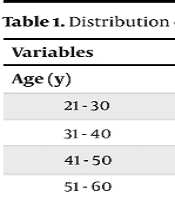
The study results showed that most heart failure patients were aged 51 - 60 years (31%), with 111 males (55.5%) and 89 females (44.5%). Among them, 167 (83.5%) were married, 95 (47.5%) had primary education, 71 (35%) were homemakers, and 139 (69.5%) lived in urban areas. The mean duration of illness was 48.69 ± 59.81 months, and the mean ejection fraction (EF) was 40.86 ± 7.16 (Table 1).
| Variables | Values |
|---|---|
| Age (y) | |
| 21 - 30 | 7 (3.5) |
| 31 - 40 | 6 (3.0) |
| 41 - 50 | 16 (8.0) |
| 51 - 60 | 62 (31.0) |
| 61 - 70 | 50 (25.0) |
| 71 - 80 | 52 (26.0) |
| 81 and above | 7 (3.5) |
| Sex | |
| Male | 111 (55.5) |
| Female | 89 (44.5) |
| Marital status | |
| Married | 167 (83.5) |
| Widowed | 25 (12.5) |
| Divorced | 8 (4.0) |
| Education | |
| Illiterate | 58 (29.0) |
| Primary education | 95 (47.5) |
| High school diploma | 33 (16.5) |
| Bachelor’s degree | 12 (6.5) |
| Master’s degree | 2 (1.0) |
| Occupation | |
| Employee | 12 (6.0) |
| Self-employed worker | 65 (32.5) |
| Retired | 24 (12.0) |
| Unemployed | 22 (11.0) |
| Homemaker | 71 (35.5) |
| Student | 6 (3.0) |
| Region of residence | |
| Urban | 139 (69.5) |
| Rural | 61 (30.50) |
| Duration of illness (mo) b | 48.69 ± 59.81 |
| EF c | 40.86 ± 7.16 |
Abbreviation: EF, ejection fraction.
a Values are expressed as No. (%) or mean ± SD.
b Min-max: 6 - 300.
c Min-max: 15 - 55.
The results showed that the mean total score for self-compassion was 76.33 ± 11.38, and the mean total score for mood states was 95.6 ± 22.86. The correlation coefficient between mood states and the overall self-compassion score was significant (r = -0.333, P = 0.001), as were the correlations with the subcomponents of self-kindness, self-judgment, isolation, and over-identification (P < 0.05). Given the negative correlation coefficients, these relationships are inverse, indicating that higher mood state scores are associated with lower overall self-compassion scores and its subcomponents (Table 2).
| Variables | Mean ± SD | Min-Max | Correlation Coefficient | Significance |
|---|---|---|---|---|
| Self-compassion | ||||
| Self-kindness | 15.4 ± 3.44 | 7 - 25 | -0.238 | 0.001 |
| Self-judgment | 13.91 ± 2.96 | 6 - 21 | -0.347 | 0.001 |
| Common humanity | 11.91 ± 2.37 | 5 - 20 | 0.039 | 0.588 |
| Isolation | 11.94 ± 2.83 | 6 - 20 | -0.246 | 0.001 |
| Mindfulness | 12.43 ± 2.8 | 4 - 19 | -0.051 | 0.473 |
| Over-identification | 1.73 ± 2.73 | 4 - 20 | -0.435 | 0.001 |
| Total self-compassion score | 76.33 ± 11.38 | 48 - 115 | -0.333 | 0.001 |
| Mood states | ||||
| Anxiety | 22.37 ± 4.77 | 8 - 36 | -0.445 | 0.001 |
| Depression | 33.28 ± 7.35 | 17 - 58 | -0.206 | 0.001 |
| Anger | 26.78 ± 6.18 | 14 - 32 | -0.227 | 0.001 |
| Fatigue | 16.46 ± 3.74 | 7 - 27 | -0.204 | 0.001 |
| Confusion | 13.69 ± 3.73 | 7 - 25 | -0.055 | 0.442 |
| Vigor | 17.13 ± 5.43 | 8 - 28 | -0.302 | 0.001 |
| Total mood state score | 95.6 ± 22.86 | 39 - 151 | -0.330 | 0.001 |
In examining the relationship between self-compassion scores and mood state subcomponents, Pearson correlation results showed significant correlations between self-compassion and anxiety, depression, anger, fatigue, and vigor (P < 0.05). The Pearson correlation coefficients indicate that this relationship is inverse, meaning that higher self-compassion is associated with lower anxiety, depression, anger, and fatigue (Table 2).
In determining the ability to predict mood states based on self-compassion scores, linear regression results showed that mood states could be predicted by self-compassion. The beta value for self-compassion was -0.33 (P = 0.001, β = -0.33), indicating that an increase of one standard deviation in self-compassion would result in a 0.33 standard deviation decrease in mood states. Therefore, as self-compassion increases, mood states improve.
In predicting mood states based on the subcomponents of self-compassion, only over-identification significantly predicted mood states. An increase of one standard deviation in over-identification resulted in a 0.36 standard deviation increase in mood states (P = 0.001, β = 0.36). Therefore, as over-identification increases, mood state scores increase, indicating worse mood states.
In predicting self-compassion scores based on mood state dimensions, linear regression results showed that self-compassion could be predicted by anxiety (P = 0.001, β = -0.54) and vigor (P = 0.001, β = 0.27). Anxiety decreased self-compassion by 0.54, while vigor increased self-compassion by 0.27.
According to Table 3, there is a statistically significant difference in the mean self-compassion scores based on age, gender, and occupation according to the one-way analysis of variance (ANOVA) test (P < 0.05). Additionally, the Pearson correlation coefficient indicated that there was no significant relationship between the EF levels of heart failure patients admitted to the internal cardiology wards of Chamran Hospital and their self-compassion scores and mood status scores (P > 0.05).
There is also a statistically significant difference in mood states based on age, education, occupation, and region of residence (P < 0.05). The correlation coefficient between the duration of illness and the total mood state score is statistically significant, and given the Pearson correlation coefficient, the relationship is direct. As mood state scores increase, the duration of illness also increases (r = 0.177, P = 0.012).
| Variables | Self-compassion | Significance Level | Mood States | Significance Level |
|---|---|---|---|---|
| Age (y) | 0.003 b | 0.005 b | ||
| 21 - 30 | 75.28 ± 5.02 | 25.73 ± 86.85 | ||
| 31 - 40 | 77.33 ± 12.53 | 81.10 ± 66.105 | ||
| 41 - 50 | 67.75 ± 10.33 | 62.21 ± 50.108 | ||
| 51 - 60 | 8.24 ± 12.08 | 32.25 ± 82.86 | ||
| 61 - 70 | 73.88 ± 11.21 | 93.22 ± 76.99 | ||
| 71 - 80 | 76.82 ± 10.18 | 57.18 ± 65.97 | ||
| 81 and above | 75.42 ± 8.42 | 74.9 ± 57.103 | ||
| Sex | 70.04 b | 0.051 b | ||
| Male | 77.75 ± 10.75 | 78.21± 80.92 | ||
| Female | 74.53 ± 11.95 | 81.23± 15.99 | ||
| Marital status | 0.052 b | 0.578 b | ||
| Married | 76.43 ± 11.03 | 37.22 ± 89.94 | ||
| Widowed | 73.12 ± 11.29 | 24.20 ± 36.98 | ||
| Divorced | 84.25 ± 15.71 | 75.38 ± 75.10 | ||
| Education | 0.148 b | 0.024 b | ||
| Illiterate | 74.03 ± 8.66 | 53.21 ± 56.99 | ||
| Primary education | 76.96 ± 10.98 | 49.21 ± 00.92 | ||
| High school diploma | 76.03 ± 14.09 | 43.21 ± 72.99 | ||
| Bachelor’s degree | 84.66 ± 16.34 | 17.35 ± 83.87 | ||
| Master’s degree | 86.00 ± 0.0 | 00.00 ± 00.130 | ||
| Occupation | 0.001 b | 0.014 b | ||
| Employee | 81.83 ± 16.61 | 07.30 ± 00.83 | ||
| Self-employed worker | 77.86 ± 11.97 | 63.24 ± 76.91 | ||
| Retired | 80.12 ± 10.46 | 85.18 ± 91.90 | ||
| Unemployed | 78.27 ± 10.76 | 64.16 ± 31.98 | ||
| Homemaker | 71.78 ± 9.20 | 87.21 ± 59.102 | ||
| Student | 80.33 ± 5.95 | 32.11 ± 33.88 | ||
| Place of residence | 0.568 b | 0.013 b | ||
| Urban | 76.64 ± 12.76 | 80.22 ± 25.98 | ||
| Rural | 75.63 ± 7.37 | 98.21 ± 54.89 | ||
| Duration of illness (mo) | - | r = -0.122 c, P = 0.084 | - | r = 0.177 c, P = 0.012 |
| EF | - | r = 0.08 c, P = 0.261 | - | r = 0.007 c, P = 0.920 |
Abbreviation: EF, ejection fraction.
a Values are expressed as mean ± SD.
b One-way analysis of variance (ANOVA).
c Pearson correlation coefficient.
5. Discussion
The present study aimed to examine the relationship between self-compassion and mood status in heart failure patients hospitalized at Chamran Hospital, affiliated with Isfahan University of Medical Sciences in 2023. To achieve the objective of determining the mean total score of self-compassion and its dimensions (self-kindness, self-judgment, common humanity, isolation, mindfulness of suffering, and over-identification with suffering) in heart failure patients, statistical tables were prepared.
The findings of the study indicated that the mean total self-compassion score was at a moderate level, with higher scores representing higher levels of self-compassion. Similarly, in the study by Khalili et al., the level of self-compassion among cancer patients was also moderate (27).
Self-compassion acts as a protective factor when dealing with stress and chronic illnesses, enhancing life expectancy and aiding individuals in reducing negative emotions (28). By strengthening the capacity to endure suffering, promoting self-care, fostering a non-critical attitude, and utilizing personal experiences, self-compassion plays a pivotal role in improving adaptability to the conditions of chronic diseases (29).
To achieve the objective of determining the mean scores of overall mood status and its dimensions (anxiety, depression, fatigue, anger, confusion, and vitality) in heart failure patients, statistical tables were prepared. The findings of the study showed that the mean scores for anxiety, depression, anger, and fatigue were above average, while the mean scores for confusion and vitality were at an average level. The mean total mood status score of the patients indicated an unfavorable mood condition among the patients. Similarly, Rashid et al. also documented a significant association between heart failure and depression and anxiety (30). In the study by Sbolli et al., it was indicated that the causes of mood disorders in heart failure patients include hopelessness about the future, fear of death, and reduced physical capabilities (31). Overall, low mood in these patients has various dimensions and stems from factors such as psychological stress, physical limitations, and social isolation (32).
Statistical tables were prepared to analyze self-compassion and its dimensions (self-kindness, self-judgment, common humanity, isolation, mindfulness of suffering, and over-identification with suffering) in heart failure patients. The findings indicated a significant correlation between self-compassion and mood status, with self-compassion accounting for 11.1% of the variance in mood status. Carvalho and Guiomar, in a review study, also confirmed a close relationship between mental health and self-compassion (33). Similarly, Chuang et al. documented that self-compassion enhances mental health, improves mood status, and increases overall well-being (34), which aligns with the results of the present study. In the study by Kotera et al., it was indicated that self-compassion improves mood status by enhancing self-esteem (35). Furthermore, the findings revealed a significant statistical relationship between mood status and the components of self-kindness, self-judgment, isolation, and over-identification with suffering. As the severity of mood disorders increases, the components of self-compassion diminish.
Merritt and Purdon demonstrated a connection between self-compassion components and the mood status of patients, showing that better mood status corresponds to higher levels of self-compassion (36). Additionally, Scardera et al. reported a significant relationship between self-compassion and mood status in patients with eating disorders (37).
Overall, to achieve the goal of determining the relationship between mood status dimensions (anxiety, depression, fatigue, anger, confusion, and vitality) scores and the total self-compassion score in patients, statistical tables were prepared. The findings indicated that increased self-compassion is associated with decreased levels of anxiety, depression, anger, and fatigue. Baker et al. also reported a significant relationship between self-compassion components and anxiety and depression in epilepsy patients (38). Similarly, Farhadi et al. stated that mood status, stress, and anxiety in patients are related to their levels of self-compassion, demonstrating that higher self-compassion leads to reduced mood disorders (39).
Self-compassion, by fostering feelings of care and calmness, improves mood status and enhances individual resilience. Brophy et al. highlighted the role of self-compassion in the treatment of mood disorders (40).
Morgenroth et al. stated in their study that in patients with left ventricular assist devices (LVADs), higher levels of self-compassion were significantly associated with reduced anxiety and depressive symptoms (20). This finding is supported by Etemadi Shamsababdi and Dehshiri, who suggest that self-compassion enhances well-being, alleviates fear, reduces stress and anxiety, and ultimately improves mood (41). Self-compassion contributes to better challenge management by promoting and improving adaptive coping strategies while reducing the tendency to rely on maladaptive coping styles (42). It can also help decrease feelings of fatigue and confusion. Moreover, self-compassion reduces anger and hostility through improved emotional regulation (43). Individuals with higher self-compassion are less likely to direct their anger toward others or internalize hostility (44), which strengthens interpersonal relationships and their mental well-being. High levels of self-compassion are significantly associated with increased vitality and activity, and they can help reduce the lethargy associated with heart failure.
To achieve the goal of determining the relationship between total self-compassion scores and demographic characteristics (age, gender, marital status, occupation, residence area, educational level) as well as clinical features (duration of illness and EF), statistical tables were prepared. The findings of the study revealed significant correlations between self-compassion and age, gender, occupation, and EF. Specifically, the highest levels of self-compassion were observed in middle-aged individuals (51 - 60 years) and male participants. Additionally, employees demonstrated higher levels of self-compassion compared to other groups.
However, no significant correlations were found between self-compassion and marital status, educational level, or area of residence. In alignment with the present study, Zarei et al. also reported a significant association between self-compassion, age, and gender in patients with gastrointestinal cancers (45). Although the two studies focused on different patient groups, both demonstrated higher levels of self-compassion among middle-aged men.
Kohli et al. highlighted significant correlations between self-compassion, age, residential status, and education level, showing that younger individuals with lower educational attainment and rural residence exhibited higher levels of self-compassion (46). Hwang et al. also stated that there are significant associations between age, gender, education, and residential status with the level of self-compassion (47).
On the other hand, Kurebayashi and Sugimoto, in their review study, concluded that there is no clear relationship between demographic information of patients with schizophrenia (age, gender, occupation, education, and marital status) and their level of self-compassion (48). This inconsistency is likely due to the unique nature of schizophrenia, as patients are less inclined to engage in self-compassion due to the characteristics of their illness.
Similarly, in the study by Khasawneh, results indicated no significant relationship between the demographic characteristics of students and their levels of self-compassion (49). Herriot et al. reached similar conclusions. The variation in results seems to be attributed to differences in the type of samples, sample size, and sampling locations (50).
The findings of the study indicated an inverse relationship between self-compassion and EF. In the study by Fattahi et al., it was determined that lower EF in cardiac patients is associated with higher levels of self-compassion (51). Additionally, it was reported that self-compassion training enhances individuals’ sense of well-being.
To achieve the objective of determining the relationship between total mood status scores and demographic characteristics (age, gender, marital status, occupation, residence area, education level) as well as clinical features (duration of illness and EF), statistical tables were prepared. The findings of the study revealed significant statistical differences in mood status concerning the variables of age, education, occupation, and residence area. Additionally, the results indicated that as mood disorders increase in severity, the duration of illness also tends to increase.
Similarly, Lee et al. reported a high prevalence of mood disorders among cardiac patients and identified a meaningful connection between mood status, the demographic characteristics of patients, and their illness duration (52). Studies further suggest that cardiac patients experience depression, anxiety, and stress due to the nature of the disease, physical condition, frequent hospitalizations, and fear of death. The intensity of these symptoms is influenced by various factors, including individual tolerance levels, adaptability to the illness, disease severity, EF levels, age, gender, education, marital status, residence, and financial status (53, 54).
The strength of this study lies in the fact that self-compassion in cardiac patients has not been previously examined, which may contribute to enhancing the quality of care for these patients. A key limitation of this study was the lack of cooperation from certain research units in completing the questionnaires due to fatigue and illness-related incapacity. To address this challenge, the researcher personally conducted the interviews and completed the questionnaires, ensuring comprehensive data collection despite participant constraints.
5.1. Conclusions
The results showed a significant inverse relationship between the mood states of heart failure patients and the overall self-compassion score, as well as the subcomponents of self-kindness, self-judgment, isolation, and over-identification. Self-compassion scores could predict mood states, with heart failure patients who have higher self-compassion experiencing better mood states. Self-compassion in patients with heart failure is associated with gender, occupation, mood status, duration of illness, place of residence, and employment status. It is recommended that managers and nurses focus on enhancing self-compassion in patients to improve their mood states.
The researchers suggest that further studies should be conducted with patients from a wider range of cultural, religious, and social backgrounds, with larger sample sizes, and using other data collection tools. These findings emphasize the importance of healthcare organizations and administrators addressing the mental health of patients. Nurses can utilize scientific principles to teach self-compassion and enhance it among heart failure patients. Interventions such as stress management programs and methods to express and foster self-compassion, aimed at improving emotional well-being, can not only benefit heart failure patients but also play a significant role in reducing recurrent hospitalizations, thereby saving patient costs and minimizing post-treatment complications.


