


1. Background
2. Methods
2.1. Chemicals
2.2. Animals
2.3. Experimental Design
2.4. Aβ Preparation and Surgery
2.5. Isolation and Culture of hADSCs
2.6. hADSCs Characterization
2.7. Immuno- and Thioflavin S-costaining
2.8. Statistical Analysis
3. Results
3.1. hADSCs Characterization
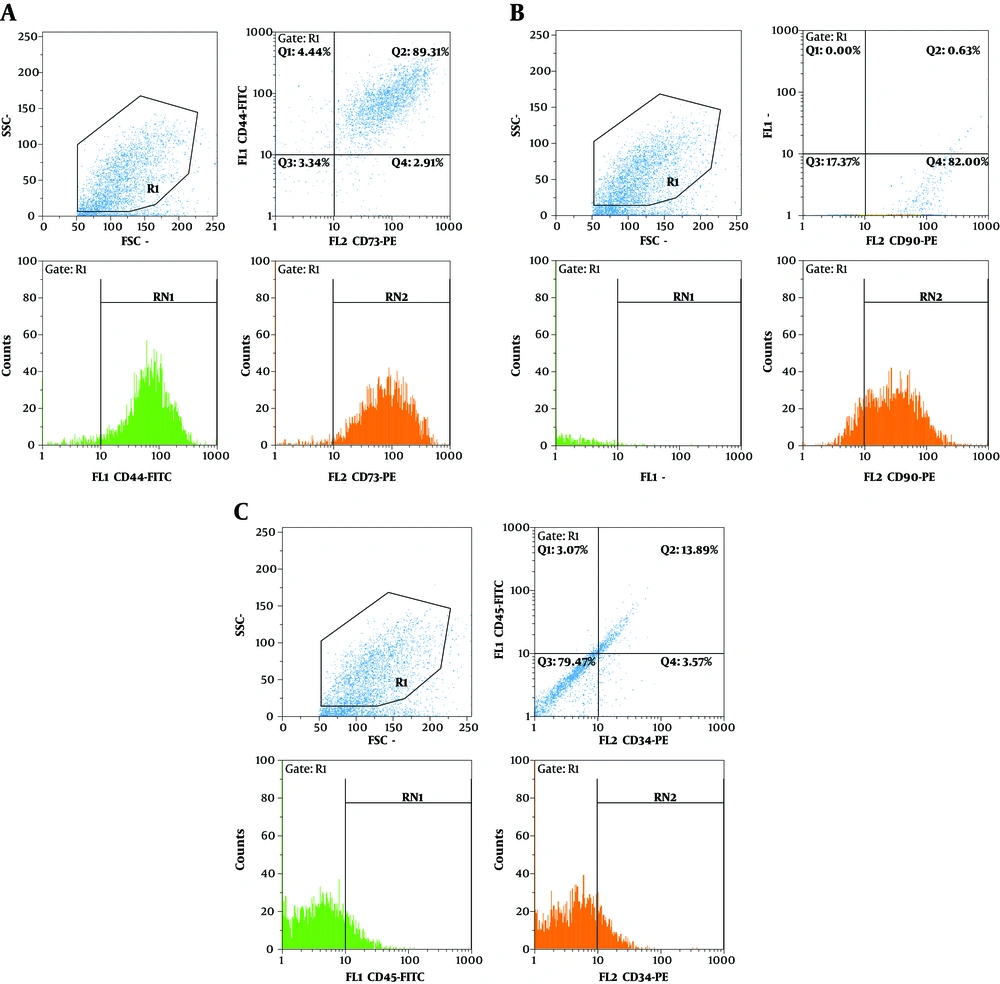
Flow cytometry analysis of surface markers showed that hADSCs express high level of CD73 (92.28%), CD44 (93.65%) (A) and CD90 (83.5%) (B) express low level of CD34 (18.67%) and CD45 (16.45%) (C).
3.2. Homing of hADSCs
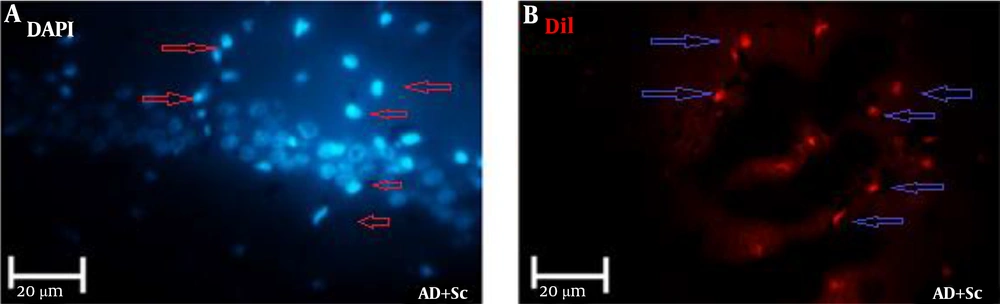
Homing of hADSCs in CA1 region of the hippocampus. Nuclei (DAPI - Blue) (A), hADSCs labeled with DiI (Red) (B).
3.3. Immuno- and Thioflavin S-Costaining
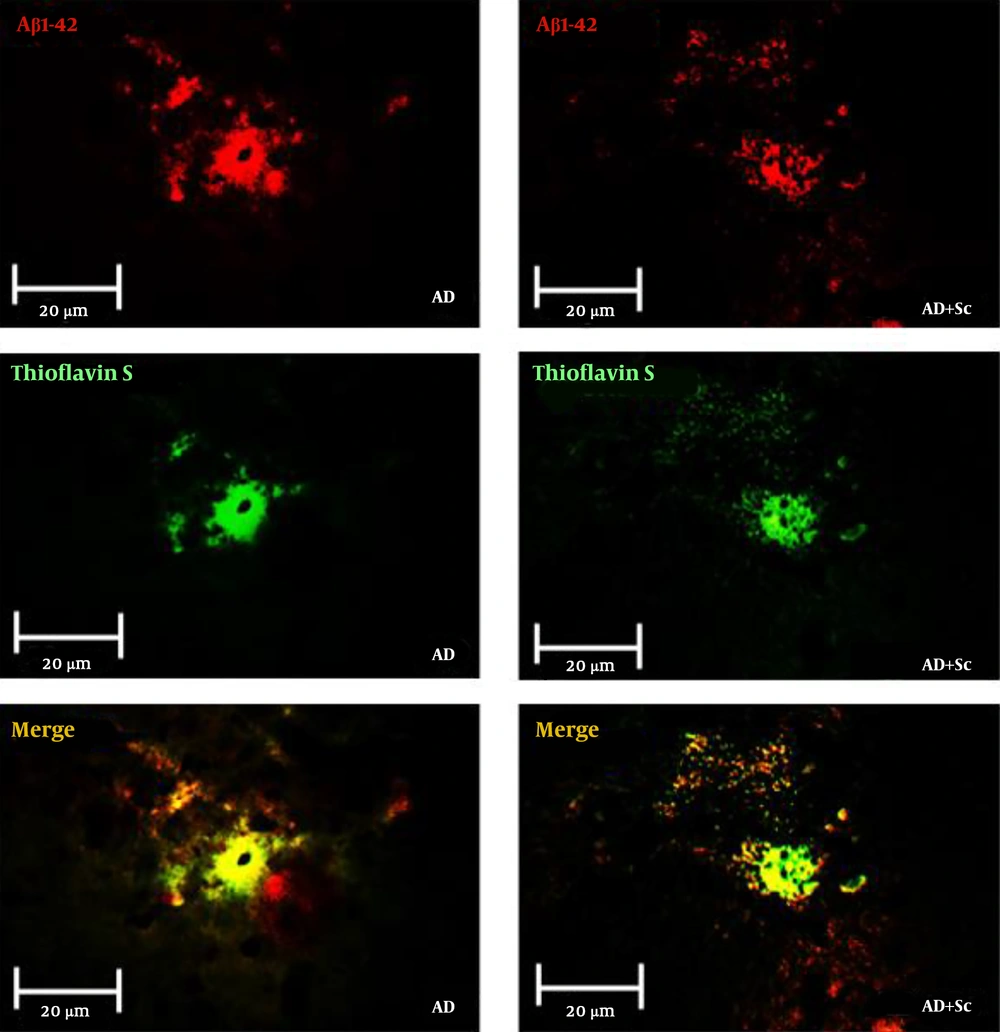
Immunofluorescent staining. Primary anti-amyloid beta rabbit polyclonal antibody followed by goat anti-rabbit FITC-conjugated secondary antibody (red), Thioflavin-S staining (green) and merge picture (yellow) in CA1 region of hippocampus in AD and AD + Sc groups (scale bar 20 µm).
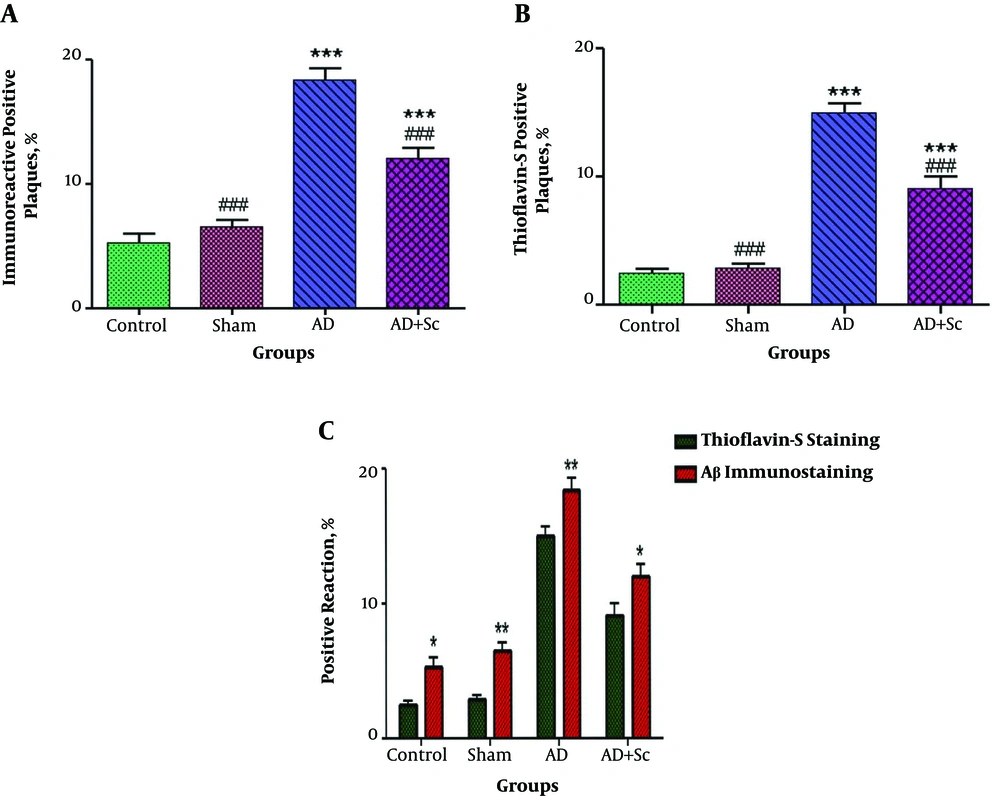
Immunoreactive positive plaques in different groups (values are expressed as mean ± SEM). N = 6, ***P < 0.001 different from control group, ###P < 0.001 different from Aβ group (A), N = 6, ***P < 0.001 different from control group, ###P < 0.001 different from Aβ group (B), *P < 0.05; **P < 0.01 show significant difference between Aβ immunostaining compared to Thioflavine-S staining (C).
