1. Background
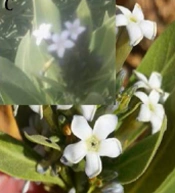
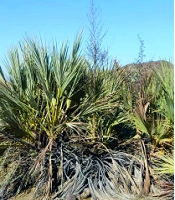
Nannorrhops ritchiana, commonly known as the Mazari palm, is locally referred to as DAAZ, wild palm, or Khok in Persian. It is recognized as the hardiest palm, with all parts of the plant being widely utilized (1). Nannorrhops ritchiana L. is a small, non-edible tree belonging to the Arecaceae family, distributed in tropical and subtropical regions worldwide. The fruits of this plant are berry-like and rich in oil.
Bacterial infections are a primary cause of mortality in farmed fish. The use of antibiotics and antimicrobials is the common method for treating such infections in aquaculture. However, the frequent and continuous use of antibiotics leads to the development of resistant strains in microorganisms, drug persistence in fish tissues, and environmental issues. Additionally, these chemicals inhibit the growth of bacterial flora in the digestive tract of fish (2). Due to the problem of antimicrobial resistance, there is an urgent need to establish regulations for the rational use of antibiotics and to discover new drugs and alternative treatments for controlling bacterial diseases in aquaculture (3).
Antibiotics have been identified as new pollutants in the aquatic environment, posing a serious problem due to the lack of wastewater treatment to eliminate these pollutants (4-8). Recent studies have shown that many antibiotics have entered aquatic environments, yet information and findings on antibiotic interactions with aquatic organisms remain limited (9, 10).
2. Objectives
The present study aimed to investigate the effect of aqueous and ethanolic extracts of the fruit of N. ritchiana on the pathogenic bacteria Aeromonas hydrophila, Yersinia ruckeri, and Streptococcus iniae in rainbow trout.
3. Methods
3.1. Preparation of Methanolic and Aqueous Extracts
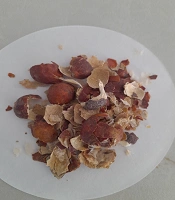
After collecting, washing, and drying the desired plant in the shade, it was powdered using an electric grinder. For extraction, 50 grams of the dried and ground powder of the desired part (fruit) was added to 250 mL of aqueous and ethanolic solvents and placed on a shaker for 24 hours at room temperature. The mixture was then filtered using Whatman No. 42 filter paper. After completing the extraction process, the obtained extract was concentrated using a rotary evaporator, and the extract was stored in the refrigerator until use (Figure 1).
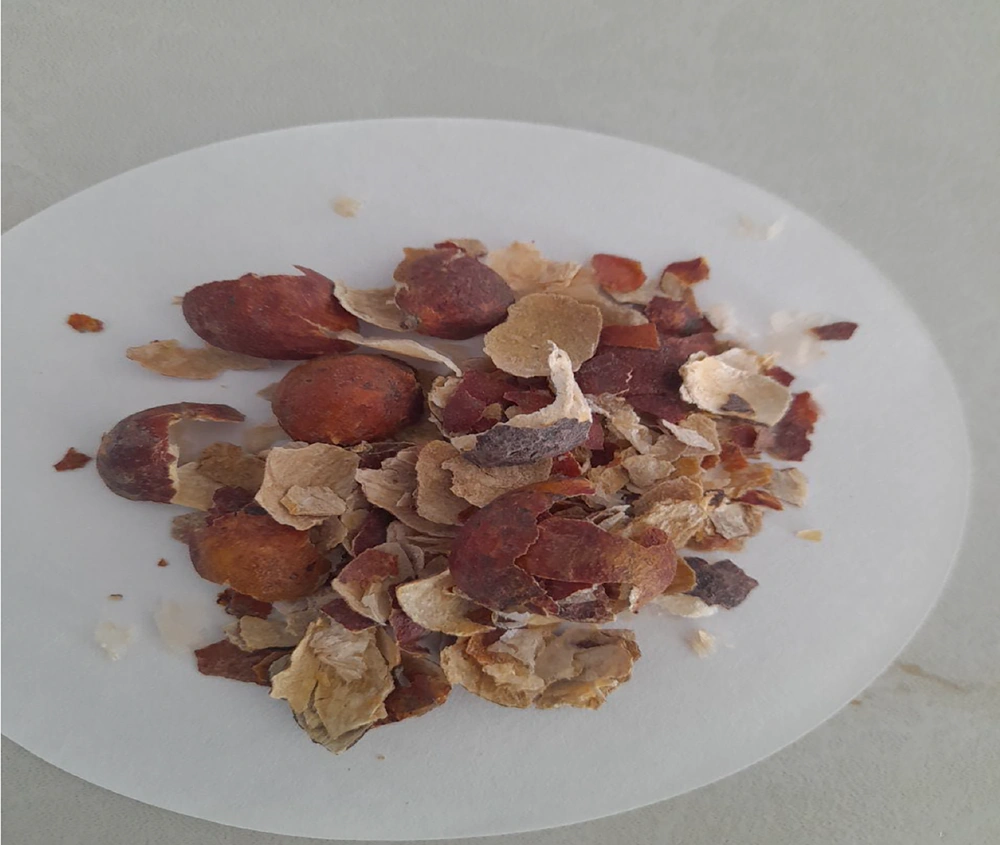
Figure 1.
Nannorrhops ritchiana fruit
3.2. Bacteria Preparation and Storage
Aeromonas hydrophila bacteria isolated from rainbow trout were prepared and approved by the Faculty of Veterinary Medicine, University of Tehran. Additionally, Y. ruckeri with PCR code number KEC 29653 and S. iniae were isolated from fish infected with Streptococcosis at the Caspian Sea Ecology Research Institute. The determination of the minimum inhibitory concentration (MIC) and minimum bactericidal concentration (MBC) of aqueous and ethanolic extracts at concentrations of 100, 50, 25, 12.5, and 6.25 mg/mL was tested using the microdilution method on the three target bacteria.
4. Results
The results of this study showed that the MIC of the ethanolic extracts against A. hydrophila, Y. ruckeri, and S. iniae were 1.56, 6.25, and 0.78 μg/mL, respectively (Table 1).
Table 1.
Antimicrobial Effects of Ethanolic Extract of Nannorrhops ritchiana Fruit Plant on Pathogenic Bacteria
| Pathogenic Bacteria | 25 | 1.25 | 6.25 | 1.56 | 0.78 | 0.39 |
|---|---|---|---|---|---|---|
| Aeromonashydrophila | - | - | - | + | ++ | ++ |
| Yersinia rockeri | - | - | + | ++ | ++ | ++ |
| Streptococcus iniae | - | - | - | - | + | ++ |
The results showed that the MIC of the aqueous extract of N. ritchiana fruit against A. hydrophila, Y. ruckeri, and S. iniae was 1.25, 25, and 6.25 μg/mL, respectively (Table 2).
Table 2.
Antimicrobial Effects of Aqueous Extract of Nannorrhops ritchiana Fruit Plant on Pathogenic Bacteria
| Pathogenic Bacteria | 25 | 1.25 | 6.25 | 1.56 | 0.78 | 0.39 |
|---|---|---|---|---|---|---|
| Aeromonashydrophila | - | + | ++ | ++ | ++ | ++ |
| Yersinia rockeri | + | ++ | ++ | ++ | ++ | ++ |
| Streptococcus iniae | - | - | - | + | ++ | ++ |
5. Discussion
Fish farming in ponds and fish farms is conducted in a conventional manner, which is stressful for fish species and suppresses the immune system, leading to infection and bacterial colonization. Therefore, the use of antibiotics to prevent the emergence and spread of infection is essential, especially in countries where preventive measures are not implemented. Antimicrobial drugs are widely prescribed and used in ponds and fish farms.
In a study by Beyzaei et al., the antimicrobial activity of the plant Daz was investigated, revealing the largest diameter of the inhibition zone against S. pneumoniae (8.40 mm), Bacillus subtilis (8.60 mm), and Fusarium oxysporum (7.66 mm) (11). The antimicrobial and antifungal activity of the ethanolic extract of this plant was tested on bacterial and fungal pathogens, showing that a concentration of 300 mg/mL had the largest inhibitory zone diameter (5 - 21 mm) (12). Other studies also demonstrated that the ethanol extract of the aerial parts of this plant is inhibitory to the fungi Candida albicans, Aspergillus niger, and Microsporum canis (13).
In a study by Sutili et al., it was shown that the essential oils of Hesperozygis ringens, Ocimum gratissimum, and O. americanum inhibited A. hydrophila infections in silver catfish (14). In the study by Tafi et al., the antimicrobial effect of hydroalcoholic extracts of Aloe vera and sage on S. iniae in rainbow trout was investigated. The results indicated that the two medicinal plants, A. vera and S. officinalis, contain the active compound cineol. The MBC of A. vera against S. iniae was 4.067 mg/mL, while the MBC of S. officinalis was 5.185 mg/mL (15).
In the study by Fakharzadeh et al., the effect of Origanum vulgare extract and nano against S. iniae bacteria was investigated, showing that the diameter of the inhibitory zone of the extract against the bacteria was 21.7 mm, with a MIC of 0.25 mg/mL and an MBC of 0.5 mg/mL (16).
5.1. Conclusions
The results of the study demonstrated that this medicinal plant is an effective inhibitor of fish pathogenic bacteria and can be used in the treatment and reduction of aquatic infections.