Fulltext
The full text of this article is available on the PDF file.
Zahedan Journal of Research in Medical Sciences
The Official Journal of Zahedan University of Medical Sciences
Authors
Background: One of the most common endocrine disorders in women's medicine is the increased androgen and the symptoms of increased androgens in women such as polycystic ovary syndrome. The two main components to diagnose this syndrome are menstrual disorder and clinical or laboratory hyperandrogenism, but other causes should be ruled out in order to confirm the diagnosis. This study aims to examine clinical Hyperandrogenism in female students of 14 to 18 years old in Shiraz in 2010.
Materials and Methods: This cross-sectional study was conducted on 3200 female high school students of 14-18 years old in Shiraz. Data collection tools include questionnaires containing personal details, clinical Hyperandrogenism features (acne, alopecia and hirsutism based on Freeman-Galway scale) and test results. The ultrasound was conducted based on Adams criteria. The data results are analyzed using SPSS-15 software and χ2 and t statistical tests.
Results: In this study, the frequency of hirsutism is 3.2%, prevalence of acne is 5% and alopecia is 4.2%. Mean of free testosterone (1.647±0.835) was higher in the group with hirsutism, acne and alopecia. Independent t-test showed no significant relationship between patients with hirsutism, acne and alopecia and non-affected people in terms of mean of total testosterone and free testosterone. However, there is a significant relationship between people with acne and hirsutism and polycystic ovary compared with those with acne and hirsutism and those without polycystic ovary (p >0.05).
Conclusion: This study indicated that clinical and chemical hyperandrogenism can be a criterion to diagnose with polycystic ovary syndrome, but ultrasound was not helpful.
© 2012, Author(s). This open-access article is available under the Creative Commons Attribution 4.0 (CC BY 4.0) International License (https://creativecommons.org/licenses/by/4.0/), which allows for unrestricted use, distribution, and reproduction in any medium, provided that the original work is properly cited.
Naderi T, Akbarzadeh M, Dabbaghmaneh M, Tabatabaei H. Prevalence of various phenotypes of polycystic ovarian syndrome among high school girls of Shiraz (2009). J Inflamm Dis. 2024;15(4):e155665. doi:
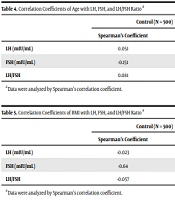
Fazli D, Moghaddasi SP. Correlations Between Gonadotropin Hormones and the Manifestations of Polycystic Ovary Syndrome. Thrita J Neu. 2022;11(1):e117396. doi: https://doi.org/10.5812/thrita-117396
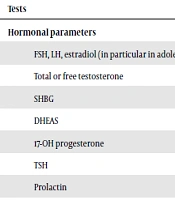
Ramezani Tehrani F, Amiri M. Polycystic Ovary Syndrome in Adolescents: Challenges in Diagnosis and Treatment. Int J Endocrinol Metab. 2019;17(3):e91554. doi: https://doi.org/10.5812/ijem.91554
Shahbazian H, Zakerkish M, Heidari-Manesh N. Etiology of Hirsutism in Women Referring to Endocrinology Clinic in Ahwaz. Zahedan J Res Med Sci. 2013;15(4):e93031. doi:
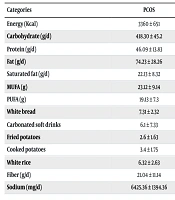
Partash N, Rezaii Ghamsari S, Eidi Shirinbolagh Z, Ebrahimi E. The Relationship Between Nutritional Patterns and Physical Activity in Adolescents with Polycystic Ovary Syndrome. J Nurs Midwifery Sci. 2025;12(1):e153735. doi: https://doi.org/10.5812/jnms-153735
Last Update: 1 month ago
Last Update: 1 month ago
Last Update: 1 month ago
Last Update: 1 day ago