1. Background
Recovery after anesthesia and surgery is a complex process and depends on many factors such as patient, anesthesia and surgery conditions as well pre-existing comorbidities (1, 2). Morbidity and mortality rates were traditionally considered as most important measurements of outcomes for recovery after anesthesia and surgery (3). However, serious adverse events after surgery usually occur in those patients with sequelae. These events are mostly unrelated to anesthesia conditions (4). Recently, increased efforts have been made to reduce hospitalization and other costs of care, and to facilitate return to normal activities and health status (5).Quality of recovery following surgery and anesthesia is now considered as a vital and patient-centered outcome (6, 7). There has been growing interest in assessing patient’s attitudes and perceptions on outcomes of care in anesthesiology (4, 8). During the past decade, a number of comprehensive and relevant instruments have been developed to assess quality of recovery in postoperative setting (9-11). One of the most commonly used and promising assessment tools is the quality of recovery score questionnaire (QoR-40) (12). The QoR-40 is a generic postoperative recovery instrument developed by Myles et al. in 1999 (12). The QoR-40 has 40 items covering five dimensions including patient support, comfort, emotions, physical independence and pain. The QoR-40 has been found to be highly correlated with a generic quality of life scale, the Medical Outcomes Study 36-Item Short-Form Health Survey (SF-36) (13-15). In a recent systematic review, it was revealed that the QoR-40 was a highly valid and reliable measure in a sample of 3459 patients from nine countries (16, 17). The QoR-40 has already been translated into several languages including Japanese and Turkish (8). To date, translation and psychometric performance of the Persian version of the QoR-40 has never been examined.
2. Objectives
The aims of this study were to translate the QoR-40 into Persian and explore its psychometric properties in Iranian patients.
3. Patients and Methods
Patients were selected from those scheduled for elective general surgery under general anesthesia from July 2013 to February 2014 at Shahid Rajaee Hospital, Qazvin. The inclusion criteria were age 18 years or older, ability to speak and write in Persian, consent to participate and admission to the hospital for at least one preoperative night. Patients with cognitive impairment, those younger than 18 years or older than 80 years, an American Society of Anesthesiologists physical status (ASA) score of IV or above, alcoholism and drug-abuse were excluded from the study. The study aims were explained to eligible patients. Patients were then asked to sign an informed consent. Patients completed the study measures preoperatively, at three days and one month after the operation. The study protocol was approved by the ethics committee of Qazvin University of Medical Sciences. According to Tabachnik and Fidell, a minimum of 200 patients were needed (5 to 10 patients per questionnaire item) to conduct psychometric testing (18).
3.1. Measures
Age, gender, educational status, marital status, monthly income, weight, height, anesthesia time, surgery time, recovery time and duration of hospitalization were retrieved from patient’s medical records.
3.1.1. The Quality of Recovery Score
The QoR-40 has 40 items that consider early postoperative health status of patients. These items cover five dimensions including emotional state (9 items), physical comfort (12 items), patient support (7 items), physical independence (5 items) and pain (7 items). All items are rated on a five-point Likert scale from one (worst) to five (best). All negative items were reversed to ease the interpretation. The total score (global score) was computed by summing all items. The minimum and maximum possible scores were 40 and 200, respectively (12-13).
3.1.2. The Short Form-36
The SF-36 is a widely used and general measure to assess quality of life in populations. The SF-36 contains 36 items in eight dimensions of physical functioning (PF), role limitations due to physical health (RP), bodily pain (BP), general health perception (GH), social functioning (SF), role limitations due to emotional problems (RE), vitality (VT) and mental health (MH). All items ranged from 0 to 100 with higher scores indicating better wellbeing. These dimensions can be summarized into two categories as Physical Component Scale (PCS) and Mental Component Scale (MCS). Psychometric properties of the Iranian version of the SF-36 were presented elsewhere and found to be valid and reliable (19).
3.1.3. Short-Form McGill Pain Questionnaire (SF-MPQ)
The SF-MPQ is a measure to assess various pain dimensions. This tool includes three parts. The first part is related to 15 descriptive adjectives with 11 sensory and 4 affective ones. All items rated on a four-point Likert scale from zero (none) to three (severe). Sensory and affective scores are resulted by summing all subset scores (sensory and affective), while the total score is computed by summing affective and sensory scores. Visual Analog Scale (VAS) is considered in the next part of this tool. VAS is a unidimensional10-cm horizontal line, anchored by two verbal descriptors ranging from no pain to worst possible pain. Present pain intensity (PPI) is considered in the last section of the SF-MPQ. The PPI contains a six-point verbal rating scale ranging from 0 (none) to 5 (the worst excruciating). The Iranian version of the SF-MPQ was reported as a valid instrument with an acceptable reliability to evaluate pain in Persian patients with chronic pain (20, 21).
3.2. Translation Procedure
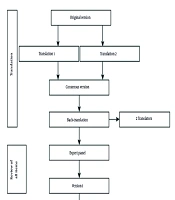
The translation procedure was performed based on the Beaton’s and Bullinger’s recommendations to create a Persian version of the QoR-40 comparable with the original English version (21). In the first step, two bilingual translators who were native Persian speakers translated theQoR-40 into the Persian/Farsi independently (forward translation step). One of these translators was aware of study aims as Beaton recommended (22). Afterwards, the project manager compared the two translations regarding consistency and adequate vocabulary. Any discrepancies and differences were resolved by discussion with translators, and finally a consensus version was reached. The next step as a backward translation, the Persian version was translated back into the original English language. The translator was a native English speaker with expertise in medicine. Next, the project manager with an expert committee (health psychologist, nurse, anesthesiologist, surgeon and the translators) reviewed all translations and related materials to verify the translation procedure. The project manager resolved any discrepancies, grammatical errors and other errors addressed by the committee. The interim Persian version was than piloted on 15 patients (a mean age of 47 years; 9 females) to ensure that the translated version, scoring and instruction were acceptable by the target sample. Discrepancies in scoring and items were resolved by the project manager and then administered on 300 patients to assess the validity and reliability of the Persian QoR-40.
3.3. Statistical Analyses
The reliability of the Iranian version of QoR-40 was tested using internal consistency and test-retest reliability. Internal consistency was measured using Cronbach’s alpha coefficient (α). A value of greater than 0.70 was considered acceptable (23). To assess test-retest reliability of the QoR-40, interclass correlation coefficients (ICCs) were used. The postoperative values of the QoR-40 at three days and one month postoperative were considered adequate to estimate the stability of this measure. The ICC ranges from 0 to 1, where < 0.40, 0.41-0.60, 0.61-0.80 and 0.81-1.00 reflected poor, fair, moderate and good agreement, respectively (8). Convergent validity of the QoR-40 was evaluated using Spearman's coefficient of rank correlation between item and own dimension. It was hypothesized that item inter-correlation of within dimension should be high (8, 24). Concurrent validity of the QoR-40 was assessed by computing Spearman's coefficient of rank correlations between postoperativeQoR-40, VAS and related dimensions of the SF-36. To assess predictive validly, multivariate linear regression analysis adjusting for age and gender was performed. The global QoR-40 was considered dependent variable, while age, gender and duration of hospitalization were considered independent variables.Known-groups comparisons were performed to investigate QoR-40’s external construct validity. Previous studies revealed that females significantly reported poorer global QoR-40 scores than males (25).Responsiveness to change over time, an important aspect of clinical utility and capacity to detect changes in health status, was performed on all patients comparing preoperative and postoperative (Day 3) values. The standardized response mean, (SRM) was computed to assess changing QoR-40 score over the time. SRM is a measure of effect size, which does not have overestimation or underestimation of treatment effect. SRM is obtained by dividing mean changes to the standard deviation of this change. Values 0.20, 0.50 and 0.80 or greater are considered small, moderate and large effect sizes, respectively (26).To examine the factorial structure of the QoR-40, exploratory factor analysis (EFA) and confirmatory factor analysis (CFA) were performed. The total sample (N = 300) was randomly split into two 150-case subsamples using Statistical Package for the Social Sciences (SPSS, version 19, IBM SPSS Statistics) random case selection procedure. These split-half samples were compared for clinical and sociodemographic characteristics. There was no statistical significant difference between the two samples. An EFA using principal component analysis (PCA) with varimax rotation was conducted on the first split-half sample to identify possible underlying factor structure. The scree plot and eigenvalues of greater than one were used for factor extraction. The sample adequacy and sphericity of the QoR-40 were examined by the Kaiser-Meyer-Olkin (KMO) and Bartlett’s test, respectively. A KMO value equal or greater than 0.70 and a significant Bartlett's test of sphericity were needed to ensure the appropriateness of using factor analysis on dataset. To evaluate further construct validity of the QoR-40, a CFA was conducted on the second sample (n = 150). Robust maximum likelihood (RML) was used to estimate model parameters due to limited sample size and large number of items. Due to ordinal nature of data, polychoric correlations matrix and asymptotic covariances matrix were used as input matrix. Chi-square (χ2) test, comparative fit index (CFI), non-normed fit index (NNFI), the root mean square error of approximation (RMSEA), goodness of fit index (GFI) and adjusted goodness of fit index (AGFI) were used to assess how well the specified model fitted the data. Criteria for a good fit model for this study were χ2P > 0.05, CFI > 0.90, NNFI > 0.90, RMSEA ≤ 0.80, GFI > 0.90 and AGFI > 0.90 (28). CFA was conducted using LISREL (version 8.80; Scientific Software International, Skokie, IL) (15).
4. Results
We enrolled 300 patients in the study. The average age of patients was 46.5 years (SD = 13.2). The sample was mostly male (61.7%) and widowed/divorced (59.7%) (Table 1). Cronbach’s alpha scores for postoperative QoR-40 subscales ranged from 0.89 to 0.93 and the global QoR-40 had an α value of 0.89. The ICCs for all QoR-40 subscales and the global QoR-40 were more than0.70, indicating an excellent reliability (Table 2), with the exception of physical comfort. The ICCs for the subscales of the QoR-40 ranged from 0.71 (physical comfort) to 0.88 (emotional state). Item-to-total correlations are presented in Table 3. Medium to high correlations were found between all items and their own scale (rho ≥ 0.42). Furthermore, all QoR-40 subscales correlated significantly to each other and ranged from 0.39 to 0.74 (P < 0.001). To examine concurrent validity of the QoR-40, a bivariate correlation between postoperative global QoR-40 and VAS was calculated. Global QoR-40 correlated significantly with VAS (rho = 0.51, P < 0.001). Spearman rho correlation coefficients indicated that the QoR-40 subscales significantly correlated with correspondent SF-36 subscales (i.e. PCS, MCS, bodily pain, physical functioning and mental health). Bodily pain significantly correlated with the QoR-40 pain subscale (rho = 0.38, P < 0.001). Mental health and the QoR-40 emotional state subscale scores correlated significantly to each other (rho = 0.41, P < 0.001). Physical functioning was also correlated significantly with physical independence (rho = 0.34, P < 0.001). Table 4 shows the Spearman's correlation coefficients between the QoR-40 subscales and SF-36 summary measures. Two summary measures of PCS and MCS were correlated significantly with all QoR-40 subscales and the global QoR-40. The duration of hospitalization was negatively correlated with global QoR-40 (rho = -0.32, P < 0.001). Multivariate linear regression analyses showed that lower duration of hospitalization was independently associated with higher quality of recovery after surgery and anaesthesia (B = -0.49, P < 0.001). The global QoR-40 score differed significantly between men and women (P < 0.005). Women (mean = 160, SD = 20) reported significantly lower quality of recovery after surgery and anaesthesia compared to men (mean = 166, SD = 18).Change over time (i.e. comparison of scores before and after surgery and anesthesia) is shown in Table 5. There was a significant improvement for all QoR-40 subscales. Changes in the score of QoR-40 subscales were generally moderate to high based on SRM (Table 5).
Inter-items correlations were significantly correlated. Sampling adequacy measures (the KMO) exceeded 0.70 with a value of 0.91. Bartlett’s test of sphericity had a significant result (χ2-test (780) = 8660, P < 0.001). Consequently, these indices enabled us to perform EFA legitimately. The EFA yielded a five-factor solution with no forcing necessary. Eigenvalues for the three factors that explained most of the variance observed were 13.52, 4.28, and 2.33, respectively. The EFA of the forty items found factor loadings of 0.37 to 0.90 and item communalities of 0.59 to 0.92. The five components explained 52.19% of the total variance (Table 6). Confirmatory factor analysis of the Iranian version of the QoR-40 using the five domain of original English version loadings of the 40 items resulted a good fit (χ2 = 2000.99, degree of freedom = 730, P value = 0.0002, GFI = 0.95, AGFI = 0.92, NNFI = 0.92, CFI = 0.93 and RMSEA = 0.079). The standardized regression weights for all domains ranged from 0.10 to 0.93 and presented in Figure 1. All latent constructs intercorrelated significantly and ranged from 0.49 to 0.91.
Table 1.
Demographic Characteristics of Patients a
| Variables | Values |
|---|---|
| Age a | 46.51 ± 13.23 |
| Education b | |
| Primary school | 75 (25.0) |
| Secondary school | 122 (40.7) |
| High school | 95 (31.7) |
| University | 8 (2.6) |
| Gender b | |
| Male | 185 (61.7) |
| Female | 115 (38.3) |
| Marital status b | |
| Married | 97 (32.3) |
| Divorced/widowed | 179 (59.7) |
| Single | 24 (8.0) |
| Accommodation b | |
| Urban | 221 (73.7) |
| Rural | 79 (26.3) |
| Monthly income | |
| Good, > 700$ | 39 (130) |
| Moderate, 500 - 700$ | 250 (83.3) |
| Poor, < 500$ | 11 (3.7) |
| Weight, kg a | 67.83 ± 13.43 |
| Height, cm a | 163.11 ± 11.20 |
| BMI, kg/m2a | 27.14 ± 15.56 |
| Anesthesia time, min a | 134.24 ± 83.43 |
| Surgical time, min a | 77.24 ± 55.99 |
| Recovery time, min a | 15.43 ± 9.57 |
a Data are presented as Mean ± SD.
bData are presented as No. (%).
Table 2.
The Reliability of the Iranian Version of the QoR-40 Questionnaire (Three Days and One Month Postoperatively) a
| Scale | ICC (CI 95%) |
|---|---|
| PC | 0.71 (0.63 - 0.77) |
| ES | 0.88 (0.84 - 0.90) |
| PS | 0.81 (0.77 - 0.86) |
| PI | 0.82 (0.77 - 0.85) |
| P | 0.84 (0.80 - 0.87) |
| GL | 0.81 (0.77 - 0.85) |
aAbbreviations: ICC, intra-class correlation coefficient; PC, physical Comfort; ES, emotional State; PS, patient support; PI, physical independence; P, pain; GL, global QoR-40.
Table 3.
Inter-Item Correlation and Internal Consistency of the QoR-40
| Variables | Mean ± SD | Coefficient |
|---|---|---|
| Emotional state, α = 0.89 | ||
| Feeling comfortable | 3.74 ± 0.56 | 0.60 |
| Feeling in control | 3.78 ± 0.68 | 0.52 |
| Feeling general well-being | 3.44 ± 0.61 | 0.54 |
| Had bad dream | 4.88 ± 0.41 | 0.70 |
| Feeling anxious | 3.14 ± 0.90 | 0.80 |
| Feeling angry | 4.64 ± 0.65 | 0.65 |
| Feeling depressed | 4.13 ± 1.00 | 0.54 |
| Feeling alone | 4.63 ± 0.71 | 0.47 |
| Had difficulty falling asleep | 4.29 ± 1.17 | 0.59 |
| Physical comfort, α = 0.91 | ||
| Able to breathe easily | 4.04 ± 2.35 | 0.64 |
| Able to sleep well | 3.59 ± 0.61 | 0.62 |
| Able to enjoy food | 3.48 ± 0.68 | 0.58 |
| Feeling rested | 3.44 ± 0.62 | 0.60 |
| Nausea | 4.58 ± 0.83 | 0.52 |
| Vomiting | 4.88 ± 0.48 | 0.88 |
| Dry retching | 4.59 ± 0.82 | 0.63 |
| Feeling restless | 3.40 ± 0.71 | 0.55 |
| Shaking or twitching | 4.52 ± 0.75 | 0.43 |
| Shivering | 4.76 ± 0.56 | 0.59 |
| Feeling too cold | 4.60 ± 0.62 | 0.65 |
| Feeling dizzy | 4.27 ± 0.67 | 0.89 |
| Patient support, α = 0.93 | ||
| Able to communicate with hospital staff in the hospital | 4.17 ± 0.66 | 0.69 |
| Able to communicate with my family and friends | 4.11 ± 0.65 | 0.63 |
| Getting support from physicians in hospital | 4.22 ± 0.60 | 0.52 |
| getting support from nurses in hospital | 4.34 ± 0.58 | 0.61 |
| Getting support from my family and friends | 4.11 ± 0.62 | 0.56 |
| Able to understand the instructions and advice | 3.78 ± 0.68 | 0.76 |
| Feeling confused | 4.27 ± 0.67 | 0.57 |
| Physical independence, α = 0.90 | ||
| Having a normal speech | 4.02 ± 0.34 | 0.60 |
| Able to wash my face, brush my teeth or shave | 3.96 ± 0.59 | 0.65 |
| Able to look after my own appearance | 3.85 ± 0.64 | 0.46 |
| Able to write | 3.40 ± 1.13 | 0.42 |
| Able to return to work or usual home activities | 3.50 ± 0.68 | 0.56 |
| Pain, α = 0.93 | ||
| Moderate pain | 3.41 ± 1.10 | 0.55 |
| Severe pain | 3.87 ± 1.28 | 0.67 |
| Headache | 4.30 ± 0.72 | 0.77 |
| Muscle pains | 3.89 ± 1.23 | 0.78 |
| Backache | 3.96 ± 1.30 | 0.52 |
| Sore throat | 4.82 ± 0.51 | 0.59 |
| Sore mouth | 4.96 ± 0.26 | 0.51 |
Table 4.
Spearman Correlations Between QoR-40 Scores and SF-12 Scores a
| QoR-40 subscale | PCS | MCS |
|---|---|---|
| Physical comfort | 0.57 | 0.40 |
| Physical independence | 0.62 | 0.59 |
| Pain | 0.64 | 0.51 |
| Emotional state | 0.51 | 0.60 |
| Psychological support | 0.40 | 0.57 |
| Global | 0.67 | 0.66 |
aAbbreviations: PCS, Physical Component Scale; MCS, Mental Component Scale.
| Scale | Maximum Possible Score | Preoperative Score | Postoperative Score | Mean Change (95% CI) | SRM |
|---|---|---|---|---|---|
| GL | 200 | 164.18 (17.34) | 146.94 (20.06) | -17.24 (-11 to -22) | 0.86 |
| PC | 60 | 50.58 (5.76) | 43.68 (6.3) | -6.9 (-5 to -9) | 0.92 |
| ES | 45 | 36.48 (4.77) | 33.17 (3.38) | -3.31 (-2 to -4) | 0.67 |
| PS | 35 | 28.92 (3.73) | 26.96 (4.10) | -1.95 (-1 to -3) | 0.48 |
| PI | 25 | 18.73 (2.64) | 14.22 (4.43) | -4.50 (-3 to -5) | 0.74 |
| P | 35 | 29.23 (4.56) | 25.31 (5.93) | -3.91 (-2 to -5) | 0.65 |
aAbbreviations: PC, Physical Comfort; ES, Emotional State; PS, Patient Support; PI, Physical Independence; P, Pain; GL, Global QoR-40.
bData are presented as No. (%).
Table 6.
Factor Loadings of QoR-40 by Exploratory Factor Analysis
| Variables | Component 1 | Component 2 | Component 3 | Component 4 | Component 5 |
|---|---|---|---|---|---|
| Feeling comfortable | 0.89 | ||||
| Feeling in control | 0.43 | ||||
| Feeling general well-being | 0.63 | ||||
| Had bad dream | 0.51 | ||||
| Feeling anxious | 0.71 | ||||
| Feeling angry | 0.56 | ||||
| Feeling depressed | 0.71 | ||||
| Feeling alone | 0.64 | ||||
| Had difficulty falling asleep | 0.51 | ||||
| Able to breathe easily | 0.47 | ||||
| Able to sleep well | 0.49 | ||||
| Able to enjoy food | 0.92 | ||||
| Feeling rested | 0.79 | ||||
| Nausea | 0.81 | ||||
| Vomiting | 0.86 | ||||
| Dry retching | 0.90 | ||||
| Feeling restless | 0.79 | ||||
| Shaking or twitching | 0.84 | ||||
| Shivering | 0.55 | ||||
| Feeling too cold | 0.82 | ||||
| Feeling dizzy | 0.52 | ||||
| Able to communicate with hospital staff in hospital | 0.57 | ||||
| Able to communicate with my family and friends | 0.63 | ||||
| Getting support from physicians in hospital | 0.66 | ||||
| Getting support from nurses in hospital | 0.46 | ||||
| Getting support from my family and friends | 0.78 | ||||
| Able to understand instructions and advice | 0.72 | ||||
| Feeling confused | 0.77 | ||||
| Having normal speech | 0.80 | ||||
| Able to wash my face, brush my teeth or shave | 0.82 | ||||
| Able to look after my own appearance | 0.46 | ||||
| Able to write | 0.50 | ||||
| Able to return to work or usual home activities | 0.49 | ||||
| Moderate pain | 0.74 | ||||
| Severe pain | 0.63 | ||||
| Headache | 0.57 | ||||
| Muscle pains | 0.85 | ||||
| Backache | 0.37 | ||||
| Sore throat | 0.67 | ||||
| Sore mouth | 0.52 |

Figure 1.
PC, Physical Comfort; ES, Emotional State; PS, Patient Support; PI, Physical Independence; P, Pain.
5. Discussion
The aims of this study were to translate the QoR-40 into Persian and evaluate its psychometric properties in Iranian patients. Our findings indicated that the Persian version of the QoR-40 was a highly valid and reliable tool to be used in Iranian patients. All participants found items of the questionnaire simple and easy to understand and completed them in about six minutes.Our estimates of internal consistency of the QoR-40 dimensions exceeded 0.70 and ranged from 0.84 to 0.93 with 0.89 for the global QoR-40. High internal consistency of the QoR-40 (Cronbach’s α = 0.91) was confirmed in a systemic review by Gornall et al. involving 3459 subjects from 17 studies in nine countries (15). However, Cronbach’s α is sensitive to the number of items and increases by increasing the number of items. Consistent with the systemic review, the Iranian version of the QoR-40 was found to be highly reliable for both individual and group measurements of comparisons. Similar results were reported previously in other settings (6, 14, 16, 17). Moderate to good reproducibility results, as assessed using the ICC, were found in the Iranian version of the QoR-40. The results were comparable to other versions of the QoR-40 (15). However, in this study the time interval between tests were longer than previous studies. Moreover, the global QoR-40 was close to the pooled ICC in Gornall’s systemic review (ICCpooled = 0.91), implying that the overall scale of the QoR-40 is consistent over time (15). Convergent validity of the QoR-40 was demonstrated by all items having medium to high correlations with their own scale (rho ≥ 0.42) and all subscales having moderate to high correlation coefficients and being significant (0.39 to 0.74, P < 0.001). According to Hays and Hayashi, convergent validity was accepted when the correlation between item and its hypothesized scale was equal or greater than 0.40. Our results were consistent with the original version of the QoR-40 (27). Concurrent validity was demonstrated by moderate Spearman's coefficients between the QoR-40 global score and VAS (rho = 0.51, P < 0.001) as well as related dimensions of the SF-36. VAS is an alternative measure for quality of recovery. Postoperative pain is considered as one of the most common sources of pain (27, 28). Insufficient postoperative pain treatment put patients at risk of adverse physiological and psychological consequences, which reduce patient’s satisfaction and quality of recovery (29). In this case, use of multimodal analgesia to alleviate postoperative pain may improve patient’s quality of recovery (15). Our results were in line with a systemic review performed by Gornall et al. involving 1171 subjects from five studies, which indicated a significant correlation between the QoR-40 score and VAS (0.58) (15). Our results indicated that a shorter hospital stay was associated with higher postoperative quality of recovery. However, hospitalization is influenced by several factors such as type of surgery, age, comorbidity and severity. This finding is also consistent with previous reports (6, 16, 17). In line with the results of previous studies, our investigation revealed that the QoR-40 scores were significantly different between males and females, with females having a lower reported score. This was evident in known-groups validity of the QoR-40. Female patients are more likely to have several adverse postoperative outcomes, including nausea and vomiting, headache and backache (30).Clinical validity was assessed by responsiveness to change over time, comparing QoR-40 scores in all patients at baseline (preoperatively) and three days after surgery. These subjects demonstrated a significantly improvement in all QoR-40 subscales, with changes measured by SRM as moderate to high. The QoR-40 has been used as an outcome measure in several clinical trials, for which responsiveness to change is the most important and relevant psychometric characteristic (15, 31). This is in agreement with other studies reporting the responsiveness of QoR-40 detecting successfully changes over the time (15-17). However, this study considered a longer period for detecting change than original version of the QoR-40 (1 day vs. 3 days). Regarding factor structure of the QoR-40, the EFA yielded a five-factor solution, with the first factor explaining over 3-times the variance of the second factor and almost 6-times of the third one. CFA resulted in good fit statistics with all latent constructs intercorrelating significantly with factor loadings between 0.49 and 0.91. There were some limitations in our study. First, test-retest reliability was examined in a long time interval. There was no consensus on time frame for test-retest reliability, but there was no change in the QoR-40 scores after one month postoperatively. Second, we recruited patients who underwent elective surgery; therefore, generalizability of results to other patient groups and general population should be performed with caution. Despite these limitations, this study was performed on a sufficient number of patients, as it was recommended to include5 to 10 patients per each item (32). Furthermore, the latent structure of the Persian version of the QoR-40 was evaluated using the CFA for the first time in this study. Overall, the Persian version of the QoR-40 was both conceptually and linguistically equivalent to the original English QoR-40. This study revealed that the Persian version of the QoR-40 is a valid and reliable instrument to assess recovery quality in Iranian patients after surgery.