
1. Background
Medical education aims to provide a strong foundation for future healthcare professionals. It plays a vital role in training competent physicians who can deliver high-quality patient care. The effectiveness of medical education depends on well-structured curricula, innovative teaching methodologies, and the integration of basic and clinical sciences (1). A robust medical education system fosters critical thinking, problem-solving abilities, and hands-on experience, ensuring that students are prepared to apply their knowledge in real-world clinical settings (2). The general histology section, an essential subject in medical curricula, requires both theoretical knowledge and practical application (3, 4). As a fundamental discipline in the study of microscopic anatomy, the histology section provides essential insights into the structural and functional organization of tissues and organs, forming the basis for understanding pathological changes and disease mechanisms (4). Mastery of histology is crucial for medical students as it bridges basic sciences and clinical practice, supporting accurate diagnosis and treatment planning (5). Given the complexity of the histology section, effective teaching methods must ensure an integrated approach that links theoretical concepts with hands-on practice. A disjointed approach to teaching, where different instructors handle theoretical and practical aspects separately, can create gaps in understanding, leading to increased cognitive overload, which may hinder student learning and retention. In contrast, a well-structured and cohesive teaching approach allows students to contextualize histological structures within physiological and pathological frameworks, reinforcing their clinical relevance (6). Moreover, synchronized teaching strategies not only facilitate active learning but also promote collaborative learning environments, where students can engage in meaningful discussions and problem-solving activities (7-9). Effective teaching methods significantly impact students’ understanding and retention (9-11). Some studies suggest that integrating theoretical and practical education under the same instructor enhances learning by ensuring continuity and reducing cognitive overload (12, 13). Establishing a continuous connection between theoretical instruction and practical application is crucial for reinforcing key concepts, improving comprehension, and enabling students to apply their knowledge in clinical settings (14). When theoretical concepts are directly integrated with laboratory experiences, students develop a deeper understanding and retain information more effectively (15). Additionally, a unified teaching approach fosters a more personalized learning environment, where instructors can track students’ progress comprehensively, provide consistent feedback, and address individual learning challenges more efficiently (16, 17).
2. Objectives
However, despite the promising advantages of a unified approach, limited research has systematically compared the academic performance and satisfaction of students under these two teaching structures. The present study aims to fill this gap by evaluating the impact of unified versus separate teachers on general histology section education.
3. Methods
This study was conducted at AJA University of Medical Sciences and approved by the institutional ethics committee. The participants were first-year medical students enrolled in the general histology section (IR.AJAUMS.REC.1402.032). A total of 108 medical students enrolled in the general histology section of introduction to anatomy participated in this study. The study followed an educational intervention design, with students randomly divided into two groups:
- Group A (unified teaching): One teacher for both theoretical and practical sessions.
- Group B (non-unified teaching): One teacher for theoretical sessions and a different teacher for practical sessions.
In the second phase of the study, students in group B, who initially had different professors for theoretical and practical sessions, attended both components with the same professor. Their satisfaction was then measured through a questionnaire, and their responses were compared to their prior experiences.
3.1. Data Collection
Data were gathered through a validated four-option questionnaire assessing student satisfaction, alongside final exam scores to evaluate academic performance. The questionnaire covered aspects such as clarity of instruction, coherence between theoretical and practical content, perceived learning efficiency, and overall satisfaction with the teaching approach.
3.2. Statistical Analysis
Statistical analysis was performed using SPSS version 24. Paired t-tests were used to compare within-group differences in academic performance and satisfaction, while Mann-Whitney U tests were applied to compare differences between the two groups. A P-value of less than 0.05 was considered statistically significant. The normality of the data was assessed using the Shapiro-Wilk test prior to choosing statistical tests.
The questionnaire was administered during the last week of the semester, immediately after the final histology session. The questionnaire included items such as “The connection between theory and practice was clear” and “The instructor responded effectively to questions”. Each item was rated on a 4-point Likert scale from 1 (very dissatisfied) to 4 (very satisfied). Total scores ranged from 8 to 32. The questionnaire’s content validity was reviewed by three medical education experts, and its reliability was confirmed using Cronbach’s alpha coefficient (α = 0.73).
4. Results
4.1. Analysis of Student Performance and Satisfaction
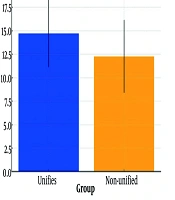
The analysis of student performance and satisfaction revealed significant differences between the two groups (group A and group B). In the first phase, group A, which consisted of students who had the same professor for both theoretical and practical general histology sessions, showed a higher mean score on assessments and reported significantly greater satisfaction with the instructional method. The statistical analysis using the Mann-Whitney U test (P < 0.01) confirmed these differences in learning outcomes, indicating that the unified teaching approach led to better performance and more favorable attitudes toward the course structure (Table 1).
Table 1.
Comparison of Student Performance and Satisfaction in Group A and Group B
| Groups | Exam Score (M ± SD) | Satisfaction Score (%) |
|---|---|---|
| A (unified) | 14.73 ± 3.61 | 57.56 |
| B (non-unified) | 12.27 ± 3.88 | 44.43 |
4.2. Second Phase (Only Group B)
In the second phase, all students from group B were assigned the same professor for both theoretical and practical general histology classes. After completing the semester, a satisfaction survey was conducted among these students to evaluate their experiences with the instructional method. The survey consisted of eight questions, each with four response options ranging from "very satisfied" to "very dissatisfied". The objective was to gauge the overall satisfaction level of students with the teaching method, specifically focusing on whether having the same instructor for both components of the course affected their perception of the course and their overall learning experience. The results from the survey indicated that, out of 54 students in group B (Table 2):
Table 2.
Student Satisfaction Levels in Group B
| Satisfaction Level | No. (%) |
|---|---|
| High | 30 (55.56) |
| Moderate | 13 (24.07) |
| Low | 11 (20.37) |
- 30 students (55.6%) reported high satisfaction with the unified teaching approach.
- 13 students (24.1%) expressed moderate satisfaction.
- 11 students (20.4%) reported low satisfaction.
4.3. Interpretation of Results
The satisfaction data from group B suggest a generally positive reception of the unified teaching approach, with more than half of the students reporting high satisfaction. This finding aligns with the positive outcomes observed in group A, where the same professor taught both theoretical and practical sessions. However, there is still notable variability in student satisfaction, as indicated by the fact that a considerable number of students (approximately 45%) reported only moderate or low satisfaction (Figure 1).
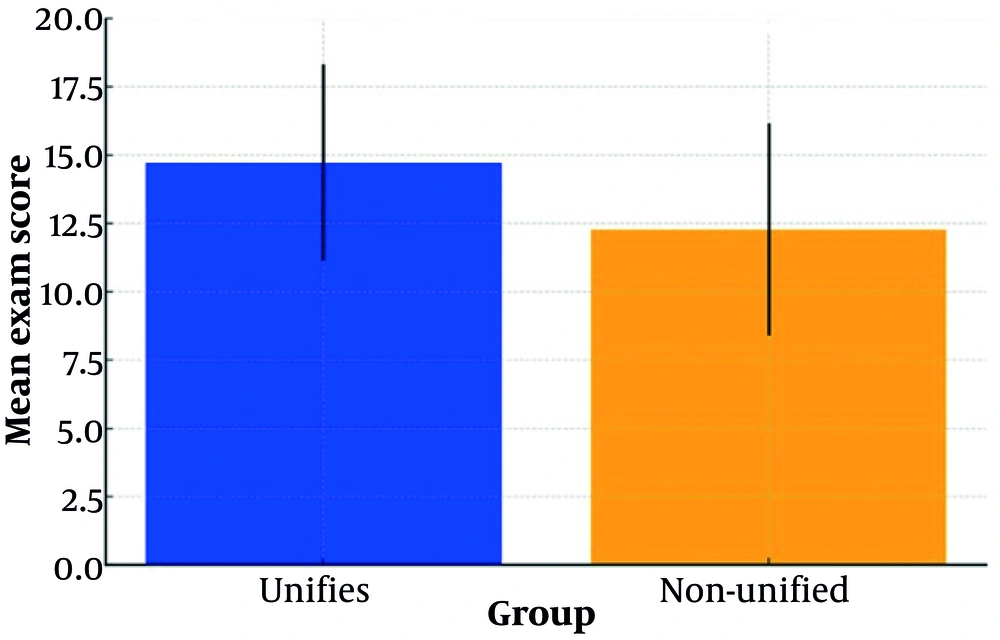
Figure 1.
Distribution of satisfaction levels in group B (high, moderate, and low satisfaction)
The high satisfaction rate (55.6%) among students in group B suggests that many found the consistency of having the same instructor for both theoretical and practical components beneficial. These students likely appreciated the continuity in teaching style, which may have helped them build a more cohesive understanding of general histology. The moderate satisfaction and low satisfaction responses, however, point to areas that may need further investigation. Factors such as teaching style, class dynamics, or even individual preferences for teaching methods could have influenced these less favorable outcomes.
4.4. Statistical Analysis and Conclusion
The differences between the satisfaction levels of group A and group B could be further explored through more detailed statistical analyses (e.g., chi-square tests for categorical data) to assess the relationship between satisfaction and performance in these two distinct groups. While group A showed a clear advantage in both satisfaction and academic performance, the results in group B suggest that the unified teaching approach had a positive, though somewhat varied, effect on student satisfaction (Table 3).
Table 3.
Statistical Comparison of Student Satisfaction and Performance Between Group A and Group B
| Groups | No. | Mean ± SD | Median ± IQR | Range | P-Value |
|---|---|---|---|---|---|
| Male | 58 | 66.7 ± 23.5 | 66.7 ± 38.6 | 87.5 - 12.5 | 0.02 a |
| Female | 52 | 50 ± 24.7 | 50 ± 45.8 | 79.2 - 29.2 | 0.06 |
a A P-value of less than 0.05 is considered statistically significant.
In conclusion, the findings indicate that having the same teacher for both theoretical and practical general histology sessions contributes to higher student satisfaction and better academic outcomes, but there is a need for more tailored teaching strategies to ensure that all students, regardless of their prior learning experiences or preferences, benefit equally from this approach. Further research is needed to explore the underlying reasons for the variations in satisfaction and to identify factors that could enhance the teaching-learning experience for students who report moderate or low satisfaction (Figures 2 and 3).
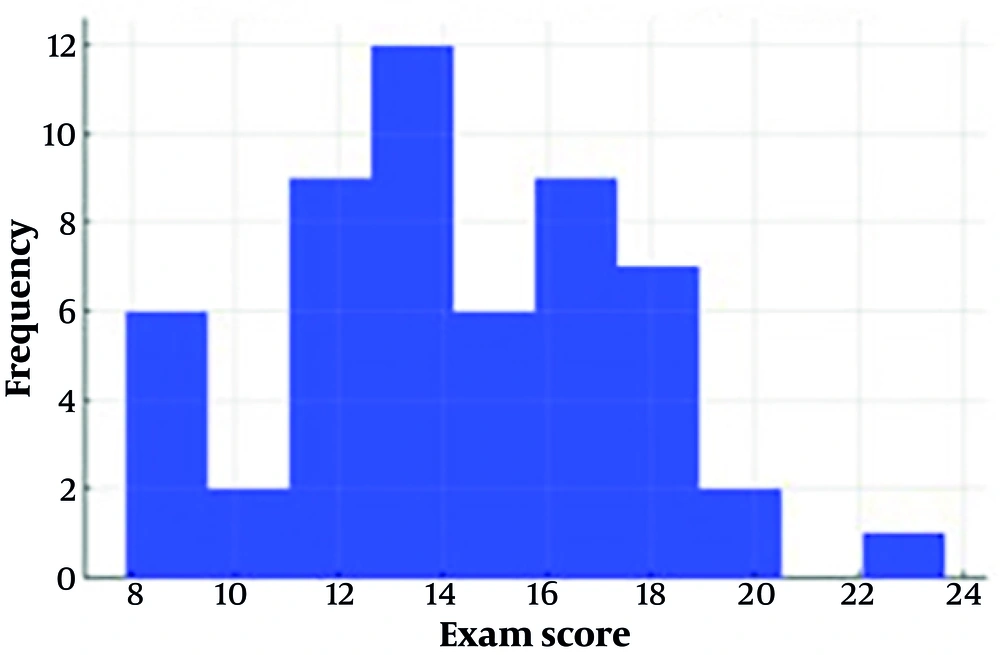
Figure 2.
Comparative analysis of satisfaction scores between group A and group B
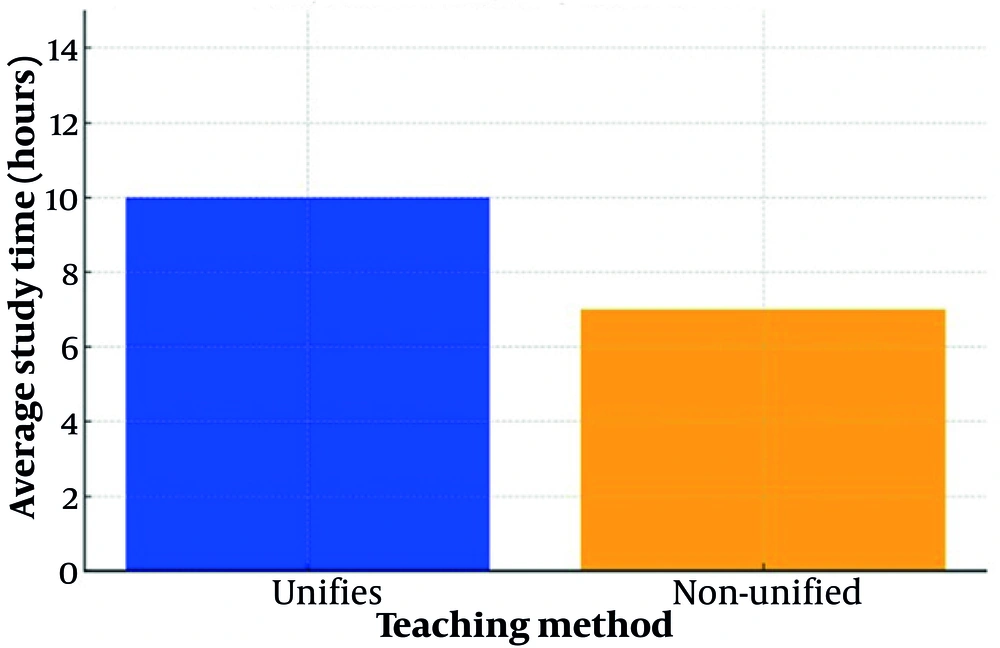
Figure 3.
Satisfaction levels by gender under the unified teaching approach
5. Discussion
The findings of this study highlight the importance of teacher consistency in both theoretical and practical general histology sessions for improving student satisfaction and academic performance. This aligns with previous research emphasizing the challenges students face in general histology education and the need for structured, engaging, and student-centered teaching approaches. A recent study by Teshome conducted at Wollo University, Ethiopia, examined medical students’ attitudes toward histology and found that while 84.24% of students were highly interested in histology, only 16.85% considered it as a career choice. The main reasons for avoiding histology as a specialization were limited career growth opportunities (35.33%) and financial concerns (22.28%), followed by the perceived difficulty of the subject (12.5%). However, an overwhelming majority of students (84.24%) believed that histology knowledge was crucial for their future clinical practice. Importantly, 82.61% of students supported integrating histology with pathology, reinforcing the notion that a system-based approach to teaching microscopic anatomy enhances its clinical relevance (10).
Further supporting the need for structured and interactive teaching strategies, a study conducted by De Souza et al. at Goa Medical College during the COVID-19 pandemic found that while virtual histology teaching improved accessibility and retention, students preferred a blended approach that combined online learning with laboratory-based sessions (P = 0.001). This suggests that traditional and digital teaching methods should be integrated to maximize student engagement and learning outcomes (18).
A similar conclusion was drawn in a study by Saverino et al., which compared face-to-face and online learning in anatomy and histology courses over two academic years. While statistical analysis showed that online learning had advantages for anatomy exams, students still expressed a strong need for social interaction with teachers and peers, which was more pronounced in face-to-face settings. Although there was no statistically significant difference in overall performance, students who attended in-person sessions were more likely to engage in direct discussions with instructors and classmates. This reinforces the idea that histology education benefits from an interactive and collaborative learning environment, further supporting the importance of having a consistent instructor who fosters student engagement and participation (19).
Additionally, a study by Gribbin et al. at the University of Michigan Medical School analyzed the impact of curricular changes that reduced histology instruction to a lecture-only format without lab exercises. Although students’ motivation to learn histology initially increased, their study time for histology decreased, and cumulative exam scores dropped significantly. The number of students with substandard scores (< 75%) increased more than 15-fold, with academically weaker students being disproportionately affected. These findings strongly indicate that removing hands-on histology exercises and reducing instructional time negatively impact student comprehension and performance. Compared to our study, where teacher consistency improved academic outcomes and student satisfaction, the Michigan study suggests that limiting structured histology instruction can have the opposite effect, disproportionately harming struggling students (20).
Recent advancements in virtual microscopy and self-directed learning modules (SDLMs) have further reshaped histology education. A study by Chimmalgi and Hortsch investigated the effectiveness of SDLMs, which consist of short instructional videos on YouTube and educational websites to support students in virtual histology learning. The study found that SDLMs significantly improved students’ academic performance when used in a blended approach, especially when assessed via virtual slides. However, when SDLMs were used as a standalone resource, they did not positively impact learning outcomes. This suggests that while self-directed digital resources are valuable, they should be used as an adjunct rather than a replacement for traditional microscopy and instructor-led learning. These findings reinforce the conclusions of our study, where a structured, teacher-consistent approach led to better student engagement and comprehension (21).
Another important study by Eng-Tat et al. explored the generational divide in teaching and learning histology. Surveying international faculty (n = 111) and first-year medical students (n = 280), the study found that 60% of faculty believed histology pedagogy needed reform, with gamification and modern approaches suggested as improvements. Notably, 70% of educators preferred face-to-face teaching using either traditional or virtual microscopy, while 71% of students reported self-teaching from online resources. Importantly, 88% of students believed that having a pathologist co-teach histology was beneficial, reinforcing the need for a clinically integrated approach. This aligns with the results from our study, which demonstrated that having a consistent instructor improved student satisfaction and performance, likely due to the better alignment of theoretical and practical knowledge (4).
These findings suggest that histology education should not only be structured and instructor-led but also integrate clinical relevance and modern technological advancements. The pathologist co-teaching model, as proposed by Eng-Tat et al. (4), could serve as an effective complement to traditional teaching methods. Similarly, integrating flipped classrooms, SDLMs, and blended teaching models could provide students with engaging and clinically relevant learning experiences. Taken together, these findings underscore the critical role of structured and integrated teaching strategies in histology education. Whether through teacher consistency, modernized teaching approaches, digital learning tools, or curricular integration with pathology, ensuring greater engagement, conceptual clarity, and accessibility can lead to better academic outcomes and student satisfaction. Future research should explore a combination of these methods, integrating faculty continuity with innovative, clinically oriented, and technology-enhanced teaching models to further improve histology education.
5.1. Conclusions
This study examined the impact of unified general histology section education, where the same instructor teaches both theoretical and practical components. The results demonstrate that students who experienced consistent teaching showed higher academic performance and greater satisfaction compared to those taught by different instructors for each component. This finding supports the importance of integrated and cohesive teaching strategies in enhancing student engagement, reducing cognitive overload, and improving learning outcomes. As histology forms a critical bridge between basic sciences and clinical practice, a well-structured, teacher-consistent approach proves essential for developing competent healthcare professionals.
However, the study has some limitations. First, it was conducted at a single institution, which may limit the generalizability of the findings to other medical schools with different curricula or teaching styles. Second, the sample size of 108 students may not fully represent the diversity of student populations across different educational settings. Additionally, while the study focused on histology, further research is needed to explore whether these results are applicable to other medical disciplines. Finally, the assessment of student satisfaction was based on self-reported data, which may be influenced by subjective biases. Future research should extend these findings to other medical disciplines, explore different teaching methods, and incorporate longitudinal studies to assess the long-term impact of teaching consistency on professional development.