


1. Background
2. Objectives
3. Methods
3.1. Animal Model
3.2. Surgical Procedures
3.3. Behavioral Testing
3.4. Biochemical Study
3.5. Measurement of Superoxide Dismutase Activity
3.6. Lipid Peroxidation Assay (Malondialdehyde Measurement)
3.7. DNA Fragmentation Assay (Apoptosis)
3.8. TNF-α Quantification
3.9. Histochemical Analysis
3.9.1. Transcranial Perfusion and Sectioning
3.9.2. Neuronal Counting
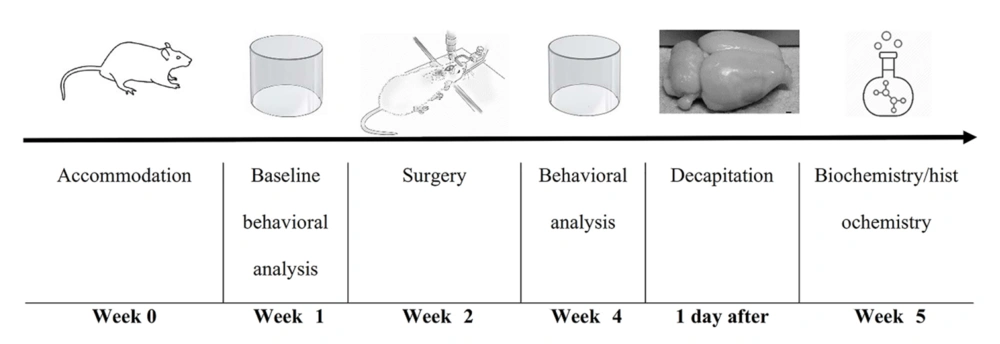
Schematic representation of time line of the experimental design. A timeline illustrating the study protocol, including 6-OHDA lesioning, genistein pretreatment, and behavioral/biochemical assessments.
| Step | Description | Details |
|---|---|---|
| 1. Ethics approval | Approval from animal ethics committee | Approval ID: IR.MEDILAMREC.1395.114 |
| 2. Animal selection | Male Wistar rats (200 - 280 g; n = 32) | Housed in temperature-controlled environment, ad libitum access to food and water. |
| 3. Behavioral screening | Pre-screening for rotation behavior | Exclude rats with >30 rotations/hour |
| 4. Randomization into 4 groups | Random allocation to one of four groups (n = 8/group) | Group A (Sham): Saline + surgery; group B (Lesion): 6-OHDA + no treatment; group C (Lesion + Gen50): 50 mg/kg genistein + 6-OHDA; group D (Lesion + Gen500): 500 mg/kg genistein + 6-OHDA |
| 5. Surgical procedure | 6-OHDA lesion via stereotaxic surgery | Anesthesia: Ketamine (100 mg/kg), Xylazine (5 mg/kg). 6-OHDA injected into the substantia nigra (5 µL). |
| 6. Post-surgery recovery | Monitoring and recovery | No unplanned mortality observed. |
| 7. Behavioral analysis | Two weeks post-surgery | Apomorphine (2 mg/kg) administered. Rotational behavior measured for 1 hour at 10-min intervals. |
| 8. Biochemical analysis | Measurement of oxidative stress and neuroinflammation | SOD Activity: NBT reduction assay ; MDA Levels: ELISA ; DNA Fragmentation: ELISA; TNF-α Levels: ELISA |
| 9. Histological analysis | Nissl staining for neuronal structures | Coronal brain sections stained and counted for neuron survival in substantia nigra compacta (SNc). |
| 10. Data analysis | Statistical analysis | One-way ANOVA or Kruskal-Wallis test for behavioral data. Statistical significance set at P < 0.05. |
a The diagram illustrates the experimental workflow, including animal selection, group allocation, surgical procedures, behavioral assessments, biochemical and histological analyses. Male Wistar rats (n = 32) were randomly assigned to four groups: Sham (saline control), Lesion (6-OHDA injection), Lesion + Gen50 (50 mg/kg genistein + 6-OHDA), and Lesion + Gen500 (500 mg/kg genistein + 6-OHDA). Following treatment and behavioral assessments, animals were sacrificed for biochemical and histological evaluations.
3.10. Statistical Analysis
4. Results
4.1. Genistein Treatment Improves Rotational Behavior in 6-OHDA-lesioned Rats
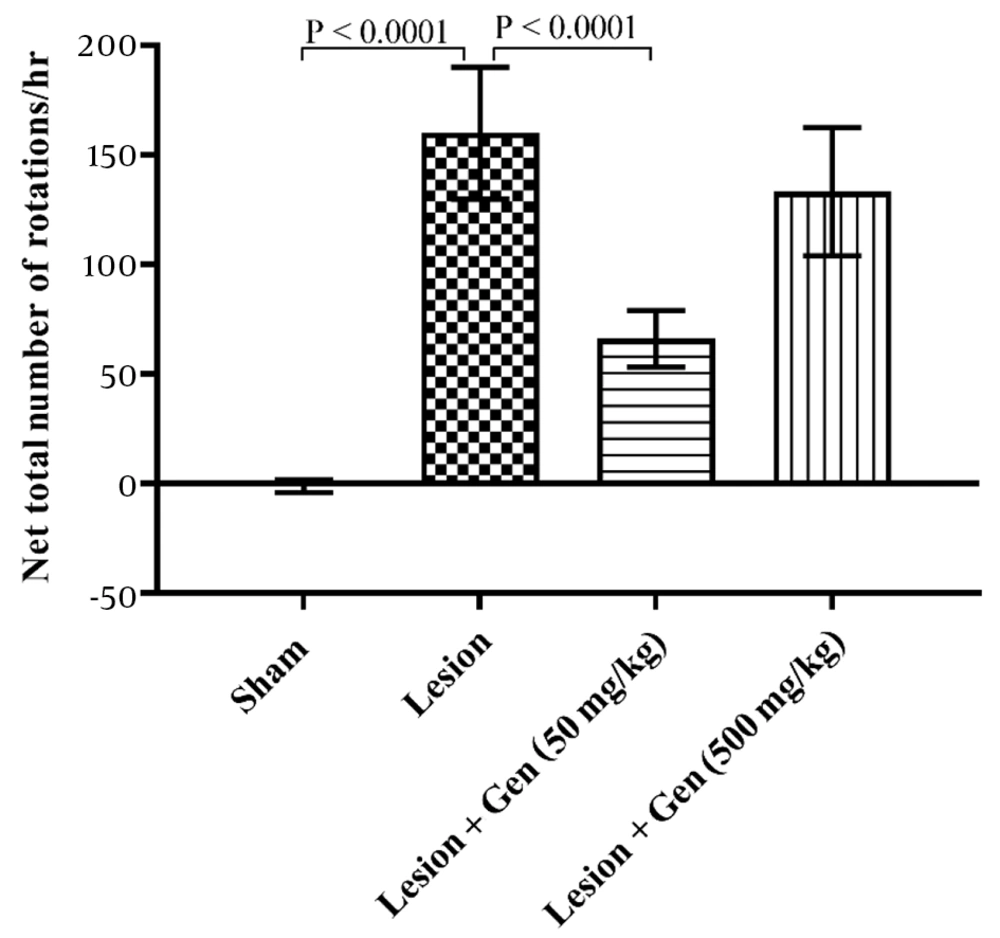
Genistein treatment improves rotational behavior in 6-OHDA-lesioned rats. The group that received a 6-OHDA injection exhibited a significant increase in rotational behavior compared to the sham-operated group (P < 0.0001). Animals pretreated with 50 mg/kg of genistein showed a significant decrease in contralateral rotations vs. the lesioned animals (P < 0.0001). However, rats pretreated with 500 mg/kg of genistein did not show a significant reduction in rotational behavior compared to the lesioned group.
4.2. Genistein Modulates Oxidative Stress by Altering Superoxide Dismutase Activity in Parkinson's Disease Model
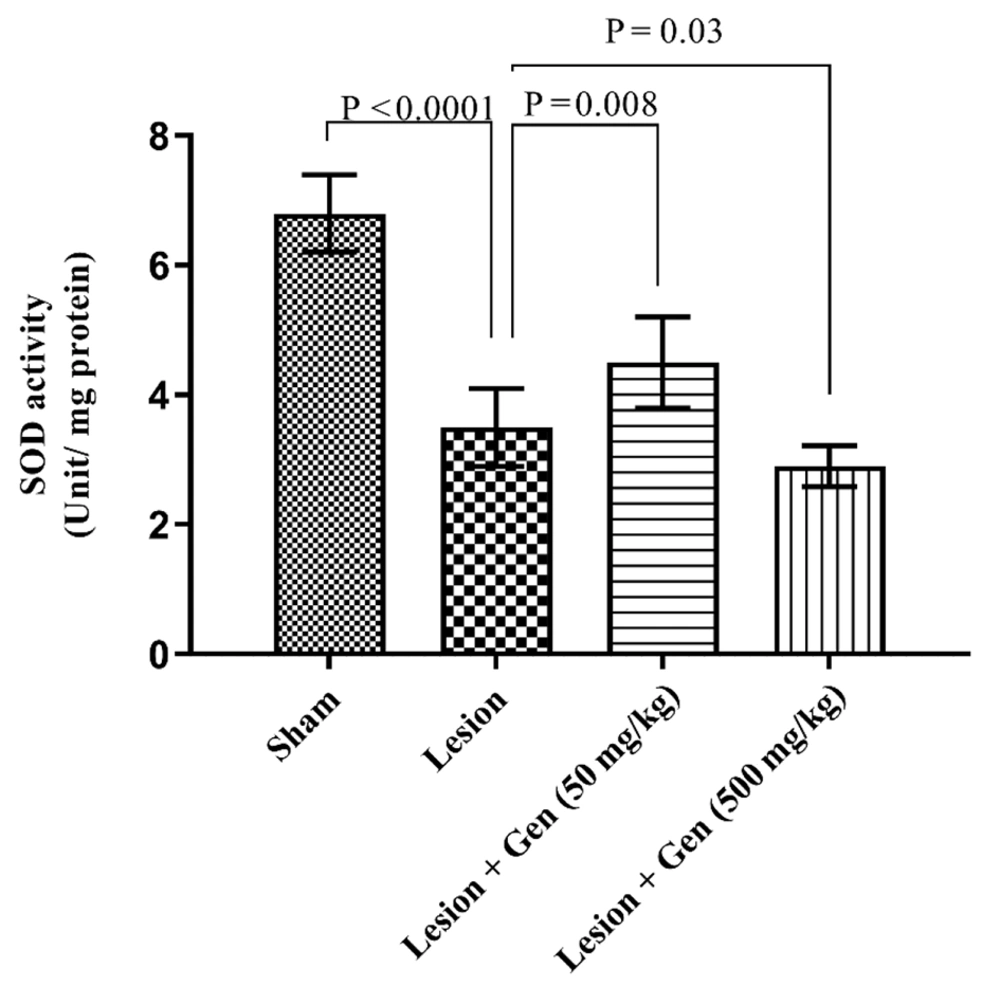
Genistein modulates oxidative stress by altering Superoxide dismutase (SOD) activity in Parkinson's disease (PD) model. SOD activity (Units/mg protein) was significantly higher in animals with 6-OHDA injection compared to the sham group (P < 0.0001). Genistein pretreatment at 50 mg/kg further increased SOD activity significantly compared to lesioned animals (P = 0.008). However, pretreatment with 500 mg/kg of genistein resulted in a significant decrease in SOD activity compared to lesioned animals (P = 0.03).
4.3. Effects of Genistein on DNA Fragmentation and Apoptosis in Parkinson's Disease Rats
-preview.webp "Effects of genistein on DNA fragmentation and apoptosis in Parkinson's disease (PD) Rats. Measurement of chromosomal DNA breakdown showed a significant increase in DNA fragmentation in the 6-OHDA-injected group compared to the sham group (P < 0.002). Pretreatment with 50 mg/kg genistein reduced DNA fragmentation, though not significantly. However, pretreatment with 500 mg/kg genistein significantly elevated DNA fragmentation levels compared to the lesioned group (P = 0.0003).")
Effects of genistein on DNA fragmentation and apoptosis in Parkinson's disease (PD) Rats. Measurement of chromosomal DNA breakdown showed a significant increase in DNA fragmentation in the 6-OHDA-injected group compared to the sham group (P < 0.002). Pretreatment with 50 mg/kg genistein reduced DNA fragmentation, though not significantly. However, pretreatment with 500 mg/kg genistein significantly elevated DNA fragmentation levels compared to the lesioned group (P = 0.0003).
4.4. Genistein Influences Lipid Peroxidation by Modifying Malondialdehyde Levels
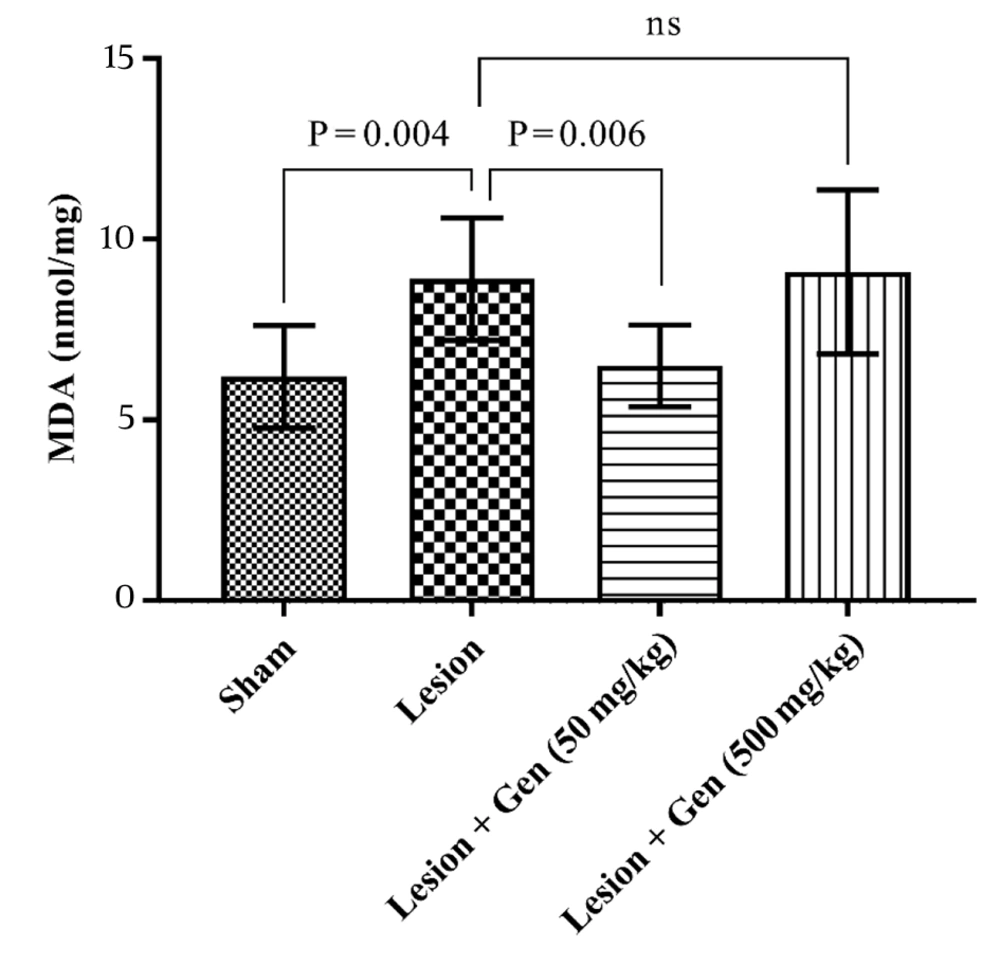
Genistein influences lipid peroxidation by modifying MDA levels in Parkinson's disease (PD) model. Malondialdehyde (MDA) levels, a marker of lipid peroxidation, were significantly increased in lesioned animals compared to sham-operated rats (P = 0.004). In the genistein pretreatment group at 50 mg/kg, MDA levels showed a significant decrease compared to the lesioned group (P = 0.006). However, pretreatment with 500 mg/kg of genistein did not change MDA levels compared to the lesioned group.
4.5. Impact of Genistein on TNF-α Levels and Neuroinflammation in Parkinson's Disease Model
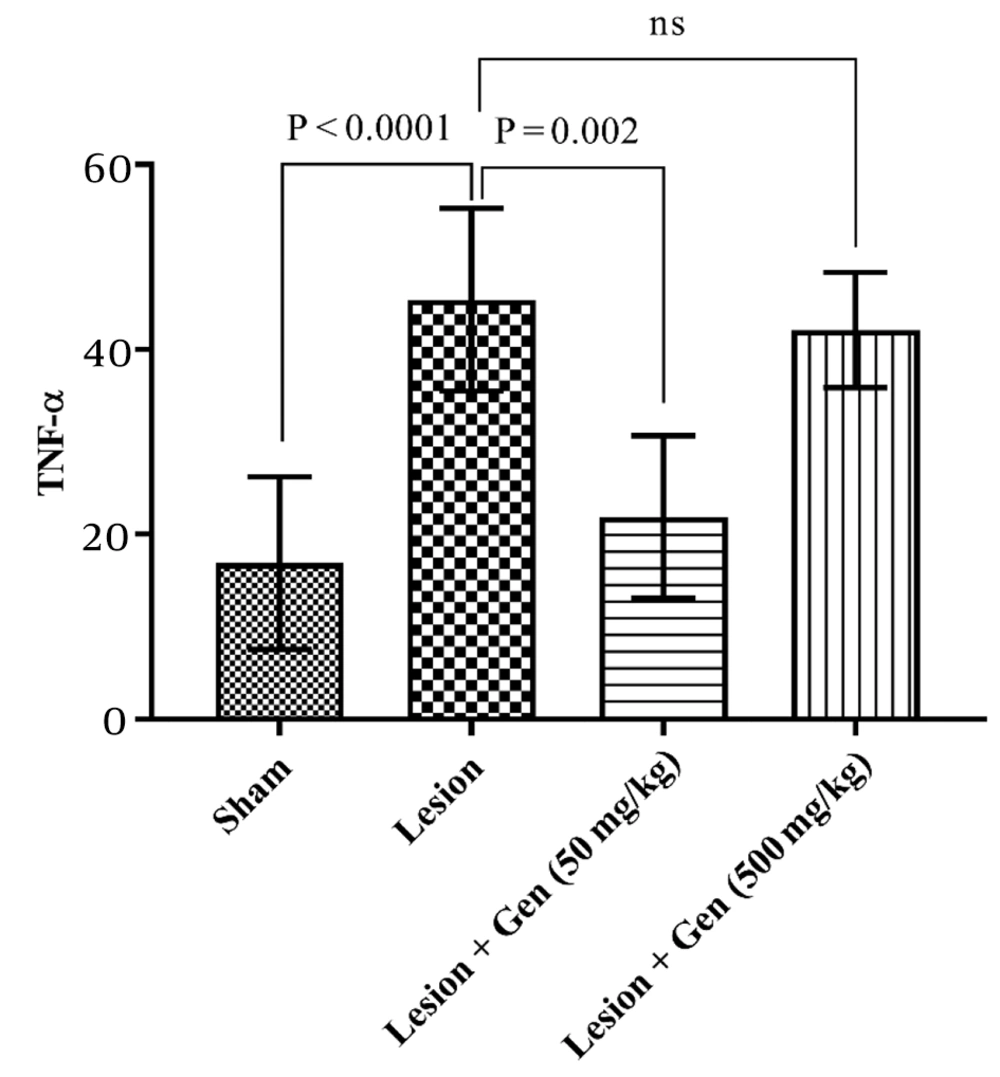
Impact of genistein on TNF-α levels and neuroinflammation in 6-OHDA-lesioned rats. TNF-α levels were significantly increased in lesioned animals compared to sham-operated rats (P < 0.0001). Pretreatment with 50 mg/kg genistein significantly decreased TNF-α levels compared to the lesioned group (P = 0.002). However, pretreatment with 500 mg/kg genistein did not result in a significant change in TNF-α levels compared to the lesioned group.
4.6. Neuroprotective Effects of Genistein on Nissl-stained Neurons in Substantia Nigra Pars Compacta
a The mean number of Nissl-stained neurons 2 weeks after the experiment in the left and right sides of brain. There was not any significant difference between the mean number of neurons in the rt side of substantia nigra in all groups
b Significant difference in lesioned rats vs. sham-operated group (P = 0.001).
c Significant difference in lesioned pretreated animals with 50mg/kg genistein vs. lesioned group (P = 0.01).

