
1. Background
Stroke, a cerebrovascular (CVA) disease, has an increasing incidence and mortality rate worldwide (1). Near 85% of CVA-related deaths occur in low or middle-income countries (2). Hypertension, diabetes, older age, smoking, obesity, lack of exercise, alcohol, atrial fibrillation, and contraceptive pill usage are among the possible risk factors of stroke (3). Cerebral damage in patients who had a stroke can cause motor dysfunction and abnormal muscle activation (4). The combination of brain and spinal circuitry is crucial for muscle synergies to show wide ranges of movement patterns. Neural pathway disorders, corticospinal drive reduction, and disuse atrophy may be found after stroke in affected people (5-7). Patients with stroke may also develop peripheral nerve injuries; however, some of them are at higher risk of peripheral nerve injuries due to underlying diseases such as diabetes (8).
Conditions such as malpositioning, traction, and using an assistive device or sustained pressure will make stroke patients prone to compression neuropathy or neuronal plexuses insult (9). There are controversies regarding electromyographic examination results post-stroke that are more prominently present in upper limbs than in lower limbs.
2. Objectives
As there are limited studies evaluating electrodiagnostic test results in people after stroke, we designed this study to assess electrodiagnostic findings in cases with different post-stroke durations.
3. Methods
This cross-sectional study was conducted at Imam Hospital between March 2016 and March 2018. The inclusion criterion was age between 18 and 75 years. All participants were asked to sign informed consent forms before enrollment.
The gathered data included age, sex, the time since stroke, medical history (diabetes, hypertension, and thyroid disorders), and drug history. Moreover, we recorded deep tendon reflex of all four limbs and the results of manual muscle testing examination. Electro-diagnostic tests were conducted by a single expert with more than five-year experience. A two-channel EMG device (Nihon-Kohden, Japan) was used and limb’s temperature was kept at > 32°C.
Nerve conduction studies (NCS) of the median, ulnar, sural, tibial, and deep peroneal nerves were carried out by means of surface bar electrodes. The electrodes were placed at a distance of 4 cm of each nerve using supra-maximal electrical stimulation. Compound motor action potentials (CMAPs) of the median, ulnar, radial, tibial, sural, and deep peroneal nerves were recorded when the machine was set at the sensitivity of 2 mv/div, low-frequency filter of 8 Hz, high-frequency filter of 8 kHz, and sweep speed of 5 ms/division. Sensory nerve action potentials (SNAP) of the median, ulnar, radial, tibial, sural, and deep peroneal nerves were recorded by proximal stimulation and distal recording (antidromic method) when the machine was set the at the sensitivity of 10 µv/div, low-frequency filter of 20 Hz, high-frequency filter of 2 kHz, and sweep speed of 1 ms/division. The onset latency of CMAP and the peak latency of SNAP were recorded at the midpoint of the first negative peak.
All cases underwent both right and left muscle evaluations by electromyogram (tibialis anterior, peroneus longus, gastrocnemius, quadriceps, deltoid, biceps, flexor carpi radialis, extensor digitorum, 1st dorsal interosseous). A 26-G Ambu Neuroline Concentric needle was used with a ground electrode.
Data analysis was conducted by SPSS version 23 software (IBM, Chicago, IL, USA). The data were presented as mean ± SD for continuous variables and frequencies for categorical variables. The chi-square test and Fisher’s exact test were used for the comparison of categorical variables. The independent samples t-test was used to compare continuous variables. A P value of less than 0.05 was considered significant.
4. Results
We enrolled 30 patients in this study, including 28 (93.3%) men and two (6.7%) women. The mean age was 58 ± 8.3 years and the mean duration since CVA was 5.9 ± 4.1 months. Half of the patients had right and half had left hemiplegia. Ten patients (33.3%) had diabetes with the mean duration of 12.5 ± 5.3 years. Moreover, 42% of the patients suffered peripheral polyneuropathy with different severities (Table 1).
Table 1.
The Frequency of Electro-Diagnostic Findings
| Findings | Percentage |
|---|---|
| Upper motor neuron pattern | |
| Mild | 63 |
| Moderate | 30 |
| Severe | 3 |
| Peripheral polyneuropathy | |
| Mild | 16 |
| Moderate | 10 |
| Severe | 16 |
| Upper limb root lesion | |
| Mild | 10 |
| Moderate | 3 |
| Severe | 0 |
| Lower limb root lesion | |
| Mild | 13 |
| Moderate | 16 |
| Severe | 6 |
| CTS | |
| Mild | 11 |
| Moderate | 33 |
| Severe | 3 |
| Ulnar neuropathy (at the elbow) | 3 |
| Myopathy | 3 |
Entrapment neuropathy was seen in 47% of the cases in the median nerve and 3% in the ulnar nerve at the wrist. Seven cases with diabetes had CTS (70%) and the only patient with ulnar neuropathy had diabetes, too. Non-diabetic patients had no ulnar neuropathy (Table 2).
Table 2.
The Frequency of Electro-Diagnostic Findings in Non-Diabetic Cases
| Findings | Percentage |
|---|---|
| Upper motor neuron pattern | |
| Mild | 635 |
| Moderate | 30 |
| Severe | 5 |
| Peripheral polyneuropathy | |
| Mild | 15 |
| Severe | 15 |
| Upper limb root lesion | |
| Mild | 10 |
| Lower limb root lesion | |
| Mild | 10 |
| Moderate | 20 |
| Severe | 20 |
| CTS | |
| Mild | 25 |
| Moderate | 85 |
| Severe | 60 |
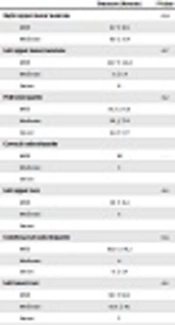
In needle electromyography at rest, spontaneous activity was not detected in the examined muscles of the cases. In activity except neurogenicity due to radiculopathy or entrapment neuropathy, we found upper motor neuron pattern (decreased recruitment) in almost all cases with normal morphology of MUAP. The duration of CVA was not significantly related to the severity of neuropathies (Table 3).
Table 3.
Comparison of CVA Duration According to the Severity of Neuropathies
| Duration (Months) | P Value | |
|---|---|---|
| Right upper motor neurons | 0.9 | |
| Mild | 8.7 ± 8.9 | |
| Moderate | 8.6 ± 5.9 | |
| Left upper motor neurons | 0.7 | |
| Mild | 34.7 ± 54.8 | |
| Moderate | 5 ± 1.4 | |
| Severe | 8 | |
| Polyneuropathy | 0.2 | |
| Mild | 16.3 ± 6.6 | |
| Moderate | 50 ± 71.2 | |
| Severe | 4.6 ± 2.7 | |
| Cervical radiculopathy | ||
| Mild | 36 | - |
| Moderate | 5 | |
| Severe | ||
| Left upper root | 0.2 | |
| Mild | 30 ± 8.4 | |
| Moderate | 5 | |
| Severe | ||
| Lumbosacral radiculopathy | 0.6 | |
| Mild | 62.6 ± 81.2 | |
| Moderate | 4 | |
| Severe | 6 ± 1.4 | |
| Left lower root | 0.5 | |
| Mild | 90 ± 92.3 | |
| Moderate | 10.5 ± 9.1 | |
| Severe | 5 | |
| Right CTS | 0.8 | |
| Mild | 22.3 ± 14.5 | |
| Moderate | 28.7 ± 56.2 | |
| Severe | 4.5 ± 0.7 | |
| Left CTS | 0.5 | |
| Mild | 9.7 ± 9.6 | |
| Moderate | 28.8 ± 56.2 | |
| Severe | ||
| Ulnar neuropathy (one case) | 36 |
5. Discussion
To our knowledge, this is the first study evaluating electromyography findings in patients with stroke in Iran. It is important to evaluate the signs of the central nervous system during needle EMG (10). Denervation activity starts two-three weeks after stroke mostly in the muscles of arms (distal part) and hands (11). However, this important role of needle EMG has not been emphasized in the literature (12). The results showed that half of the enrolled cases had peripheral neuropathy and the upper motor neuron pattern was the most common finding in the enrolled cases. The results also showed that most cases with CTS suffered a moderate form of neuropathy. In addition, our results indicated that the mean duration of CVA was independent of neuropathy severity. A previous study conducted by Dozono 28 evaluated patients with a history of CVA. Their results showed that 12 (43%) had peripheral neuropathy (13).
Using ambulatory devices, such as canes and crutches, may prone patients to develop neuropathies after CVA (9). If these devices are not used correctly, a wide range of neuropathies could occur such as ulnar nerve paralysis and carpal tunnel syndrome (14, 15). In this study, we found that one patient had ulnar neuropathy and 14 (47%) had CTS. Hemiparetic patients who use wheelchairs or canes will suffer the overuse syndrome due to repetition, high force, difficult, and long constrained posture (16). On the other hand, gripping the cane or crutch will bring extra force on the wrist and hand, leading to ulnar neuropathy or CTS (13).
Our results also showed that 70% of diabetic cases had CTS and the only patient with ulnar neuropathy was diabetic, as well. Diabetes is a devastating disease that affects the peripheral nervous system (17, 18). It is reported that diabetes may increase the risk of CTS up to 40% (19).
Patients with stroke may show a wide range of electro-diagnostic abnormalities. They also are prone to develop peripheral nerve injuries (8). The electro-diagnostic abnormalities may also occur due to underlying diseases such as diabetes. In stroke patients, needle electromyographic examinations may show normal findings or abnormalities (e.g. positive sharp waves or fibrillation potentials that are more common in upper limbs than in lower limbs) (10). In this study, none of the patients showed abnormal needle findings. The reduced number of MUAPs may be found in stroke cases, as found in our study (20).
5.1. Conclusions
The electro-diagnostic evaluation should be considered in patients with stroke to distinguish upper and lower motor neuron patterns or peripheral neuropathy.