A 30- year- old, gravid 1, para 0, abortion 0, woman was hospitalized in the obstetric ward of our center on May 13, 2020. She was a primiparous woman (23
+6 weeks of gestation). Her complaint was palpitation and lethargy, which was started a month before this visit, and she linked these symptoms to her pregnancy. Also, her routine laboratory check-up tests for pregnancy revealed pancytopenia: (WBC = 2.9 x 1000/mm
3, Lymphocyte = 35%, Hb = 6.6 g/dL, RBC = 2.1 Mill/mm
3, Plt = 7 x1000/mm
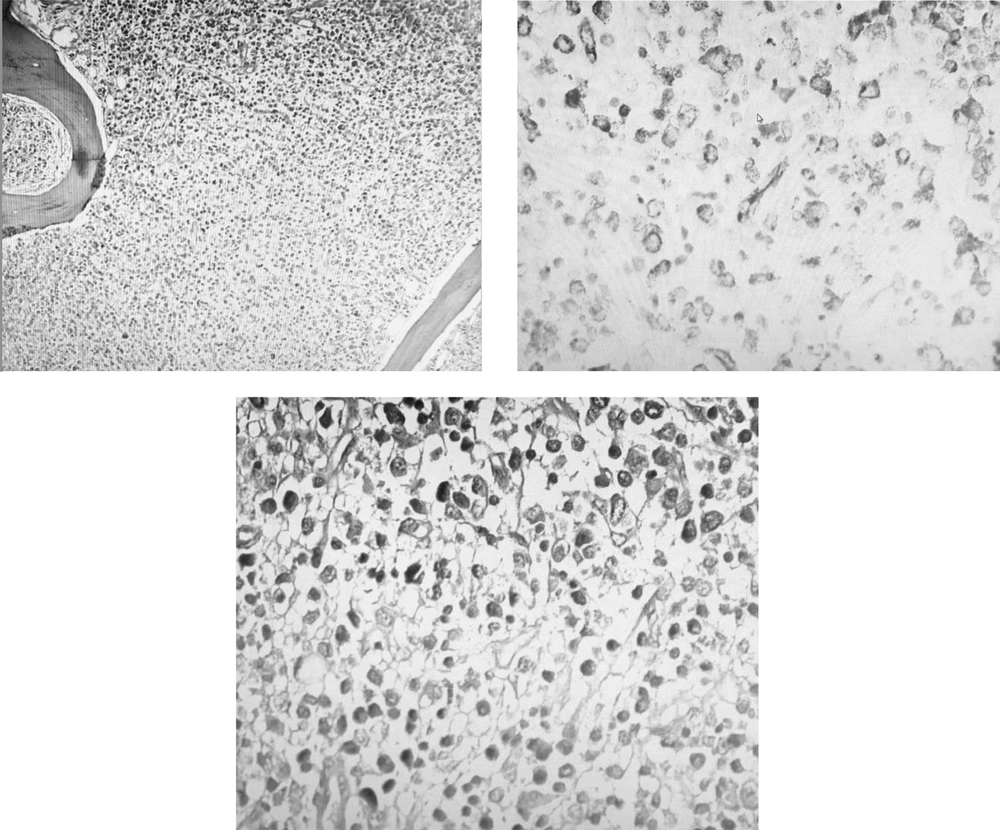
3). Four days later, and in fetal color-doppler echocardiography, a 24-week female fetus was seen. Her major cardiac structures were normal, and the only finding was fetal tachycardia (175/min) that raised gynecologist concerns about fetal distress and maternal etiologies of the fetal tachycardia. She underwent bone marrow aspiration and biopsy (BMA/BX), which revealed non-M3 acute myeloid leukemia (AML) (
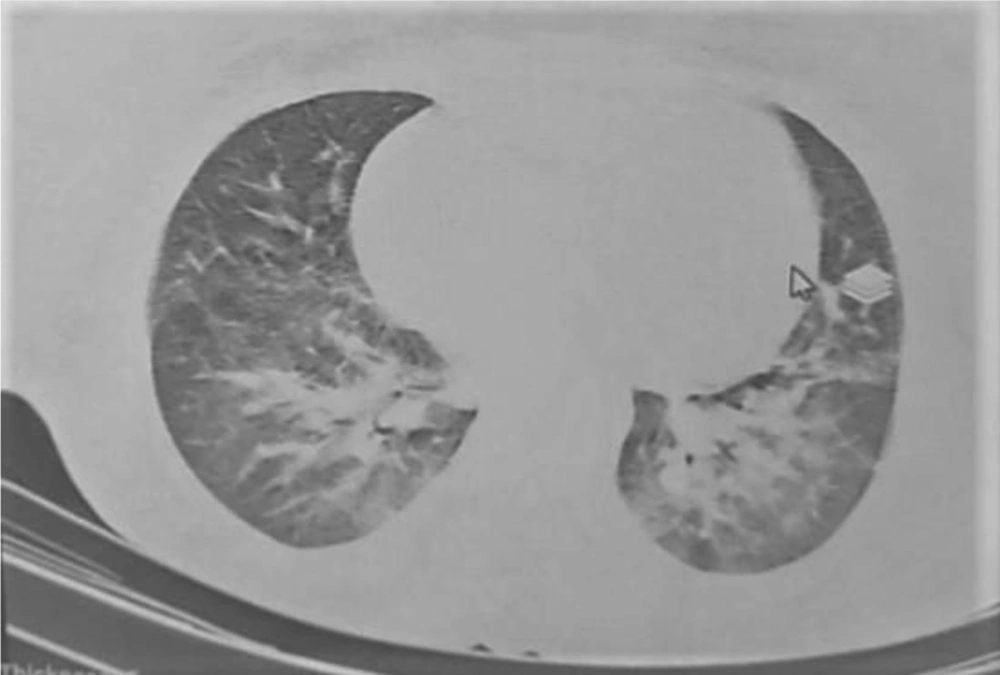
Figure 1). After After considering a new case of AML, she was advised to think about the termination of pregnancy. Despite being aware of the risks that threatened her life and even that of the fetus, she did not agree with terminating the pregnancy or even starting the chemotherapy. During her admission, she encountered several problems such as perianal abscess and several cellulitis as well as gestational diabetes mellitus, which was eventually managed by insulin administration. After getting some antibiotics for her abscess and receiving excessive amounts of packed cell and platelet, she was discharged with her consent without getting any chemotherapy. Knowing that she did not follow the basic principles of personal protection and her attendance in high-risk places, she returned to our hospital about three weeks later with severe respiratory distress. Her pancytopenia got worsened. She received large amounts of blood product. Her LDH was elevated, and her lung CT-Scan showed findings compatible with Covid-19 infection (
Figure 2). Her serologic tests (IgG and IgM antibodies against covid-19) were negative, which may be as a result of leukemia, but Her RT-PCR on the nasopharyngeal swab sample was positive with high viral load. While still insisting on not receiving chemotherapy, multi-drug treatment for Covid-19 infection was started for her using infliximab, Beta-Interferon, Hydrocortisone, and sofosbuvir. She was intubated the day before delivery because of her severe respiratory distress and abnormal arterial blood gas (ABG) results. After delivery, chemotherapy was started with Adriamycin and Cytosar. Two days after delivery, she expired.
On July 6, 2020 and following a hypertension crisis in the mother, an emergent cesarean section was performed. After general anesthesia, she underwent cesarean section, with unruptured amniotic fluid membrane, and while the isolation protocols were fully implemented, a girl was born at 31 weeks of gestational age. Her birth weight was 1,440 g, and her head circumference was 27.5 cm, both appropriate for gestational age, between 10th and 50th percentile on Fenton growth curve. Her first minute Apgar score was 1, after resuscitation steps according to the current neonatal resuscitation program, her Apgar score reached 7 in the fifth minute of her life. After receiving continuous positive airway pressure, her Apgar reached 8 in the tenth minute of her life. Delayed cord clamping and skin to skin contact was not performed. Within minutes of placental expulsion, a sample of placental tissue from the fetal side was taken immediately after delivery, using an aseptic technique and sterile equipment. The sample was transferred to the laboratory in viral transport media. The neonate was transferred to the NICU ward in an isolated room with negative pressure. All personal protection guidelines were performed for the nursing system and treatment staff. Cord blood gas analysis was normal. Because of mild to moderate subcostal retraction and tachypnea she needed supplementary oxygen with hood and blender using inspired oxygen fraction titrated gradually up to 30%.
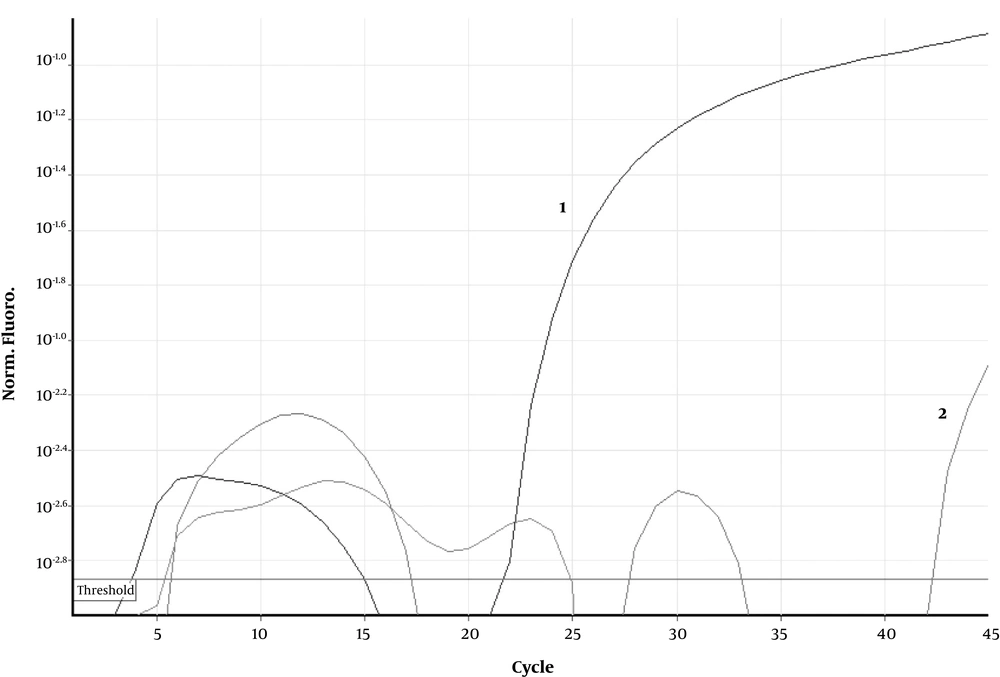
The first nasopharyngeal swab sample was collected after the baby was cleaned at the first 24 hours of her life. The second nasopharyngeal swab sample was collected on the third day of life. RT-PCR on both nasopharyngeal swab samples was positive with a high viral load similar to her mother (
Figure 3 and
Table 1). Nasopharyngeal swab and placental samples were examined for coronavirus RT-PCR. The swabs and tissue samples were placed in viral transport medium or sterile saline and stored at 4 - 8°C until they were sent to the laboratory to be processed within 4-12 hours of collection. RNA was extracted from the cell culture supernatants, and one-step TaqMan RT-PCR was performed in duplicate.
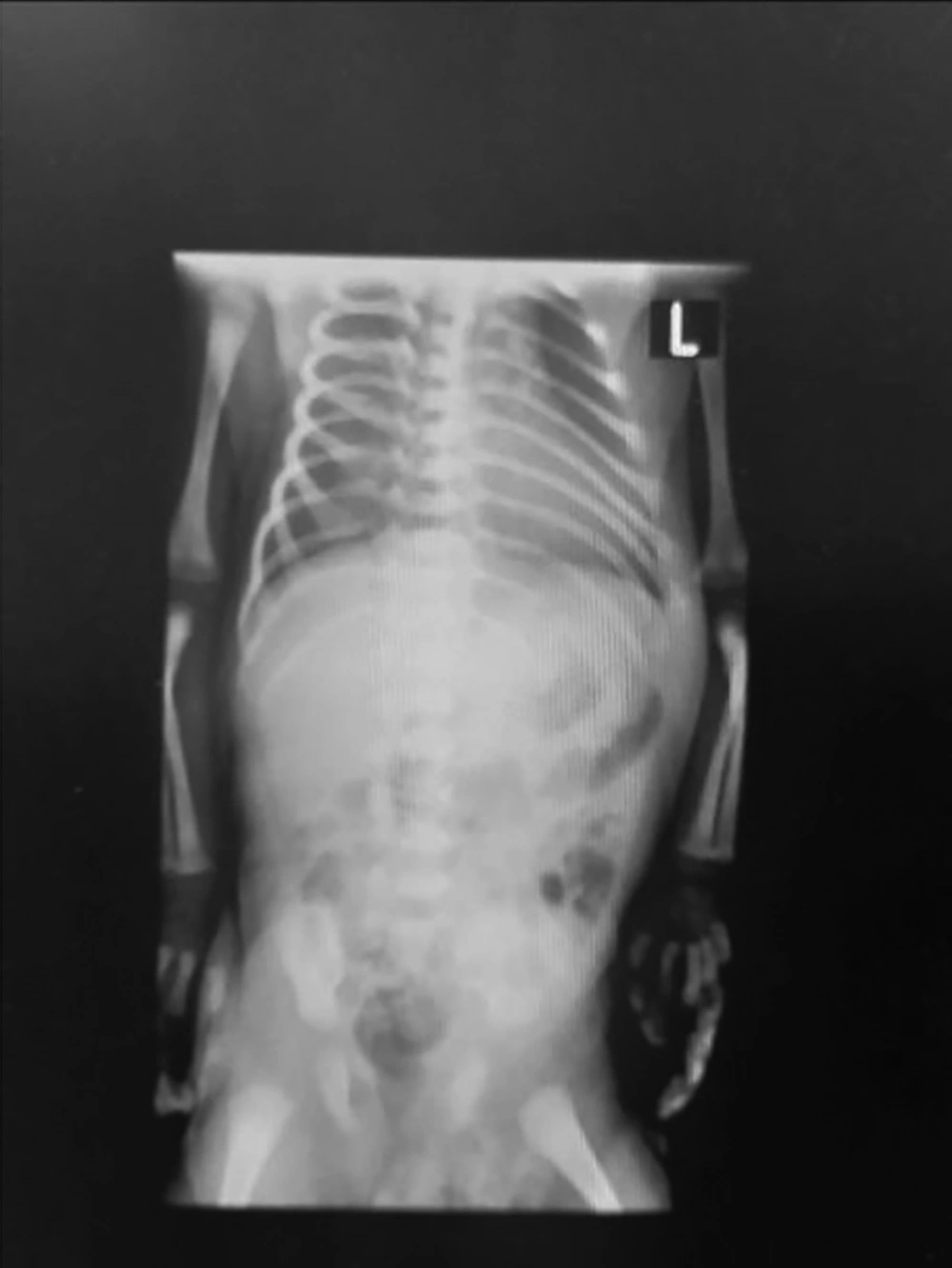
Her first CRP, CBC, and other laboratory data were all normal with no lymphopenia. She had some borderline blood sugar tests that were corrected by receiving dextrose water serum solution. She had elevated LDH levels up to 932 U/ml, SGOT, and SGPT were in the normal range. Her brain, abdominopelvic sonography, and echocardiography were normal. On the second day of her life, repetitive episodes of apnea had occurred. Because of mild hypotonia, she underwent a lumbar puncture, which showed a normal pattern. Cerebrospinal fluid (CSF) was negative for SARS-CoV2, bacteria, fungi, and HSV 1 and 2. Her sepsis work-up did not reveal any abnormal results, and her blood, CSF, and urine culture were negative. Her serologic findings (IgG and IgM antibodies against covid-19) were negative on the fifth day of life. Serologic tests were repeated two weeks later, which showed negative results. During the admission, her need for supplementary oxygen was gradually tapered and episodes of feeding intolerance, which were defined as necrotizing enterocolitis (NEC), were managed uneventfully using traditional antibiotics without any special treatment for Covid-19. She only received azithromycin because of her prolonged need for supplementary oxygen and conjunctivitis. Her weight gain and head circumference growth pattern were both normal, and her prematurity care follow up, including retinopathy of prematurity (ROP) examination, were in progress (
Figure 4).