


1. Context
1.1. Rationale
Gastroenteritis remains one of the primary contributors to illness and medical service use among children globally. Viral pathogens such as rotavirus, norovirus, and adenovirus are the most common etiological agents, typically causing self-limiting infections that resolve without antimicrobial therapy (1, 2). Despite this well-established viral predominance, antibiotics are frequently overprescribed in pediatric cases, often without proper diagnostic confirmation or clinical justification, reflecting gaps in clinical awareness, parental expectations, and limited access to rapid viral diagnostics (3). This inappropriate antibiotic use not only fails to target the underlying etiology but also initiates a cascade of adverse health outcomes, chief among them being disruption of the gut microbiome (4). The gut microbiota plays a pivotal role in human health and disease, as highlighted in comprehensive reviews (5), making its protection crucial.
The gastrointestinal tract hosts a complex and dynamic microbial community essential for digestion, immune modulation, and nutrient synthesis (6). Broad-spectrum antibiotics, commonly used in pediatric settings, profoundly disrupt this delicate ecosystem, resulting in dysbiosis (7, 8). Dysbiosis is characterized by reduced microbial diversity, enrichment of opportunistic pathogens, and suppression of beneficial commensals. The full scope of consequences arising from antibiotic-induced dysbiosis is still an area of active investigation, with some effects potentially remaining unknown (9). This imbalance impairs mucosal immunity, prolongs recovery, and is implicated in the pathogenesis of chronic conditions such as inflammatory bowel disease (IBD), metabolic syndrome, and obesity (10, 11). Alterations to the gut microbiota have been linked to significant changes in host immunity and metabolism (12).
Antibiotic overuse further increases the risk of secondary infections, notably Clostridium difficile infection (CDI) (13, 14), where microbiota disruption facilitates colonization and toxin production, leading to diarrhea, colitis, and in severe cases, toxic megacolon. Furthermore, antibiotic treatment in children infected with Shiga toxin-producing Escherichia coli (STEC) is associated with a higher risk of hemolytic uremic syndrome (HUS), a serious condition characterized by hemolysis, thrombocytopenia, and acute kidney injury (15, 16). Beyond individual risks, antibiotic overuse is a key driver of antimicrobial resistance (AMR), a critical public health challenge (17), a concern that extends beyond individual clinical practice to population-level interventions (18), with children being particularly vulnerable due to immature immune systems and frequent antibiotic exposures (19).
Understanding the mechanisms of antibiotic perturbation on the microbiome is essential to appreciate its long-term consequences (20). To address this gap, we conducted a systematic review that included studies on children (< 18 years) with acute gastroenteritis who received antibiotic therapy. We focused on extracting data related to gut microbiome alterations, emergence of antibiotic resistance, and risk of secondary infections (e.g., C. difficile) or complications (e.g., HUS). Given the substantial heterogeneity across the included studies in terms of population, intervention, and outcome measures, a quantitative meta-analysis was not feasible. Therefore, studies were grouped thematically by the type of adverse outcome, and a narrative synthesis was conducted. Despite growing concern, a comprehensive synthesis specifically linking antibiotic use in pediatric viral gastroenteritis to microbiome disruption and its subsequent complications is lacking. This gap underscores the need for a targeted systematic review to inform clinical practice and stewardship efforts.
2. Objectives
This systematic review aims to comprehensively evaluate the adverse consequences of antibiotic use in children with acute gastroenteritis, with a particular emphasis on gut microbiome disruption as a central mechanism. We specifically assess how this disruption contributes to subsequent risks, including AMR development and serious complications like C. difficile infection and HUS. The findings are intended to inform evidence-based clinical practice and strengthen antibiotic stewardship programs in pediatric care.
3. Data Sources
A comprehensive systematic literature search was performed to identify all relevant studies. We searched the following electronic databases from their inception to August 31, 2025: PubMed, Embase, Scopus, Cochrane Central Register of Controlled Trials (CENTRAL), and Web of Science. To minimize publication bias and identify grey literature, we also conducted a search using Google Scholar. Furthermore, we manually screened the reference lists of all included studies and relevant systematic reviews to identify any additional publications not captured by the database searches. The search was restricted to studies published in English. The detailed search strategy for each database, including all keywords and MeSH terms, is provided in Supplementary Table 1.
Table 1.Summary of Adverse Effects of Antibiotic Use in Pediatric Gastroenteritis
| Category | Adverse Effect | Mechanism | Impact on Health | Key References |
|---|---|---|---|---|
| Gut microbiome disruption | Dysbiosis (reduced microbial diversity) | Antibiotics kill beneficial gut bacteria, causing imbalance | Impaired digestion, immune dysfunction, delayed recovery; risk of IBD, obesity | (3, 5, 7, 10, 11, 13, 14, 17, 21-23) |
| Antibiotic resistance | Emergence of resistant pathogens | Selective pressure favors resistant strains | Treatment failures, prolonged illness, increased healthcare burden | (12, 13) |
| Secondary infections | CDI | Microbiome disruption allows pathogen overgrowth | Diarrhea, colitis, longer hospital stay | (8, 9) |
| Severe systemic effects | HUS | Antibiotics promote toxin release by STEC | Kidney failure, hemolysis, thrombocytopenia, life-threatening | (14) |
| Chronic health issues | IBDs, obesity | Dysbiosis influences inflammation and metabolism | Chronic GI symptoms, increased long-term health risks | (7, 11) |
Abbreviation: HUS, hemolytic uremic syndrome; IBD, inflammatory bowel disease; CDI, Clostridium difficile infection.
A comprehensive literature search was conducted across five major scientific databases: PubMed, Embase, Scopus, Cochrane Library, and Google Scholar, covering the period from January 1, 2000, to August 31, 2025. Keywords and MeSH terms such as “pediatric gastroenteritis”, “antibiotic use”, “gut microbiome”, “microbiota”, “antibiotic resistance”, and “Clostridium difficile” were used in various combinations with Boolean operators (AND, OR) to enhance the sensitivity of the search. Filters were applied to include only peer-reviewed, English-language studies involving human subjects. A comprehensive description of the search strategies applied to each database is available in Supplementary Table 1.
4. Study Selection
4.1. Inclusion Criteria and Rationale
This review focused specifically on pediatric patients diagnosed with acute viral gastroenteritis. The rationale for this focus is that antibiotic use in viral gastroenteritis is often unnecessary and may lead to adverse effects, making this group particularly relevant for evaluating antibiotic-related harms. Studies involving bacterial gastroenteritis were excluded to maintain a clear scope, as antibiotic therapy in bacterial infections generally has different indications and outcomes. Identification of viral gastroenteritis cases was based on clinical diagnosis supported by laboratory confirmation when available, as reported in the included studies.
Studies were eligible for inclusion if they met the following criteria: (A) included pediatric patients aged 0–18 years with a diagnosis of acute viral gastroenteritis; (B) reported antibiotic exposure during the illness, regardless of indication; and (C) assessed at least one relevant outcome, including gut microbiome alterations (such as dysbiosis or reduced microbial diversity), emergence of antibiotic resistance, or occurrence of secondary infections like C. difficile. Eligible study designs included randomized controlled trials, cohort studies, case-control studies, and large observational studies. Exclusion criteria included studies focusing solely on bacterial gastroenteritis or non-infectious diarrhea, lack of pediatric-specific data, or missing relevant outcome measures. Other exclusions were animal or in vitro studies, case reports, editorials, narrative reviews, conference abstracts without full text, and articles lacking documentation of antibiotic exposure or stratified analysis.
4.2. Definition of Microbiome Changes
Microbiome changes were defined as alterations in the composition, diversity, or function of the gut microbial community. These were assessed through measures such as microbial diversity indices, relative abundance of key bacterial taxa, or detection of dysbiosis-related biomarkers, as reported in the included studies. Objective measurements included sequencing-based analyses (e.g., 16S rRNA gene sequencing), culture-based methods, or biochemical markers indicating microbiome disruption.
Study selection was carried out in two stages by two independent reviewers. The initial step in the screening process was to review titles and abstracts for relevance. In the second phase, the full texts of potentially eligible articles were reviewed based on the inclusion and exclusion criteria. Reviewer disagreements were addressed through discussion, with a third reviewer involved if consensus could not be reached. Figure 1 displays the PRISMA flow diagram that outlines the study selection procedure.
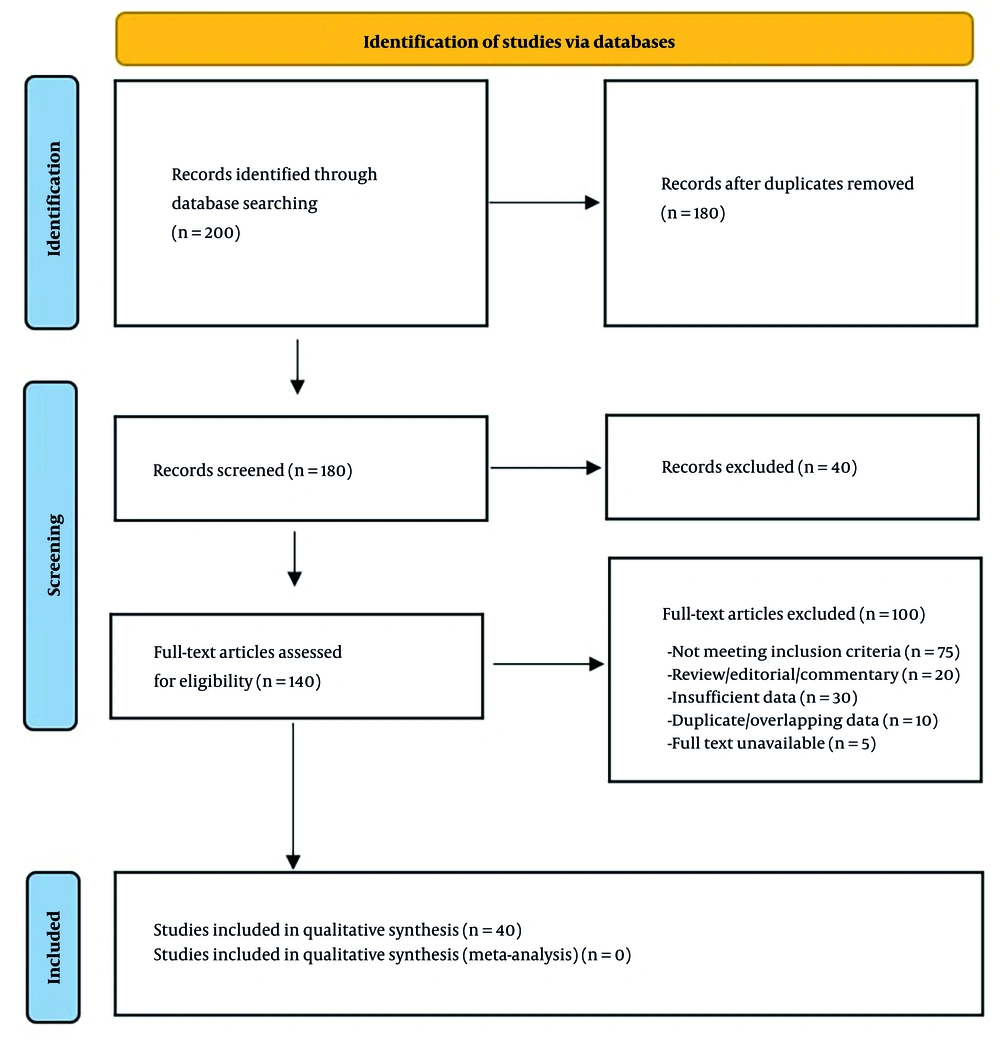
Figure 1.
PRISMA flow diagram
5. Data Extraction
Two reviewers independently extracted data employing a standardized form prepared beforehand. Information extracted included study title, first author, publication year, study design, country, age group, sample size, type and duration of antibiotic therapy, and reported outcomes related to gut microbiome changes, resistance development, and secondary infections. Discrepancies were resolved by consensus following cross-checking.
5.1. Risk of Bias Assessment
Two independent reviewers assessed the methodological quality and risk of bias of all included studies. For randomized controlled trials (RCTs), the revised Cochrane Risk of Bias tool (RoB 2.0) was used, evaluating bias across five domains: Randomization, deviations from interventions, missing data, outcome measurement, and selective reporting. Each domain was judged as 'low risk,' 'some concerns,' or 'high risk'.
For observational studies (cohort, case-control), the Newcastle-Ottawa Scale (NOS) was employed. The NOS awards stars across three domains: Selection (max 4 stars), comparability (max 2 stars), and outcome/exposure assessment (max 3 stars). Studies were categorized as high (7 - 9 stars), moderate (4 - 6 stars), or low (0 - 3 stars) quality. Disagreements were resolved by consensus or by a third reviewer.
For statistical analysis, although a quantitative meta-analysis was initially planned, due to substantial heterogeneity among studies — for instance, in design (e.g., mixing randomized controlled trials with observational cohort studies), patient populations (e.g., encompassing different age groups from neonates to adolescents and diverse geographical regions), interventions (e.g., varying classes, spectra, and durations of antibiotic therapy), and outcome measures (e.g., employing different sequencing techniques for microbiome analysis and various definitions for antibiotic resistance) — a formal meta-analysis was not feasible. Therefore, data synthesis was performed using a narrative approach supported by descriptive statistics.
6. Results
This systematic review included 40 studies published between 2000 and 2025 that examined the adverse effects of antibiotic use in pediatric gastroenteritis. Across the studies, four main categories of harmful outcomes were consistently identified: Disruption of the gut microbiome, emergence of antibiotic resistance, increased risk of secondary infections, and severe complications such as HUS. Due to considerable heterogeneity across included studies in terms of design, populations, and measured outcomes, a meta-analysis was not performed. Instead, results are summarized narratively, focusing on these key adverse outcomes.
Antibiotic administration, particularly with broad-spectrum agents, was found to cause significant disturbances in the gut microbiome of affected children (21, 24-29). Even exposures during the very beginning of life, such as intrapartum antibiotic prophylaxis, have been shown to alter the offspring's microbiota (30). Dysbiosis, characterized by reduced microbial diversity, was consistently reported by studies such as Gibson et al. (24), Vangay et al. (21), Zimmermann and Curtis (25), which facilitated the overgrowth of pathogenic bacteria, and confirmed by more recent work (26-29). Seminal studies using deep sequencing have revealed the pervasive and lasting effects of antibiotics on gut microbial communities (31). This microbial imbalance impaired digestive function, weakened immune responses, and delayed clinical recovery. Several longitudinal studies, including Jernberg et al. (22) and Rodriguez-Ruiz et al. (32), indicated that these microbiome alterations could persist for months post-treatment, with some changes potentially being irreversible. The early life period represents a critical window where antibiotic exposure can have disproportionate effects on microbiota establishment and long-term health (33). Moreover, such disruption was correlated with increased risks of IBD, metabolic syndrome, and obesity later in life, as reported by Neuman et al. (7) and Vallianou et al. (34). Links between antibiotic-induced dysbiosis and disturbances in glucose metabolism and body weight regulation have been established (35). The mechanisms and health impacts associated with microbiome disruption are summarized in Table 1.
Excessive and improper antibiotic use in pediatric gastroenteritis has played a role in the increase and spread of antibiotic-resistant bacteria. Multiple studies, such as Nogacka et al. (36), Francino (37), and Zhang et al. (38), alongside other key evidence (36-38), demonstrated that repeated or inappropriate antibiotic exposure increased colonization with resistant pathogens, including extended-spectrum beta-lactamase (ESBL)-producing Enterobacteriaceae. The emergence of resistance complicates future treatment options and represents a significant public health concern. Resistant infections were associated with prolonged illness duration, higher hospitalization rates, and increased healthcare costs. Detailed findings regarding antibiotic resistance and its consequences are presented in Table 1.
One of the most concerning consequences of antibiotic use was the increased risk of secondary infections, particularly CDI. Antibiotic-induced disruption of the gut microbiome creates an environment favorable for C. difficile colonization and toxin production, leading to severe complications such as diarrhea, colitis, and extended hospital stays. Multiple studies, including Becattini et al. (39) and Kesavelu and Jog (23), as well as foundational reviews (23, 30), consistently demonstrated a significant association between antibiotic exposure and higher incidence of CDI. These findings are detailed in Table 2, which highlights the increased risk and clinical impact of secondary infections following antibiotic use.
Table 2.Studies Examining the Link Between Antibiotic Use and Secondary Infections in Pediatric Gastroenteritis
| Studies (y) | Antibiotic Type | Secondary Infection Identified | Impact on Clinical Outcome |
|---|---|---|---|
| Mada and Alam (2024) (13) | Broad-spectrum antibiotics | CDI | Increased severe diarrhea, colitis, prolonged hospitalization |
| Mada and Alam (2024) (13) | Fluoroquinolones, cephalosporins | C. difficile infection | Higher rates of prolonged hospitalization and healthcare costs |
| Lathakumari et al. (2024) (35) | Multiple antibiotic classes | Opportunistic infections | Gut flora disruption led to overgrowth of harmful bacteria |
| Freedman et al. (2016) (16) | Broad-spectrum antibiotics | C. difficile and other infections | Significant microbial diversity loss, secondary infections |
Abbreviation: CDI, Clostridium difficile infection.
Several studies also highlighted the risk of HUS, a severe complication associated with infection by Shiga toxin-producing E. coli (STEC). Antibiotic therapy can stimulate increased Shiga toxin release, exacerbating hemolysis, renal damage, and thrombocytopenia, as emphasized by Aires (26) and Willing et al. (40), reinforcing this critical risk. The cascade from antibiotic use to microbiota alteration and subsequent disease risk is a well-documented pathway (41). The worsening of patient outcomes highlights the importance of refraining from antibiotic use when STEC infection is suspected or diagnosed. The systemic health impact of antibiotics, including the risk of HUS, is summarized in Table 1.
To summarize, the evidence strongly suggests that overusing antibiotics in cases of pediatric gastroenteritis leads to serious negative outcomes over both short and extended periods. Gut microbiome disruption weakens immune defenses and prolongs illness; antibiotic resistance complicates treatment strategies; secondary infections, particularly C. difficile, increase morbidity; and severe complications such as HUS can be aggravated. These results underscore the urgent necessity of implementing strict antibiotic stewardship and evidence-based prescribing practices in the management of pediatric gastroenteritis to safeguard children’s health.
7. Discussion
Pediatric gastroenteritis remains a global health challenge, with viral agents such as rotavirus, norovirus, and adenovirus accounting for the majority of cases. Despite the well-established viral etiology in most instances, antibiotics continue to be over-prescribed, often without clear clinical indication. This persistent misuse has profound and multifaceted consequences, particularly through the disruption of the gut microbiome — a vital, intricate ecosystem essential to a child’s digestive, immune, and metabolic health.
The cornerstone of this review is the disruption of the gut microbiome — a complex ecosystem of trillions of microorganisms indispensable for nutrient metabolism, immune modulation, and pathogen defense. In pediatric viral gastroenteritis, the administration of broad-spectrum antibiotics directly targets and disrupts this delicate equilibrium, precipitating a sharp decline in microbial diversity (6). This disruption is not merely a side effect but the pivotal initiating event that sets the stage for the subsequent adverse outcomes discussed herein. Recent studies such as Gibson et al. (24), Francino (37), and Zimmermann and Curtis (25) confirmed consistent microbiota disruption and loss of diversity following even short courses of antibiotics in early life, a finding robustly supported by subsequent research (29, 42-44). Recent evidence confirms that longer courses of antibiotics result in more pronounced and long-lasting microbiome alterations (45).
A direct and clinically significant consequence of this antibiotic-induced microbiome disruption is the loss of colonization resistance, which creates a fertile environment for opportunistic pathogens to flourish. A key example is C. difficile; the depletion of protective gut bacteria following antibiotic use allows for its overgrowth and toxin production, precipitating secondary infections (23). Thus, the initial disruption of the microbial community is the fundamental mechanism leading to conditions such as CDI. The clinical implications are serious, often resulting in severe diarrhea, colitis, and extended hospitalization, as consistently demonstrated across multiple studies summarized in this review. This example underscores how microbiome disruption, the core focus of this review, directly translates into tangible clinical harm.
Notably, the disruption of the microbiome caused by antibiotics affects more than just the immediate gastrointestinal system. Emerging evidence links microbiome perturbations with chronic systemic conditions including IBD, metabolic syndromes such as obesity, and even neurodevelopmental and mental health disorders, underscoring the crucial role of the gut-brain axis in early life (7, 10). Studies such as Neuman et al. (7), Vallianou et al. (34), and Vliex et al. (46) emphasized how early dysbiosis may affect energy homeostasis and even behavior and cognition, with further evidence linking early-life antibiotic exposure to long-term metabolic and immune sequelae (34, 47, 48). This bidirectional communication system between the gut and central nervous system is exquisitely sensitive to microbial alterations, and early-life disturbances can predispose children to long-lasting health challenges (8).
Moreover, the recovery of the microbiome following antibiotic treatment is frequently slow and may remain incomplete. While partial recolonization of beneficial bacteria may occur within weeks, full restoration to a healthy, balanced microbiota can take months—or may never fully normalize — resulting in sustained immune dysregulation and heightened vulnerability to infections in the subsequent months or years (19, 46). Longitudinal cohort studies by Jernberg et al. (22), Jakobsson et al. (49), and Suvvari et al. (42) reported microbiome alterations lasting up to a year or more, highlighting the persistent nature of antibiotic-induced dysbiosis as confirmed in other cohorts (32, 49). Such persistent alterations can compromise the maturation and function of the immune system, particularly the development of regulatory immune responses that prevent excessive inflammation and autoimmune disorders later in life (8). This vulnerability of the immune system underscores the necessity of maintaining microbiome health in children, particularly during key periods of immune development.
Beyond altering the ecological balance, antibiotic-induced disruption of the gut microbiome is a key driver in the acceleration of AMR. The dysbiotic environment created by antibiotics applies a powerful selective pressure on bacterial populations, favoring the expansion of pre-existing resistant strains and facilitating the horizontal gene transfer of resistance determinants. This process fosters the emergence and spread of resistant pathogens that complicate treatment, increase healthcare costs, and threaten effective infection control (25). This mechanistic link between dysbiosis and resistance is evidenced by findings from Duan et al. (44), Arboleya et al. (28), and Fishbein et al. (50), which showed that early-life antibiotic exposure selects for resistant bacteria, including ESBL-producing E. coli and Klebsiella species, even in asymptomatic children (36-38). Pediatric gastroenteritis, predominantly viral in origin, provides little justification for antibiotic exposure, making stewardship efforts crucial in curbing AMR that is potentiated by microbiome disruption and preserving antibiotic efficacy for truly bacterial illnesses.
Furthermore, improper use of antibiotics in STEC infections can worsen clinical outcomes by enhancing toxin release and inducing the potentially fatal HUS. The pathophysiology involves antibiotic-induced bacterial lysis that liberates Shiga toxins, leading to hemolysis, renal impairment, and thrombocytopenia — conditions particularly perilous for young children (11). Recent clinical evidence (27, 38) strengthens this concern, advising against antibiotics in suspected or confirmed STEC cases. This risk mandates meticulous clinical evaluation and judicious prescribing, reinforcing that antibiotics are not a benign intervention and must be reserved for clear bacterial indications.
To mitigate these widespread risks, robust antibiotic stewardship programs are urgently needed. These programs should emphasize evidence-based guidelines, promote the use of rapid diagnostic tools to accurately identify infection etiology, and foster comprehensive education for healthcare providers about the adverse consequences of unnecessary antibiotic use. As highlighted in Ribeiro et al. (51), Kesavelu and Jog (23), and Patangia et al. (29), stewardship interventions — including point-of-care testing and clinical decision support — can effectively reduce inappropriate antibiotic use in pediatrics, a strategy increasingly supported by the literature (23, 51, 52). Restricting broad-spectrum antibiotic prescriptions in pediatric gastroenteritis cases where viral pathogens predominate will safeguard the gut microbiome, reduce the burden of secondary infections, and slow the tide of AMR (1, 4).
In summary, while antibiotics are indispensable for treating bacterial infections, their overuse in viral pediatric gastroenteritis is unjustified and initiates a cascade of harm. The synthesis of evidence from 40 studies in this review demonstrates that antibiotic exposure is the trigger, and gut microbiome disruption is the pivotal first domino that falls. This disruption serves as the foundational pathophysiological event, which subsequently predisposes children to the other documented adverse outcomes: The emergence of antibiotic resistance, an increased risk of secondary infections like C. difficile, and the aggravation of severe complications such as HUS. Therefore, an informed, cautious, and stewardship-driven approach to prescribing is paramount. Such an approach is necessary not only to avoid direct toxicity but, crucially, to prevent the initial microbiome disruption that sets this detrimental cascade in motion. By preserving the integrity of the gut ecosystem, we can safeguard children's immediate recovery, long-term health, and the global effectiveness of antimicrobial therapies.
7.1. Limitations
This systematic review has several limitations, primarily stemming from the nature of the available evidence.
Study designs and risk of bias: The majority of the evidence comes from observational studies (cohort and case-control), which, despite adjustment for confounders, are susceptible to residual confounding and selection bias. This limits the strength of causal inferences regarding the direct effects of antibiotic exposure on the measured outcomes. Only a few randomized trials were available, and they often had limitations in blinding.
Heterogeneity and synthesis challenges: Considerable clinical and methodological heterogeneity existed across the included studies. This included variations in patient populations (e.g., different age groups, geographical settings), antibiotic interventions (type, spectrum, duration, indication), and outcome measurements (e.g., diverse sequencing techniques for microbiome analysis, varying definitions of antibiotic resistance and dysbiosis). This heterogeneity prevented a meaningful quantitative meta-analysis and necessitated a narrative synthesis, which is more susceptible to subjective interpretation.
Measurement and reporting of core outcomes: The assessment of gut microbiome disruption — the central focus of this review — was not standardized. Studies employed a wide range of techniques, from traditional culture to 16S rRNA gene sequencing and metagenomics, with differing depths of sequencing and bioinformatic pipelines. This variability complicates direct comparisons and the aggregation of findings. Similarly, definitions and measurements of antibiotic resistance and clinical complications like HUS were not uniform.
Long-term evidence gap: Most studies reported short-term or medium-term outcomes. Robust longitudinal data tracking the long-term consequences of antibiotic-induced dysbiosis from pediatric gastroenteritis into adolescence or adulthood are scarce. Therefore, the full scope and persistence of potential health sequelae remain incompletely understood.
Potential for bias: Although our search was comprehensive, the restriction to English-language publications may have introduced language bias, potentially omitting relevant data. Furthermore, publication bias towards studies reporting significant adverse effects of antibiotics is possible, which might overestimate the reported associations.
7.2. Future Directions
Future research should aim to address these limitations by conducting well-designed prospective cohort studies and randomized controlled trials with standardized methodologies for evaluating antibiotic exposure, microbiome composition, and resistance patterns. Longitudinal investigations that monitor microbiome recovery and associated health outcomes over extended periods are especially needed to clarify the enduring effects of early-life antibiotic use. The development and clinical integration of rapid, point-of-care diagnostic tools to distinguish viral from bacterial gastroenteritis may substantially reduce unnecessary antibiotic prescriptions.
In addition, future studies should explore microbiome-protective strategies — such as targeted probiotics, prebiotics, or synbiotics — that may mitigate the adverse effects of antibiotics on gut flora. Multi-center collaborations involving diverse pediatric populations are essential to improve generalizability and support the creation of evidence-based, globally applicable guidelines for antibiotic stewardship in pediatric gastroenteritis.
7.3. Conclusions
This systematic review of 40 studies underscores the substantial risks associated with the inappropriate use of antibiotics in pediatric gastroenteritis, a condition most often caused by viral pathogens. These findings reinforce the urgent need for evidence-based antibiotic prescribing, guided by accurate diagnosis and clinical judgment. Strengthening antibiotic stewardship — particularly in pediatric care — can minimize unnecessary exposure, preserve microbiome health, and slow the spread of resistance. Prudent antibiotic use in pediatric gastroenteritis is essential not only to improve immediate recovery but also to safeguard long-term child health and the global effectiveness of antimicrobial therapies.
